Chris Fleming, the American comedian and actor, stands at a pivotal juncture in his career, reflecting wistfully on the accelerating wave of YouTube content creators now actively courted by Hollywood. His observations come as digital-native talents like Backrooms director Kane Parsons and Obsession’s Curry Barker have notched runaway horror pic hits at the multiplex, demonstrating a clear and present pathway from viral online content to mainstream cinematic success. Fleming, speaking to The Hollywood Reporter at the prestigious Just for Laughs comedy festival in Montreal, candidly expressed a sense of having "missed that. Yeah, I missed that" — a sentiment that underscores the rapid evolution of the entertainment industry and the shifting criteria for industry recognition.
Fleming’s own trajectory, while now soaring, began in a different era of online content creation. His absurdist YouTube series, Gayle, where he famously portrayed the titular stay-at-home mom Gayle Water-Waters, garnered a dedicated following between 2012 and 2015. "The industry didn’t care. But the people cared," Fleming recalled, highlighting a familiar dichotomy for early online creators. This grassroots adoration allowed Gayle to thrive for over three years, cultivating a loyal fanbase long before the established entertainment complex fully recognized the power of digital platforms as incubators for talent. However, the path from a YouTube series that largely bypassed Hollywood’s radar to his critically acclaimed HBO Max streaming special, Chris Fleming: Live at the Palace, which debuted in February, was a protracted and often challenging journey.
The Genesis of a Cult Phenomenon: Gayle and the Early YouTube Landscape
When Chris Fleming launched Gayle in 2012, the landscape of online content creation was significantly different from today’s hyper-commercialized and industry-integrated ecosystem. YouTube was still largely a wild west, a platform where independent creators could experiment with form, character, and narrative without the immediate pressure of traditional gatekeepers. Gayle, with its distinct brand of absurdist humor, surreal scenarios, and Fleming’s uncanny embodiment of the suburban matriarch Gayle Water-Waters, quickly carved out a niche. The series often satirized mundane aspects of suburban life through a darkly comedic and uncomfortably relatable lens, resonating deeply with an audience hungry for authentic, unconventional voices.
Fleming’s ability to fully commit to the character, coupled with his knack for sharp, observational comedy, allowed Gayle to flourish organically. The series was a testament to the power of direct-to-audience engagement, building a community of fans through shared laughter and an appreciation for its unique artistic vision. While it garnered millions of views and established Fleming as a singular comedic voice, this period predated the mainstream industry’s widespread acceptance and active scouting of YouTube talent. The mechanisms for translating online popularity into traditional film and television deals were nascent, often requiring creators to prove their commercial viability through painstaking independent efforts rather than through proactive industry courtship. This historical context illuminates Fleming’s comment about missing the current wave; the infrastructure and mindset simply weren’t in place for a Gayle-sized phenomenon to immediately leap to a major studio deal.
A Decade of Independent Grit: Building a Career Beyond the Mainstream Gaze
Despite the industry’s initial indifference to Gayle, Fleming did not falter. He spent the better part of a decade meticulously building a career on his own terms, demonstrating remarkable resilience and an unwavering commitment to his craft. "I’ve had a really solid career for the last 10 years or so, where I’ve been able to do theaters for my own fan base," Fleming explained. This period was characterized by extensive touring, developing new material, and nurturing the direct relationship he had forged with his audience. He became a fixture on the independent comedy circuit, selling out venues based purely on his unique brand of physical comedy, whimsical storytelling, and a magnetic, often frenetic, stage presence.
This independent hustle is a common narrative for many comedians, but Fleming’s success in sustaining it for a decade without significant mainstream backing speaks volumes about his talent and the loyalty of his fanbase. He navigated the challenges of self-promotion, booking, and production, honing his performance skills and expanding his comedic repertoire. This grassroots approach allowed him to maintain artistic control and cultivate a distinct voice, distinguishing him from artists who might have been molded by industry executives. While he yearned for broader acting opportunities, which remained scarce ("struggling to do one acting gig a year"), this decade of independent work laid an unshakeable foundation for his eventual breakthrough. It was a testament to the fact that while the industry might overlook early digital successes, a dedicated artist can still forge a viable, impactful career through sheer force of talent and audience connection.
The HBO Max Breakthrough: Chris Fleming: Live at the Palace
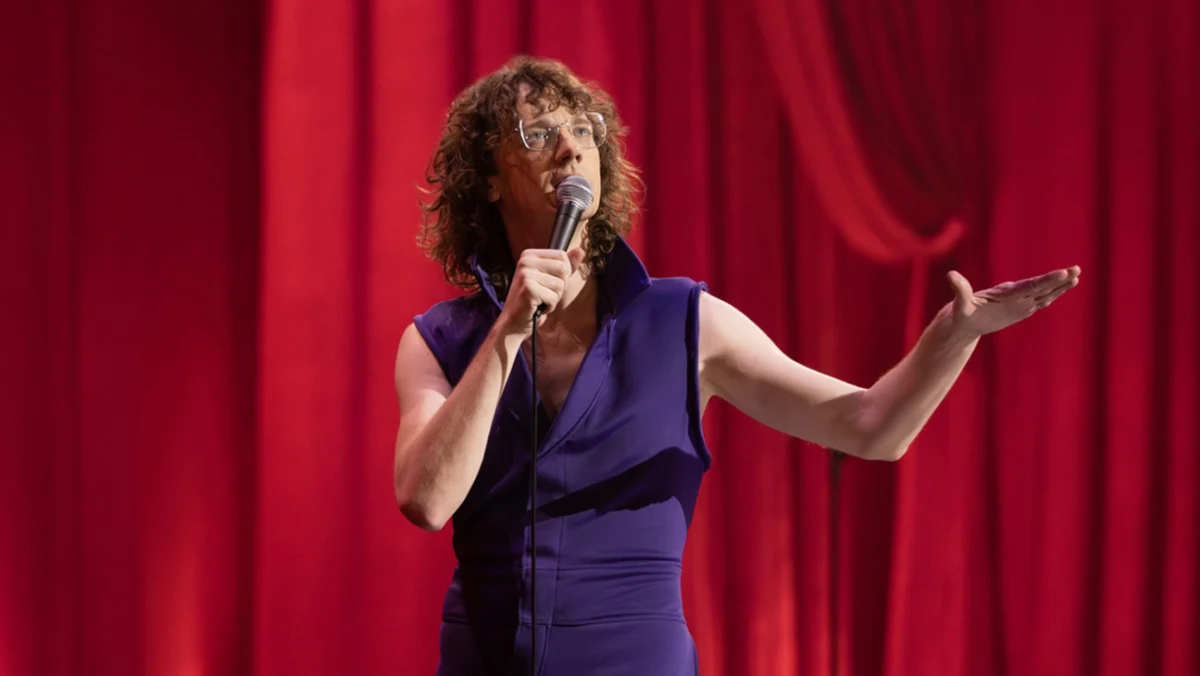
The debut of Chris Fleming: Live at the Palace on HBO Max in February marked a significant turning point, catapulting Fleming from a beloved cult figure to a more widely recognized comedic force. The special was a culmination of his decade-long journey, showcasing his refined stage presence, razor-sharp wit, and an inimitable performance style that blends the absurd with the deeply personal. The special was lauded not only for its comedic content but also for its distinctive visual aesthetic, particularly Fleming’s memorable purple bodysuit. This costume, a striking piece of performance art in itself, was designed by Anthony Sartino, a renowned costume designer famously associated with creating iconic wardrobes for the late music legend Prince. The collaboration with Sartino not only elevated the special’s visual impact but also subtly connected Fleming to a legacy of artists who use fashion as an integral part of their stage persona, signaling an artistic ambition beyond mere stand-up.
The impact of the HBO Max special was immediate and profound. "The HBO special and the success of that has blown things through the roof," Fleming stated, underscoring the transformative power of a major platform release. While specific viewership numbers are often proprietary, the critical acclaim and subsequent industry buzz clearly indicated a significant boost. For starters, Fleming is now in high demand for movie and TV series gigs, a stark contrast to his previous struggle for acting roles. "Before the special, I was struggling to do one acting gig a year. Now, since the special, there’s been many," he reported, highlighting a dramatic shift in his professional landscape. This breakthrough validates not only Fleming’s talent but also the increasing role of streaming platforms as arbiters of comedic taste and launchpads for careers.
The Streaming Wars and the Shifting Paradigm of Comedy Specials
Fleming’s success with his HBO Max special is inextricably linked to the ongoing "streaming wars" — the intense competition among major platforms like Hulu, Amazon, Max, YouTube TV, and Netflix for subscriber attention. This arms race has led to an unprecedented investment in original content, including a robust demand for stand-up comedy specials. Netflix, in particular, pioneered the strategy of acquiring and producing a vast library of comedy specials, recognizing their appeal as relatively low-cost, high-engagement content that can attract and retain subscribers globally. Other platforms quickly followed suit, creating a vibrant marketplace for comedians.
Fleming explicitly credits this fierce competition with "turbocharging his career," providing a prominent stage and significant resources that were previously unavailable to artists outside the traditional network television system. While there has been some debate within the industry about whether streaming comedy specials continue to move the needle with audiences as platforms increasingly diversify their content focus towards live events and sports, Fleming’s experience unequivocally demonstrates their potent impact. For an artist like Fleming, who had cultivated a niche following, a streaming special offered an unparalleled opportunity for mass exposure, allowing his unique comedic voice to reach millions of new potential fans instantaneously.
However, Fleming also acknowledges the double-edged sword of this fragmented media space. He accepts that "an increasingly fragmented media space means no project or performance can hold lasting firepower for a career like might have happened before the streaming and internet eras overtook the stand-up comedy world." In an era of content saturation, where attention spans are fleeting and new material is constantly being released, the longevity of any single project’s impact can be shorter. Yet, even with this understanding, Fleming underscores the personal and professional seismic shift: "But my life before February was a different life than it’s been since February when [the comedy special] came out." This sentiment captures the paradox of the modern entertainment landscape: while individual projects may have a shorter shelf-life in the collective consciousness, their immediate impact on an artist’s career trajectory can be profoundly transformative.
From Signature Style to Unrecognizable Roles: Expanding Artistic Horizons
The newfound demand for Chris Fleming’s acting talents is already leading him down exciting and challenging new paths. He currently has two movie acting roles in progress, though he remains tight-lipped about the specifics. One of these roles, which brought him to Montreal a week after a significant personal transformation, required him to shed his distinctive long, wavy locks. "I had to cut my hair to play a normie husband, a religious guy, a new dad," Fleming explained, gesturing to his shorn hair. The directive from the production was clear: "They wanted me to be unrecognizable, to not look at all like Chris Fleming. That’s why they did me dirty like this," he quipped, referencing the absence of his signature "wolf cut."
This transformation is more than just a physical alteration; it signifies a pivotal moment in Fleming’s acting career. For a comedian whose public persona and stage presence are so intrinsically linked to his unique aesthetic, playing a "normie" role, one that actively seeks to strip away his recognizable traits, is a testament to his versatility and the industry’s newfound trust in his dramatic capabilities. It demonstrates a willingness to embrace roles that challenge his established comedic identity, allowing him to explore a broader range of characters and expand his artistic horizons beyond the specific personas he’s cultivated online and on stage. This willingness to be "unrecognizable" is often a hallmark of serious actors, signaling a commitment to character over celebrity.
The Just for Laughs Context: A Global Hub for Comedy Talent
Fleming’s interview takes place against the vibrant backdrop of the Just for Laughs comedy festival in Montreal, an event that serves as a crucial nexus for the global comedy industry. Established in 1983, Just for Laughs is one of the world’s largest and most prestigious comedy festivals, drawing thousands of performers, industry executives, talent scouts, and fans annually. It’s renowned as a critical platform for emerging talent to gain exposure, for established comedians to showcase new material, and for networks and studios to scout for the next big stars.
For Fleming, attending Just for Laughs at this particular moment in his career carries significant weight. It’s an opportunity to network, to potentially secure further projects, and to be recognized within an industry that is now actively seeking his unique brand of talent. His presence at such a high-profile event, especially on the heels of his HBO Max special, solidifies his standing as a comedian on the ascent, capable of commanding attention both on stage and on screen. The festival, which wraps up its programming this weekend, traditionally culminates in a flurry of deals, new collaborations, and renewed industry interest in the comedic talents it features, placing Fleming firmly in the spotlight of current industry conversations.
Broader Implications: YouTube’s Evolving Role and the New Path to Hollywood
Chris Fleming’s journey, from an early YouTube pioneer to a celebrated HBO Max artist now fielding multiple Hollywood acting offers, offers a compelling case study of the evolving entertainment landscape. While he initially felt he "missed" the direct YouTube-to-Hollywood pipeline currently benefiting horror directors like Kane Parsons and Curry Barker, his recent success paradoxically validates the enduring power of digital platforms as launchpads for unique voices. Parsons’ Backrooms started as a viral found-footage horror series on YouTube, leveraging the platform’s reach to build a massive audience before being picked up by A24 for a feature film adaptation. Similarly, Barker’s Obsession tapped into the psychological horror genre, proving that low-budget, high-concept digital content can translate into mainstream appeal.
Fleming’s experience, though delayed, ultimately mirrors this trend of digital validation. His path highlights that while the timing of industry recognition may vary, cultivating an authentic voice and a dedicated fanbase online remains a powerful, if not essential, component of modern career building in entertainment. His story also serves as a testament to resilience and the enduring value of artistic integrity. In an era where algorithms and viral trends often dictate fleeting fame, Fleming’s decade of independent work and his eventual breakthrough on a major streaming platform underscore that sustained effort, unique talent, and a deep connection with an audience can, and often will, eventually break through the noise. His shift into diverse acting roles further signals a broadening acceptance of digitally-native creators into the full spectrum of traditional entertainment, marking a significant and promising chapter in his career and for the industry at large.