The Toronto International Film Festival frequently serves as a launchpad for the autumn awards season, drawing global attention to ambitious cinematic projects, breakout directorial debuts, and highly anticipated studio comedies. Among the most buzzed-about titles on the festival schedule was Girl Group, a musical comedy marking Rebel Wilson’s transition into both writing and directing. Boasting an expansive, cross-industry ensemble cast featuring actors, pop icons, and comedians, the film promised a nostalgic yet modern exploration of female pop stardom, generational empowerment, and personal redemption. However, the world premiere screening at TIFF was met with an uncharacteristically muted response from an audience known historically for its warmth and enthusiasm, casting an immediate shadow over the film’s commercial and theatrical prospects.
Main Facts of the Production and Premiere
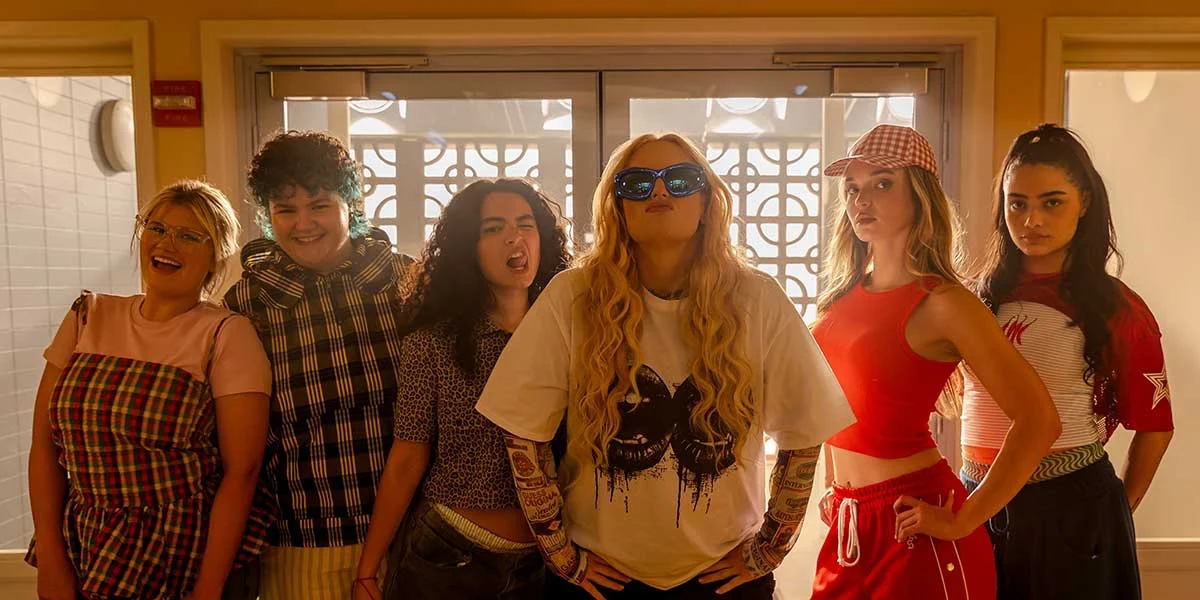
Girl Group tracks the tumultuous trajectory of Tassie Young, portrayed by Rebel Wilson, a former pop sensation from a late-1990s girl group modeled after the global phenomenon of the Spice Girls. Set in the present day, the narrative follows Tassie as she finds herself excluded from a lucrative and high-profile 2026 reunion tour with her former bandmates. Desperate to reclaim her lost prestige and relevance, she accepts a court-mandated community service assignment tutoring a motley crew of aspiring, outcast singers in East Los Angeles. What ensues is intended to be a raucous, heartwarming journey of mutual mentorship and comedic mishaps, drawing explicit thematic inspiration from genre-defining hits such as Pitch Perfect and Bridesmaids.
The film’s runtime spans 103 minutes, though Wilson revealed during the post-premiere Q&A session that her initial assembly cut exceeded three hours due to the sheer volume of material and comedic bits filmed. The sprawling supporting cast reads like an international pop and comedy showcase, featuring Randall Park, Sheridan Smith, Melanie Chisholm, Nicole Scherzinger, Jamie-Lee O’Donnell, Shaznay Lewis, Ashley Roberts, Judi Love, Guz Khan, Chabely Ponce, Daniela Couso, Lilah Pate, Mia Kaplan, Bailey Stender, Loren Gray, Miracle Washington, Ana Yi Puig, Keith Duffy, Chris Colfer, Bechill, Jolene, Sally Hawkins, and Jennifer Coolidge. Despite this staggering array of recognizable talent, critics and festivalgoers noted that several prominent performers—most notably Hawkins and Coolidge—were underutilized within the narrative framework.
Chronology and Narrative Arc
The chronological foundation of Girl Group establishes its emotional stakes in a prologue set at an all-girls preparatory school in 1997. Sally Hawkins appears as a supportive, encouraging educator who urges five young students to fully commit to an onstage performance of a Spice Girls track. Among these students is a young, gap-toothed Tassie, whose ambitions of pop stardom are validated when a talent scout, played by Chris Colfer in a clear nod to his breakout role in Glee, discovers the quintet in the audience.
The group’s subsequent rise is meteoric, characterized by rapid commercial success and cultural saturation. Predictably, tensions arise, and Tassie makes the fateful decision to sever ties with the group to pursue a solo career, resulting in a swift and catastrophic decline.
The narrative then fast-forwards two decades to 2026. Tassie is depicted as an alcoholic, washed-out has-been struggling to cope with her faded celebrity status. Another alcohol-related infraction and subsequent drunk driving arrest lead to a community service sentence. Her unimpressionable manager, portrayed by Jennifer Coolidge, assigns her the task of whipping the aforementioned group of East LA misfit teenagers into shape. This cohort ultimately brands themselves as "Explode," setting the stage for the inevitable culmination of musical showcases, generational friction, and personal redemption.
Supporting Data and Critical Reception
The critical consensus emerging from the TIFF premiere highlighted a stark disconnect between the film’s lofty comedic ambitions and its actual execution. While festival audiences at TIFF are routinely supportive of world premieres, the house remained largely silent throughout significant portions of the screening, punctuated only by occasional groans at particularly strained dialogue. Reviewers pointed to specific running gags that failed to land, such as a character naming her child "hashtag-baby, hyphenated," or Nicole Scherzinger’s character deliberately mispronouncing the word "current" by eliding its middle syllables.
The juxtaposition between the film’s runtime of 103 minutes and Wilson’s disclosure that two-thirds of the original material was left on the cutting room floor sparked immediate industry discussions regarding the editorial process. Observers questioned whether the project suffered from an inability to discern effective comedic material from self-indulgent shtick, raising concerns about the film’s commercial viability ahead of its wider distribution window.
Thematic Ambitions Versus Execution
Beyond its attempts at humor, Girl Group attempts to engage with serious sociological critiques surrounding the nature of female empowerment across different generations. The narrative establishes a direct ideological conflict between Tassie and her teenage students, who confront their mentor with the argument that the hyper-sexualized marketing and liberation frameworks of the late 1990s pop music industry were inherently exploitative rather than truly emancipatory. Tassie’s screening of vintage music videos serves as the catalyst for this debate, highlighting how societal definitions of female agency have evolved over the span of three decades.
However, critics observed that these thematic explorations are largely treated as superficial checklist items rather than deeply integrated narrative drivers. The film frequently pivots away from these complex intergenerational dialogues to prioritize broad, irreverent gags and slapstick elements. Furthermore, while the script attempts to subvert the trope of viciously competitive female dynamics popularized by films like Pitch Perfect—advocating instead for solidarity among young women—the preordained nature of the redemption arc diminishes the dramatic tension, leaving audiences with little narrative suspense.
Musical Sequences as the Saving Grace
Amidst the critical panning of the narrative structure and comedic timing, unanimous praise was reserved for the film’s musical and choreographic sequences. Staged across diverse environments including shopping malls, boxing training rings, and traditional theater stages, these segments capture the kinetic energy that the film elsewhere struggles to maintain.
The standout sequence of the film occurs when the group "Explode" performs an entirely original, unpolished number utilizing mismatched costumes and minimal theatrical embellishments. Reviewers noted that this unpretentious staging successfully convinced the audience of the characters’ authentic artistic worth, outshining the more polished, heavily engineered musical numbers that mimic classic Destiny’s Child performances. Industry analysts suggested that had the filmmakers leaned more heavily into the musical performances rather than forcing contemporary comedic gags, the final product might have achieved a more cohesive and resonant tone. Performances by Nicole Scherzinger were singled out as moments of genuine comedic promise, though similarly constrained by an underdeveloped script.
Broader Industry Impact and Implications
The lukewarm reception of Girl Group at TIFF raises broader questions regarding the current landscape of studio-style comedies and the challenges faced by multihyphenate creators transitioning into directing. Rebel Wilson’s insistence on anchoring the film’s center stage mirrors the trajectory of her character, Tassie, yet critics argued that this creative choice limited the ensemble’s overall impact. By keeping the spotlight firmly fixed on Tassie’s unrelenting shtick, the film frequently sidelines the very performers and musical elements capable of elevating the material.
As distribution strategies are finalized for the coming months, the performance of Girl Group will serve as an interesting case study for how contemporary audiences respond to nostalgic pop-culture pastiches that attempt to reconcile historical tropes with modern sensibilities. While the project possesses all the structural ingredients of a crowd-pleasing jukebox comedy—including a massive ensemble, recognizable music tracks, and familiar redemption beats—its inability to find a consistent tonal balance demonstrates the difficulties inherent in translating personal comedic visions to the big screen. Ultimately, while Girl Group aimed to explode onto the cinematic landscape with the force of a chart-topping pop anthem, its TIFF debut suggests a production that ultimately fizzled before reaching its full potential.