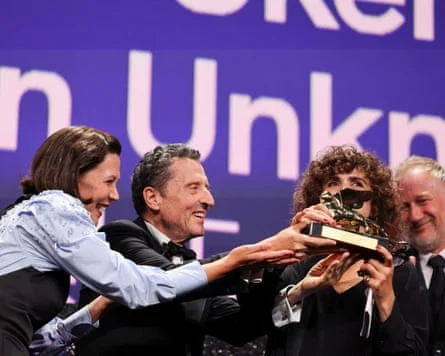
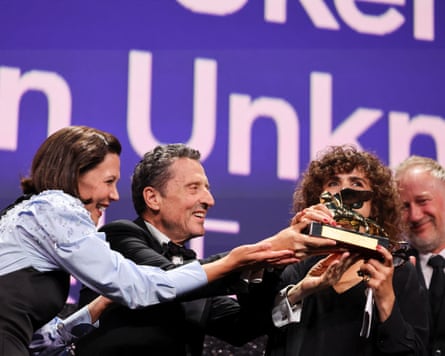
The 83rd edition of the Venice International Film Festival concluded with a dramatic awards ceremony that celebrated boundary-pushing cinema, historical excavation, and politically charged documentaries, while simultaneously sparking fierce debate across international diplomatic and cultural spheres. Egyptian-Danish filmmaker May el-Toukhy captured the festival’s highest honor, the prestigious Golden Lion, for her elegantly appointed period drama Woman Unknown. Set against the backdrop of Denmark’s immediate liberation from Nazi occupation, the film resonated deeply with a jury led by American actor and director Maggie Gyllenhaal.
The festival, held annually on the Lido di Venezia, once again proved to be a critical battleground where high art intersects with contemporary geopolitical realities. From stark examinations of modern military intelligence to historical biographies embroiled in regional conflict, this year’s selection of winners reflects a global cinema grappling with the burdens of the past and the crises of the present.

A Triumphant Night for Woman Unknown
May el-Toukhy’s victory with Woman Unknown marks a significant milestone as the film stood out as the sole feature in the main competition solely directed by a woman. During her emotional acceptance speech, el-Toukhy acknowledged the severe logistical, financial, and emotional hurdles she faced bringing the project to the screen. She explicitly thanked jury president Maggie Gyllenhaal for calling attention to the persistent underrepresentation of female filmmakers at the outset of the festival.
Adapted with psychological precision, the film centers on Marie, a young housemaid portrayed by Mathilde Arcel, who stands on the precipice of marrying her widowed employer. Her anticipation is poisoned by the fear that he will uncover a suppressed chapter of her wartime past—specifically, an intimate relationship with a German soldier during the occupation. Critics have drawn favorable comparisons between el-Toukhy’s atmospheric direction and Alfred Hitchcock’s classic psychological thriller Rebecca, praising its meticulous pacing and dense moral ambiguity.
In an unusual move that puzzled festival veterans, Mathilde Arcel was also awarded the Volpi Cup for best actress. Venice festival regulations traditionally discourage bestowing multiple major prizes upon a single film to spread recognition across the competitive slate. However, Gyllenhaal revealed to the press that the jury’s vote for Arcel was entirely unanimous, compelling them to bypass convention. "She is going to blow our socks off," Gyllenhaal remarked, praising the newcomer’s searing emotional vulnerability.
Geopolitical Friction and the Special Jury Prize
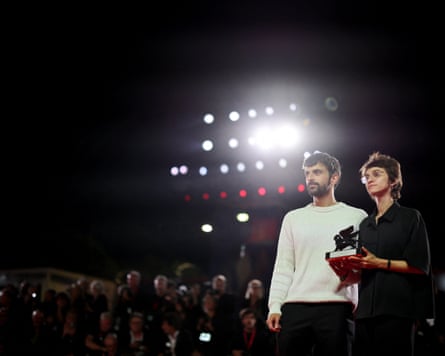
While dramatic fiction claimed the top honors, documentary filmmaking provided the festival’s most politically volatile moments. The special jury prize was awarded to NAZA, a searing investigation into Israel’s use of artificial intelligence in military targeting during the conflict in Gaza. Directed by Yuval Abraham and Rachel Szor and produced by The Guardian, the film draws upon anonymous testimony gathered from 24 Israeli military insiders during clandestine nocturnal interviews on Tel Aviv rooftops.
The documentary derives its title from the military acronym used by intelligence services to quantify the anticipated civilian death toll resulting from an airstrike. Accepting the award alongside Szor, Abraham used his platform to address immediate backlash. "It’s honestly not very easy to stand here, thinking of all the Israeli politicians and journalists who are now attacking this film and denying it without even seeing it," Abraham stated. "So much is being done not to look at reality."
The film’s premiere on the Lido sent shockwaves through the festival. Just one day after its initial screening, the Israel Defense Forces issued a categorical denial regarding the allegations brought forward in the documentary. The recognition by the Venice jury elevates an already intense global debate concerning automated warfare, ethics in modern intelligence gathering, and the responsibility of documentary filmmakers in zones of active conflict.
Recognition for International Maestros and Rising Stars
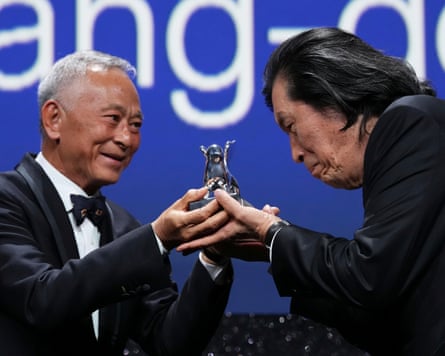
The runner-up grand jury prize was awarded to acclaimed South Korean auteur Lee Chang-dong for Possible Love. The film offers a finely judged, simmering examination of an unhappy married couple whose lives intertwine with a documentary filmmaker and her wealthy spouse, exploring themes of friendship, exploitation, and psychological entrapment. Lee received the trophy from veteran Hong Kong filmmaker and fellow jury member Johnnie To.
In the directorial category, Russian filmmaker Ilya Khrzhanovsky was awarded the Silver Lion for best director for DAU, a visually striking biographical drama chronicling the life of Nobel Prize-winning quantum physicist Lev Landau and his coerced participation in the Soviet nuclear weapons program.
The inclusion of DAU in the official selection had drawn sharp condemnation from the Ukrainian government in the weeks leading up to the festival. Critics pointed to lead actor Teodor Currentzis’s refusal to condemn the full-scale invasion of Ukraine, alongside the film’s historical backing from a Russian businessman subsequently sanctioned by both the United States and Ukraine. Filmed in Kharkiv between 2008 and 2011 before the outbreak of hostilities, Khrzhanovsky addressed the controversy directly during his press conference on the Lido, stating, "The only thing I can wish for is peace and success for the Ukrainian government to succeed in the best possible way, to save the country and to win this war."
Meanwhile, American cinema made its presence felt through Martin McDonagh’s Wild Horse Nine, which earned John Malkovich the Volpi Cup for best actor. Malkovich delivered a critically praised performance as an erratic, aging veteran CIA agent whose terminal cancer diagnosis forces a retroactive reckoning with the morality of his clandestine career. The 72-year-old actor accepted the honor via a video link, expressing deep humility at joining the long lineage of performers recognized over the 83-year history of the Venetian institution.
Broader Implications of the 83rd Venice Biennale
The 2026 Venice Film Festival will likely be remembered as an edition that refused to shy away from uncomfortable truths. By rewarding works that directly interrogate state power—such as NAZA’s critique of automated military strategy and DAU’s historical interrogation of Soviet atomic science—the jury signaled that cinema remains an essential medium for political confrontation.
Simultaneously, the triumph of May el-Toukhy’s Woman Unknown underscores a growing appetite for historical dramas that re-examine the private compromises made by ordinary individuals during periods of national trauma. As these award-winning titles transition from the Lido to international theatrical releases, their reception will undoubtedly continue to shape conversations surrounding historical memory, artistic freedom, and the ethical boundaries of cinematic storytelling.
Full List of Festival Winners
- Golden Lion for Best Film: Woman Unknown, directed by May el-Toukhy
- Grand Jury Prize: Possible Love, directed by Lee Chang-dong
- Silver Lion for Best Director: Ilya Khrzhanovsky for DAU
- Special Jury Prize: NAZA, directed by Yuval Abraham and Rachel Szor
- Best Screenplay: Un bon petit soldat (A Good Little Soldier) by Stéphane Brizé, Coralie Amédeo, and Olivier Gorce
- Volpi Cup for Best Actress: Mathilde Arcel in Woman Unknown
- Volpi Cup for Best Actor: John Malkovich in Wild Horse Nine
- Marcello Mastroianni Award for Best Young Actor: Malou Khebizi in 15/18 A Place to Heal
- Armani Beauty Audience Award: Eu contez (I Matter), directed by Alina Șerban
- Luigi De Laurentiis Award for Best Debut Film: La maison du vent (House of the Wind), directed by Auguste Bernard Kouemo Yanghu