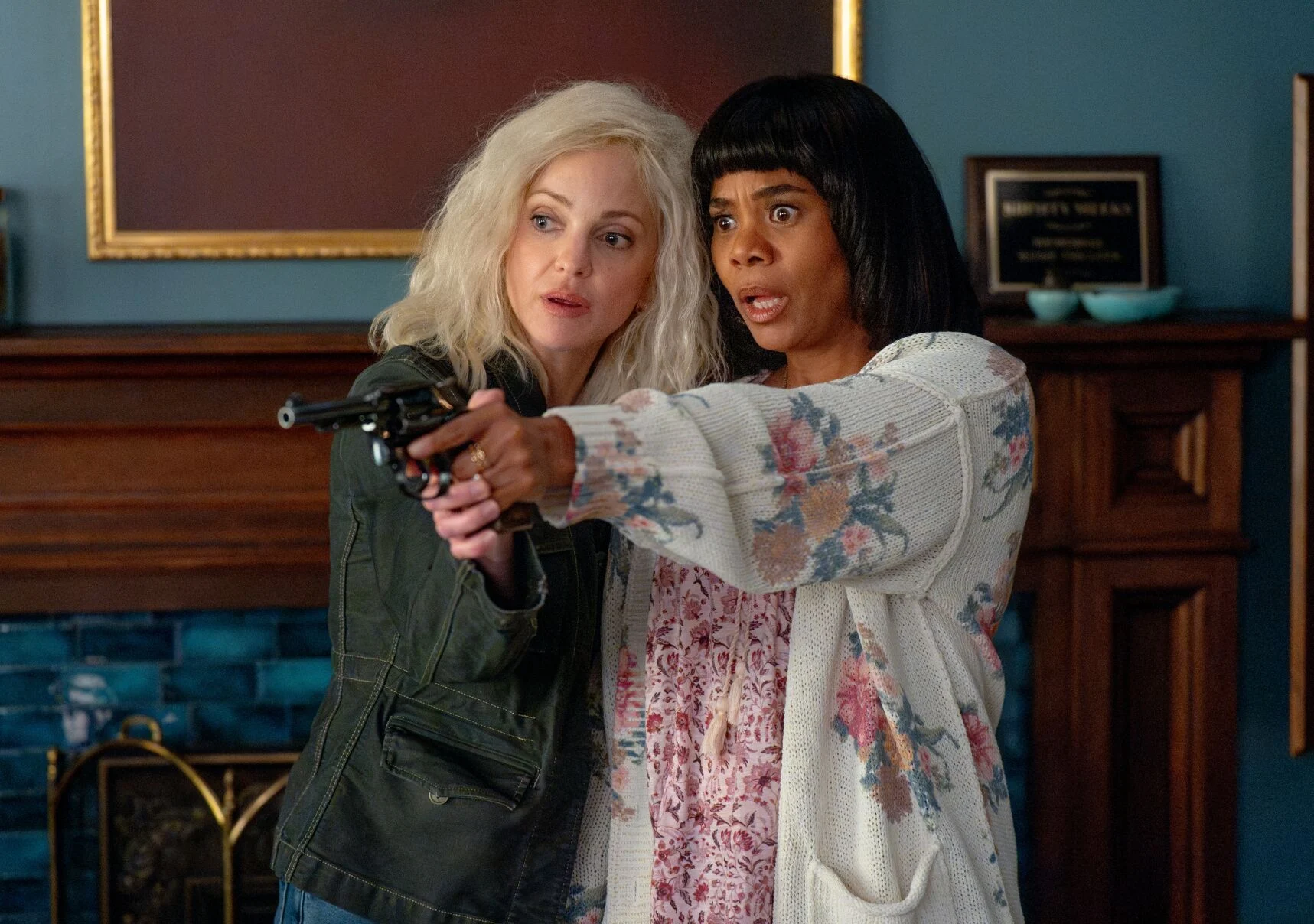
The latest entry in the cinematic spoof landscape deliberately omits a numerical identifier, operating as a quiet form of protest from its creators. The Wayans family collectively disowned the three sequels produced in their absence—Scary Movie 3 through 5, released in 2003, 2006, and 2013, respectively—following a bitter compensation dispute with the Weinstein Company in 2001. This long-standing industry grievance serves as a foundational thematic undercurrent for the new production. Released in 2026, the latest Scary Movie adheres closely to the traditional Wayans formula: a legacy horror-comedy that simultaneously lampoons genre conventions while delivering a sharp critique of the broader entertainment industry. It retains the polarizing comedic stylings that have historically delighted core audiences while drawing sharp criticism from detractors, executing low-brow humor while capturing significant commercial returns at the global box office.
Chronology of the Franchise and the Great Divestment
To understand the friction behind the multi-decade hiatus, one must examine the origins of the franchise and the business practices of Hollywood in the late 1990s and early 2000s.
In 2000, Scary Movie premiered via Dimension Films, transforming a modest $19 million production budget into a staggering $278 million worldwide box office triumph. The film successfully merged the teen slasher revival wave of the late 1990s—typified by Scream and I Know What You Did Last Summer—with high-energy, anarchic sketch comedy. Its immediate financial viability prompted Dimension Films to greenlight a sequel to hit theaters exactly one year later. Despite the inclusion of veteran satirists such as Chris Elliott and David Cross, the rushed production timeline for the sequel placed noticeable strain on the creative process.
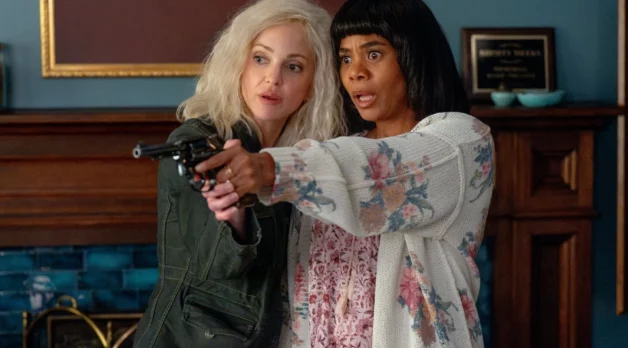
Following creative and financial disagreements over compensation and artistic control in 2001, the Wayans family severed ties with the studio. In their absence, Dimension Films enlisted Zucker, Abrahams, and Zucker (ZAZ) veteran David Zucker to direct Scary Movie 3 and Scary Movie 4, effectively replacing principal architects Marlon and Shawn Wayans with mainstream comedic actors like Simon Rex and Charlie Sheen. Reflecting on this era in a subsequent interview with GQ, Marlon Wayans compared the studio’s continuation of the franchise without its creators to "watching your child become a crackhead." This trajectory mirrored a distressingly familiar cycle within Hollywood, where minority creators are frequently sidelined after establishing profitable intellectual properties.
However, the 2026 release marks a significant course correction. Bringing back nearly the entire original principal cast after a 25-year separation, the production has yielded unexpected moments of emotional resonance alongside its signature irreverence, capitalizing on a reported $172 million global box office haul within its first two weeks of release to secure the future of the series.
Historical Foundations: From ZAZ to Hollywood Shuffle
The comedic DNA of the Wayans family did not emerge in a vacuum. It is deeply rooted in the traditions of mid-century satire and the counter-programming ethos of the 1970s. Collaborators Robert Townsend and Keenen Ivory Wayans trace their comedic sensibilities to foundational texts like Blazing Saddles and Kentucky Fried Movie, drawing inspiration from masters of timing such as Sid Caesar, Mel Brooks, and Paul Mooney.
The formal architecture of the modern spoof was largely codified by David Zucker, Jim Abrahams, and Jerry Zucker (ZAZ). With Kentucky Fried Movie in 1977 and Airplane! in 1980, the ZAZ team pioneered a style characterized by hyper-dense, up-to-the-minute cultural references delivered within a structured narrative frame. Jim Abrahams famously noted that their distinct brand of fast-paced, apolitical absurdity served as intentional counter-programming to the heavy sociopolitical friction of the 1970s, navigating the turbulence of the Vietnam War, Watergate, and shifting civil rights movements by focusing purely on structural parody.
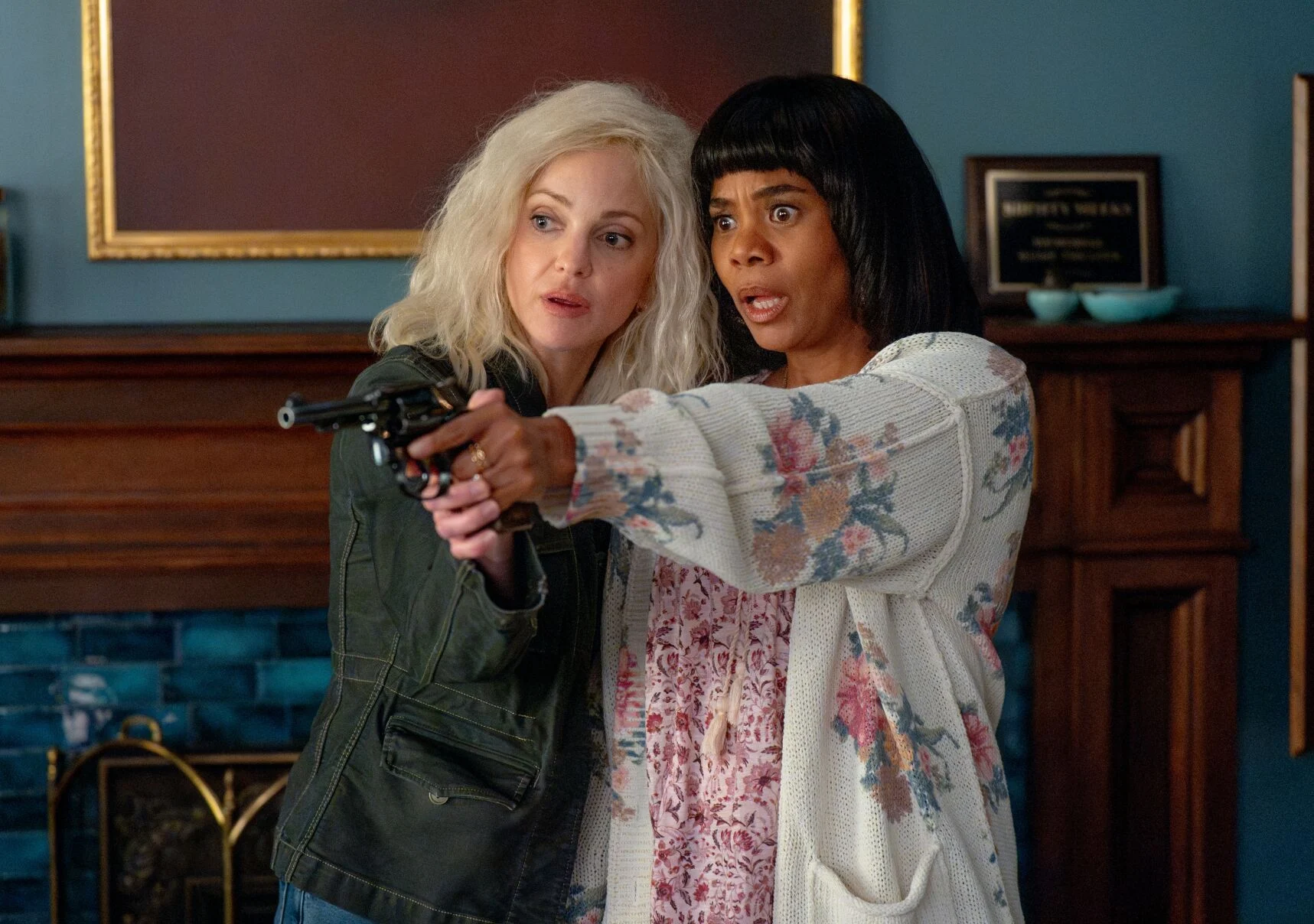
In 1987, Robert Townsend and Keenen Ivory Wayans expanded upon this foundational recipe with Hollywood Shuffle, integrating the biting racial satire of The Richard Pryor Show to transform cinematic karaoke into a sophisticated vehicle for cultural criticism. The film targeted genres historically marketed toward Black audiences—including blaxploitation features and early independent urban dramas—interrogating the systemic lazy conventions that studio executives routinely relied upon. Operating with limited financial resources, the Wayans family and Townsend constructed a subversive blueprint that challenged the dominant white Hollywood power structure.
This trajectory yielded Keenen Ivory Wayans’ independent successes, including I’m Gonna Git You Sucka (1988) and the groundbreaking television sketch series In Living Color (1990–1994). Airing on the Fox network, In Living Color functioned as a rigorous training ground for the family, utilizing aggressive sketch comedy to dissect both mainstream white culture and internal African American media representations under the gaze of white corporate management.
Social Commentary and the Subversion of Stock Tropes
The thematic complexity of the Wayans’ work reached a critical juncture with the 1996 release of Don’t Be a Menace to South Central While Drinking Your Juice in the Hood. The film directly confronted the wave of inner-city coming-of-age melodramas popularized in the early 1990s, such as Boyz n the Hood (1991), Juice (1992), and Menace II Society (1993). While these original dramas were often hailed as artistic triumphs, their subsequent commercialization encouraged studio executives to repeatedly mine Black trauma, systemic imprisonment, and urban violence for mainstream pop-corn entertainment.
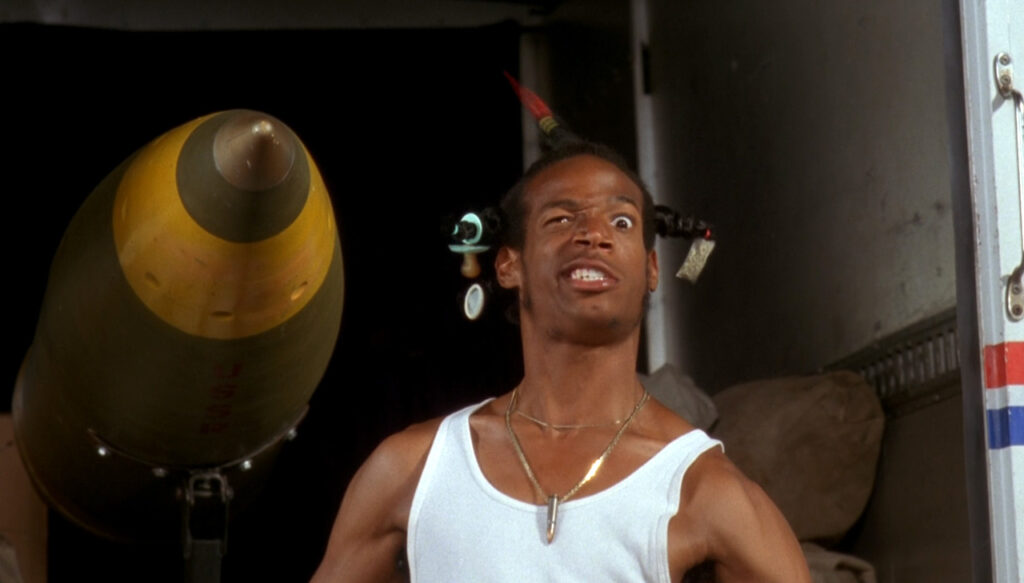
In the film, Marlon Wayans portrays Loc Dog, an explicit spoof of Larenz Tate’s volatile character O-Dog from Menace II Society. By exaggerating these archetypes to absurd extremes—featuring braided armpit hair and a hidden nuclear arsenal inside a stolen postal vehicle—the performance engaged in a rigorous critique of the stock characters demanded by the industry, challenging stereotypes generated by both white and Black writers alike.
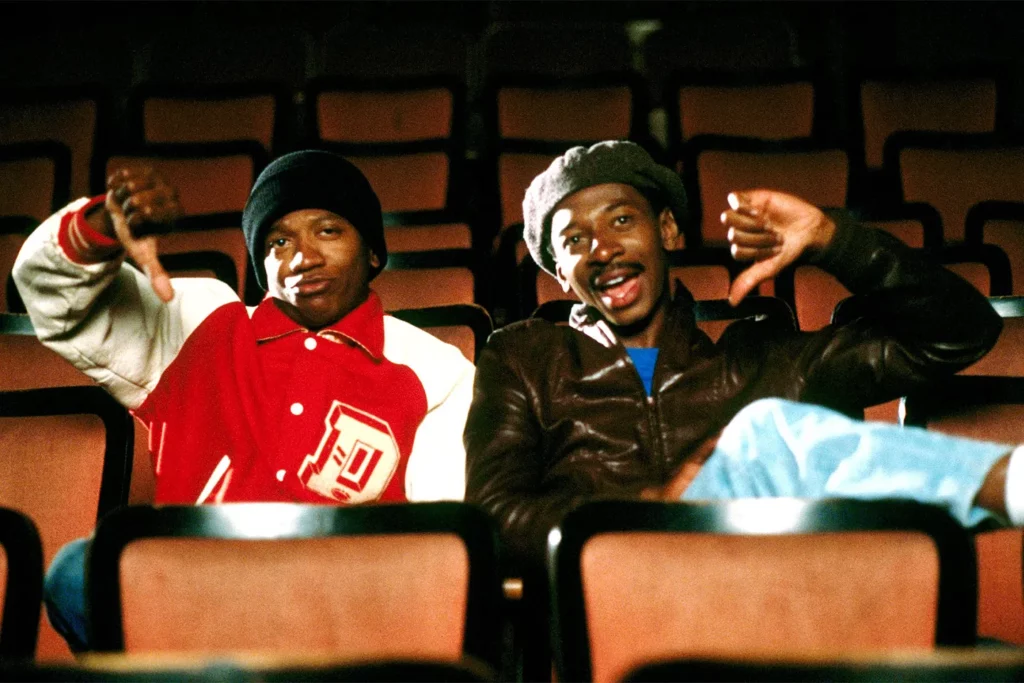
This same balancing act defined the production of the original Scary Movie in 2000. Many of the primary horror properties lampooned in the film featured exclusively white casts. In a 1997 review of David Mamet’s The Edge, film critic Roger Ebert famously coined the phrase "The Brother Always Dies First," highlighting a recurring trope within horror cinema regarding the marginalization of minority characters. Scary Movie addressed this inherent tension by placing Black actors—such as Regina Hall, Shawn Wayans, and Marlon Wayans—at the literal center of a mainstream horror spoof. By inflating prevailing cinematic stereotypes to ridiculous proportions, the film walked a fine line between low-brow slapstick and social commentary.
Industry Implications and Broader Cultural Shifts
The enduring commercial viability of the Wayans model underscores a broader economic reality within the entertainment industry: high-concept, low-budget satirical works routinely yield exceptional profit margins. The original Scary Movie converted its $19 million budget into a $278 million worldwide return for Dimension Films, proving that independent sensibilities, when scaled appropriately, can outperform traditional studio blockbusters.
Furthermore, the release of the 2026 installment arrives during a distinct period of industry reassessment regarding representation and artistic autonomy. Reflecting on his early career, Robert Townsend recounted a pivotal conversation with legendary actor Sidney Poitier, during which Poitier explained how he maintained personal dignity during an era hostile to Black performers: "I said no. I made sacrifices to do it, but I had the power to say no."
The pursuit of this creative autonomy has increasingly borne fruit at the highest levels of modern cinema. Last year, Ryan Coogler’s Sinners—a supernatural thriller exploring artistic freedom and the historic exploitation of Black art—grossed $370 million globally while securing a historic number of Academy Award nominations. Observers note a direct conceptual lineage connecting Coogler’s contemporary explorations of institutional exploitation back to the foundational cinematic critiques launched decades earlier by Townsend, Keenen Ivory Wayans, and their collaborators.
Whether contemporary studio executives are genuinely absorbing these historical critiques or merely capitalizing on legacy intellectual property remains a subject of ongoing debate among film historians. Nevertheless, the return of the Wayans family to their signature franchise on their own terms signals a permanent shift in power dynamics, proving that the architects of modern spoof comedy retain both the cultural relevance and the box-office viability to dictate the terms of their homecoming.