The television landscape continues to expand its most intricate fictional universes through strategic prequels and spin-offs, a trend exemplified by the Starz network’s historical drama franchise. In the season two premiere of Outlander: Blood of My Blood—titled Remembrance Day—viewers were treated to unexpected appearances from two foundational figures of the original Outlander continuity: Reverend Reginald Wakefield and his devoted housekeeper, Mrs. Graham. This narrative integration bridges decades of television storytelling, offering long-term followers of Diana Gabaldon’s literary adaptations a sophisticated layer of interconnectivity while deepening the historical stakes of the 1920s timeline.
Main Facts of the Premiere and Fan Service Integration
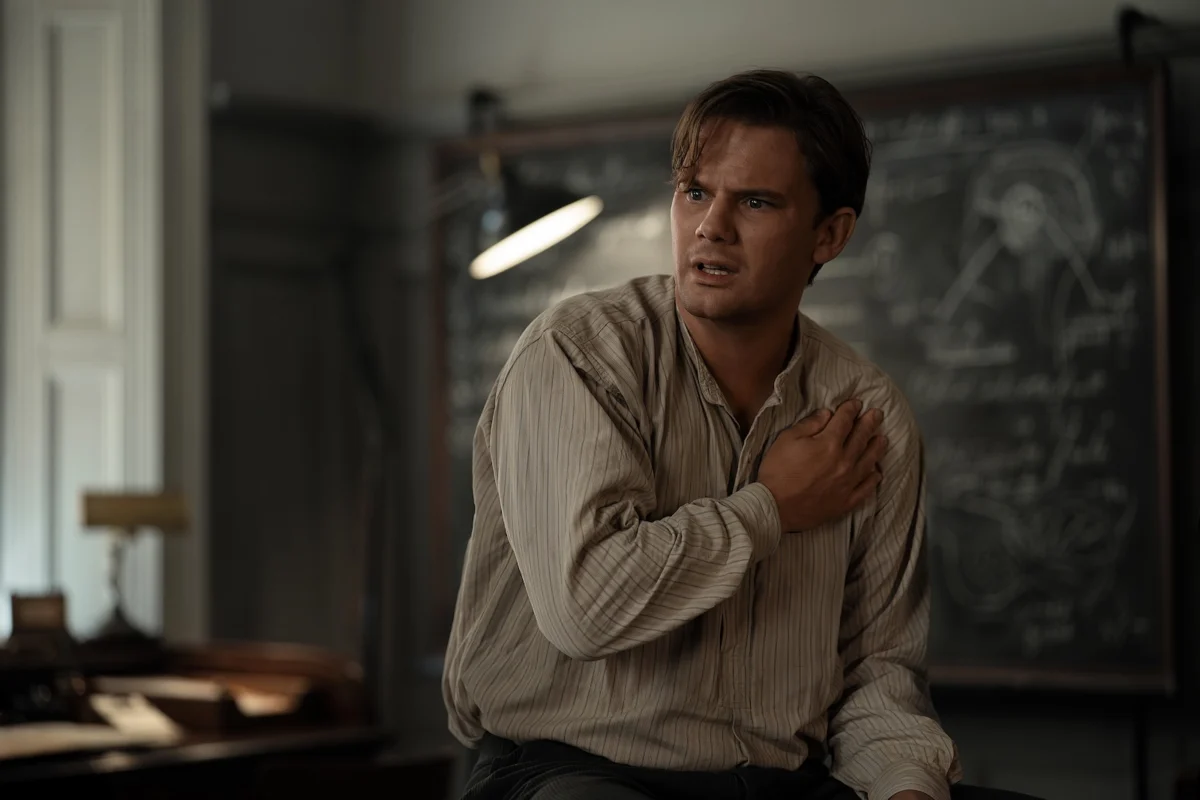
The premiere episode of the second season brings forth younger iterations of characters previously established in the parent series, colloquially referred to by the creative team as the "Mothership." Alongside established prequel inclusions such as Arch Bug, Murtagh, and Jocasta Cameron, the arrival of Reverend Wakefield and Mrs. Graham establishes a firm anchor in Inverness. In the narrative chronology of the prequel, these familiar faces intersect directly with Henry, who finds himself constrained within an insane asylum located in the Scottish Highlands during the 1920s.
Rather than functioning as mere cameos, these characters are woven directly into the psychological and supernatural framework of the plot. The episode culminates in a pivotal exchange wherein Mrs. Graham confides in Henry her distinct belief that his arrival is tied to the mystical properties of the ancient standing stones. This revelation sets up an immediate narrative tension as Henry directly asks for her assistance, leaving audiences awaiting the subsequent Friday broadcast to discover the trajectory of their alliance.
Historical Context and Chronological Placement
Understanding the significance of Reverend Wakefield and Mrs. Graham requires examining their established roles within the broader Outlander chronology. In the primary series, set initially in the 1940s following the conclusion of the Second World War, Reverend Reginald Wakefield serves as an academic authority and clergyman in Inverness. He provides sanctuary and intellectual support to Claire Randall (née Beauchamp) and her husband, Frank Randall, while Frank conducts genealogical research into his infamous ancestor, Captain Jonathan "Black Jack" Randall.
Concurrently, Mrs. Graham occupies a vital cultural and spiritual space within the household and the local community. Steeped in Scottish folklore and traditional beliefs regarding the "old ways," she acts as an initial guide for Claire, helping the time-displaced protagonist understand the anomalous properties of the stone circle at Craigh na Dun. By transplanting younger versions of these characters into the 1920s timeline of Blood of My Blood, the production team establishes a multi-generational legacy for Inverness, illustrating that the supernatural phenomena surrounding the stones have long influenced the lives of those who reside in their shadow.
Official Responses from Production Leadership
The decision to incorporate these legacy characters was addressed by executive producer Maril Davis during a roundtable discussion with media outlets. Davis detailed the meticulous creative process behind mapping out the prequel’s narrative arcs, emphasizing that historical and chronological plausibility dictated the inclusion of the reverend and his housekeeper.
"Their story fit organically into the Henry story in a way," Davis explained during the roundtable. She noted that because these characters appeared as older individuals in the original series set decades later, their younger counterparts naturally aligned with the age requirements of the 1920s narrative. "Obviously, when we see them in Outlander or the Mothership, they’re older characters, so it naturally, age-wise, fit. And it was such a natural progression to have Henry interact with both of them, and it worked out so well."
Davis further elaborated that the writing room actively sought opportunities to reward dedicated followers of both the television adaptations and Diana Gabaldon’s original source material. By ensuring that these crossovers served the immediate plot rather than existing solely for nostalgic value, the production team avoided superficial fan service. "They don’t come out of the blue," Davis stated regarding the inclusion of the Easter egg moments. "They feel very enmeshed in that storyline."
Broader Impact and Narrative Implications for the Franchise
The strategic deployment of legacy characters in prequel television programming carries significant implications for audience retention and universe expansion. In an era where streaming platforms and cable networks frequently utilize intellectual property extensions, maintaining internal continuity is paramount for sustaining viewer investment. For Outlander: Blood of My Blood, introducing characters with pre-established emotional and narrative weight allows the series to bypass lengthy introductory exposition. Viewers already possess an inherent understanding of Mrs. Graham’s affinity for folklore and the Reverend’s intellectual curiosity, granting the new narrative immediate credibility.
Furthermore, this integration reinforces the central thematic motifs of the Outlander franchise: destiny, interconnected lineages, and the cyclical nature of time. By demonstrating that figures from Claire and Frank’s future lives were already interacting with time-travelers decades prior, the narrative constructs a deterministic web that elevates the stakes of Henry’s plight in the Inverness asylum. As the season progresses, the collaboration between Henry and Mrs. Graham is expected to shed further light on the mechanics of the stones, potentially offering historical context that recontextualizes events from the original series.
Future Outlook and Production Schedule
As Outlander: Blood of My Blood continues its second-season run, weekly episodic releases on Starz will test how deeply these interconnected storylines resonate with both legacy fans and new viewers. With the conclusion of the premiere leaving Henry’s fate hanging in the balance, subsequent episodes carry the burden of resolving immediate plot dynamics while expanding the overarching mythology of the Scottish Highlands. The careful curation of the cast—balancing fresh faces with familiar pillars of the franchise—demonstrates a calculated approach to long-form storytelling that ensures the enduring viability of the Outlander television universe.