As the 74th San Sebastián International Film Festival unfolds along the windswept coast of the Basque Country, the event carries a distinct atmosphere of transition. For José Luis Rebordinos, the festival’s outgoing director, this September serves as the final chapter of a seventeen-year tenure that has fundamentally reshaped the identity of one of Europe’s most prestigious cinematic gatherings. While the red carpets remain busy with international stars like Penélope Cruz and Brad Pitt, the focus within the industry is shifting toward the legacy left behind by a man who helped steer a "hidden gem" into the global spotlight.
Rebordinos, characteristically humble, resists the urge to frame his time in charge as a singular triumph. "I am happy, because I think we did good work," he reflects during a brief respite from the festival’s frenetic schedule. "We, not I, because we are a team. We are a lot of people, and we did very good things. I did my work. I have a salary for that. It’s a normal thing."
Despite his self-effacement, the transformation of the San Sebastián International Film Festival (SSIFF) since his appointment in 2010 is undeniable. Under his leadership, the festival evolved from a regional event into a powerhouse of industry networking, high-profile world premieres, and a critical nexus for Latin American and Spanish cinema.
A Chronology of Strategic Evolution
The trajectory of the festival under Rebordinos can be categorized into three distinct phases of growth. Upon taking the reins in 2010, the immediate objective was to stabilize the festival’s finances and modernize its structure. By 2012, the launch of the Europe-Latin America Co-Production Forum marked a pivot toward creating a sustainable economic model, positioning San Sebastián as the primary bridge between European and Latin American film markets.
The second phase, spanning 2015 to 2020, focused on "star power" and international visibility. By aggressively pursuing world premieres and integrating the festival into the autumn "awards season" circuit—often following the Venice and Toronto festivals—Rebordinos ensured that the Kursaal, the festival’s primary venue, became a mandatory destination for Hollywood talent and independent auteurs alike.
The third phase, from 2021 to the present, has centered on institutionalizing the festival’s role as an industry hub. The introduction of the Creative Investors’ Conference in 2022 signaled a move to attract financiers, not just creators, solidifying the festival’s reputation as a place where deals are made, not just where films are screened.
The Institutional Shift: Moving Beyond the "Hidden Gem"
Historically, San Sebastián was known for its beauty, its gastronomy, and its role as a scenic backdrop for European film culture. However, the modern festival operates with the efficiency of an industry engine. The data confirms this shift: in the last decade alone, the number of accredited industry professionals attending the festival has grown by approximately 40%.
This expansion has allowed the festival to secure films that previously would have been locked into the competition circuits of Cannes or Berlin. This year’s lineup includes Fatih Akin’s Ghost Song, the final project from British auteur Mike Leigh, Tender Loving Care, and Jesse Eisenberg’s The Debut. Industry analysts suggest that this shift in programming is a direct result of the festival’s dedicated infrastructure for producers and investors.
Christine Vachon, co-founder of Killer Films, has frequently noted that San Sebastián provides an intimacy that larger festivals lack. "Everybody thinks of Cannes and Venice and Berlin, but it’s the smaller festivals like San Sebastián that people will gravitate toward," Vachon observed in earlier discussions. "Those are the festivals where you actually get to spend time with filmmakers, local artists, and financiers."

The Transition to New Leadership
In 2027, the mantle will pass to Maialen Beloki, the current deputy director. Beloki’s appointment is historic, marking the first time a woman will lead the festival in its 74-year history. Her eleven-year tenure as deputy has ensured a seamless transition period.
Rebordinos expresses full confidence in his successor. "She is very intelligent and a very good person. She knows the festival very well, and I think it is the perfect direction for the festival to go in," he says. For his own future, Rebordinos has expressed a desire to return to his roots as a cinephile, prioritizing reading, writing, and smaller-scale involvement in Latin American and Spanish film projects.
Political Stance and Institutional Values
The festival has not shied away from the socio-political realities of the day, a hallmark of Rebordinos’s leadership style. At the 74th opening ceremony, hosts Fariba Sheikhan and Mariona Terés issued a public statement condemning the ongoing humanitarian crisis in Gaza and expressing solidarity with filmmakers threatened by political entities.
Rebordinos views this as a moral imperative, despite the potential risks to funding or diplomatic relations. His administration previously faced backlash for his public criticism of Spain’s far-right Vox party, which resulted in the loss of at least one major corporate sponsor.
"The genocide isn’t a theory," Rebordinos states clearly. "We are a little speaker, but in front of the barbarism, we had to say something. It’s not very important, our opinion. But we can say something." He remains pragmatic about his role, noting that he does not seek to dictate the moral compass of other festivals, but rather to operate according to the conscience of his own organization.
The Donostia Legacy
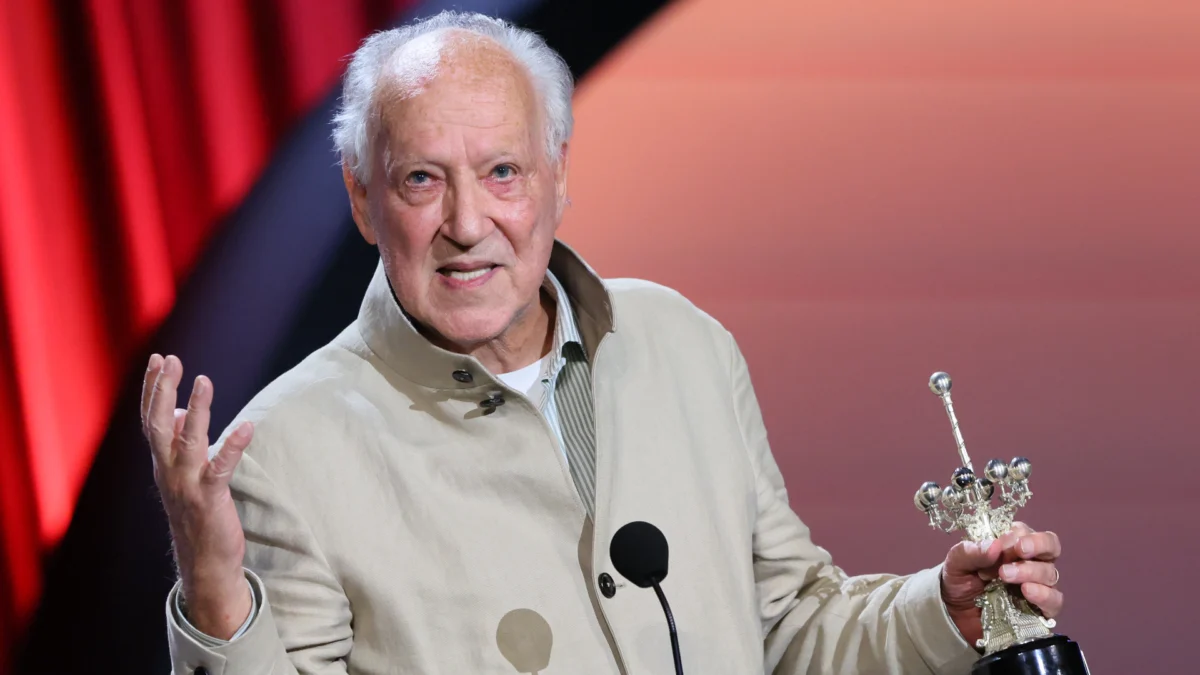
A recurring feature of the festival is the Donostia Award, given for lifetime achievement. The committee’s strategy has remained consistent: balancing a "cinephile" selection with a high-profile "star." This year, German director Werner Herzog received the award, drawing a standing ovation that underscored the festival’s deep reverence for the history of the medium.
Despite the occasional logistical challenge—such as a last-minute cancellation by a confirmed honoree earlier this year—the festival has maintained its ability to draw top-tier talent. This year, the focus remains on the premiere of Brad Pitt’s Heart of the Beast and the continued presence of industry figures such as Pablo Larraín and Adele Romanski at the Tabakalera conference center.
Future Implications and Sustained Stature
The departure of Rebordinos comes at a time when the San Sebastián International Film Festival is arguably at its most influential. The challenge for the incoming administration will be to maintain this momentum in an increasingly volatile global film market.
Industry experts suggest that the festival’s future success will depend on its ability to continue balancing its dual identity: as a cultural beacon for local Basque and Spanish audiences and as a high-stakes arena for the global film business. The infrastructure built over the last seventeen years—the co-production forums, the investor conferences, and the expanded industry network—provides a robust foundation for this next chapter.
As the 74th edition concludes on September 26, the focus will inevitably shift toward what a post-Rebordinos era looks like. Yet, for now, the festival continues to operate with the steady, measured confidence of an institution that has successfully navigated the transition from a regional fixture to an indispensable pillar of international cinema. Rebordinos leaves behind not just a more profitable or better-attended event, but a festival that has found its unique, authoritative voice in a crowded global landscape.