The Oldenburg Film Festival has long served as a prestigious platform for independent cinema, often highlighting genre-defying projects that utilize constrained settings to explore complex narrative structures. Among the most discussed entries at the recent festival is the feature film Dead Drop, directed by Ned Crowley. The film, which clocks in at a brisk 88 minutes, positions itself at the intersection of claustrophobic psychological thriller and high-concept cosmic horror. By trapping a diverse assembly of strangers within the confines of a malfunctioning freight elevator, Crowley attempts to dissect social dynamics through the lens of extreme duress, echoing the structural sensibilities of cult classics like Vincenzo Natali’s 1997 film Cube.
Narrative Premise and Character Archetypes
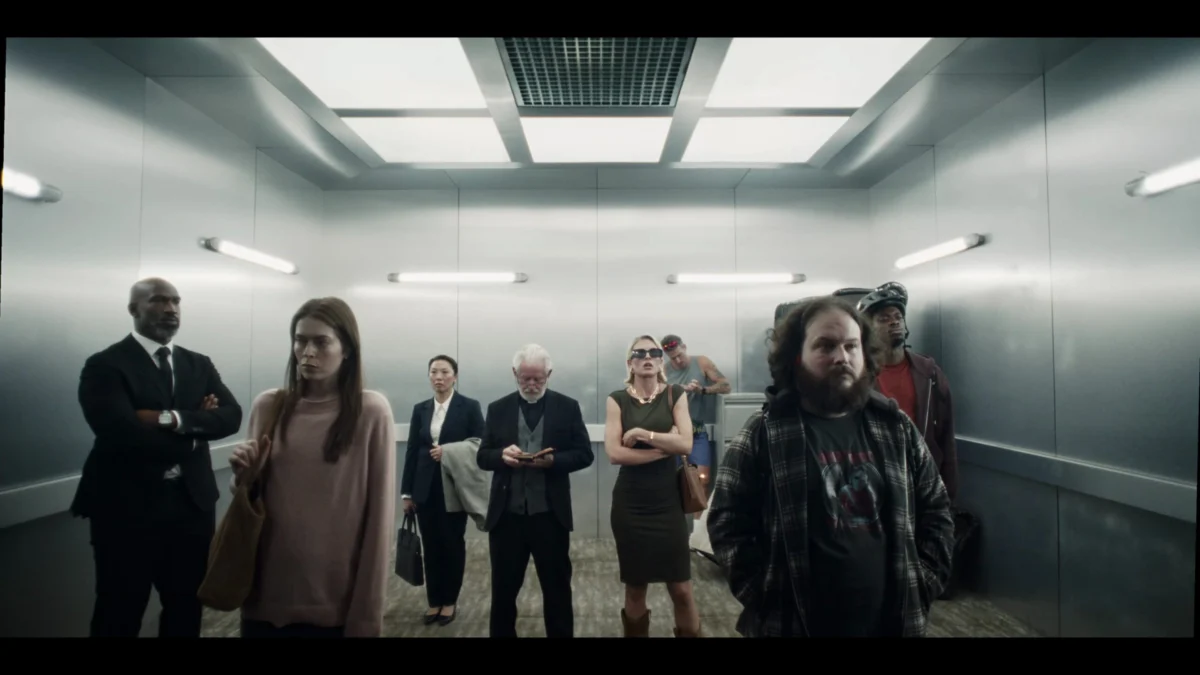
The plot of Dead Drop centers on a motley group of eight individuals who, for reasons of convenience or haste, bypass standard office elevators in favor of a freight lift. The ensemble cast includes a priest, a bike messenger, a pregnant educator, a caustic computer technician, a fitness trainer, and a legal professional, among others. Upon entering the elevator, the group finds their transit interrupted, trapping them in a state of indefinite suspension. The narrative momentum is driven not by external exploration, but by the escalating psychological and physical disintegration of the passengers as they are subjected to an ominous, disembodied voice communicating through the elevator’s intercom system.
Crowley, who also penned the screenplay alongside David Martin, utilizes these characters as conduits for examining contemporary societal friction. The script deliberately leans into archetypal portrayals, creating a microcosm of class, racial, and ideological conflict. While some critics argue this approach sacrifices deep character development for shorthand characterization, the film’s pacing is engineered to minimize the impact of these stock representations. By forcing disparate personalities into a singular, inescapable metal box, the film generates a friction that keeps the audience engaged, even as the plot ventures into increasingly surreal and cosmic territory.
Technical Execution and Production Design
One of the primary challenges of the single-set thriller is the avoidance of visual stagnation. In Dead Drop, production designer Rositsa Trayanova and cinematographer Aidan Gault collaborate to transform a limited metal space into an evolving environment. The production utilized subtle lighting shifts and dynamic camera angles to suggest a sense of depth within the claustrophobic setting. The set itself serves as a repository for clues; as the narrative progresses, physical elements within the elevator—initially perceived as mundane—take on significant symbolic weight.
The film’s aesthetic choices are heavily influenced by a visceral, practical approach to horror. Rather than relying solely on psychological tension, Crowley incorporates significant gore elements that serve to punctuating the narrative’s rhythm. The sequence involving a personal trainer’s injury and the subsequent, albeit dark, humor associated with the character’s post-mortem state, indicates a tonal duality. The director actively works to prevent the audience from taking the more absurd, far-fetched elements of the script too seriously, opting instead for a blend of “bawdy” humor and stark, Kubrick-esque visual nods, such as the systematic flooding of the lift with blood.
Chronology of the Production
The development of Dead Drop follows the trajectory of independent genre filmmaking, where budgetary constraints are transformed into creative assets. Following the completion of his previous feature, Killing Faith, Crowley sought to explore the limitations of a single-room environment. The pre-production phase focused heavily on casting, with a requirement for actors capable of maintaining high-energy, high-conflict performances within a confined space.
- Development Phase: Crowley and Martin finalized the story, focusing on the concept of “liminal space” as a narrative device.
- Casting: The selection process prioritized diverse archetypes to maximize interpersonal tension.
- Production: The shoot took place over a compressed timeline, utilizing the single-set strategy to maintain continuity and manage logistical costs.
- Post-Production: The emphasis was placed on pacing, ensuring that the 88-minute runtime did not suffer from the stagnation often associated with single-location narratives.
Comparative Analysis: The Single-Set Thriller
The “contained thriller” subgenre has gained significant traction in the last two decades. Films such as Buried (2010), The Platform (2019), and the aforementioned Cube have established a blueprint for filmmakers to explore societal issues through localized, high-stakes environments. Dead Drop contributes to this lineage by leaning into the “hellevator” trope—a term utilized within the film’s dialogue to characterize the descent into a hellish, inescapable reality.
From an analytical standpoint, the film’s strength lies in its ability to maintain a steady tempo. While the film lacks the groundbreaking conceptual shift that defined Cube, it excels in its execution of the "fun-house" horror aesthetic. The shift from a grounded, realistic argument between strangers to a surreal, cosmic horror event allows for a degree of flexibility that keeps the viewer guessing. However, this shift also presents a challenge: by prioritizing shock and spectacle, the film risks alienating viewers seeking a more grounded, character-driven experience. The lack of emotional investment in the characters, while intentional, remains a point of contention for those evaluating the film’s narrative weight.
Critical Reception and Audience Impact
Early feedback from the Oldenburg Film Festival suggests a polarized, albeit generally positive, reception. The film is characterized as a "fun, if rather thin" experience. The critical consensus points toward the film’s pacing as its greatest asset, with many noting that the short runtime prevents the premise from overstaying its welcome.
The film’s exploration of human behavior under duress is not intended as a sociological study, but rather as a stylized exercise in genre filmmaking. As noted by the cast and crew during festival Q&A sessions, the objective was to create a visceral experience that prioritizes entertainment over didacticism. By leaning into the absurdity of the situation, Crowley effectively manages to undercut the darker themes, creating a viewing experience that is as humorous as it is horrific.
Broader Implications for Independent Horror
The success of a film like Dead Drop, even on a modest scale, illustrates the enduring viability of the low-budget, single-set horror model. For independent producers, this model offers a clear pathway to festival success and subsequent distribution. By minimizing locations, filmmakers can allocate more of their limited budgets to production design, practical effects, and post-production quality.
Furthermore, the emergence of films that blend horror with dark, irreverent humor reflects a broader shift in audience appetite. Modern viewers, particularly those following independent horror, show a preference for films that do not take themselves too seriously. The “meta” commentary embedded within Dead Drop—such as the characters’ own confusion regarding their predicament—serves to acknowledge the audience’s awareness of the genre’s tropes, effectively breaking the fourth wall without disrupting the narrative flow.
Conclusion
Dead Drop stands as a testament to the creativity possible within strict logistical confines. While it may not rewrite the rules of the genre, it provides a masterclass in how to manage a contained set, keep a narrative moving at a brisk pace, and balance competing tones of horror and comedy. For those interested in the evolution of the single-set thriller, the film offers a compelling, albeit superficial, study in modern genre mechanics. As the independent film landscape continues to evolve, the reliance on high-concept, low-cost projects like this will likely remain a hallmark of the industry, proving that sometimes, the most effective narratives are those that start with a simple, claustrophobic premise and see just how far they can push the audience into the unknown.