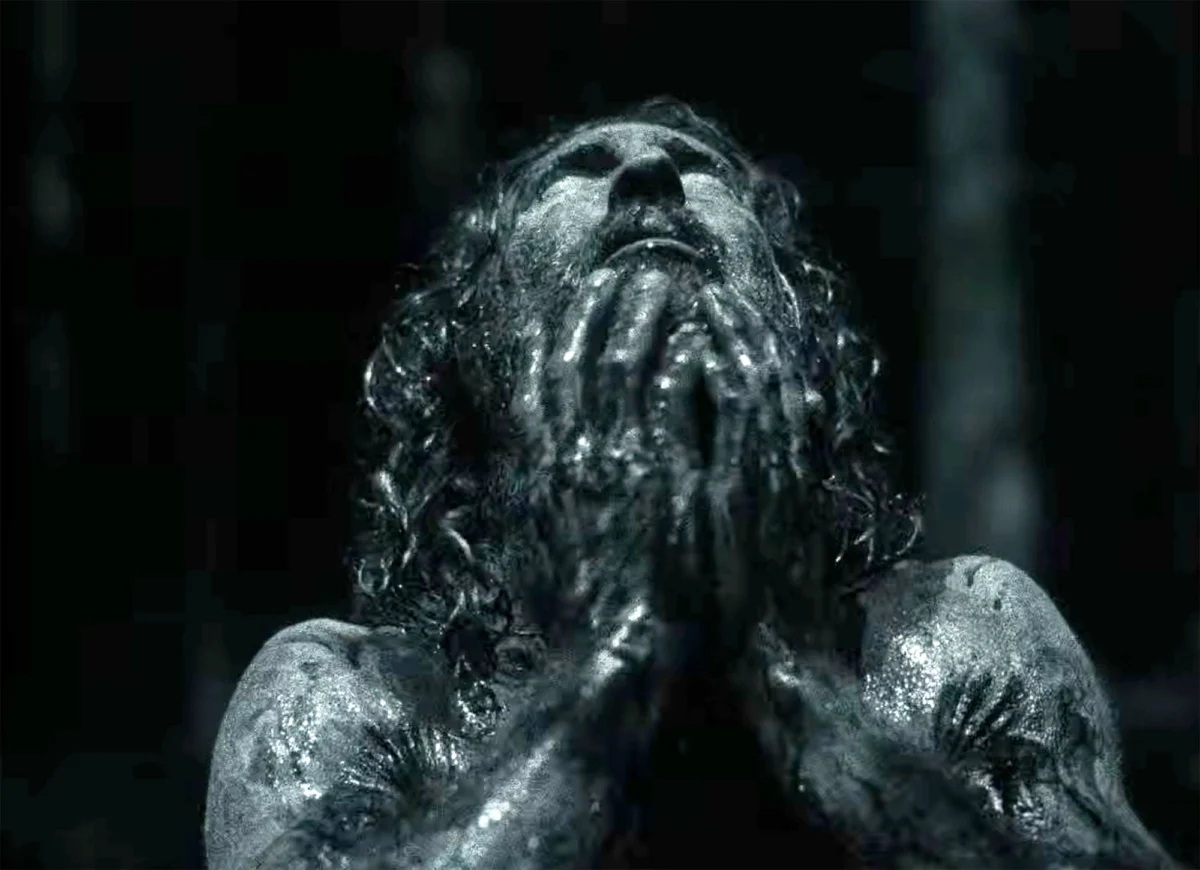
The cinematic landscape of horror is once again bracing for a stark, historical descent into the macabre as Focus Features unveils the second official trailer and promotional poster for Werwulf, the highly anticipated upcoming feature from acclaimed filmmaker Robert Eggers. Known for his uncompromising dedication to period accuracy, atmospheric dread, and folkloric terror, Eggers turns his lens away from nineteenth-century vampire lore—revisited recently in his reimagining of Nosferatu—and steps further back into the primordial mists of thirteenth-century England.
The promotional rollout, timed strategically to coincide with a full moon, offers audiences a deeper look at what studio executives and early promotional materials describe as Eggers’ most visceral and harrowing cinematic experience to date. Scheduled to land in theaters worldwide on December 25, 2026, Werwulf promises to challenge mainstream horror conventions by grounding its supernatural premise in the stark realities of medieval survival, linguistic authenticity, and religious anxieties.
Main Facts of the Production
Werwulf represents the latest high-profile collaboration between writer-director Robert Eggers and Focus Features, continuing a creative trajectory that has firmly established Eggers as one of the defining auteurs of modern contemporary horror. Set against the bleak, fog-drenched landscapes of medieval England, the narrative follows a mysterious, predatory creature that begins stalking a secluded rural community, transforming local superstition and campfire folklore into a bloody, inescapable reality.

At the center of the narrative is a cursed local farmer portrayed by Aaron Taylor-Johnson, whose physical and psychological transformation forms the axis of the film’s terror. Taylor-Johnson is joined by a formidable ensemble cast that includes Lily-Rose Depp, Willem Dafoe—continuing his fruitful creative partnership with Eggers—alongside Ralph Ineson, Jack Morris, Bodhi Rae Breathnach, Jan Bijvoet, and Ritchi Edwards.
Behind the camera, Eggers has reunited with his trusted core production team. Cinematography is handled by Jarin Blaschke, whose distinct visual styling defined the stark monochrome and naturalistic lighting of The Lighthouse and the sweeping, cold vistas of The Northman and Nosferatu. The musical score is composed by Robin Carolan. Notably, the production has doubled down on historical authenticity by scripting the dialogue entirely in old Middle English, reinforcing the director’s commitment to immersing viewers completely within the period. Furthermore, the screenplay was co-written by Eggers and the celebrated Icelandic author and artist Sjón, who previously collaborated with Eggers on The Northman.
Chronology and Development of the Project
The journey toward Werwulf has been marked by a deliberate, methodical production schedule characteristic of Eggers’ filmmaking style. Principal photography took place across several rugged and historically resonant locations in the United Kingdom, utilizing stages at Elstree Studios alongside extensive location shoots in Wales and the brooding, atmospheric expanse of the Forest of Dean in Gloucestershire. These locations were chosen to capture the suffocating enclosure and natural menace required to evoke thirteenth-century agrarian life.
Following the completion of principal photography and post-production, Focus Features began rolling out the marketing campaign earlier in the year, generating significant critical and fan anticipation with a cryptic initial teaser. The release of the second full trailer on September 26, 2026, accompanied by the launch of an immersive promotional website, marks the acceleration of the studio’s global publicity campaign. By slotting the film into the coveted Christmas Day theatrical window, Focus Features is signaling immense confidence in the commercial and awards-season viability of a project that pushes the boundaries of traditional holiday cinematic releases into dark, uncharted territory.

Supporting Data and Context within Eggers’ Filmography
To understand the weight and anticipation surrounding Werwulf, one must examine Robert Eggers’ rapid ascension within the global film industry. Eggers burst onto the international scene in 2015 with The Witch, a Puritan-era psychological horror film made on a modest budget that grossed over $40 million worldwide against a $4 million budget, while garnering universal critical acclaim and launching the career of Anya Taylor-Joy.
He followed this breakout success with 2019’s The Lighthouse, a psychological thriller starring Willem Dafoe and Robert Pattinson shot in 35mm black-and-white using vintage lenses. The film earned an Academy Award nomination for Best Cinematography and cemented Eggers’ reputation as a meticulous craftsman of historical verisimilitude. In 2022, Eggers scaled up his ambitions with The Northman, a Viking epic that explored Norse mythology with unprecedented historical rigor. Though its box office performance was modest relative to its $70–90 million budget, it reinforced his status as a visionary capable of commanding large-scale historical productions.
Most recently, Eggers tackled the German expressionist classic Nosferatu, a project that further fine-tuned his mastery over cinematic dread and supernatural folklore. With Werwulf, Eggers is effectively completing an unofficial thematic triptych of classical European monsters, stripping away modern cinematic tropes to examine how medieval populations would genuinely interpret lycanthropy through the lenses of religious zealotry, sin, and the perceived presence of the devil within human society.
Official Responses and Marketing Strategy

The promotional rollout for Werwulf has deviated from conventional blockbuster strategies, leaning instead into experiential marketing and atmospheric world-building. The release of the second trailer via YouTube was quickly followed by the activation of an official promotional portal, inviting audiences to explore the grim folklore underpinning the narrative. Taglines provided by Focus Features—such as "Do not dread the darkness. Embrace it" and "Feed upon the flesh of mankind"—establish a tone that is uncompromisingly grim and visceral.
Industry analysts have noted that the studio’s decision to greenlight a script described internally as Eggers’ darkest to date, spoken entirely in Middle English, demonstrates an unusual level of artistic freedom granted to the director. While historical horror features historically face an uphill battle at the mainstream box office due to challenging subject matter and linguistic barriers, Eggers’ brand equity among cinephiles and horror enthusiasts has transformed his films into anticipated cultural events rather than standard genre fare.
Broader Impact and Industry Implications
The arrival of Werwulf on December 25, 2026, carries notable implications for the commercial viability of elevated, director-driven horror during atypical theatrical windows. Traditionally reserved for family-friendly spectacles, prestige dramas, and holiday blockbusters, Christmas Day has increasingly become a landing ground for counter-programming aimed at adult audiences seeking darker alternatives.
Furthermore, Werwulf stands as a testament to the enduring commercial strength of mid-budget, auteur-led filmmaking within a studio system often dominated by intellectual property franchises and cinematic universes. By investing in original—albeit folklorically rooted—interpretations of classic monsters, Focus Features is proving that specialized, high-art horror can command global box office attention.

As the December 25 release date approaches, anticipation continues to build across film communities worldwide. With its uncompromising aesthetic, rigorous historical framework, and a creative team operating at the peak of their respective crafts, Werwulf is poised to challenge audiences, redefine werewolf mythology for the modern cinematic era, and close out the 2026 film calendar with a stark, haunting exploration of humanity’s darkest impulses.