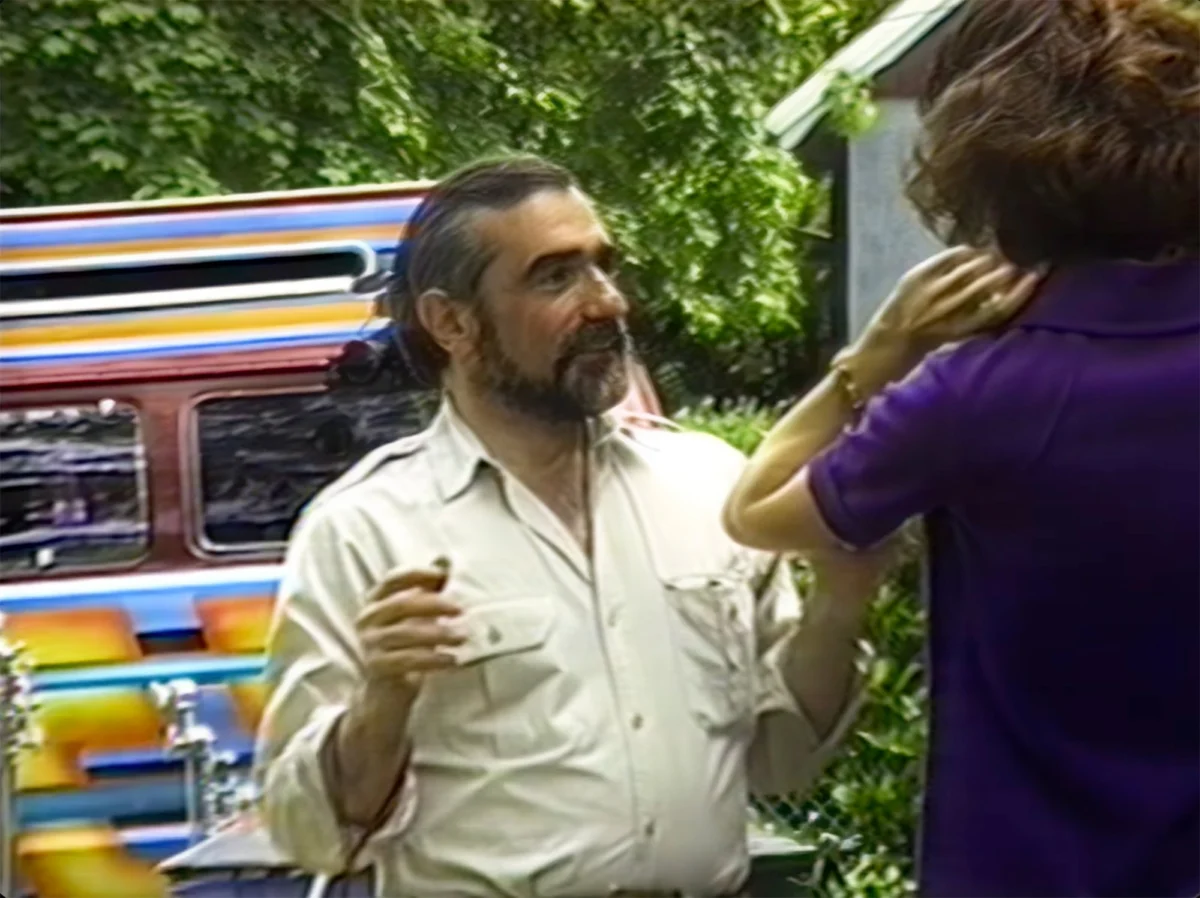
Life After Movies has officially released the trailer for As Far Back As I Can Remember… The Story of Goodfellas, a comprehensive documentary feature dedicated to examining the production, cultural resonance, and enduring legacy of Martin Scorsese’s 1990 cinematic landmark, Goodfellas. Directed and produced by the filmmaking duo Lisa Downs and Ashley Pugh, known collectively for their work under the Life After Movies banner, the documentary positions itself as the definitive retrospective on one of the most celebrated mafia dramas in cinematic history. The film is slated to hold its world premiere at the upcoming Newport Beach Film Festival this fall, bringing together a vast assembly of the original cast, crew, and cultural commentators to dissect how the picture was brought to life and why its influence remains palpable more than three decades later.
The Genesis and Historical Context of a Gangster Masterpiece
To understand the magnitude of As Far Back As I Can Remember… The Story of Goodfellas, one must revisit the landscape of Hollywood in 1990. At the time, Martin Scorsese was already an established auteur, having directed classics such as Taxi Driver, Raging Bull, and The Last Temptation of Christ. However, his return to the crime genre—which he had previously explored with 1973’s Mean Streets—marked a profound stylistic evolution. Adapted from Nicholas Pileggi’s best-selling 1986 non-fiction book Wiseguy, which detailed the real-life exploits of mob associate Henry Hill, Goodfellas offered a hyper-kinetic, documentary-style look into the mundane brutality and seductive allure of organized crime.
The film featured a powerhouse ensemble cast anchored by Robert De Niro as Jimmy Conway, Ray Liotta in his breakout leading role as Henry Hill, Joe Pesci in his Academy Award-winning turn as the volatile Tommy DeVito, and Lorraine Bracco as Karen Hill. Written by Pileggi and Scorsese, the production rejected the romanticized, operatic detachment found in Francis Ford Coppola’s The Godfather trilogy, opting instead for a gritty, fast-paced, and darkly comedic immersion into the everyday operations of the Lucchese crime family.

Despite initial studio anxieties regarding the film’s extreme violence, dark humor, and complex narrative structure, Goodfellas became a critical and commercial triumph. It grossed approximately $47 million at the domestic box office against a modest $25 million budget and garnered six Academy Award nominations, including Best Picture and Best Director for Scorsese. While Kevin Costner’s Dances with Wolves ultimately swept the major categories that year, Joe Pesci secured the Oscar for Best Supporting Actor, cementing his performance in cinematic lore.
A Comprehensive Retrospective Featuring Extensive Interviews
The newly unveiled trailer for As Far Back As I Can Remember… The Story of Goodfellas showcases the unprecedented scope of the documentary’s interview roster. Unlike standard retrospective featurettes found on home media releases, Downs and Pugh have secured brand-new, in-depth conversations with a vast cross-section of the talent that worked both in front of and behind the camera.
Among the notable participants appearing in the documentary are actress Lorraine Bracco, co-screenwriter and author Nicholas Pileggi, producer Irwin Winkler, and executive producer Barbara De Fina. The production also features contributions from supporting cast members and crew who helped shape the film’s distinct aesthetic, including Chris Serrone (who played young Henry Hill), Debi Mazar, Illeana Douglas, Julie Garfield, Welker White, Kevin Corrigan, Joseph D’Onofrio, and Bo Dietl. Technical contributions are deeply represented through interviews with key crew members, such as camera operator Larry McConkey—celebrated for his legendary, unbroken Steadicam shot tracking through the Copacabana nightclub—production designer Kristi Zea, and assistant director Joseph Reidy, alongside cultural figures and actors such as Samuel L. Jackson.
Through these extensive discussions, the documentary aims to strip away the glossy veneer of Hollywood nostalgia to investigate the granular realities of the film’s production. The narrative details the rigorous rehearsal processes, the extensive use of improvisation among the principal actors, the innovative editing choices executed by Thelma Schoonmaker, and the meticulous historical research conducted by Pileggi during his years embedding with law enforcement and former mob figures.

Filmmakers and Production Background
As Far Back As I Can Remember… The Story of Goodfellas represents a significant milestone for directors Lisa Downs and Ashley Pugh. Downs is widely recognized for her critically acclaimed Life After documentary series, which explores the profound professional and personal impacts that landmark films have on their casts and crews long after production wraps. Pugh brings extensive experience in digital media production and documentary storytelling, notably serving as a driving force behind projects like New Kids on the Blockchain.
Operating under the banner of Life After Movies, the filmmaking team has spent years conducting meticulous research and securing archival materials to construct a narrative that balances reverence with investigative depth. According to the filmmakers, the project is designed to transcend standard promotional fluff, functioning instead as an authoritative cinematic essay on the mechanics of timeless filmmaking. The official synopsis describes the feature as a bold love letter that explores not only how the film was created, but also the real-world underworld that inspired it, examining the sociological and economic conditions of the era that birthed the narrative.
Broader Impact and Cultural Implications on Modern Cinema
The decision to release a feature-length documentary dedicated entirely to Goodfellas underscores the film’s enduring footprint on global popular culture. Over the past 35 years, Scorsese’s masterwork has been cited by countless contemporary filmmakers as a primary catalyst for their entry into the industry. Its distinct narrative devices—most notably the heavy reliance on first-person voiceover narration, rapid-fire editing rhythms, and the seamless integration of pop and rock music catalogs to drive narrative momentum—have become staple techniques in modern cinematic grammar.

Furthermore, Goodfellas fundamentally altered the television landscape. The film’s nuanced portrayal of criminals as deeply flawed, domestic, and morally compromised individuals directly paved the way for the golden age of prestige television drama. Creators of foundational series such as The Sopranos have openly acknowledged their profound debt to Goodfellas, with David Chase famously referring to Scorsese’s film as the blueprint that proved complex, unlikable criminal protagonists could sustain long-form narrative engagement.
By examining these far-reaching implications, As Far Back As I Can Remember… The Story of Goodfellas serves as both a historical preservation project and a critical examination of artistic influence. As the film prepares for its high-profile festival debut this autumn, cinephiles and industry analysts alike will be watching to see how this definitive retrospective contextualizes one of the twentieth century’s most enduring cultural artifacts. Comprehensive distribution details following the festival premiere are expected to be announced by Life After Movies in the coming weeks.