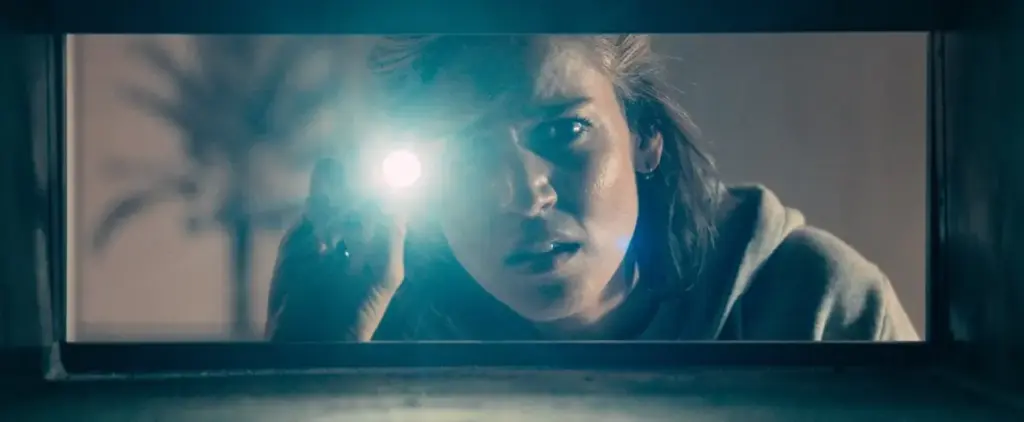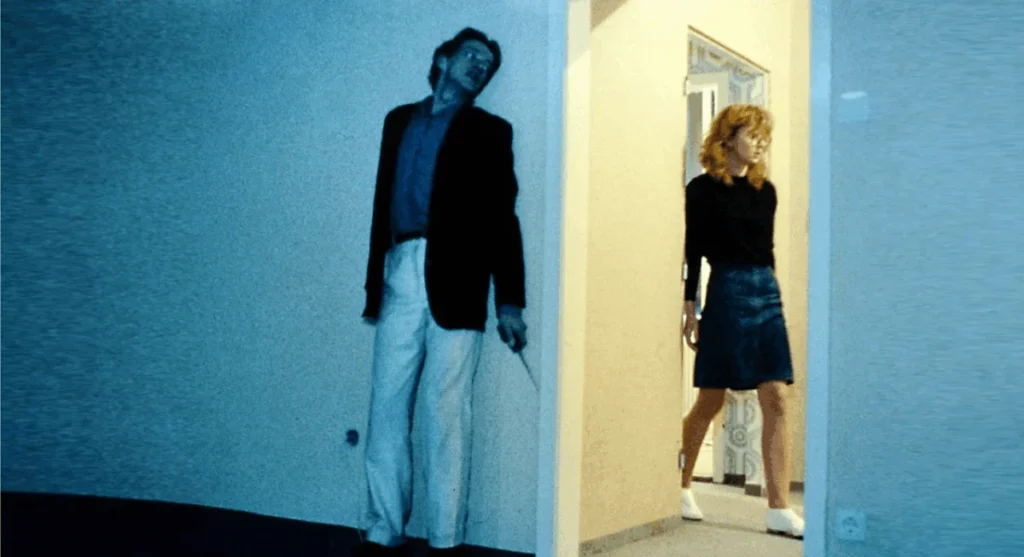
The latest entry in the genre-filmmaking catalog of director Rebekah McKendry, the vampire-centric horror film Sundown, has arrived amidst significant anticipation following its debut at the Beyond Fest. While the production serves as a testament to the advancements in practical effects artistry, the film has faced critical scrutiny regarding its structural integrity and screenplay execution. Written by Joshua Hull and David Ian McKendry, the project represents a tonal pivot for the director, moving away from the quirky, high-concept stylistic choices seen in her previous works such as Glorious and the anthology All the Creatures Were Stirring, toward a more grounded, albeit uneven, narrative experience.
Production Context and Creative Direction
Rebekah McKendry has established a reputation for managing low-budget, high-impact horror productions that prioritize visual ingenuity and dark, idiosyncratic humor. In Sundown, the narrative centers on a multi-generational trio of women: the hardened matriarch Donna, portrayed by Olwen Fouéré; her daughter Valerie, played by Camille Sullivan; and her granddaughter Kay, played by Summer H. Howell. The story is set against a stark, winter-choked backdrop, a setting historically utilized in horror cinema to provide high-contrast visuals for visceral effects work.
The film’s central conflict initiates when the three women, bound by the trauma of a familial murder, capture a man they suspect is responsible for the crime. The plot takes a supernatural turn when it is revealed that the captive is a vampire, triggering a siege scenario that occupies the remainder of the film’s runtime.
Chronological Narrative Progression
The progression of Sundown follows a distinct three-act structure, though critics have noted that the pacing fluctuates significantly between these phases. The first two acts are characterized by an intense, dialogue-heavy interrogation sequence. During this portion of the film, the characters grapple with the revelation of the antagonist’s true nature, setting the stage for an external threat as other vampires converge upon the remote cabin.
The transition into the third act marks a shift toward a siege-style thriller, drawing thematic parallels to genre classics like Dog Soldiers. As night falls, the narrative attempts to heighten the tension; however, the shift has been described as disjointed. The internal logic regarding the vampires’ ability to navigate daylight, as well as the environmental continuity of the forest, has become a focal point for debate among viewers and reviewers, with many pointing to inconsistencies in the film’s established internal rules.
![‘Sundown’ Review – A Vampire Siege Film Drained by Heavy Exposition and an Inconsistent Script [Beyond Fest]](https://www.dreadcentral.com/wp-content/uploads/2026/07/Screenshot-2026-07-14-at-8.28.05-AM-e1790356568538.png)
Technical Analysis: The Role of Practical Effects
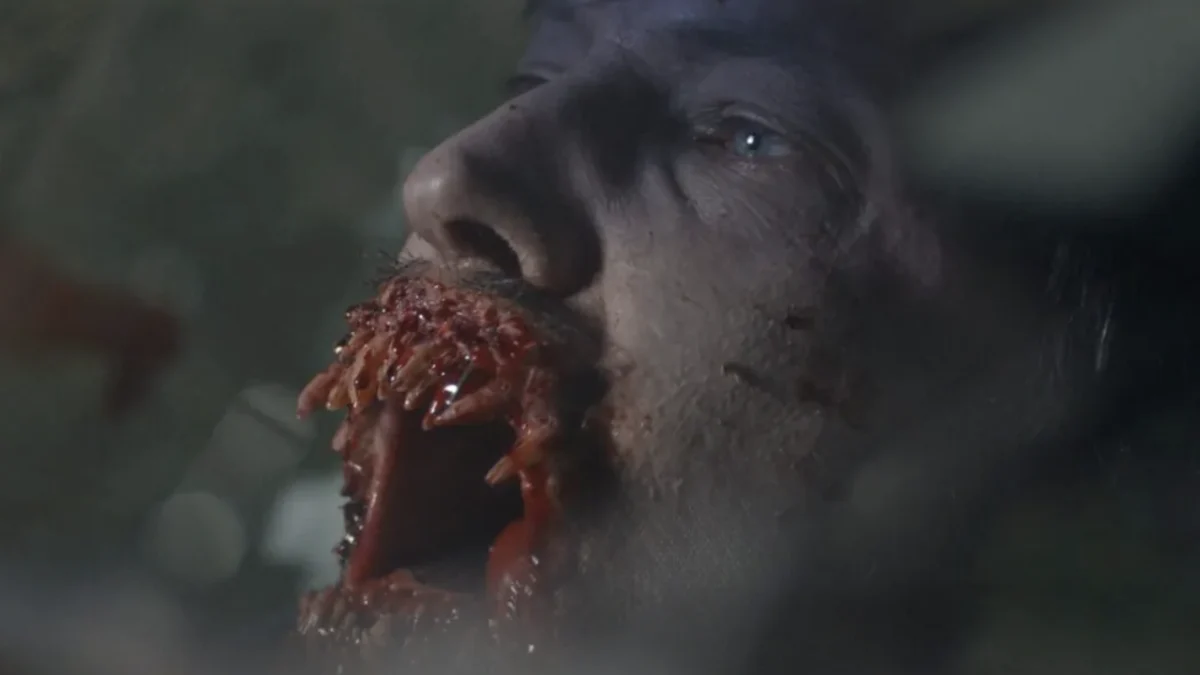
One of the most widely acknowledged strengths of Sundown is its commitment to practical, non-digital gore. In an era increasingly dominated by Computer Generated Imagery (CGI), the production team’s reliance on physical effects provides a tactile quality that elevates the film’s visceral impact. The cinematography utilizes the stark white of the snow to accentuate the blood-red palette of the violence, a stylistic choice that effectively highlights the high-quality craftsmanship of the makeup and prosthetic departments.
The creature design, specifically the depiction of the vampires, reflects a desire to move away from the traditional, aristocratic tropes of the genre. The filmmakers opted for a more feral, animalistic aesthetic, reminiscent of the "reapers" seen in Guillermo del Toro’s Blade II. These creatures feature lipless, jagged maws and a lack of overt human personality, emphasizing their role as predatory forces rather than tragic or sympathetic figures. Despite the visual success of these creature designs, some audience feedback has suggested that the lack of depth regarding the antagonists’ origins or motivations left a void in the film’s primary conflict.
Screenplay and Narrative Challenges
The primary point of contention in critical assessments of Sundown remains the screenplay. The film relies heavily on exposition, with characters frequently verbalizing their motivations and the history of their interpersonal conflicts rather than allowing these elements to manifest through organic action.
The relationship between Donna and Valerie, in particular, is marked by consistent friction. While the performances by Fouéré and Sullivan are technically proficient, the characters are often relegated to repetitive cycles of conflict. Valerie’s arc, which involves the loss of her daughter and a failed political run, is frequently referenced through dialogue dumps that interrupt the momentum of the horror elements. This reliance on "telling" rather than "showing" has been identified as a significant obstacle to audience immersion.
Comparative Analysis and Industry Impact
When compared to McKendry’s earlier work, Sundown represents a significant shift in ambition. The success of Glorious demonstrated the director’s ability to maximize limited environments through imaginative, cosmic horror storytelling. By contrast, Sundown attempts a more traditional, grounded horror structure, which appears to have struggled under the weight of its own narrative exposition.
Industry analysts observe that this project highlights a recurring challenge for independent horror directors transitioning into more serious, grounded subgenres. The demand for clear, concise world-building in a siege film often clashes with the stylistic flair that defined an auteur’s earlier career. For Sundown, this meant that the film’s moments of high-octane gore—such as a notable shovel decapitation sequence—were periodically undermined by the surrounding dialogue-heavy scenes.
![‘Sundown’ Review – A Vampire Siege Film Drained by Heavy Exposition and an Inconsistent Script [Beyond Fest]](https://www.dreadcentral.com/cdn-cgi/image/width=788%2Cheight=444%2Cfit=crop%2Cquality=75%2Cgravity=auto%2Csharpen=1%2Cmetadata=none%2Cformat=auto%2Conerror=redirect/wp-content/uploads/2026/07/Screenshot-2026-07-14-at-8.28.05-AM-e1790356568538.png)
Broader Implications for the Vampire Subgenre
The release of Sundown contributes to an ongoing conversation regarding the state of the vampire film in the mid-2020s. With audiences showing a preference for either hyper-stylized or deeply psychological interpretations of the mythos, a film that occupies the middle ground must have a highly polished script to maintain relevance.
The film’s performance in the market serves as a case study for the necessity of script refinement in genre cinema. While the film excels in the department of practical effects—a vital component for the genre’s traditional fanbase—the lukewarm reception to its narrative structure suggests that technical prowess alone may no longer be sufficient to anchor a feature-length horror film.
Conclusion and Future Outlook
Ultimately, Sundown occupies a complex space in the current horror landscape. It is a film of sharp contradictions: it features some of the most impressive practical gore effects in recent memory, yet it is simultaneously hampered by a script that struggles to find its emotional center.
The film’s legacy will likely be defined by its visual contributions to the vampire genre, particularly its feral creature designs and its effective use of environmental cinematography. As Rebekah McKendry continues her career, the lessons learned from the reception of Sundown—specifically regarding the balance between character-driven exposition and kinetic, visual storytelling—will likely influence her future projects. For now, the film remains a notable, if flawed, entry in her filmography, serving as a reminder that even the most visceral creature features require a sturdy narrative foundation to truly resonate with a modern audience.