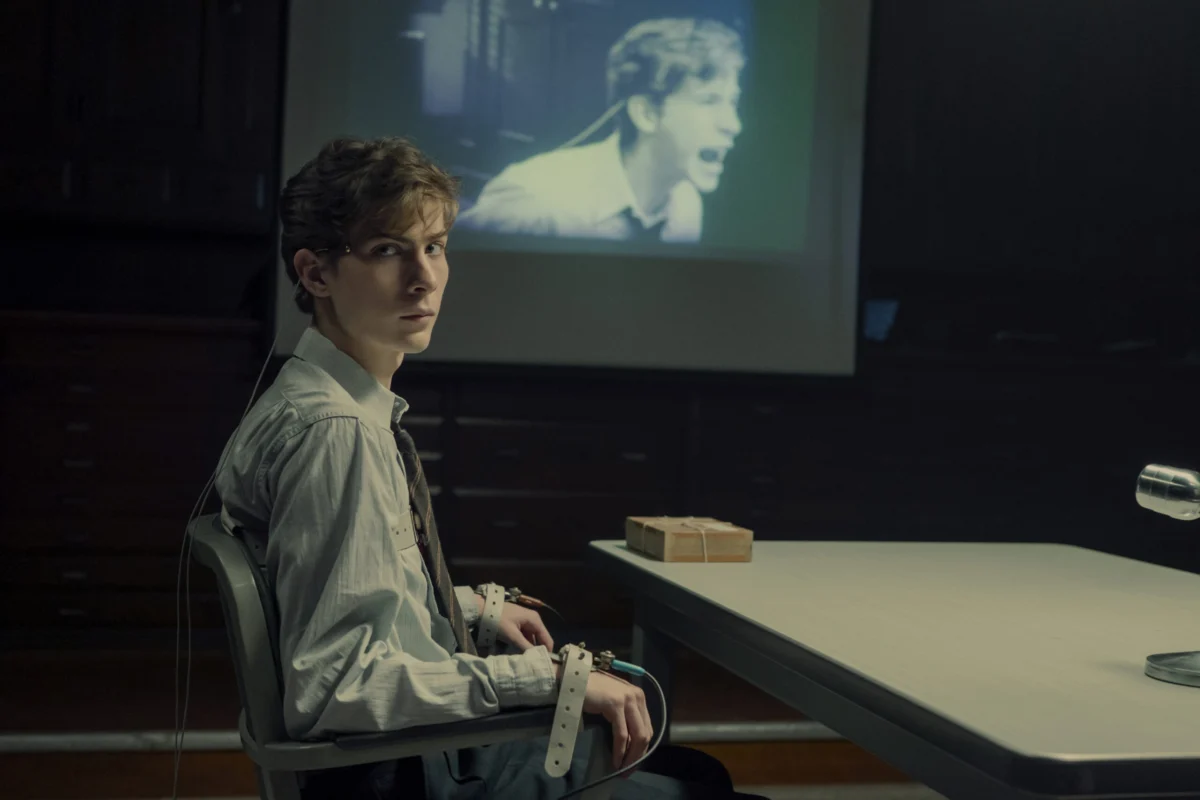
The cinematic exploration of historical figures who commit acts of mass violence often treads a fine line between sensationalism and psychological inquiry. In the upcoming Netflix biographical drama Unabomber, director Janus Metz Pedersen deliberately chooses the path of introspection, examining the formative years of Theodore Kaczynski rather than focusing primarily on his notorious mail-bombing campaign. Set against the backdrop of post-war academia, the film investigates the complex interplay of high intellect, social isolation, and institutional experimentation that preceded Kaczynski’s transformation into a domestic terrorist. In an in-depth discussion about the project, Metz details the rigorous approach required to bring a sensitive and heavily classified piece of American history to the screen, shedding light on the artistic, ethical, and psychological dimensions of the production.
Main Facts of the Production and Narrative Focus
Unabomber centers heavily on Kaczynski’s late adolescence and early adulthood, specifically his time as a precocious student at Harvard University during the late 1950s and early 1960s. The narrative hinges on Kaczynski’s enrollment at Harvard at the age of 16 and his subsequent participation in psychological experiments conducted by Professor Henry A. Murray, portrayed in the film by Academy Award winner Russell Crowe.
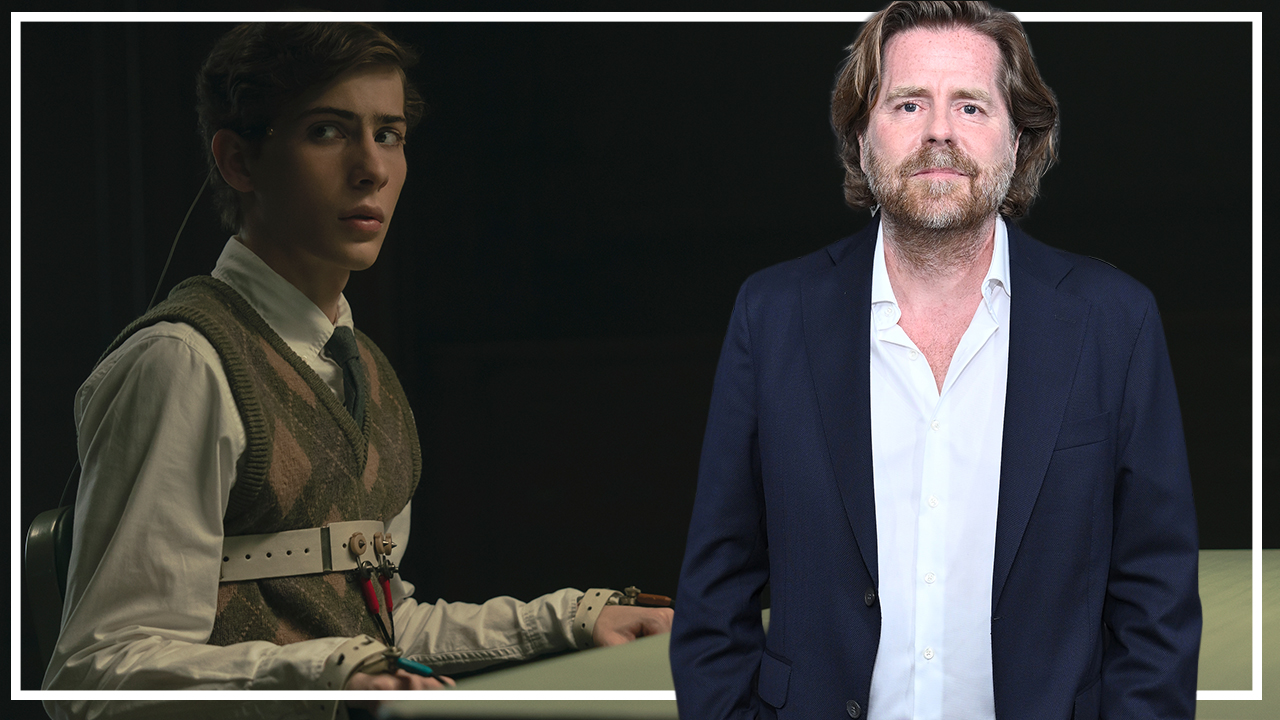
Rather than aiming to provide definitive answers or excuses for Kaczynski’s subsequent actions, the film functions as an exploration of the various factors that contributed to his radicalization. The production features Jacob Tremblay in his first major adult-role performance as the young Kaczynski, alongside Annabelle Wallis as Christiana Morgan, capturing the intellectual hothouse of mid-century academia and the covert, high-pressure psychological testing to which students were subjected. Metz, whose background is firmly rooted in documentary filmmaking, brings an investigative eye to the drama, relying on historical records, published accounts, and structural analysis of Kaczynski’s writings to construct a nuanced portrait of a fractured mind.
Chronology of Ted Kaczynski’s Formative Years and Crimes
Understanding the trajectory of the Unabomber requires a chronological examination of key milestones in Kaczynski’s life, spanning from his early childhood to his eventual capture and death:
- May 22, 1942: Theodore John Kaczynski is born in Evergreen Park, Illinois, to working-class parents of Polish descent.
- Early Childhood: Demonstrating extraordinary intellectual abilities from an early age, Kaczynski skips multiple grades, leading to severe social isolation and a sense of alienation from his peers. A period of hospitalization during his youth, during which family visits were severely restricted, is frequently cited by biographers as an early psychological trauma.
- 1958: At just 16 years old, Kaczynski enters Harvard University on a scholarship. It is during this period that he becomes a subject in unethical psychological experiments overseen by Professor Henry A. Murray, designed to induce intense psychological stress and ego-deflation.
- 1962–1969: Kaczynski earns his undergraduate degree from Harvard, subsequently completes his master’s and doctoral degrees in mathematics at the University of Michigan, and briefly serves as an assistant professor at the University of California, Berkeley, before resigning abruptly.
- 1971: Kaczynski moves to a remote, off-the-grid cabin in Lincoln, Montana, abandoning academic life entirely to live a primitive existence while formulating his anti-technology ideology.
- 1978–1995: Operating out of his Montana cabin, Kaczynski executes a 17-year mail-bombing campaign targeting universities, airlines, and computer stores, resulting in three deaths and 23 injuries.
- September 1995: Under intense pressure from the Federal Bureau of Investigation and following the publication of his 35,000-word manifesto, Industrial Society and Its Future, in major newspapers, Kaczynski’s brother, David Kaczynski, recognizes his ideological writing style and turns him in to federal authorities.
- April 1996: Law enforcement agents arrest Kaczynski at his remote cabin.
- May 1998: Kaczynski pleads guilty to federal charges to avoid the death penalty and is sentenced to life imprisonment without the possibility of parole.
- June 10, 2023: Kaczynski dies by suicide at the Federal Medical Center in Butner, North Carolina, at the age of 81.
Supporting Data and Context of the Harvard Experiments

Central to the film’s narrative—and to the ongoing debate surrounding Kaczynski’s psychological decline—is the covert research conducted by Professor Henry A. Murray at Harvard. Funded in part by intelligence agencies during the Cold War era, these experiments subjected undergraduate students to severe verbal abuse, degradation, and psychological stress tests while their physiological responses were monitored.
Historians and psychological researchers have long debated the long-term impact of Murray’s experiments on Kaczynski. Because Harvard University has maintained strict classification and privacy restrictions regarding the Kaczynski file and associated research archives, filmmakers and independent researchers have been systematically blocked from accessing primary documentation regarding the specific tests administered to him. Despite these institutional roadblocks, Metz utilized documented accounts from other participants and Kaczynski’s own memoirs to recreate the tense, pressurized dynamic between student and professor.
Cinematic Approach and Directorial Vision
Transitioning from feature espionage thrillers such as All the Old Knives to historical biographical drama, Metz applied his documentary-honed instincts to the visual and auditory composition of Unabomber. Recognizing that a significant portion of the dramatic tension arises from closed-door interrogations and intellectual sparring matches, the director focused on capturing psychological states through deliberate camera movement and framing.
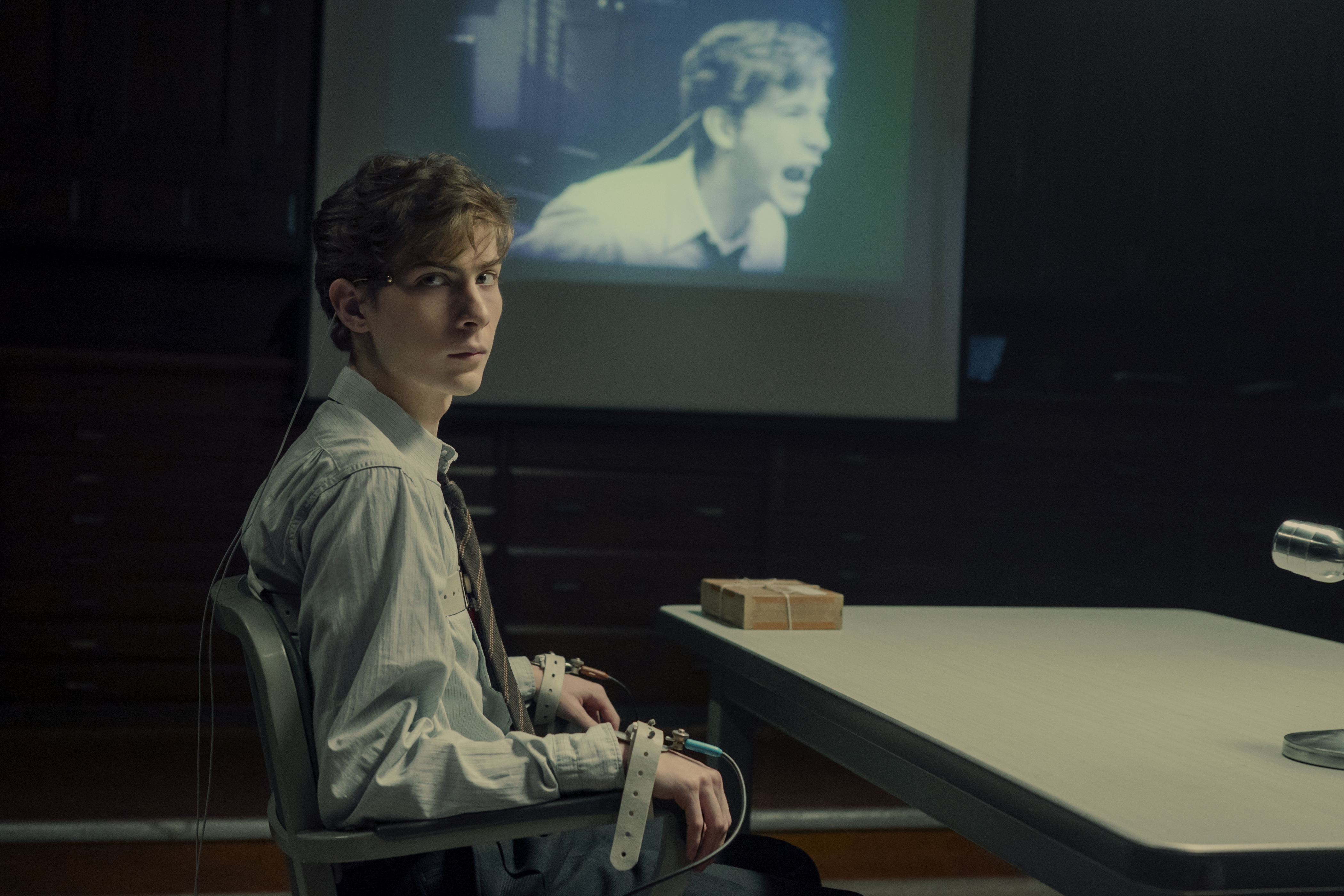
The film employs subtle shifts in cinematography—such as altered camera angles and unconventional framing—to visually represent Kaczynski’s growing disorientation and the creeping paranoia that characterized his academic years. The recurring visual motif of one-way mirrors, transparent glass partitions, and reflections serves as a metaphor for continuous surveillance and the systematic dismantling of a young man’s sense of self. Furthermore, the casting of Jacob Tremblay was strategically chosen to leverage the actor’s youthful innocence, contrasting starkly with the rigid, intellectualized violence that would define Kaczynski’s later decades. Opposite Tremblay, Russell Crowe brings a commanding, authoritative presence to the role of Professor Murray, personifying the institutional power structures that Kaczynski would eventually come to view as his ultimate ideological enemy.
Broader Impact, Implications, and Contemporary Relevance
As contemporary society grapples with rising rates of political radicalization, ideological extremism, and the societal impacts of rapid technological advancement, the release of Unabomber offers a timely cautionary tale. Metz points out that Kaczynski’s 1995 manifesto, Industrial Society and Its Future, articulates critiques of modern industrialization, alienation, and technological dependency that resonate surprisingly well with modern debates regarding artificial intelligence, surveillance capitalism, and digital isolation.
However, film critics and cultural analysts emphasize a crucial distinction made by the director: while Kaczynski’s critique of technological overreach touched upon genuine societal anxieties, his transition from theoretical dissent to violent terrorism represents a profound moral failure. By examining the roots of this radicalization without offering simple answers or glorifying the perpetrator, the film encourages audiences to reflect on the vulnerabilities of human psychology, the ethics of institutional experimentation, and the dangers of extreme social isolation in the modern era. Through rigorous historical inquiry and disciplined cinematic storytelling, Unabomber contributes a significant piece to the ongoing discourse surrounding how society identifies, understands, and ultimately seeks to prevent violent extremism.