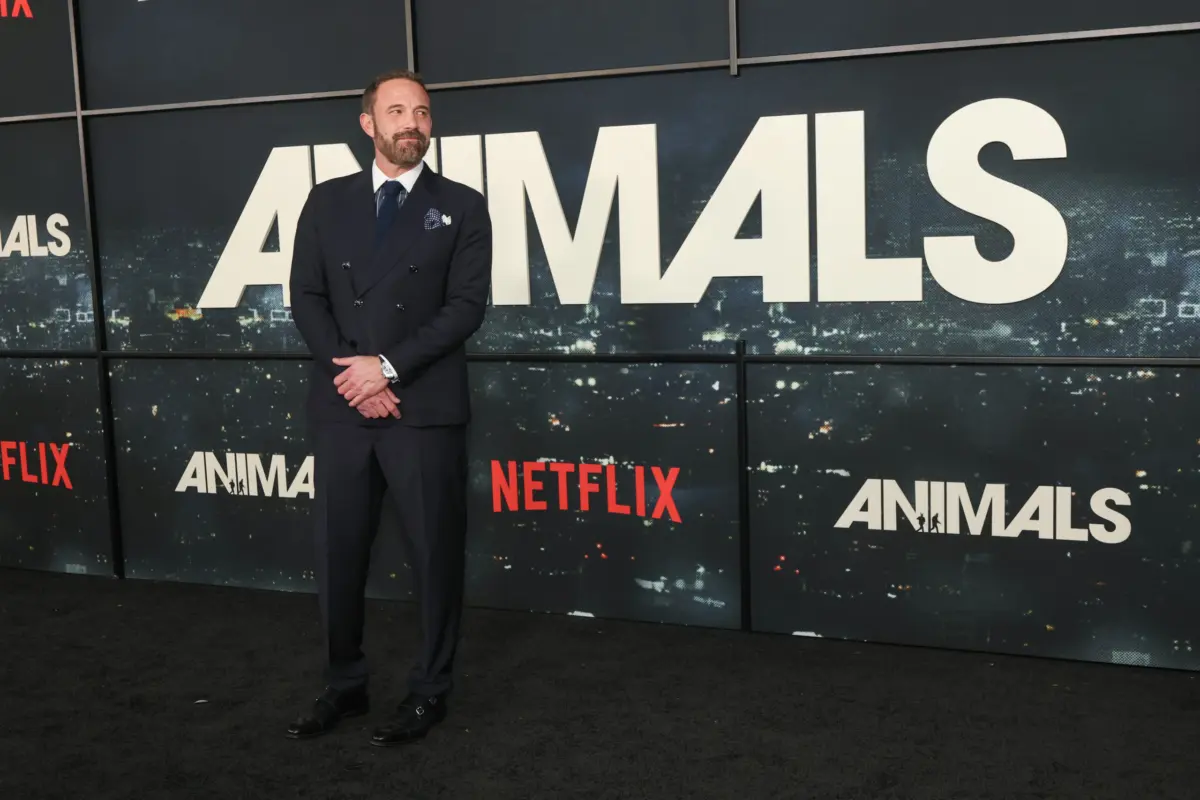
The intersection of generative artificial intelligence and the entertainment industry has reached a pivotal juncture, highlighted by Ben Affleck’s strategic integration of AI tools into his latest directorial project, Animals. While the debate surrounding AI in Hollywood has often been framed through the lens of labor disputes and fears of displacement, Affleck is positioning the technology as a sophisticated, behind-the-scenes utility rather than a creative replacement for human artistry. Following the $600 million acquisition of his AI startup, InterPositive, by Netflix earlier in 2026, the industry is closely observing how these tools are being utilized to enhance, rather than automate, the filmmaking process.
A Strategic Approach to Proprietary Technology
Affleck’s approach, as articulated during Bloomberg’s Screentime event and subsequent press appearances, rests on the pillar of intellectual property protection. Unlike many generative platforms that rely on large-scale web scraping—a practice that has drawn the ire of the Writers Guild of America (WGA) and the Screen Actors Guild (SAG-AFTRA)—Affleck emphasizes that Animals utilized a strictly proprietary dataset.
"I wouldn’t use something that trains on or has learned from any work that is copyrighted, or that is an intelligence created by a peer of mine or somebody that I look up to," Affleck noted. By creating a closed loop of data, the production team ensured that no outside creative work was "extracted" or exploited. This distinction is critical in an era where the legal framework for AI training remains volatile. For Affleck, the goal is to prevent the "extractive" nature of external tech platforms from cannibalizing the value of individual performances and creative contributions.
Chronology of AI Integration in Hollywood
The integration of AI into major studio productions has accelerated significantly since 2023, marking a rapid shift in post-production workflows:
- 2023: The WGA and SAG-AFTRA strikes prominently featured AI regulations as a core demand, resulting in contractual protections regarding "digital replicas" and the use of AI in screenwriting.
- Early 2026: Ben Affleck’s company, InterPositive, is acquired by Netflix for approximately $600 million, signaling a major move toward internalizing AI development tools for high-budget feature films.
- October 2026: The release of Animals serves as the first major case study of this proprietary AI integration, focusing on visual enhancements and post-production efficiencies.
- October 9, 2026: Animals premieres in select theaters and via the Netflix streaming platform, providing the public with a tangible look at the output of this technology.
The Philosophical Stance: Tools vs. Creators
Affleck is quick to dismiss the notion that AI could ever replace the core of human storytelling. During his remarks, he emphasized that AI is "not magic" and "not sentient," characterizing the hype surrounding "super-intelligent" machines as a transient misunderstanding of the technology’s current capabilities.
"I don’t think that’s ever going to happen in a way that anyone’s going to give a shit enough to want to see it," Affleck remarked regarding the prospect of fully AI-generated scripts or performances. His stance is that the audience’s connection to a film is rooted in human experience, vulnerability, and the specific choices made by actors and directors. By keeping AI restricted to the role of a "post-production tool," he aims to mitigate the risk of the "uncanny valley" and maintain the integrity of the performance.
Data-Driven Insights: The Cost of Disruption
The broader implications of this technology are rooted in the financial realities of the modern studio system. The film industry is currently grappling with several structural headwinds:
- Theatrical Attendance: Post-pandemic recovery has been inconsistent, with box office revenue often failing to match pre-2019 benchmarks.
- Labor Costs: As collective bargaining agreements increase the cost of production, studios are under pressure to find operational efficiencies.
- Production Tax Incentives: Global competition for filming locations has led to a race for tax rebates, which often dictates where and how films are produced.
Affleck argues that the industry’s focus on AI as an existential threat is misplaced. Instead, he points to these logistical and economic factors as the true "issues" facing Hollywood. By bringing AI tools into a "guild-signatory" environment—where artists are respected, credited, and compensated—Affleck hopes to insulate the creative community from the "domination" of external tech companies that lack the same ethical constraints.
Industry Reactions and Future Outlook
The acquisition of InterPositive by Netflix suggests a broader industry trend: studios are moving to own the AI stack rather than licensing it from third-party tech conglomerates. This allows for a higher level of quality control and ensures that the data used to train the models remains within the studio’s secure ecosystem.
From a regulatory standpoint, industry analysts suggest that Affleck’s model may serve as a blueprint for "responsible AI." If major studios can demonstrate that they are using AI to solve specific, technical problems—such as background augmentation, lighting correction, or non-disruptive visual effects—without encroaching on the creative domain of writers and actors, the tension between labor and management may eventually stabilize.
However, the skepticism remains high among creative unions. The primary concern is "function creep"—the fear that tools used for minor post-production tweaks today could be used for more significant creative substitutions tomorrow. The burden of proof remains on the filmmakers to demonstrate that these tools remain subservient to the artist.
Assessing the "Animals" Precedent
The effectiveness of Affleck’s AI implementation in Animals is judged by its invisibility. As he noted, "if you can see it or if you can tell what it is, like, you’ve ruined it." This philosophy aligns with the long-standing tradition of visual effects (VFX) in cinema; the best effects are those the audience never notices.
As Animals reaches a global audience, the film will be scrutinized not just for its plot—which centers on a high-stakes kidnapping involving a mayoral candidate and his wife, played by Kerry Washington—but for its technical execution. If the film is received with critical acclaim for its performances and narrative, it may validate the thesis that AI can be a "discrete set of tools" without undermining the "humanity" of the project.
The Role of Artists Equity
Affleck’s production company, Artists Equity, has consistently championed a model of shared success. By integrating this philosophy into the development of InterPositive’s AI tools, Affleck is attempting to ensure that if a machine is trained on the contributions of a specific artist, that artist retains a stake in the outcome.
"If you are a director or an actor and you are contributing something that’s your art, then yes, if you choose to use this technology to train from that, you avail yourself of that intelligence," Affleck explained. This model of voluntary, compensated participation is a significant departure from the "opt-out" models common in the current AI landscape, where artists are often forced to fight to keep their likenesses and works out of training datasets.
Conclusion: A Measured Future
As Hollywood continues to navigate the complexities of digital evolution, the discourse initiated by Ben Affleck serves as a critical inflection point. By separating the hype of "sentient AI" from the reality of "advanced software," he is providing a pragmatic framework for the creative class.
The ultimate test for this approach will be the long-term sustainability of the model. If proprietary, ethical AI can lead to cost-effective, high-quality production without eroding the rights of the creative labor force, it may offer a path forward that preserves the industry’s artistic soul while modernizing its toolkit. As Animals enters the cultural conversation, it stands as a testament to the belief that the future of cinema, even in the age of artificial intelligence, remains a fundamentally human endeavor. Whether this technology will truly "weaken" the industry or serve as a vital support structure remains to be seen, but for now, the industry is watching closely to see if the experiment succeeds.