The publishing sector targeting readers aged eight through twelve has experienced a notable shift in recent years, driven by an increasing demand for speculative narratives that blend imaginative world-building with contemporary emotional and social themes. Despite persistent industry challenges regarding review space in major literary publications for children’s and young adult literature, authors and independent publishing houses continue to champion middle grade speculative fiction. The upcoming slate of 2026 releases offers a diverse array of novels spanning fantasy, science fiction, historical mythos, and contemporary realism with supernatural twists. This comprehensive overview examines the prominent middle grade speculative titles scheduled for publication throughout 2026, analyzing their thematic resonance, industry implications, and the broader cultural context of their release.

The Evolving Middle Grade Publishing Ecosystem
The middle grade category—traditionally serving readers from approximately eight to twelve years of age—occupies a critical developmental window in youth literacy. Industry data from organizations such as the Cooperative Children’s Book Center (CCBC) and the American Library Association (ALA) consistently highlight that while children’s book publishing commands significant market share, middle grade titles, particularly in speculative subgenres, often struggle for mainstream critical visibility compared to adult fiction or young adult blockbusters.

Publishing analysts note that contemporary middle grade acquisitions increasingly favor stories that offer escapism paired with emotional validation. Themes of identity, systemic pressure, grief, and community resilience have become staples of the genre. Authors are utilizing fantastical elements—such as magical transformations, alternate histories, and sentient environments—as narrative vehicles to help young readers process complex real-world anxieties. This trend reflects a broader evolution in children’s literature away from purely didactic storytelling toward nuanced, character-driven explorations of autonomy and belonging.
Dragons, Realms, and Mythological Quests

Fantasy and mythological retellings remain foundational pillars of the middle grade market, offering expansive settings that appeal to young imaginations. Several high-profile releases in 2026 ground their fantastical elements in rich cultural traditions and personal identity journeys.
In Realmsweep by H.E. Edgmon (Feiwel & Friends, October 13, 2026), the narrative transports readers to a fantasy-infused version of the United States, specifically focusing on the Kingdom of Texas, where dragons and magical creatures coexist with human society. The protagonist, Rowdy, a royal prince, participates in a quadrennial scavenger hunt known as the Realmsweep to secure transformation magic that aligns his physical body with his gender identity. This blending of high-fantasy adventure with a deeply personal, affirming narrative underscores the genre’s capacity to reflect diverse youth experiences.

Similarly, Graci Kim’s Royalslinger (Disney Hyperion, July 21, 2026), the second installment in The Slinger series, expands on a universe where genetic mutations allow individuals to access a magical dream world while asleep. Protagonist Aria navigates the Royal League of Dreamslingers alongside her bloom dragon companion, Rio. The narrative escalates when the kingdom mandates a quest to recover a stolen relic linked to Aria’s late mother, who perished in a historical Dreamslinger accident.
In the realm of oceanic folklore, Julia Riew’s Shim Jung Takes the Dive (Quill Tree Books, April 28, 2026) draws inspiration from South Korea’s historic haenyeo (free-diving women) and traditional folktales. Set on the fictional island of Haemin, the story follows Shim Jung, who accidentally enters an undersea queendom ruled by a dragon after a botched ritual dive. Riew’s work highlights a growing industry appetite for international folklore integrated into accessible middle grade frameworks.

Thrills, Chills, and Supernatural Mysteries
Horror and suspense targeted at younger readers have seen a surge in popularity, providing safe spaces for children to explore fear, mystery, and resilience.

Tehlor Mejia’s The Creeps (Delacorte Press, October 6, 2026) introduces readers to Dylan, who struggles with the harsh reality of living in a derelict motel after financial displacement, compounded by his mother’s chronic illness. When residents begin to vanish—and Dylan’s mother subsequently disappears—he and a neighbor must confront the building’s sinister basement. The novel uses thriller mechanics to address socioeconomic precarity and housing insecurity.
Parallel themes of familial protection and forbidden spaces emerge in Kaela Rivera’s The Hungry Forest (Bloomsbury Children’s Books, August 18, 2026). Brothers Ryan and Teddy defy their late father’s strict warnings by entering a dangerous, sentient forest to investigate local disappearances. The narrative combines high-stakes survival elements with grief processing, as the brothers grapple with their father’s legacy.

Magic with Modern Twists and Contemporary Realism
The boundaries between magic and contemporary life continue to blur in 2026 releases, allowing authors to examine neurodiversity, mental health, and social dynamics through a speculative lens.

Noah Corey’s Clementine H. Hopeful Is Not a Hero (Labyrinth Road, March 17, 2026) introduces Clementine, a boy who faces social alienation due to his name and his fixation on spiders. When midnight games of pretend in the woods with neighborhood children begin manifesting tangible magic, Clementine faces moral choices regarding heroism and villainy.
In The Genie Game by Jordan Ifueko (Harry N. Abrams, April 21, 2026), a dystopian America controlled by the corporate "Trio Trust" serves as the backdrop for Valentine’s search for her missing sister. Conscripted into granting non-magical wishes to fuel corporate coffers, Valentine must navigate a high-stakes competition to secure her freedom and locate her sibling.

Cultural heritage and generational magic are explored in Christine Hartman Derr’s Raven, Rising (Heartdrum, July 7, 2026), which follows Raven, a Native youth who loses her ability to infuse magic into her cooking following the death of her parents. Facing isolation and strict school rules as one of the few Indigenous students, Raven rediscovers her culinary magic with the support of new friends. Marissa Macy’s Spells to Mend Broken Hearts (Scholastic Press, September 15, 2026) similarly examines friendship and magical consequences through a modern lens, as protagonist Alex utilizes her grandmother’s spellbook after relocating to a new town.
Genre-Benders, Science Fiction, and Dystopian Futures

The 2026 publishing calendar features several titles that defy traditional genre classifications, incorporating elements of magical realism, psychological exploration, and hard science fiction.
Andrea Beatriz Arango’s No Place on Earth (Random House Books for Young Readers, August 25, 2026) follows Gustavo as he adjusts to a drastic relocation from Puerto Rico to Yellowstone National Park. The narrative introduces a unique speculative element when a classmate, Kordell, appears in Gustavo’s dreams via lucid dreaming techniques used to manage depression, bridging the gap between psychological realism and speculative connection.

Representation of asexual and aromantic (aspec/arospec) identities enters the middle grade space in Ciera Burch’s Olivia Gray Will Not Fade Away (Margaret K. McElderry Books, March 17, 2026). The protagonist literally turns invisible when confronted with discussions of romance, leading her to discover and evaluate asexual and aromantic terminologies to understand her internal experiences.
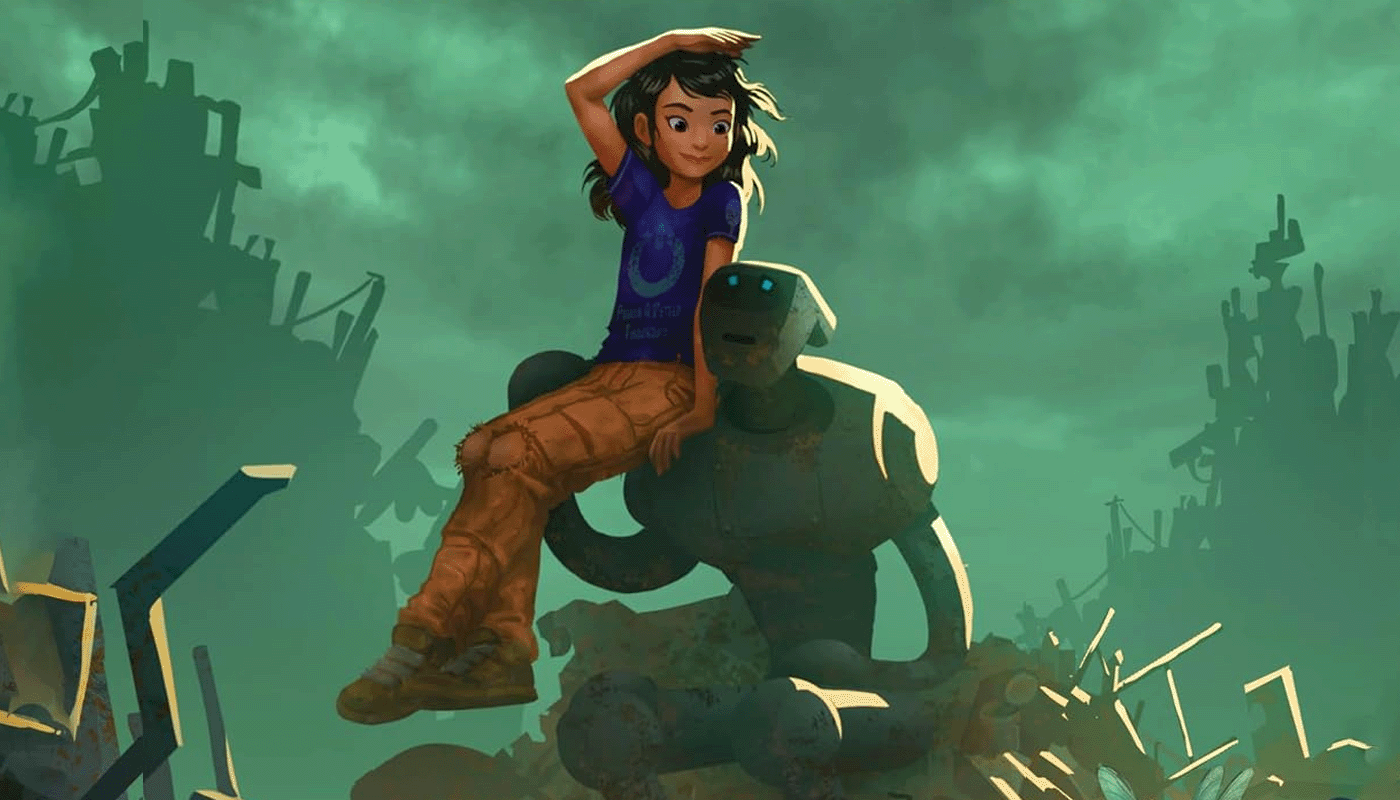
Science fiction offerings include Deva Fagan’s The Delta Codex (Atheneum Books for Young Readers, April 14, 2026), which centers on a bio-engineered child containing the sum of a planetary settlement’s historical knowledge, and Erin Entrada Kelly’s The Second Life of Snap (Greenwillow Books, May 12, 2026). Kelly’s dystopian Texas setting—governed by corporate rationing—explores themes of technological attachment and familial bonds through a young girl’s efforts to repair a discarded, dysfunctional robot.

Expanded Horizons: Quests, Folklore, and Ghost Stories
Additional notable categories rounding out the 2026 publishing year include subversions of classic tropes. Emily B. Martin’s Nell O’Dell Hates Quests (Candlewick Press, April 7, 2026) offers a comedic deconstruction of traditional fantasy tropes as a retired quester’s daughter is forced into an unexpected adventure. Claribel A. Ortega’s The Sea Witch Prophecy (Scholastic Press, October 6, 2026), the fifth book in the Witchlings series, continues the collective battle against the antagonist Ambert.

Ghost stories and supernatural folklore are prominently featured in works such as India Hill Brown’s Girl from the Ashes (Scholastic Press, July 7, 2026), Shakirah Bourne’s Here Lies a Ghost (Scholastic Press, March 3, 2026), and Ally Russell’s Mystery James Returns from the Grave (Delacorte Press, September 15, 2026). These titles utilize historical settings, institutional settings, and supernatural entities to address themes of accountability, social hierarchy, and historical memory.
Furthermore, space exploration and planetary colonization anchor Donna Barba Higuera’s Firesnake (Levine Querido, June 2, 2026)—the third volume in The Last Cuentista series—and Olivia Abtahi’s Rostam Wrecks the Realm (Simon & Schuster Books for Young Readers, June 9, 2026). Mythology-driven narratives are further enriched by Malia Maunakea’s The Shark Prince (Penguin Workshop, May 5, 2026), drawing on Native Hawaiian shark-god ancestry, and Marie Arnold’s They Will Not Save Us (Scholastic Press, October 6, 2026), which incorporates Haitian Vodou traditions into a contemporary community crisis.

Industry Implications and Future Outlook
The breadth and thematic depth of the 2026 middle grade speculative fiction catalog indicate a robust and maturing market segment. Publishers, literary agents, and children’s literature advocates emphasize that these works provide essential scaffolding for young readers navigating an increasingly complex world. By addressing systemic issues, mental health, intersectional identities, and historical awareness through imaginative frameworks, authors in this space are redefining the boundaries of children’s literature.

As these titles roll out across various imprints throughout 2026, their reception by librarians, educators, and young readers will likely continue to shape publishing acquisition strategies. The ongoing commitment to diverse protagonists, complex emotional landscapes, and high-caliber world-building ensures that middle grade speculative fiction remains a vital, dynamic cornerstone of contemporary literature.