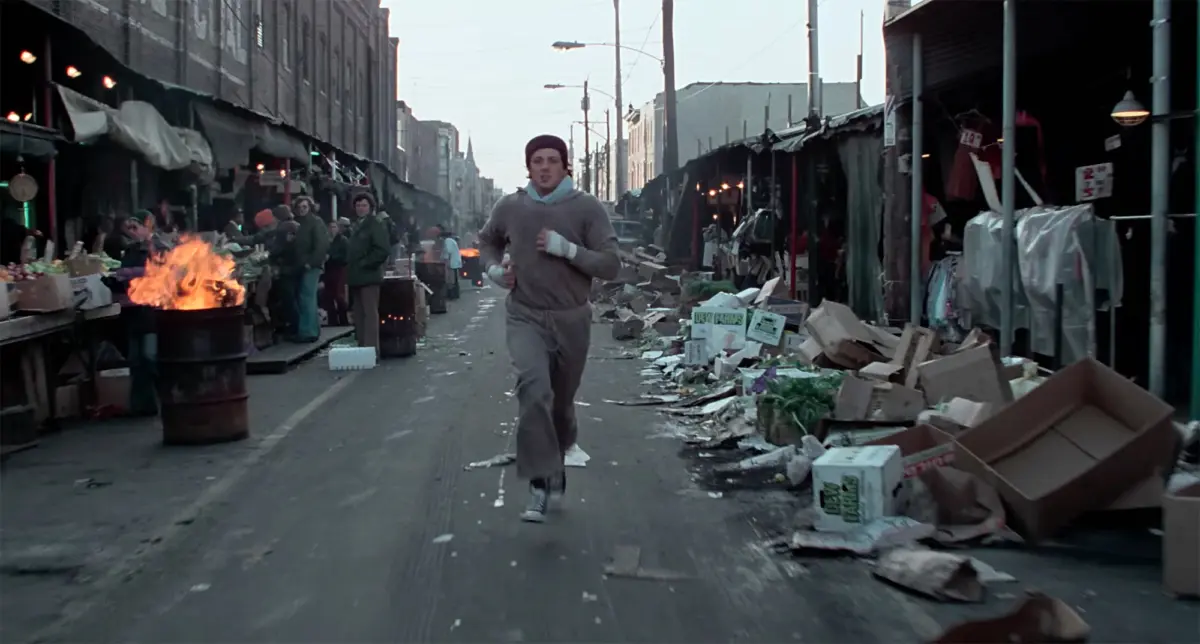
Half a century after Sylvester Stallone’s underdog masterpiece first punched its way into American culture, Metro-Goldwyn-Mayer, in partnership with Fathom Entertainment, has officially announced a nationwide theatrical re-release of the original 1976 sports drama Rocky. To mark this monumental golden anniversary, distributors have dropped a series of new trailers and promotional posters, offering moviegoers an opportunity to experience John G. Avildsen’s timeless classic back on the big screen in a pristine 4K restoration.
The special anniversary screenings are scheduled to run for a limited engagement through Fathom Entertainment from November 7 through November 11, 2026. This theatrical return gives both lifelong fans and a new generation of cinemagoers a chance to witness the inspirational story of Philadelphia club fighter Rocky Balboa on a cinematic scale, complete with updated visual and audio fidelity that brings the grit of 1970s Philadelphia back to life.
The Origin of an American Cinematic Milestone
Released in theaters in December 1976, Rocky emerged during a time of economic uncertainty and shifting cultural moods in the United States, resonating deeply with audiences looking for an authentic narrative about perseverance against insurmountable odds. Written by Sylvester Stallone—who was then a struggling, virtually unknown actor—the script was famously born out of Stallone’s own sheer determination after he watched the heavyweight championship match between Muhammad Ali and Chuck Wepner in March 1975.
Refusing to sell his screenplay to producers Irwin Winkler and Robert Chartoff unless he was cast in the title role, Stallone took a monumental gamble that paid off indefinitely. Operating on a famously tight budget of roughly $1 million and a compressed shooting schedule of just 28 days, the production relied heavily on guerrilla filmmaking tactics, natural lighting, and practical locations throughout working-class neighborhoods of Philadelphia.
Directed by John G. Avildsen, whose steady hand captured both the raw athletic discipline and the quiet, tender romance between Rocky and Adrian Pennino (played by Talia Shire), the film became a bona fide cultural phenomenon. It grossed approximately $225 million worldwide at the box office, making it the highest-grossing film of 1976 and establishing Stallone as an overnight global megastar.
Critical Acclaim and Awards Circuit Chronology

The trajectory of Rocky from a low-budget independent drama to an awards-season juggernaut remains one of Hollywood’s most celebrated Cinderella stories. At the 49th Academy Awards held in March 1977, the film received a staggering ten nominations across major categories, ultimately securing three prestigious Oscars: Best Picture, Best Director for John G. Avildsen, and Best Film Editing for Richard Halsey and Scott Conrad.
In addition to its major wins, the film garnered Academy Award nominations for Sylvester Stallone for Best Actor and Best Original Screenplay, Talia Shire for Best Actress, Burt Young for Best Supporting Actor, Burgess Meredith for Best Supporting Actor, and Bill Conti for Best Original Song ("Gonna Fly Now"). The iconic musical score by Conti, alongside the unforgettable cinematography by James Crabe, cemented the film’s status in cinematic history long before streaming services and home video eras democratized film access.
Supporting Data and Cultural Legacy
The cultural footprint of Rocky extends far beyond its initial box office receipts and accolades. The narrative blueprint—an unheralded underdog given a once-in-a-lifetime shot at glory—became a foundational storytelling trope across sports and narrative cinema.
Furthermore, the physical locations immortalized in the film, particularly the stone steps leading up to the Philadelphia Museum of Art, transformed into a global tourist destination known universally as the "Rocky Steps." Visitors from around the world continue to reenact the triumphant training montage, running up the steps with arms raised in victory.
The franchise’s financial longevity is equally staggering. The original film spawned a massive multi-decade cinematic empire, including five direct sequels (Rocky II, III, IV, V, and Rocky Balboa) as well as the critically acclaimed Creed legacy trilogy starring Michael B. Jordan. Collectively, the Rocky and Creed universe has grossed billions of dollars worldwide, proving that the themes of dignity, self-respect, and emotional endurance are universally timeless.
Theatrical Re-Release Logistics and Promotional Timing
The upcoming 50th-anniversary screenings arrive at a fascinating crossroad for the intellectual property. The theatrical event coincides with the development and rollout of I Play Rocky, an upcoming biographical drama directed by Peter Farrelly that chronicles the dramatic behind-the-scenes struggles Stallone faced while trying to get the original film made against the wishes of skeptical studio executives.

Exhibitors and industry analysts note that strategic re-releases of classic cinema in 4K restoration have proven increasingly viable for modern theatrical business models. By offering eventized, limited-run screenings complete with exclusive bonus content, distributors like Fathom Entertainment can draw consistent foot traffic to cinemas during traditionally slower exhibition windows.
Industry Response and Fan Anticipation
While formal public relations statements from the principal cast members regarding the 50th anniversary have been measured, cultural analysts and film preservationists have widely praised the decision to return the film to the big screen. The meticulous 4K restoration process ensures that the cinematography—which famously captured the decaying industrial aesthetic of mid-70s Philadelphia with stark realism—retains its authentic film grain while offering modern clarity and color grading.
Tickets for the limited five-day engagement are expected to experience high demand, particularly in key regional markets such as Philadelphia, where civic pride in the character of Rocky Balboa remains fiercely intact. Special promotional materials released by MGM emphasize the visceral nature of the final bout between Balboa and heavyweight champion Apollo Creed (played by the late Carl Weathers), reminding audiences of the sheer emotional gravity that carried the film to legendary status.
Broader Implications for Cinematic Preservation
The 50th-anniversary rollout of Rocky underscores a broader, growing industry trend toward the theatrical preservation and re-issuing of legacy media. As digital platforms increasingly dominate everyday media consumption, event cinema—characterized by digitally remastered prints, one-time-only screenings, and premium formats—provides movie theaters with a distinct competitive advantage.
For Rocky, a film explicitly about refusing to stay down when knocked to the canvas, its return to theaters serves as a poetic reminder of the enduring power of traditional cinematic storytelling. As Sylvester Stallone’s immortalized character once noted, it’s about how hard you can get hit and keep moving forward. Half a century later, the cinematic legacy of the Italian Stallion shows no signs of slowing down.