Montreal-based filmmaker Ashley Duong has pushed the boundaries of the documentary genre with her latest feature, Ba’s Book, a hybrid project that meticulously deconstructs the silence surrounding her father’s traumatic past. The film, which explores the life of Anh Duong, follows his journey from a war-torn Vietnam to the upheaval of 1970s revolutionary Iran, eventually culminating in his 1980 migration to Canada. By blending traditional documentary techniques with staged dramatic re-enactments, the film transforms a personal memoir into a collective exploration of diasporic trauma and familial healing.
A Memoir Written in Silence
The genesis of the film lies in the 2024 publication of Dear Da-Le: A Father’s Memoir of the Vietnam War and the Iranian Revolution. For decades, Anh Duong—referred to by his daughter as "Ba"—maintained a stoic silence regarding his early life. The necessity of this emotional armor was born from a lifetime of navigating extreme political volatility. As a witness to the brutal realities of the Vietnam War and the subsequent Iranian Revolution, Anh Duong learned to suppress his experiences to ensure survival.
The memoir, structured as a series of letters to his daughter, finally provided the catalyst for Ashley Duong to bridge the gap between their experiences. However, the film goes beyond the written text. While the book documents the historical timeline, the film captures the emotional "white space" of the narrative—the untold stories of the family members left behind in their ancestral Vietnamese village, including his mother, Nguyen Thi Bay, and his siblings.

Chronology of a Displaced Life
The narrative arc of the film and the underlying life of its subject can be categorized into four distinct chapters:
- The Formative Years (1950s–1960s): The childhood and early adulthood of Anh Duong in Vietnam, defined by the societal pressures of the Vietnam War and the domestic sacrifices made by his sisters to support his education.
- The Era of Exile (1970s): A period of intense displacement during the Iranian Revolution, where Anh Duong, like many others, found himself in a state of political precarity, further cementing his habit of emotional concealment.
- The Canadian Chapter (1980–2023): The decades spent in Canada, characterized by the successful establishment of a new life, professional integration, and the continued, deliberate suppression of past traumas.
- The Reclamation (2024–Present): The publication of the memoir and the subsequent filming of Ba’s Book, marking a transition from historical evasion to active confrontation with the past.
The Methodology of Hybrid Documentary
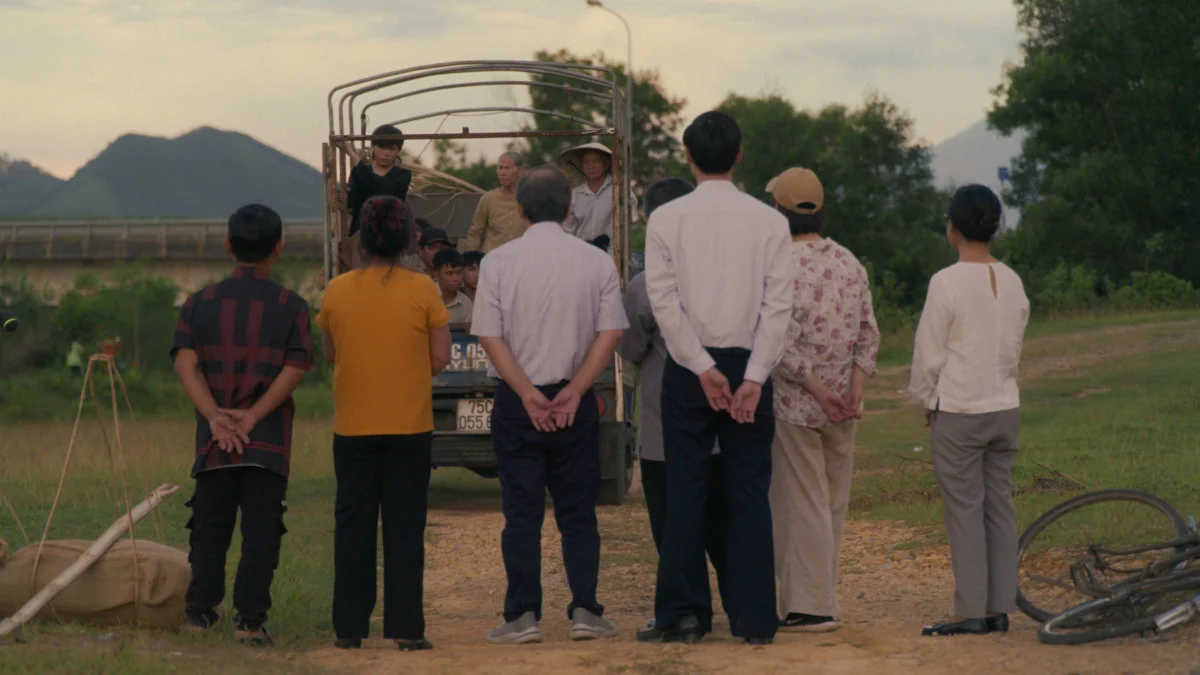
To elicit the answers that had eluded her for years, Ashley Duong employed an inventive, multi-disciplinary production strategy. Rather than relying on a traditional "fly-on-the-wall" approach, she built a three-walled set in Vietnam, designed to resemble her father’s childhood home. This theatrical space allowed for a porous boundary between the present-day documentary subjects and the historical re-enactments.
The production utilized a sophisticated three-camera setup. One camera operated in a traditional documentary mode, capturing unfiltered, spontaneous reactions from the relatives. Simultaneously, a narrative-focused crew followed a script penned by Duong and collaborator Steven Sych, utilizing cinematic lighting, reverse angles, and professional actors—including Montreal-based actor Duy Nguyen—to portray younger versions of the family members.
This technique proved particularly effective during the interrogation of family secrets. By having her relatives direct the actors playing their younger selves, Duong created a safe, controlled environment where the participants felt empowered to pose the questions they had feared asking for decades. The result is a film that functions simultaneously as a historical record and a cathartic performance.

The Gendered Burden of History
One of the most compelling aspects of the film is the nuanced portrayal of Aunt Hanh, whose story serves as a critical counter-narrative to the traditional "hero’s journey" of the refugee. During the production, it became evident that the educational and professional opportunities afforded to Anh Duong were made possible only through the systematic sacrifice of his sisters.
Aunt Hanh, who was forced to abandon her education at the age of nine to manage domestic labor, initially expressed deep-seated resentment toward her brother. Through the medium of the film, these long-buried grievances were surfaced and, ultimately, addressed. The film serves as a testament to the gendered legacies of conflict, where the success of one family member often masks the erasure of another. Ashley Duong’s decision to highlight this dynamic offers a broader critique of the patriarchal structures that persisted in the shadow of war.
Data and Diasporic Context
The film reflects the broader experience of the Vietnamese diaspora, a population that has historically faced significant challenges in documenting the intergenerational transmission of trauma. According to data from Statistics Canada, the Vietnamese-Canadian population has grown steadily since the late 1970s, with many families struggling with the "model minority" myth that often demands silence in exchange for integration.
The use of hybrid filmmaking to address these issues is a growing trend in contemporary cinema. Scholars in trauma studies have noted that for survivors of civil conflict, direct testimony can sometimes be re-traumatizing. By using "narrative devices"—such as acting and set design—subjects are able to create a psychological distance that allows for more honest disclosure. The success of Ba’s Book in navigating this terrain underscores the potential for artistic collaboration to serve as a form of social therapy.

Implications and Critical Reception
The premiere of Ba’s Book at the Vancouver Film Festival marks a significant moment for Canadian documentary filmmaking. By prioritizing the voices of the relatives over a singular, authoritative narrator, Duong has created a template for ethical storytelling within families.
The film’s impact extends beyond its emotional resonance; it serves as a case study for how families divided by geopolitical conflict can utilize creative expression to process historical grief. As Duong herself noted, the act of filmmaking became a way for her family to "show up for each other." For those in the diaspora, the film offers a blueprint for navigating the future by finally settling accounts with the past.
The technical execution—using three cameras to capture both the performance of memory and the reality of reconciliation—sets a high bar for future hybrid documentaries. By moving beyond the binary of fact versus fiction, Ba’s Book captures the messy, fragmented reality of identity in a post-conflict world. It suggests that while the scars of war are permanent, the silence that often follows them does not have to be.
As the film continues its festival run, it is expected to generate significant discussion regarding the ethics of filming family trauma and the importance of preserving the stories of the "left behind." For Ashley Duong and her family, the project has successfully transformed a private history into a public act of love, ensuring that the legacy of their struggle is not lost to the passage of time.