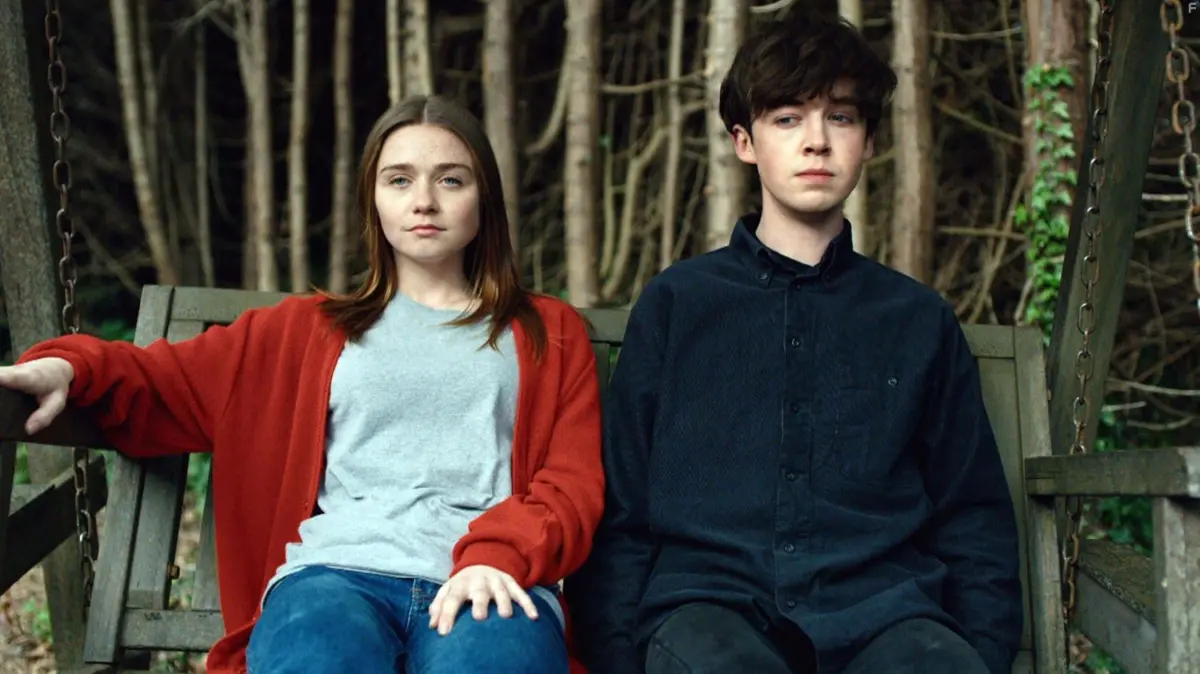
The definitive streaming era of the late 2010s is facing another significant contraction as Netflix confirms the impending global removal of one of its most critically acclaimed co-productions. The dark British comedy-drama *The End of the F**ing World is officially set to depart the platform, bringing a definitive end to its long-running streaming availability under the Netflix banner.
According to official platform notifications, users worldwide have until November 4, 2026, to stream the series. The show will officially vanish from the global library on November 5, 2026. The removal marks the conclusion of a standard fixed-term licensing window established during Netflix’s aggressive international expansion phase, illuminating the complex legal and financial realities governing the streaming industry’s vast catalog of co-produced content.
Main Facts of the Departure
The impending exit of *The End of the F**ing World highlights the fragile nature of digital distribution rights for television series branded with the iconic red "N." Although marketed globally as a Netflix Original, the series was originally commissioned by the United Kingdom’s Channel 4. Netflix joined the project as a co-producer and international distributor, securing exclusive streaming rights outside of the UK for a predetermined duration.
Industry analysts note that fixed-term distribution contracts for early-generation co-productions typically span between five and ten years following the premiere of a final season. With the second and final season of the series having debuted globally in November 2019, the expiration date in late 2026 aligns precisely with a standard seven-year contractual window. Upon expiration, the underlying global rights revert entirely to the original commissioning body and production studios, forcing the streaming platform to either renegotiate an expensive license extension or quietly let the title go.
The removal is part of a broader, systemic trend observed throughout 2026, during which more than one hundred historical Netflix Originals and co-productions have expired and left the service. Titles such as Gilmore Girls: A Year in the Life are slated for similar departures within the same month, signaling that the platform’s early library is undergoing a massive structural reset as foundational content agreements reach their statutory limits.
Chronology and Production History
The cultural footprint of *The End of the F**ing World was established through a distinct production and distribution timeline that began in the mid-2010s. The project originated as an indie graphic novel series written and illustrated by Charles Forsman, published by Fantagraphics Books. Its transition to the screen began when Clerkenwell Films and Dominic Buchanan Productions optioned the material, eventually securing a commission from Channel 4 in the United Kingdom.
Below is the chronological evolution of the series from page to screen, and ultimately, to its departure from global streaming:
- 2011–2013: Charles Forsman publishes the original comic book issues comprising *The End of the F**ing World.
- September 2015: Development is announced for a television adaptation produced by Clerkenwell Films.
- October – December 2017: Season 1 premieres linearly on Channel 4 in the United Kingdom, capturing domestic critical attention.
- January 2018: Netflix releases the first season globally, transforming the dark indie comedy into an international word-of-mouth phenomenon.
- November 2019: Season 2 premieres simultaneously on Channel 4 and Netflix, bringing the narrative arc of James and Alyssa to a definitive, closed conclusion.
- 2023 – Mid-2026: Engagement data indicates steady, long-tail viewership, accumulating nearly 60 million viewing hours across the platform.
- November 4, 2026: The final day subscribers can legally stream the series on Netflix before its global removal on November 5.
Supporting Data and Audience Engagement
Despite occupying a revered status among critics and television aficionados, the series maintained a modest, highly dedicated viewership profile rather than generating blockbuster mainstream numbers. Data compiled from Netflix Engagement Reports spanning from 2023 through mid-2026 reveals that the series accumulated approximately 60 million viewing hours during that window. While these figures pale in comparison to the massive multi-hundred-million-hour metrics commanded by tentpole franchises like Stranger Things or Wednesday, they underscore a healthy, sustained long-tail demand that justified keeping the series active for nearly a decade.
Critical reception for the program remains among the highest for any British import of its era. The first season earned a near-perfect 96 percent critical approval rating on the review aggregator Rotten Tomatoes. The series was lauded for its sharp pacing, a meticulously curated indie-pop soundtrack helmed by Graham Coxon, and the nuanced performances of leads Alex Lawther and Jessica Barden.
The show’s prestige was further solidified through major industry accolades. *The End of the F**ing World received a prestigious Peabody Award in the Entertainment category and secured multiple British Academy Television Awards (BAFTAs), including a win for Best Drama Series following its second season.
Official Context and Industry Implications
The departure of co-produced content illuminates the shifting economic priorities of modern media conglomerates. During the mid-2010s, streaming platforms aggressively pursued global distribution deals to rapidly scale their subscriber bases, frequently absorbing international titles into their own branded ecosystems. However, as the streaming market has matured and profitability has taken precedence over raw subscriber growth, platforms are increasingly scrutinizing the cost-benefit ratio of renewing expiring legacy licenses.
For Channel 4 and independent international distributors, the reversion of rights opens new avenues for monetization. Content liberated from exclusive streaming agreements can now be licensed to alternative platforms, sold to regional broadcasters, or housed on free ad-supported television (FAST) channels, which have emerged as major revenue drivers for back-catalog television.
From a consumer perspective, the removal of *The End of the F**ing World serves as a stark reminder of the ephemeral nature of digital media libraries. Unlike physical media purchases, subscription streaming guarantees access only for the duration of active corporate contracts. Because the series consists of two concise, eight-episode seasons with runtimes averaging roughly twenty minutes per episode, viewers retaining active subscriptions possess ample opportunity to complete a final viewing before the statutory removal deadline.
As November 2026 approaches, the streaming industry continues to navigate the complex legal fallout of its early expansionist era. The exit of James and Alyssa’s chaotic teenage road trip underscores a sobering reality for digital entertainment consumers: even the most celebrated modern classics are subject to the cold mathematics of intellectual property law and corporate contract expiration.