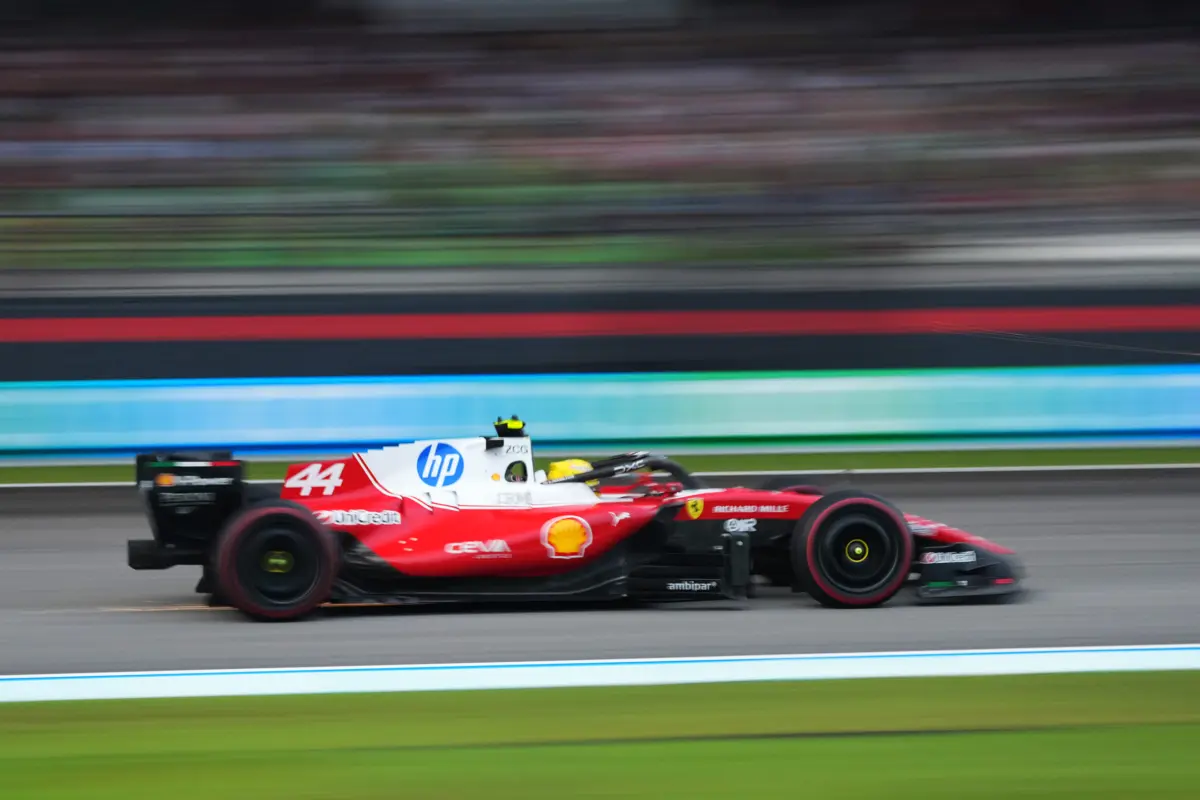
Apple has announced a strategic partnership with Dolby Laboratories to integrate Dolby Atmos spatial audio and Dolby Vision high-dynamic-range (HDR) imaging into its Formula 1 coverage, marking a significant evolution in how motorsport is broadcast to home audiences. This initiative is set to debut during the upcoming United States Grand Prix at the Circuit of the Americas in Austin, Texas. By leveraging cutting-edge audiovisual technology, Apple aims to bridge the sensory gap between a spectator at the trackside and a viewer in the living room, emphasizing the visceral intensity—the mechanical roar, tire friction, and the high-stakes atmosphere of the pit lane—that defines modern Formula 1.
The Technological Leap in Broadcast Standards
For decades, the standard for televised sports has remained relatively stagnant, relying on traditional stereo or standard surround sound formats. While high-definition video became the industry benchmark, the auditory experience often failed to capture the chaotic, high-frequency intensity of a Formula 1 engine. The introduction of Dolby Atmos changes this by utilizing object-based audio, which allows sound engineers to position individual noises—such as a car’s engine note or the screech of tires—in a three-dimensional space.
John Couling, senior vice president of entertainment for Dolby Laboratories, emphasized that the objective is to heighten the emotional connection between the viewer and the sport. "The sound is what makes it emotional; it is the sound that guides you through that and builds the tension," Couling stated. By isolating the distinct audio signatures of the cars and the ambient environment of the grandstands, the technology allows the viewer to feel the momentum of the race as if they were positioned in the heart of the action.
This audio advancement is paired with Dolby Vision, which optimizes brightness, contrast, and color accuracy on a frame-by-frame basis. For F1, a sport characterized by extreme speeds, blurred motion, and diverse lighting conditions—from the harsh midday sun in Austin to the artificial floodlights of night races—the dynamic range provided by Dolby Vision ensures that critical details in the shadows or the highlights are never lost.
A Chronology of Apple’s F1 Integration
Apple’s involvement in Formula 1 is the result of a deliberate, long-term strategy to reshape the landscape of sports media. The company’s trajectory in this space can be summarized through its recent aggressive expansion into premium sports broadcasting:
- 2022: Apple signaled its serious entry into live sports by securing exclusive rights to Major League Soccer (MLS) through a landmark 10-year deal. This move established the "Apple TV" platform as a serious contender for major live events.
- Early 2024: Industry reports surfaced regarding Apple’s interest in acquiring broader F1 broadcast rights, viewing the sport as a prime vehicle for global subscription growth.
- Mid-2024: Apple finalized its initial agreement for F1 rights, with industry analysts estimating the deal to be valued between $140 million and $150 million. This marked the beginning of Apple’s official role in distributing F1 content.
- Late 2024: The announcement of the Dolby partnership represents the first major technical upgrade to the viewing experience under the Apple-F1 banner, beginning with the U.S. Grand Prix in Austin.
Market Context and Strategic Motivation
Apple’s approach to sports media differs significantly from incumbents like ESPN or Amazon Prime Video. While competitors often prioritize volume—securing as many games or leagues as possible—Apple has opted for a curated, high-quality "premium-first" approach. This strategy reflects a broader corporate philosophy that views technology as an enabler of superior user experience rather than just a delivery vehicle.
Oliver Schusser, Apple’s vice president of music, sports, Apple TV, and Beats, has been vocal about the perceived shortcomings of the current sports broadcasting market. "If you are a sports fan today, our viewpoint is that the experience is—I am going to be polite and say—not easy," Schusser remarked. By removing the friction of fragmented broadcast rights and prioritizing high-fidelity audio and video, Apple is attempting to differentiate its platform in a crowded streaming ecosystem.
The business logic is supported by current demographic trends. Eddy Cue, the executive leading Apple’s services division and a noted F1 enthusiast, recently reported that the sport is experiencing a surge in viewership among younger demographics and women. According to Cue, this "significant double-digit percentage growth" highlights that the sport is no longer a niche hobby for a legacy audience but a global entertainment phenomenon that demands a more sophisticated presentation.
The Mechanics of the Broadcast Upgrade
The rollout of these features will be seamless for users within the Apple ecosystem. The Dolby Atmos and Dolby Vision enhancements will be natively supported on the Apple TV 4K, as well as a wide range of compatible Dolby-enabled televisions, soundbars, and home theater systems.
Crucially, the production of the races remains the responsibility of Formula 1’s internal broadcasting division, which manages the massive logistical undertaking of capturing high-speed racing from multiple camera angles and microphone arrays. Apple serves as the distribution partner, ensuring that the raw data and video feeds are encoded and delivered to the end user without sacrificing the quality of the signal. This partnership highlights the importance of the tech stack in modern broadcasting, where the speed of delivery and the stability of the stream are as vital as the content itself.
Analysis: The Implications for Sports Media
The marriage of Formula 1 and Apple’s tech stack serves as a bellwether for the future of sports consumption. Several key implications emerge from this partnership:
- The Premiumization of Sports: As sports rights continue to skyrocket in price, broadcasters are under pressure to provide "more" for the consumer. By offering high-end audio and video features as a standard inclusion, Apple is setting a new floor for what fans expect from high-budget sports coverage.
- Technological Competitive Advantage: In an era where content is increasingly commodified, the quality of the playback technology becomes a primary differentiator. A provider that can offer a "you are there" experience via Atmos and HDR may find higher retention rates among subscribers compared to platforms that offer standard, lower-fidelity streams.
- The Shift Toward Globalized Niche Interests: F1’s growth is a testament to the power of global, event-based sports. Unlike domestic leagues, which are tied to specific time zones and cultural markets, F1 operates on a global circuit. Apple’s ability to cater to this diverse, international audience with high-end tech suggests that their strategy is not just local, but aimed at scaling its services platform worldwide.
- Hardware-Software Synergy: Apple’s move reinforces the importance of the Apple TV 4K hardware. By optimizing the software experience for their own hardware, they create an "ecosystem lock-in" that is difficult for rivals to replicate. Users who experience a race in Dolby Atmos are less likely to migrate to a platform that cannot provide the same sensory depth.
Looking Ahead
As the United States Grand Prix approaches, all eyes will be on the technical execution of this partnership. If the initiative proves successful, it is highly probable that Apple will expand these standards to other sports properties in its portfolio, such as Major League Baseball or MLS, potentially triggering an industry-wide race to upgrade broadcast standards.
The collaboration between Apple, Dolby, and Formula 1 is more than a marketing exercise; it is a fundamental shift in how spectators interact with the mechanical theater of motorsport. By prioritizing the "roar of the engines" and the "chaos of the pit lane," Apple is betting that the future of sports broadcasting lies in the ability to make the screen disappear, leaving the fan entirely immersed in the sensory reality of the event. For the millions of viewers tuning in from Austin and beyond, the upcoming race will serve as the first test of whether this high-fidelity promise can truly redefine the standard for the modern sports fan.