New York City’s Jacob K. Javits Convention Center is once again serving as the epicenter of global pop culture as the annual New York Comic Con (NYCC) gets underway this week, drawing tens of thousands of costumed attendees, industry professionals, and media representatives from around the world. As convention organizers implement heightened health and safety protocols—a standard practice for large-scale indoor gatherings following years of public health awareness campaigns—veteran attendees frequently trade practical tips on avoiding the dreaded "con crud," a colloquial term for the seasonal illnesses that traditionally sweep through densely packed convention floors. Public health officials and convention veterans alike reiterate fundamental hygiene measures, such as frequent hand sanitizing and minimizing direct contact with communal surfaces, to ensure that the four-day celebration of comics, television, and film remains a positive experience for all participants.
While the bustling exhibition halls of the Javits Center capture the immediate attention of the entertainment industry, pop culture enthusiasts remaining outside of Manhattan are met with a diverse, albeit eclectic, lineup of cinematic and literary releases. Milestone anniversary screenings, such as a special 20th-anniversary theatrical run of Guillermo del Toro’s dark fantasy masterpiece Pan’s Labyrinth, offer repertory cinema fans a chance to experience contemporary classics on the big screen. Meanwhile, psychological thriller enthusiasts are turning their attention to new theatrical offerings like Other Mommy, starring Jessica Chastain. However, for a significant segment of the fandom community, the most notable cultural developments this week are unfolding far away from the multiplex, anchored instead in long-awaited publishing milestones and unexpected streaming television premieres.
A Century-Defining Literary Collaboration Finally Reaches American Shores
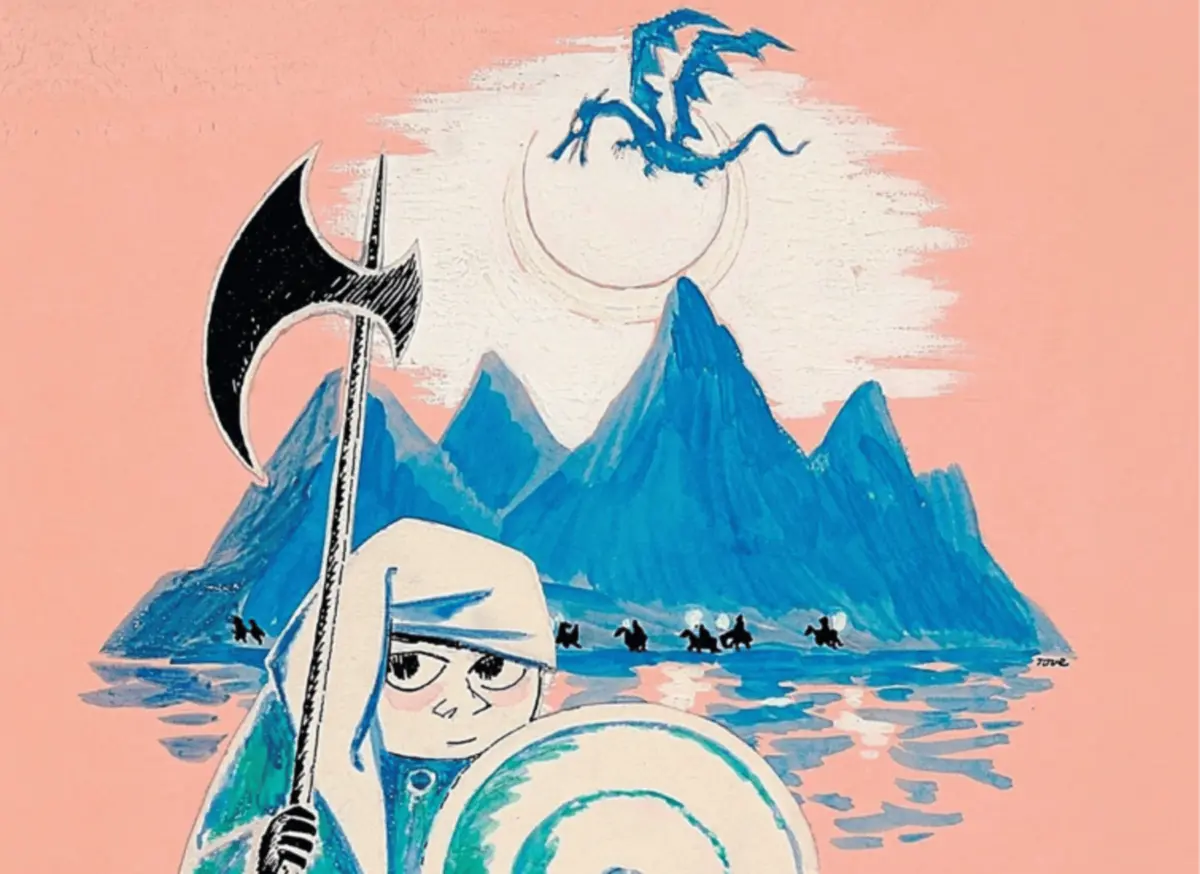
The most anticipated literary release of the season arrives courtesy of publisher William Morrow, which has officially released The Hobbit: Illustrated by Tove Jansson to the United States market. While Finnish and Swedish readers have enjoyed access to Jansson’s distinct artistic interpretation of J.R.R. Tolkien’s foundational fantasy classic for decades, American audiences have historically been excluded from experiencing this specific volume.
The transatlantic journey of this unique edition dates back to correspondence between Jansson and fellow legendary children’s book creator Astrid Lindgren, best known as the author of Pippi Longstocking. Operating in her capacity as a publisher, Lindgren proactively approached Jansson with the proposition of illustrating Tolkien’s burgeoning masterpiece. Demonstrating remarkable foresight into the enduring cultural footprint of the material, Lindgren famously wrote to Jansson that the novel would inevitably become "the children’s book of the century, and will live long after we are dead and buried."
Jansson’s illustrations diverge significantly from the traditional, highly detailed fantasy aesthetics usually associated with Middle-earth. Instead, her artwork brings her signature idiosyncratic style—celebrated globally through her creation of the Moomin universe—to Tolkien’s dwarves, hobbits, and the fearsome dragon Smaug. Literary analysts and publishing industry insiders anticipate that this long-overdue U.S. publication will spark renewed academic and commercial interest in mid-century interpretations of fantasy literature, bridging the gap between Scandinavian children’s literature traditions and Anglo-American high fantasy.
The Resurgence of Classic Maritime Adventure on Television
In the realm of serialized television, MGM+ is preparing to launch its high-profile adaptation of Treasure Island on Sunday, October 11th. Featuring a stellar ensemble cast that includes acclaimed actors David Oyelowo and Hayley Atwell, the series aims to reintroduce Robert Louis Stevenson’s timeless tale of pirates, mutiny, and buried gold to a contemporary television audience.
Despite the star power attached to the project, industry observers have noted the relatively muted promotional campaign surrounding the series, raising questions about modern viewing habits in an increasingly crowded streaming landscape. The release of the MGM+ series also arrives during a curious renaissance for the intellectual property, running parallel to development on a separate feature film adaptation directed by Ridley Scott, slated for a 20th-century-fox-style theatrical rollout in 2027.
This renewed interest in Treasure Island inevitably invites comparisons to Jonathan E. Steinberg and Robert Levine’s critically lauded Starz television series Black Sails, which functioned as a narrative prequel to Stevenson’s novel. Despite running for four critically acclaimed seasons and earning high praise for its complex characterizations, geopolitical framing, and intricate plotting, Black Sails has historically maintained a cult status rather than achieving mainstream ubiquity. Entertainment analysts frequently point to Black Sails as a prime example of prestige television that was ahead of its time, noting that its principal cast members—including Hannah New and Jessica Parker Kennedy—deserve broader global recognition following their standout performances in the series. The impending premiere of MGM+’s Treasure Island provides an opportune moment for critics and audiences to reexamine the enduring viability of pirate narratives within the prestige television ecosystem.
Exploring the Intersection of Humanity and Technology in Contemporary Nonfiction
In the literary non-fiction space, poet and essayist Franny Choi has captured the attention of critics with the release of We Radiant Things: Notes on Being Alien and Becoming Cyborg, published via her ongoing partnership with independent and major literary houses. Building upon the thematic foundations of her acclaimed 2019 poetry collection Soft Science, Choi’s new essay collection investigates the complex intersections of identity, systemic racism, artificial intelligence, and bodily autonomy.
The opening chapter of We Radiant Things centers on an analytical critique of Alex Garland’s 2014 science fiction film Ex Machina. Rather than offering a conventional cinematic review, Choi utilizes the film as a cultural touchstone to examine broader societal anxieties surrounding technology, gendered violence, and the historical marginalization of non-white bodies. In outlining her critical methodology, Choi writes, “This is the only way I want to do what someone might call criticism: tenderly, from stabbing range.”
Subsequent chapters expand this framework to encompass other seminal sci-fi texts, most notably Mamoru Oshii’s Ghost in the Shell. Literary critics have praised the collection for its lyrical prose and rigorous intellectual inquiry, positioning Choi’s work as a vital contribution to modern cultural criticism that bridges the gap between academic theory and accessible personal narrative.
Streaming Platforms Embrace Genre Experimentation with Below
Rounding out the week’s notable entertainment developments is the streaming debut of Below, a Newfoundland-set supernatural thriller starring Josh Hartnett and Mackenzie Davis. Distributed via Netflix, the series has generated significant industry chatter—and divergent critical reviews—for its atmospheric blend of maritime isolation and monstrous unknown entities.
Described by reviewers variously as "exhilarating" by Variety and lauded by RogerEbert.com as one of the standout streaming releases of the year, Below leans heavily into the moody, rain-swept aesthetic popularized by contemporary prestige mystery dramas. The series features Hartnett alongside an ensemble cast that includes Charlie Heaton, creating an intergenerational dynamic that has drawn curiosity from television critics.
While the exact nature of the series’ central antagonist has been a subject of playful speculation across social media platforms—with various outlets referencing bizarre maritime phenomena and parasitic entities—the broader industry implication points toward a continuing appetite for mid-budget, high-concept genre television on subscription video-on-demand services. As studios look for ways to capture viewer retention amid fragmented viewing habits, atmospheric thrillers like Below demonstrate the enduring market viability of localized, high-tension storytelling.