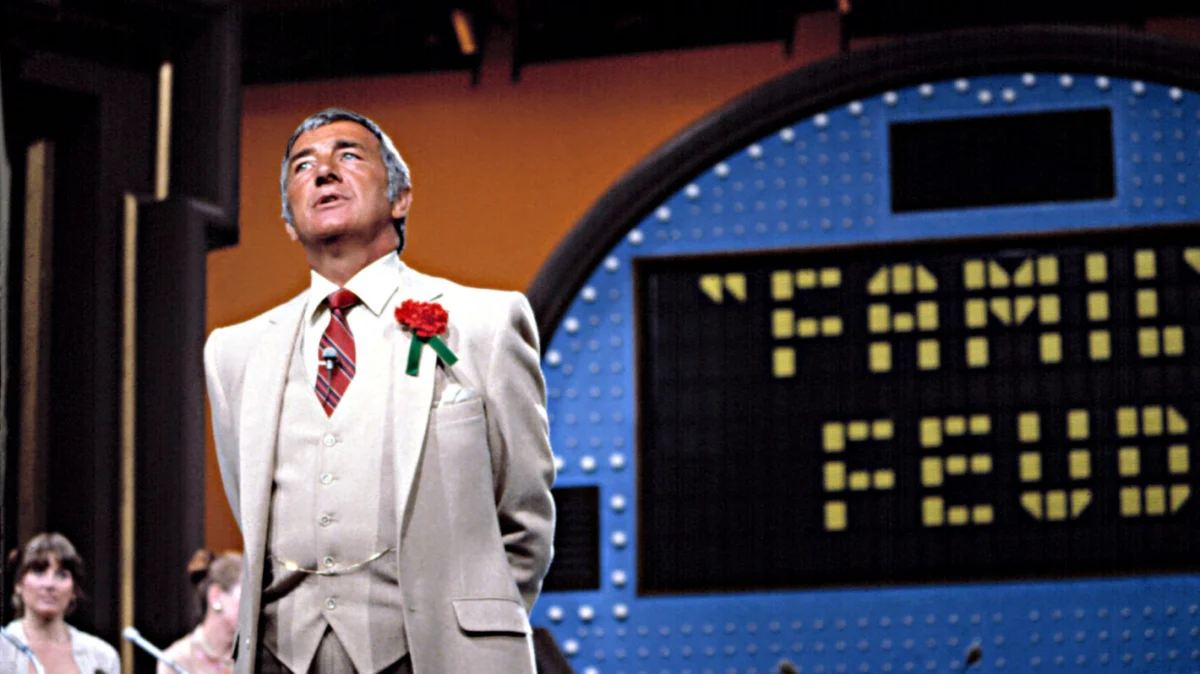
Family Feud remains one of the most enduring and recognizable brands in the history of American television, serving as a cornerstone of the game show genre for nearly half a century. Since its televised debut on July 12, 1976, the program has transcended its status as a mere daytime competition to become a cultural touchstone, characterized by its unique "Survey Says" format and its ability to reflect the shifting social dynamics of the American family. Originally a production of the prolific Mark Goodson and Bill Todman, the show was born out of a desire to create a competitive environment that emphasized relatable human intuition over specialized knowledge. Unlike contemporary programs of the 1970s that required academic prowess, Family Feud invited viewers and contestants to guess the consensus of the general public, a formula that proved to be an immediate ratings success for ABC.
The initial run of the series was defined by the presence of Richard Dawson, a British-born actor who had previously achieved fame as Corporal Peter Newkirk on Hogan’s Heroes and as a popular panelist on Match Game. Dawson’s transition from actor to host was instrumental in establishing the show’s identity. During his tenure from 1976 to 1985, Dawson became known for his charismatic yet occasionally irreverent interaction with contestants. Most notably, his habit of greeting female contestants with a kiss on the cheek or hand—earning him the nickname "The Kissing Bandit"—became a hallmark of the show. While such behavior is viewed through a different lens in the contemporary era, at the time, it contributed to Dawson’s reputation as a charming and empathetic host who could put nervous families at ease.
The Mechanics of the Game: A Study in Human Intuition
The premise of Family Feud is deceptively simple, yet it relies on a sophisticated understanding of social psychology. In each episode, two families, typically consisting of five members each, compete to name the most popular responses to survey questions previously posed to a group of 100 individuals. These questions are not based on objective facts but on subjective opinions, such as "Name a reason people might be late for work" or "Name something you find in a doctor’s office."
The gameplay begins with a "face-off" between one representative from each family. The contestant who provides the higher-ranking answer on the board earns the right for their family to either play the round or pass it to the opposing side. To sweep a round, a family must identify all the remaining popular answers on the board before accumulating three "strikes," which occur when a family member provides an answer that was not among the survey responses. If a family fails to clear the board, the opposing family is given a single opportunity to "steal" the points by providing just one of the remaining correct answers. This structure ensures a high level of tension and encourages the "awkward answers" that have become the show’s signature. The final round, known as "Fast Money," involves two family members answering five questions in rapid succession to reach a combined score of 200 points, usually for a top prize of $20,000.
Historical Chronology: From ABC to Modern Syndication
The timeline of Family Feud is marked by several distinct eras, each defined by its host and the prevailing television landscape of the time.
- The Dawson Era (1976–1985): The show premiered on ABC’s daytime lineup and quickly expanded into a nighttime syndicated version. By the late 1970s, it was the number-one game show on television, frequently outperforming long-standing giants like The Price Is Right. However, by the mid-1980s, ratings began to decline as the market became saturated with new game show formats.
- The Ray Combs Era (1988–1994): After a three-year hiatus, the show returned to CBS with comedian Ray Combs at the helm. Combs brought a high-energy, fast-paced style that appealed to a younger demographic. This era saw the introduction of the "Bullseye" round and expanded the show’s reach in syndication. Despite initial success, the show struggled to compete with the rising popularity of Wheel of Fortune and Jeopardy!.
- The Transition and Revival Years (1994–2010): In an attempt to boost ratings, Richard Dawson was brought back for a single season in 1994, but the nostalgia factor was not enough to sustain the program. The show went off the air again in 1995 before being revived in 1999 with host Louie Anderson. Anderson was followed by Richard Karn (2002–2006) and John O’Hurley (2006–2010). While these hosts maintained a steady audience, the show remained a modest performer in the syndication market.
- The Steve Harvey Renaissance (2010–Present): The appointment of comedian Steve Harvey as host in 2010 marked a seismic shift in the show’s fortunes. Harvey’s comedic timing, particularly his "deadpan" reactions to outrageous or suggestive answers, transformed Family Feud into a viral sensation. Under Harvey’s leadership, the show moved its production to Atlanta and later Los Angeles, eventually climbing to the top of the syndication ratings.
Statistical Impact and Market Performance
The enduring success of Family Feud is supported by robust viewership data. According to Nielsen ratings, the show has frequently occupied the number-one spot among all syndicated programs, often averaging between 6 and 9 million viewers per episode during the peak Harvey years. This performance is particularly notable in an era of "cord-cutting," where traditional linear television has seen a significant decline in viewership.
The show’s demographic reach is equally impressive. It maintains a strong hold on the 18-49 and 25-54 age brackets, which are highly coveted by advertisers. This is largely attributed to the show’s digital strategy; clips of humorous contestant blunders and Harvey’s reactions are frequently shared across social media platforms like YouTube, TikTok, and Facebook, garnering hundreds of millions of views and introducing the 1970s-era format to Gen Z and Millennial audiences.
Furthermore, the brand has expanded into a global franchise. Family Feud has been adapted in over 50 international markets, including the United Kingdom (as Family Fortunes), Australia, Germany, and several countries across Africa and Southeast Asia. This global footprint reinforces the universal appeal of the "survey says" concept, proving that the desire to understand the "common mind" transcends cultural boundaries.
Industry Reactions and Cultural Analysis
Television historians and industry analysts often point to Family Feud as a masterclass in format durability. "The genius of Family Feud lies in its simplicity and its focus on people rather than trivia," notes media analyst Robert Thompson. "It is one of the few shows where the contestants are as much the stars as the host."
The show has also been praised for its inclusivity. Since its inception, Family Feud has featured families from diverse ethnic, religious, and socioeconomic backgrounds. By showcasing the dynamics of different family units, the program provides a window into the American domestic experience. However, the show has not been without its critics. Some observers have noted that the "Steve Harvey era" has leaned more heavily into "double entendre" questions designed to elicit "blue" or suggestive humor. While this has undoubtedly helped ratings, some purists argue it deviates from the more wholesome, family-oriented tone of the Mark Goodson years.
In response to the show’s evolution, Fremantle (the current production company) has emphasized the importance of staying relevant. In a statement regarding the show’s longevity, production executives highlighted that the core of the show—families working together and laughing together—remains unchanged, even if the humor has modernized to reflect contemporary sensibilities.
Broader Implications and the Future of the Franchise
The trajectory of Family Feud offers significant insights into the future of the entertainment industry. Its success suggests that while technology and viewing habits change, the fundamental human desire for relatability and communal experience remains constant. The show’s ability to pivot from a standard daytime game show to a multi-platform digital powerhouse serves as a blueprint for other legacy brands seeking to survive in the digital age.
As Family Feud approaches its 50th anniversary, its place in the pantheon of great American television is secure. It has survived host changes, network cancellations, and the total transformation of the media landscape. Whether it is through the awkward, pressure-cooker responses like "To be beheaded!" or the high-stakes tension of a Fast Money round, the show continues to prove that there is no substitute for the unpredictable nature of the human spirit. As long as there are families willing to compete and 100 people willing to be surveyed, the "Feud" is likely to remain a staple of the airwaves for decades to come.