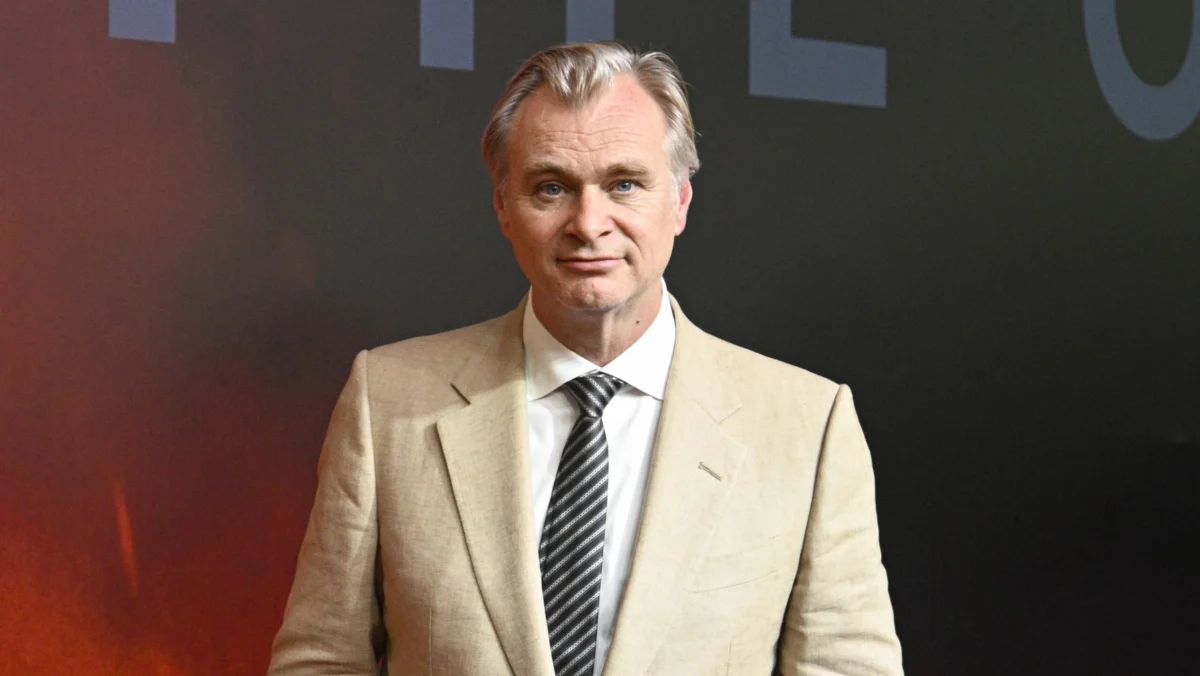
Oscar-winning filmmaker Christopher Nolan has robustly dismissed the burgeoning online debate surrounding his highly anticipated adaptation of Homer’s epic, The Odyssey, labeling the pre-release conversations as "irrelevant." Speaking to The Telegraph, Nolan addressed the criticisms that have emerged following the release of trailers, specifically concerning certain casting choices, the incorporation of American accents, and the use of modern dialogue, drawing parallels to the initial skepticism that once shadowed his acclaimed Dark Knight trilogy. His firm stance underscores a director’s conviction in his artistic vision, even when faced with the relentless scrutiny of a digitally connected audience.
The Genesis of Controversy: Nolan’s The Odyssey Unveiled
Homer’s The Odyssey stands as one of the foundational texts of Western literature, a timeless epic poem chronicling the ten-year journey of the hero Odysseus as he strives to return home to Ithaca following the Trojan War. Its themes of perseverance, temptation, loyalty, and the human condition have resonated for millennia, making any cinematic adaptation a monumental undertaking. Christopher Nolan, celebrated for his intricate narratives, intellectual depth, and visually spectacular filmmaking in works like Inception, Dunkirk, and Oppenheimer, brings a unique sensibility to this ancient tale, a factor that both excites and, for some, provokes apprehension.
The project, which has been in various stages of development for several years before Nolan officially attached himself, promised a fresh, perhaps more grounded, interpretation of the mythological journey. The casting announcements alone began to stir the pot, featuring a star-studded ensemble that includes Matt Damon as the cunning Odysseus, Anne Hathaway as his steadfast wife Penelope, and Tom Holland as their son Telemachus. However, it was the casting of Lupita Nyong’o as the legendary Helen of Troy and Elliot Page as Sinon, the Greek warrior known for his role in the Trojan Horse deception, that ignited the most significant online fervor. These choices, perceived by some as diverging from traditional or historical portrayals, quickly became a flashpoint for debate across social media platforms.
Further fuel was added to the fire with the release of the film’s initial trailers. Audiences noted the presence of distinctly American accents among the Hellenic characters and dialogue that felt remarkably contemporary, eschewing the more formal or archaic language often associated with period epics. For a segment of the audience, particularly those who cherish a strict adherence to historical or mythological authenticity, these creative decisions represented a significant departure and, for some, a betrayal of the source material’s spirit.
Nolan’s Defense: A History of Overcoming Skepticism
Responding to this wave of pre-release commentary, Nolan remained unflustered. "Comes with the territory," he told The Telegraph, shrugging off the criticism with the seasoned calm of a filmmaker accustomed to high stakes and public scrutiny. He elaborated on his perspective, stating, "But look, these conversations that happen before people see the film — they’re always irrelevant, because no one having them knows what the film actually is yet." This statement reflects a common sentiment among creators who believe that the true measure of their work can only be taken once it is experienced in its entirety.
Nolan’s confidence is rooted in a career marked by bold choices and, at times, initial public doubt that was ultimately disproven by critical and commercial success. He specifically invoked his decade-long journey with the Dark Knight trilogy, a cinematic achievement that redefined the superhero genre. "I spent 10 years of my life dealing with Batman," the 55-year-old director reflected. "When I came on to Batman Begins, writers and artists had been working on this beloved character for almost 65 years, and a lot of freighted thoughts were out there about what he represents."
The parallels are striking. Before Batman Begins revitalized the Caped Crusader’s cinematic presence, the character had been languishing in a period of creative missteps. Nolan’s vision, grounded in realism and psychological depth, was a radical departure. Yet, the most potent example of pre-release skepticism turning into posthumous triumph was the casting of Heath Ledger as The Joker in The Dark Knight. At the time, Ledger was largely known for his roles in romantic comedies and dramas such as 10 Things I Hate About You and A Knight’s Tale. The internet, still in its relative infancy compared to today’s social media landscape, was abuzz with doubts and even outrage over what many perceived as a miscast choice for one of cinema’s most iconic villains. Nolan stood by his decision, and Ledger’s performance ultimately transcended expectations, earning him a posthumous Academy Award for Best Supporting Actor and cementing his portrayal as one of the greatest cinematic villains of all time.
This experience, Nolan suggests, taught him a crucial lesson: "What I learnt over my time on that trilogy is you can’t worry about any of that at all. What you have to do is honour the original text by interpreting it in the strongest way you personally can." He believes that genuine artistic sincerity, even when it deviates from established fan expectations, ultimately resonates. "In the end, fans of the property — even when we were doing something that was not what they would have done — enjoyed the sincerity of the attempt to put as good a version of it on screen as we could," Nolan added. This philosophy guides his approach to The Odyssey, asserting his right to a personal, sincere interpretation. "So, when it comes to The Odyssey, all I can do is make the best film I possibly can in the most sincere way. It’s very different from how anyone else would do it, but that’s what adaptation is."
Modernizing an Ancient Epic: Artistic Intent Behind Stylistic Choices
Beyond the broader philosophical defense of artistic adaptation, Nolan also provided specific insights into his choices for The Odyssey, particularly regarding the modern dialogue. In an interview with Channel 4 News, the filmmaker explained that the decision was a deliberate effort to make Homer’s millennia-old story feel more immediate and accessible to contemporary audiences.
"When you look at the ancient world, people tend to view the ancient world in weird ways and there’s a lot of cultural prejudice — elevating it just because it’s old," Nolan stated. This observation highlights a common pitfall in adapting classical texts: the tendency to imbue them with an artificial reverence that can distance modern viewers. Nolan argues that such an approach can obscure the inherent human drama and relatability that made these stories enduring in the first place.
He emphasized that a direct engagement with the original poem reveals a different truth: "When you go to the poem, what you find is something that’s really earthy, grounded and accessible." For Nolan, the essence of The Odyssey lies in its raw, humanistic portrayal of struggle, desire, and return, not in a rigid, antiquarian presentation. "So, for me, in building the world of the film, what I talk to all the actors about is, I want to center it on that and make it feel very fresh for modern audiences and do away with some of those assumptions."
This approach reflects a broader trend in contemporary adaptations of historical or mythological material, where filmmakers seek to bridge the temporal gap by infusing narratives with a modern sensibility. It’s a calculated risk, as it can alienate purists, but it aims to engage a wider, younger audience who might otherwise find such stories inaccessible. By opting for contemporary accents and dialogue, Nolan is implicitly inviting viewers to see the characters of The Odyssey not as distant, idealized figures, but as individuals grappling with universal human experiences, much like the characters in his other films. This interpretive freedom is often a hallmark of successful adaptations, which understand that "fidelity" can sometimes mean capturing the spirit and impact of a work, rather than a literal transcription.
The Digital Arena: Social Media’s Role in Film Discourse
The intensity of the online conversation surrounding The Odyssey underscores the profound impact of social media on modern film culture. Platforms like X (formerly Twitter) have become virtual public squares where initial reactions, often based on limited information like trailers or casting announcements, can rapidly escalate into widespread debates, sometimes overshadowing the artistic merits of a project.
The casting of Lupita Nyong’o as Helen of Troy, a figure traditionally depicted as having Hellenic features, drew particular ire from certain conservative commentators. Matt Walsh, a prominent figure in these circles, voiced his criticism in posts on X, which subsequently garnered agreement from Elon Musk, the platform’s owner. Musk further engaged with posts mocking Elliot Page’s casting as Sinon, signaling a broader ideological battle that has increasingly seeped into discussions about cultural products. These reactions often frame casting choices that deviate from historical or traditional ethnic depictions as "woke" or politically motivated, rather than artistic interpretations.
This phenomenon is not new, but its amplification through social media has reached unprecedented levels. The instantaneity of reactions, the algorithmic amplification of contentious content, and the formation of echo chambers contribute to a landscape where pre-release narratives can become entrenched, sometimes making it challenging for a film to be judged on its own terms upon release. Such online movements can exert pressure on studios, influence public perception, and even lead to phenomena like "review bombing," where coordinated negative reviews are posted before a film’s official release or even before many have seen it. For a director like Nolan, who meticulously crafts every aspect of his films, this pre-emptive judgment based on fragments of information is precisely what he deems "irrelevant." The challenge for filmmakers today is not just to create compelling art, but to navigate a turbulent digital environment where their work is dissected and debated long before it reaches the silver screen.
Anticipation and Implications for Nolan’s Legacy
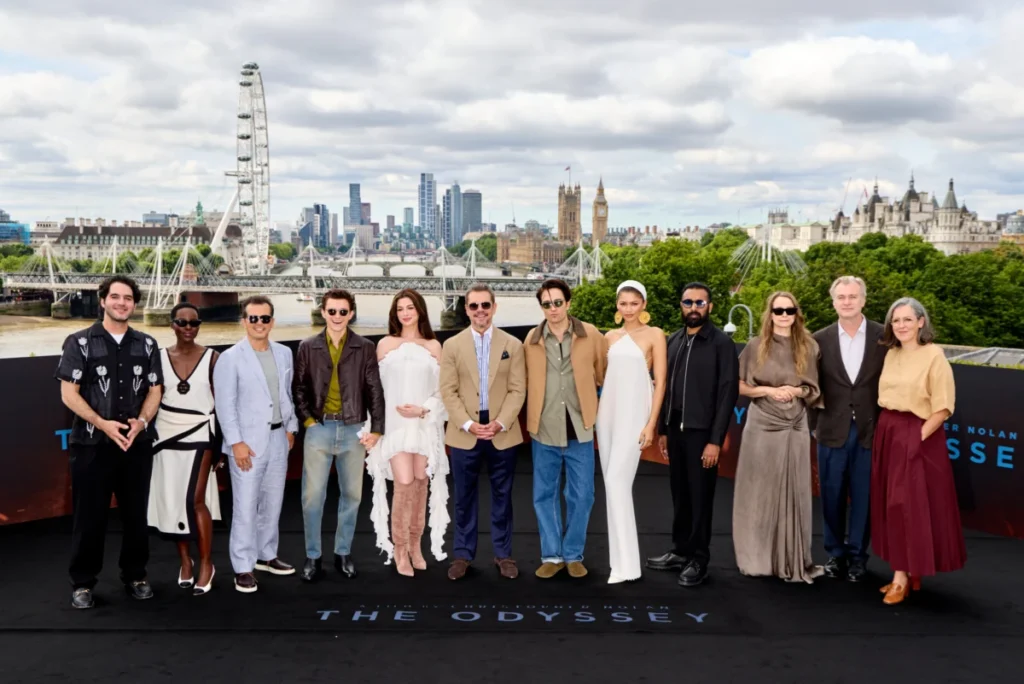
As The Odyssey gears up for its theatrical release on July 17, the stakes are undeniably high. Beyond the core trio of Damon, Hathaway, and Holland, the film boasts an impressive roster of talent, including Zendaya, Robert Pattinson, Jon Bernthal, Travis Scott, and Charlize Theron. This ensemble cast, combined with Nolan’s reputation for delivering both critical acclaim and commercial success, positions The Odyssey as one of the year’s most anticipated cinematic events.
The commercial performance of Nolan’s films often sets benchmarks. Oppenheimer, his previous historical epic, grossed nearly $1 billion worldwide, a remarkable achievement for a three-hour R-rated drama. This track record gives Warner Bros. (the distributing studio for many of Nolan’s films, though the article doesn’t specify for The Odyssey) significant confidence in Nolan’s ability to draw audiences, regardless of early online chatter. For the studio, Nolan’s artistic vision, even if it courts controversy, is a valuable asset. They are likely banking on the director’s unique brand of epic filmmaking to translate the ancient Greek saga into a modern blockbuster.
The reception of The Odyssey will have significant implications for Nolan’s legacy. If the film succeeds in captivating audiences and critics, much like The Dark Knight did after its initial casting controversy, it will further solidify his reputation as a visionary director unafraid to tackle challenging material and make bold artistic choices. It could serve as another powerful testament to the idea that a filmmaker’s conviction in their interpretation of a classic text can ultimately transcend superficial criticisms. Conversely, should the film falter, it might embolden those who argue for stricter fidelity in adaptations, or at least for a more cautious approach to modernizing beloved classics.
More broadly, The Odyssey will undoubtedly contribute to the ongoing discourse about artistic freedom versus audience expectations, particularly concerning cherished source material. In an era where intellectual property and established narratives often dictate creative decisions, Nolan’s uncompromising stance on adaptation is a powerful statement. It posits that the true honor of a classic lies not in its rigid preservation, but in its continuous reinterpretation, allowing each generation to find new meaning and resonance within its timeless narratives.
Ultimately, Christopher Nolan’s The Odyssey stands poised to be more than just a film; it is a cultural event that will test the boundaries of adaptation, the influence of online discourse, and the enduring power of a singular artistic vision. As Nolan himself implies, the final judgment rests not with the cacophony of pre-release speculation, but with the collective experience of the audience in the darkened theater, confronting the epic journey as he intends it to be seen. The true "relevance" of the conversation, it seems, will only become clear after the credits roll on July 17.