The annual migration of pop-culture enthusiasts, industry insiders, and cosplayers to Manhattan has officially commenced as New York Comic Con (NYCC) gets underway at the Javits Center. Drawing hundreds of thousands of attendees from around the globe, the massive convention serves as a primary hub for comic books, film promotions, and television premieres. Public health officials and convention organizers have reiterated baseline sanitation guidelines for large-scale indoor gatherings, advising attendees to practice rigorous hand hygiene and maintain preventative measures against circulating seasonal illnesses colloquially known within fandom circles as "con crud."
While the Javits Center floor fills with exhibitors and fans, the broader entertainment and literary landscape is experiencing a significant influx of high-profile releases spanning classic fantasy illustration, maritime historical drama, contemporary speculative poetry, and high-concept science fiction television.
A Landmark Publishing Event: Tove Jansson’s The Hobbit Arrives in the U.S.
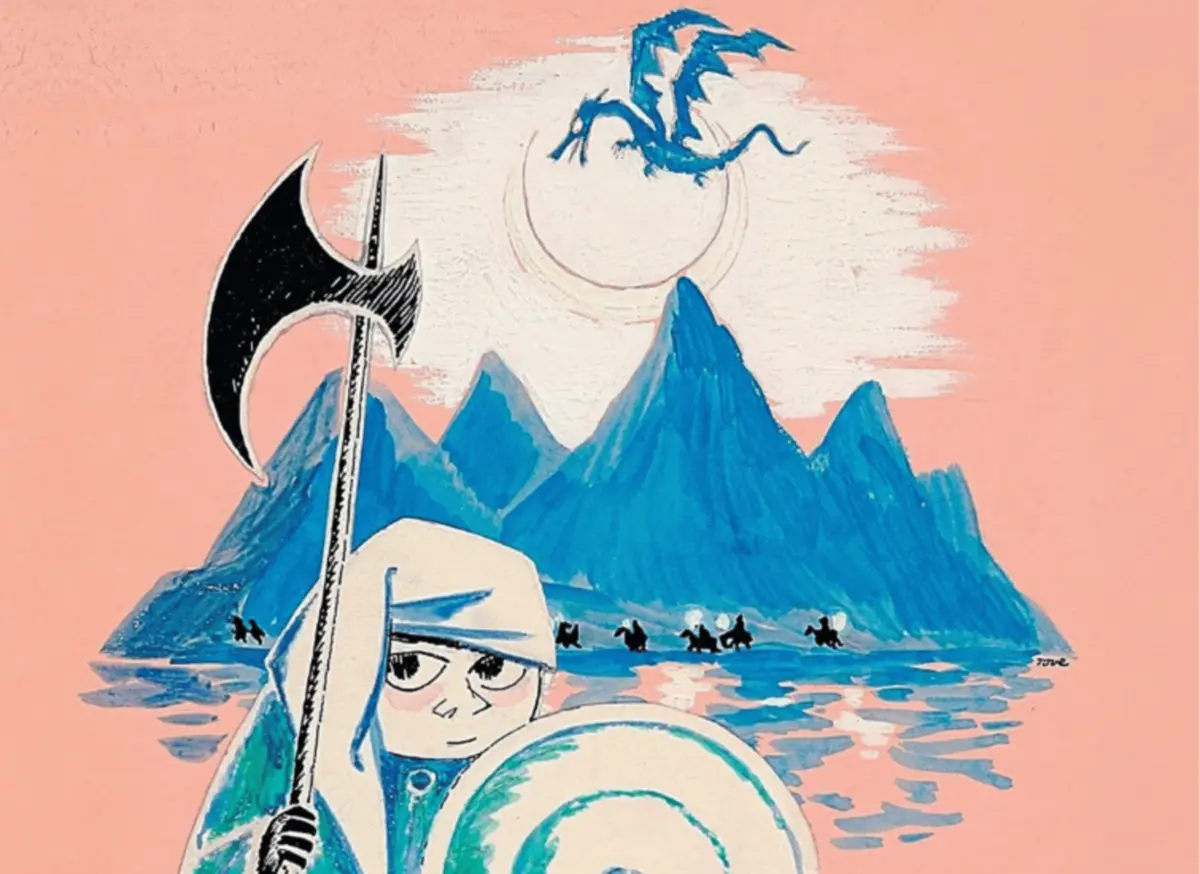
Decades after its initial publication in Nordic markets, J.R.R. Tolkien’s foundational fantasy classic, The Hobbit, is officially available in the United States featuring illustrations by renowned Finnish-Swedish author and artist Tove Jansson. Published this week by William Morrow, an imprint of HarperCollins, The Hobbit: Illustrated by Tove Jansson marks the first time American readers have official domestic access to Jansson’s unique artistic interpretation of Middle-earth.
The genesis of this publishing milestone dates back to post-World War II Scandinavia. Astrid Lindgren, the celebrated creator of Pippi Longstocking working in her capacity as a publisher at the Swedish publishing house Rabén & Sjögren, approached Jansson with a commission to illustrate a new regional edition of Tolkien’s work. Recognizing the enduring literary significance of the manuscript, Lindgren famously wrote to Jansson predicting that the novel would become "the children’s book of the century, and will live long after we are dead and buried."
Jansson’s artistic style—best known globally for her creation of the whimsical, philosophical Moomin franchise—imbues Tolkien’s text with an idiosyncratic visual identity. Unlike the more traditional academic or romanticized illustrations that often accompany Tolkien’s legendarium, Jansson’s depictions of Smaug the dragon and Thorin’s company of dwarves offer stark, minimalist, and deeply expressive characterizations. Literary analysts note that this cross-cultural collaboration between two towering figures of Scandinavian children’s literature adds a fascinating layer of historiographical value to Tolkien’s global bibliography.
Maritime Dramas Expand: MGM+ Prepares Treasure Island Premiere
The television landscape is experiencing a renewed interest in classic maritime adventure, highlighted by the upcoming premiere of MGM+’s Treasure Island. Scheduled to debut on Sunday, October 11, the series features a high-profile ensemble cast including critically acclaimed actors David Oyelowo and Hayley Atwell.
The release arrives in a surprisingly crowded landscape for pirate-themed media. Despite the enduring critical acclaim and cult following of Starz’s historical drama Black Sails—which functioned as a narrative precursor to Robert Louis Stevenson’s original 1883 novel—the genre has historically struggled to capture mainstream viewership consistency. Industry observers note that the upcoming MGM+ adaptation, alongside Ridley Scott’s announced feature-film take on Treasure Island slated for 2027, indicates a strategic push by studios to revitalize historical adventure properties for modern streaming audiences.
The persistent shadow of Black Sails continues to influence critical discourse surrounding maritime adaptations. Created by Jon Steinberg and Robert Levine, the four-season series earned praise for its intricate political plotting, complex characterizations, and subversion of traditional pirate tropes. Cultural critics frequently cite the series as an example of prestige television that maintained a high watermark for writing and production design while remaining under-recognized by major awards bodies. The forthcoming premiere of MGM+’s interpretation will test whether contemporary audiences are prepared to re-engage with Stevenson’s timeless narrative framework under a fresh creative lens.
Speculative Criticism and Cyborg Identity in We Radiant Things
In the literary non-fiction sector, poet and essayist Franny Choi has released We Radiant Things: Notes on Being Alien and Becoming Cyborg via Haymarket Books. Following the critical success of her 2019 poetry collection Soft Science, Choi’s new essay collection blends cultural criticism, memoir, and speculative theory.
The opening chapters of the collection tackle prominent science fiction cinema, beginning with an analytical deconstruction of Alex Garland’s 2014 film Ex Machina. Rather than relying on traditional objective distance, Choi approaches critical evaluation through an intersectional framework, examining how tropes of artificial intelligence intersect with systemic racism, gender dynamics, and personal identity.
In her own writing regarding her critical methodology, Choi describes her approach as an effort to engage with text "tenderly, from stabbing range." Subsequent chapters expand this analytical scope to iconic anime and manga properties such as Mamoru Oshii’s Ghost in the Shell. Publishers and literary critics anticipate that the collection will serve as a significant touchstone for discussions regarding modern cyborg theory, marginalization, and the ways in which contemporary audiences consume speculative media through the lens of lived experience.
Streaming Horizons: Netflix’s Below Enters the Genre Conversation
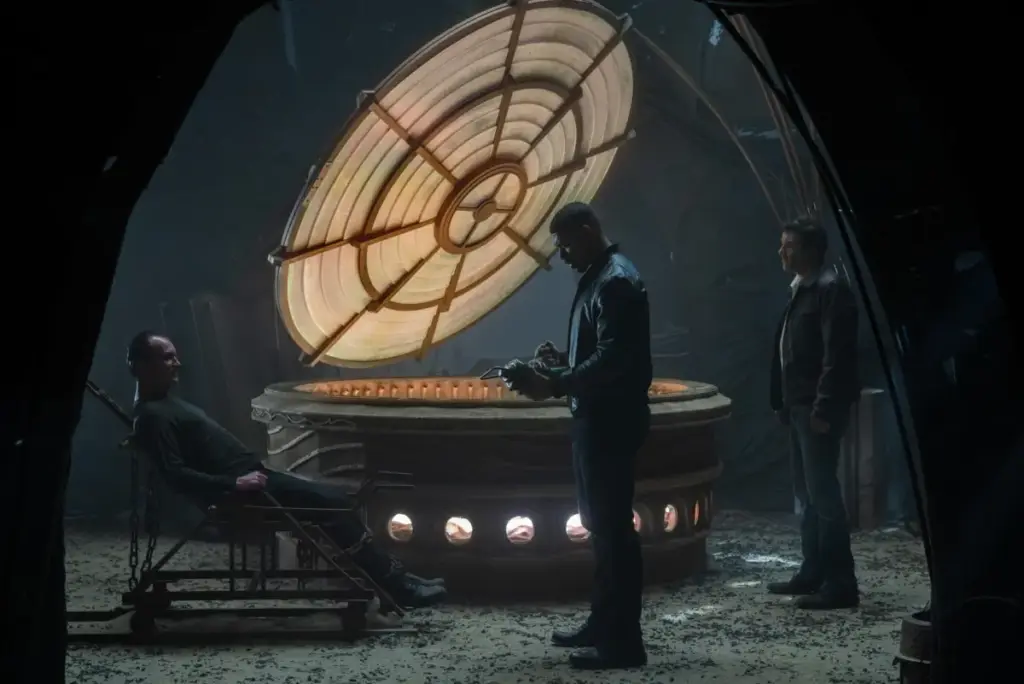
Netflix has expanded its catalog of atmospheric genre television with the release of Below, a Newfoundland-set thriller centering on mysterious marine phenomena and psychological tension. Starring Josh Hartnett and Mackenzie Davis, the series has drawn early critical comparisons to classic procedural mysteries and environmental horror narratives.
Initial critical reception from major industry publications has been mixed to positive. Outlets such as Variety have characterized the series as an "exhilarating" addition to the platform’s psychological thriller lineup, while reviews from RogerEbert.com praised its atmospheric world-building and character dynamics. The production utilizes the rugged, isolated coastline of Newfoundland to establish a sense of claustrophobia and dread, drawing thematic parallels to regional gothic storytelling.
The casting choices have generated considerable discussion within television fandoms. The pairing of Josh Hartnett—whose career resurgence has earned steady praise across multiple television and film platforms—alongside Mackenzie Davis provides the series with significant dramatic weight. However, casting dynamics, such as the inclusion of Charlie Heaton as Hartnett’s on-screen relative, have sparked online curiosity regarding generational casting trends in contemporary prestige television.
As Below rolls out globally on Netflix, industry analysts are monitoring its performance metrics to gauge subscriber appetite for mid-budget, high-concept genre experiments that operate outside established intellectual property franchises. Whether the series achieves long-term cultural traction remains to be seen, but its arrival underscores the streaming giant’s ongoing commitment to geographically distinct, high-tension storytelling.