The landscape of modern animation has reached a monumental milestone with the release of Wildwood, the latest feature film from the acclaimed Portland-based stop-motion studio LAIKA. Directed by LAIKA President and CEO Travis Knight and written by veteran screenwriter Chris Butler, the 131-minute epic represents the culmination of a sixteen-year developmental journey. Based on the 2011 fantasy novel by Colin Meloy—frontman of the indie folk band The Decemberists—and illustrated by Carson Ellis, Wildwood pushes the boundaries of a centuries-old cinematic medium through unprecedented technical ambition, massive scale, and a deeply emotional narrative rooted in loss, grief, and the precarious transition from childhood to maturity.
Production Background and Chronological Development
The genesis of Wildwood dates back to the years preceding the publication of Meloy’s novel. Travis Knight encountered the manuscript before its official release and immediately recognized its potential for a cinematic adaptation. However, the sheer scale of the source material required technological advancements and institutional experience that LAIKA had not yet amassed.
Over the subsequent decade and a half, the studio methodically prepared for the project by producing critically acclaimed stop-motion features including Coraline (2009), ParaNorman (2012), The Boxtrolls (2014), Kubo and the Two Strings (2016), and Missing Link (2019). These projects served as technical stepping stones, allowing the studio to refine its proprietary rapid-prototyping technology, lighting techniques, and puppet engineering.
Pre-production on Wildwood officially commenced in early 2020, mere weeks before the global onset of the COVID-19 pandemic forced industry-wide shutdowns. Despite logistical hurdles, remote planning allowed the production team to lay a comprehensive foundation, leading to principal photography beginning in 2021. The meticulous nature of stop-motion animation extended the production timeline significantly, culminating in a finished product that stands as the longest stop-motion animated feature in cinema history at 131 minutes.
Plot Overview and Character Dynamics
Set against the atmospheric backdrop of late spring in Portland, Oregon, Wildwood follows headstrong teenager Prue McKeel, voiced by Peyton Elizabeth Lee. The narrative catalyst occurs when a murder of crows inexplicably abducts Prue’s infant brother, Mac, carrying him deep into the Impassable Wilderness—a forbidden, enchanted forest hidden on the outskirts of the city.
Determined to retrieve her brother, Prue embarks on a perilous rescue mission, accompanied reluctantly by her classmate Curtis Mehlberg, voiced by Jacob Tremblay. Upon crossing into the forest, the protagonists discover an ancient, stratified civilization populated by talking animals, bureaucrats, bandits, and mystics. The society stands on the precipice of a destructive civil war incited by the Dowager Governess Alexandra, voiced by Carey Mulligan. Alexandra, a grieving mother consumed by the loss of her own son, commands an army of disciplined coyotes and seeks to usurp natural laws to replace what she has lost.
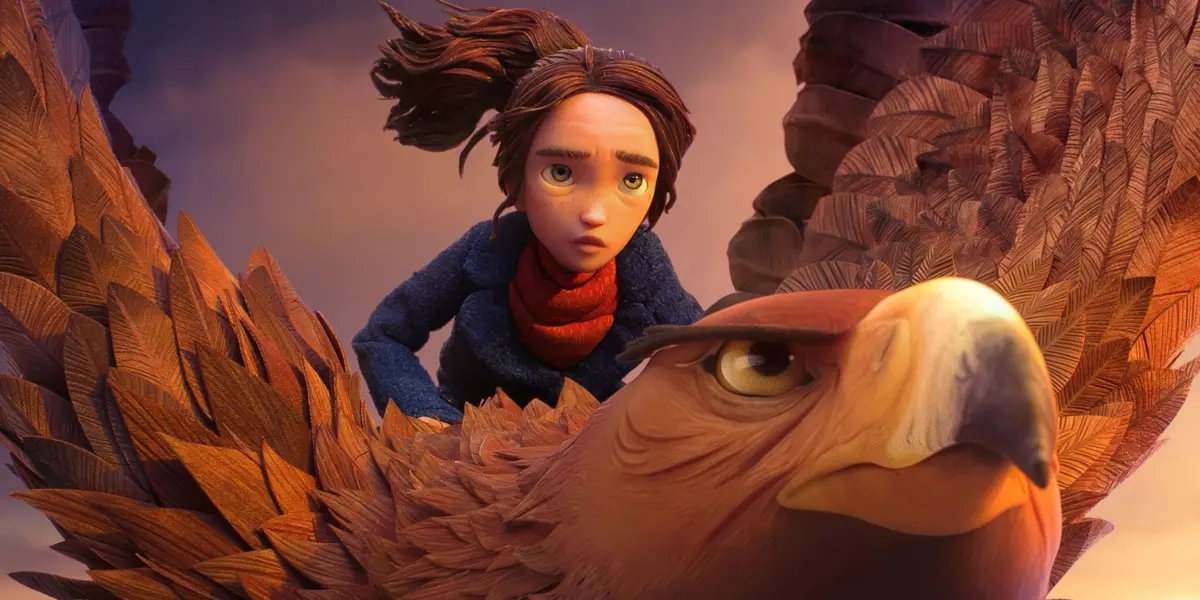
Along her journey, Prue forms alliances with prominent figures within the forest’s factionalized society, including the Bandit King Brendan, voiced by Mahershala Ali; a formidable eagle known as The General, voiced by Angela Bassett; and a resourceful rat named Septima, voiced by Awkwafina. Meanwhile, Alexandra’s forces are spearheaded by Maksim, a menacing servant coyote voiced by Tom Waits, whose unwavering authoritarian presence establishes a high stakes-environment for the film’s central conflict.
Technical Scale and Statistical Achievements
Wildwood redefines the technical parameters of stop-motion animation through staggering production metrics. The film utilizes 233 handcrafted puppets and 132 practical sets. To capture the nuanced facial expressions required for the dramatic narrative, the production generated more than 142,000 unique 3D-printed replacement faces.
A team of 49 specialized animators executed the project, capturing 24 individual photographic frames for every second of screen time across the film’s 131-minute runtime. Notably, the production achieved several technical firsts for LAIKA. The puppet of The General features a 64-inch wingspan capable of realistic avian movement, including fully articulating feathers that open and collapse—a feat never before accomplished on this scale in stop-motion animation. Furthermore, the production recorded instances of character tears in 67 distinct shots, representing a tenfold increase over the studio’s previous high-water mark.
The narrative culminates in a nearly 12-minute climactic battle sequence comprising 411 individual shots. Featuring thousands of digital and practical combatants, the sequence stands as the largest battle ever rendered in a stop-motion feature, rivaling the scope of live-action epics like The Lord of the Rings.
Cinematography and Visual Effects Integration
To achieve a distinct visual language, LAIKA enlisted six-time Academy Award-nominated cinematographer Caleb Deschanel, marking his first foray into stop-motion animation. Deschanel applied live-action cinematic instincts to the miniature environments, collaborating closely with production designer Nelson Lowry and costume designer Deb Cook to establish an authentic sense of place that bridges the real-world geography of Portland with the fantastical architecture of the Impassable Wilderness.
While the foundation of the film relies on practical miniature photography, LAIKA partnered with visual effects studio Wētā FX to expand the scope of the production. Digital environments were seamlessly integrated to extend practical sets, populate crowd shots, and generate dynamic elements such as fire, smoke, waterfalls, and a sentient digital ivy antagonist. The hybrid approach effectively blurs the line between physical miniature construction and digital enhancement, maintaining the tactile integrity of the stop-motion medium while accommodating grand cinematic scale.
The Soundscape and Musical Composition
Complementing the visual achievements is an immersive sound design where every auditory element—from environmental rustling to gunfire and avian wingbeats—was constructed entirely from scratch. The acoustic landscape is anchored by an orchestral score composed by Dario Marianelli, designed to elevate both the high-octane action sequences and the intimate, character-driven moments of emotional realization.
Industry Implications and Thematic Resonance
Wildwood explores heavy thematic material uncommon in mainstream animated features, earning a PG-13 rating for thematic elements, intense sequences of action, and violence. By examining the psychological toll of grief through Alexandra’s obsession and Prue’s reluctant acceptance of adolescent maturity, the film bridges generational divides, appealing equally to juvenile audiences and adult cinephiles.
Industry analysts note that Wildwood arrives at a critical juncture for traditional animation, demonstrating the commercial and artistic viability of prolonged, craft-intensive filmmaking in an era dominated by digital shortcuts. As LAIKA’s most ambitious undertaking to date, the film solidifies the studio’s position as a premier innovator in the medium, establishing a high benchmark for stop-motion storytelling that will influence the industry for years to come.