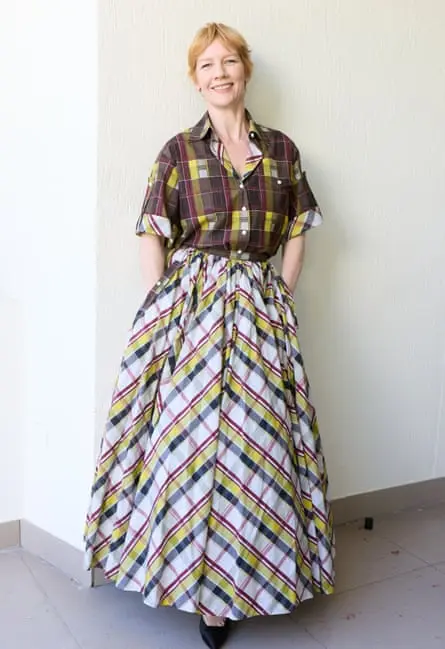
The trajectory of Sandra Hüller’s career has reached a rare and dizzying apex. Best known for demanding, self-possessed performances in acclaimed European cinema, the German actor finds herself at the center of an unprecedented global cinematic convergence. With a slate of high-profile releases spanning international arthouse projects and massive Hollywood franchises, Hüller is currently navigating a level of international visibility that contrasts sharply with her grounded beginnings in East German theater.
The Convergence of a Milestone Year
By the close of 2026, Hüller’s filmography will have expanded by four major cinematic releases, with persistent industry speculation pointing toward a potential fifth. This unusual concentration of work is largely a byproduct of shifting global production schedules and post-pandemic release strategies colliding with her deliberate career choices. Rather than a calculated campaign for global stardom, Hüller describes the phenomenon as a logistical coincidence—a series of distinct professional commitments organically maturing at the same time.
Among her current projects are two black-and-white art-house features that firmly anchor her in the European auteur tradition: Paweł Pawlikowski’s Fatherland and Rose, a 17th-century historical fable directed by an emerging European voice. Simultaneously, she has crossed over into major American studio releases, including the sci-fi blockbuster adaptation Project Hail Mary—which grossed $684 million globally—and Alejandro González Iñárritu’s Digger, a polarizing political satire that has sparked intense debate across the industry.
Navigating the Legacy of East Germany and Fatherland
Hüller’s international acclaim is deeply intertwined with her personal history. Born and raised in the German Democratic Republic (GDR), she continues to reside in the former East German territory, maintaining a perspective on European politics and history shaped by the fall of the Berlin Wall.

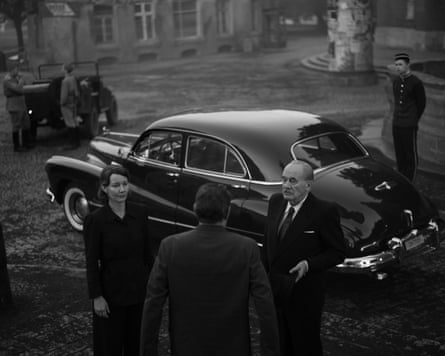
This background informed her approach to playing Erika Mann in Pawlikowski’s Fatherland. Set in a newly divided postwar Germany, the film explores the ideological fractures of the era, shadowing the Mann family as they navigate the geopolitical fallout of the Nazi regime and the nascent utopian ambitions of East Germany.
During discussions surrounding the film, Hüller has reflected openly on the historical nuances often overlooked by contemporary German cinema. She has noted that the complex grief and foundational socialist ideals associated with the former East Germany are rarely approached with the necessary nuance by modern German directors. For Hüller, the film serves as a reminder that political systems are inherently transient, a lesson she believes is particularly vital in an era marked by democratic friction and the resurgence of far-right politics in Europe.
The Political Backdrop and the Rise of the AfD
The themes of Fatherland resonate uncomfortably with contemporary German politics. The resurgence of the far-right Alternative für Deutschland (AfD)—which secured significant electoral victories in eastern German states such as Saxony-Anhalt, capturing over 43% of the vote—has placed the fragility of democratic institutions at the forefront of national discourse.
Drawing parallels between the historical displacement of the Mann family in 1933 and current political trajectories, Hüller has cautioned that authoritarian movements rarely emerge overnight, instead materializing gradually through incremental shifts in public tolerance. Her engagement with these themes extends beyond the screen; as a co-founder of the Leipzig-based experimental theater collective Farn Kollektiv, she continues to utilize performance as a medium for socio-political critique.
Transitioning to Hollywood: From Blockbusters to Satire
Hüller’s recent ventures into American cinema have demonstrated her range as a character actor capable of bridging high-concept science fiction and biting satire. In Project Hail Mary, directed by Phil Lord and Christopher Miller, she played Eva Stratt, the unyielding mission controller opposite Ryan Gosling. The role required the signature ultra-competence and emotional restraint that first brought her international attention in Maren Ade’s 2016 tragicomedy Toni Erdmann and later in Justine Triet’s Academy Award-winning Anatomy of a Fall.
Conversely, her role in Iñárritu’s Digger placed her within a high-profile cautionary tale. The film, which paired her with Tom Cruise as a caricature of an oil tycoon, received mixed critical reviews and struggled at the box office. Despite the polarized public reception, Hüller maintains a pragmatic view of the project, suggesting that time will reframe the film as a revealing cultural document of the mid-2020s.
Challenging Traditional Power Dynamics on Set
Despite stepping into the machinery of major Hollywood productions—complete with rigorous publicity tours, red-carpet appearances, and studio handlers—Hüller has resisted the traditional trappings of American celebrity culture. Notably, she operates without a personal assistant, preferring a degree of self-reliance forged in European ensemble theater.
Her experiences on large-scale sets have offered unique insights into the mechanics of power in the entertainment industry. While blockbusters are traditionally associated with rigid hierarchies, her collaboration with directors like Lord and Miller highlighted a shift toward more collaborative, playful on-set environments. Furthermore, her preparation for Rose—in which she portrays a female war veteran passing as a man—offered her a sociological window into male behavioral patterns and the subconscious competitiveness often embedded in patriarchal social structures.
The Future of Ensemble Work and Directorial Ambitions
As her international profile continues to grow, Hüller faces the paradox of ensemble performance. In the German theater scene, where she built her reputation, individual stardom can disrupt the egalitarian dynamics of a troupe. To counter this, she has expanded her creative purview, shifting behind the camera to direct two new productions for Farn Kollektiv focusing on themes of revenge and farewells.
This pivot toward directing underscores Hüller’s broader philosophy regarding her career: art is a collective endeavor, and institutional structures—whether political or theatrical—are built to be re-evaluated. Whether she is stepping onto the red carpet at a royal gala, contributing to independent European cinema, or anchoring a major Hollywood release, Sandra Hüller remains committed to challenging audiences and interrogating the systems that shape modern life.