The December issue of Kadokawa’s Monthly Comic Beam magazine has officially confirmed that horror mangaka Rei Mikamoto is set to conclude his latest project, Blood Friend, in the publication’s upcoming issue, scheduled for release on December 11, 2026. This announcement brings an end to a series that has served as a significant addition to the magazine’s long-standing portfolio of dark, genre-bending storytelling, marking just over a year of serialization for the title.
Premise and Narrative Foundation
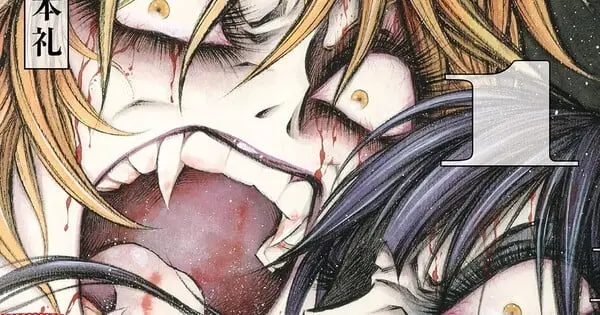
Blood Friend centers on a classic trope of Japanese horror: the unsettling, abandoned structure at the edge of town. The story follows a group of elementary school students who decide to conduct a "test of courage"—a staple of Japanese youth culture—at a Western-style mansion rumored to be haunted. The narrative tension is established early when one of the children, gripped by a harrowing premonition, warns the group that their excursion will result in at least one of them never returning.
By utilizing the claustrophobic setting of an old mansion, Mikamoto leverages his signature style of visceral horror, focusing on the vulnerability of youth against supernatural or psychological threats. Since its launch in December 2025, the series has garnered attention for its aggressive pacing and the artist’s characteristic commitment to gruesome imagery, a hallmark of his career that has cultivated a dedicated, if niche, readership.
Chronology of Publication
The serialization of Blood Friend followed a deliberate production schedule characteristic of Monthly Comic Beam’s editorial practices:
- December 2025: The series officially debuts in Monthly Comic Beam, garnering immediate interest among fans of Mikamoto’s previous works.
- June 12, 2026: Kadokawa publishes the first compiled volume, marking the series’ transition from magazine serialization to a collected book format.
- November 11, 2026: The December issue of the magazine confirms the series will reach its finale in the following issue.
- December 11, 2026: The final chapter of Blood Friend is scheduled for publication, concluding the series’ twelve-month run.
Rei Mikamoto: A Legacy of Horror
Rei Mikamoto is a seasoned figure in the Japanese manga industry, known primarily for his contributions to the horror and exploitation genres. His career is defined by a willingness to push boundaries in terms of violence and shock value, often blurring the lines between traditional horror and dark comedy.
His most recognizable work remains Chimamire Sukeban Chainsaw, which began its run in 2009. The story of a high school girl armed with a chainsaw battling a mad scientist and her creations became a cult hit, ultimately spanning 13 volumes and leading to a significant multimedia expansion. The franchise saw a live-action film adaptation in 2016, followed by two additional films in 2019 under the "Red" project banner. Furthermore, the sequel series, Chimamire Sukeban Chainsaw reflesh, sustained the property’s momentum from 2018 to 2019.
Mikamoto’s earlier works, such as Reiko the Zombie Shop, established his international presence. Dark Horse Comics’ decision to publish the first six volumes in North America highlighted his influence beyond Japan. This work was also adapted into a live-action video series in 2004, cementing his reputation as an creator whose work translates well into live-action formats. His other notable projects include the 2010 film adaptation of Kyonyu Dragon—released as Big Tits Zombie in some markets—and the shorter, two-volume series Iron Ghost no Shojo (Iron Ghost Girl), which ran from 2017 to 2018.

Industry Context and Magazine Positioning
Monthly Comic Beam has long positioned itself as a publication that embraces experimental and unconventional storytelling. Unlike mainstream shonen or shojo magazines, it caters to an adult demographic with an appetite for mature themes, non-linear narratives, and darker aesthetics. The inclusion of Mikamoto’s work in this magazine aligns with the editorial strategy of providing a platform for established "cult" artists who are capable of maintaining a loyal, consistent readership.
The conclusion of Blood Friend occurs in a competitive landscape where horror manga must contend with an influx of digital-first titles and global distribution platforms. By keeping the series relatively short—approximately one year in duration—Mikamoto and the editorial team at Kadokawa have avoided the narrative "bloat" that can often affect long-running series, ensuring that the impact of the horror remains sharp and undiluted.
Implications for the Horror Genre in Manga
The termination of a series by a high-profile creator like Mikamoto often signals a shift in the publication’s focus for the upcoming calendar year. In the Japanese publishing industry, the "end" of a series is frequently accompanied by plans for new projects, often teased in the final volume or the concluding magazine issue. While no immediate successor to Blood Friend has been announced, industry analysts note that Mikamoto’s consistent output suggests that he will likely begin a new project in the near future, potentially exploring new iterations of the horror tropes he has spent over two decades perfecting.
The shift toward shorter, self-contained horror series reflects a broader trend in the manga market. Readers, particularly those consuming content via mobile devices or digital apps, are increasingly gravitating toward "event" series that promise a definitive beginning, middle, and end, rather than open-ended sagas that require a multi-year investment.
Market Response and Corporate Synergy
As a property under the Kadokawa umbrella, Blood Friend benefits from the corporation’s extensive vertical integration. Kadokawa handles everything from the initial magazine serialization to the publication of the compiled tankobon volumes and the potential licensing for international distribution or live-action adaptation.
The disclosure regarding Kadokawa World Entertainment’s ownership stake in Anime News Network underscores the deep integration of the Kadokawa Group within the global anime and manga ecosystem. For fans, this relationship ensures that news regarding creators like Mikamoto is disseminated with a high degree of accuracy and speed, as the primary source material is managed directly within the corporate network.
Concluding Remarks
As the December 11, 2026, deadline approaches, the focus for fans of Rei Mikamoto will shift to the resolution of the mystery within the mansion. Whether the series will receive a collected second volume or an eventual transition into other media remains to be seen. However, the legacy of Blood Friend, even in its brief existence, stands as a testament to Mikamoto’s enduring ability to deliver high-octane horror that respects the traditions of the genre while providing the visceral, unsettling experiences his audience expects.
With the conclusion of this project, the industry turns its attention to the next cycle of Monthly Comic Beam, observing how the departure of such a distinct voice will influence the magazine’s direction in 2027 and beyond. For now, the narrative of the students trapped in the mansion remains the primary focus, leaving readers to anticipate whether the grim premonition mentioned in the series’ inception will ultimately come to pass.