The History Channel has expanded its unscripted portfolio with the premiere of History’s Mystery Files, a docuseries that delves into historical enigmas, ranging from archaeological anomalies to accounts of paranormal phenomena. To helm this project, the network has tapped actor Jorge Garcia, a performer best known for his long-term tenure on the ABC cultural phenomenon Lost and the procedural staple Hawaii Five-0. The series serves as a bridge between traditional historical inquiry and the growing public interest in fringe phenomena, utilizing Garcia’s familiar screen presence to anchor complex, often speculative narratives.
The Evolution of Historical Docuseries
In recent years, the documentary landscape has shifted significantly toward "investigative history," a genre that blends rigorous historical research with high-production-value reenactments and expert commentary. History’s Mystery Files represents the latest iteration of this trend. By focusing on "high strangeness"—a term frequently used in ufology and parapsychology to describe events that defy conventional scientific explanation—the series seeks to capture a demographic that is increasingly curious about the intersection of folklore and hard history.
For the production team, the challenge lies in maintaining factual integrity while exploring topics that lack empirical verification. The show focuses on three primary pillars: sacred discoveries, unsolved disappearances, and anomalies. These categories are designed to provide a framework for viewers to categorize disparate events, from the discovery of ancient, subterranean cities to the persistence of urban legends that have permeated local cultures for generations.
Chronology and Thematic Scope
The series operates on a case-by-case basis, with each episode functioning as an independent investigation. The thematic scope is expansive. Garcia notes that the production team encountered significant evidence of accidental historical discovery, such as the subterranean complexes found during modern construction projects. One notable case discussed by the host involves the renovation of the Philadelphia residence of Benjamin Franklin, where researchers uncovered a cache of human bones in the basement. Historical context suggests these remains were likely associated with the anatomist William Hewson, who worked in the home during the 18th century, yet the discovery continues to fuel public speculation regarding the clandestine practices of early medical science.
Other segments of the series explore:

- Subterranean Infrastructure: Accounts of massive, city-sized underground networks capable of housing thousands of individuals and livestock, often discovered by sheer coincidence.
- Cryptids and Paranormal Entities: Investigations into regional legends, including the "Island of the Dolls" and various accounts of entities that appear to exist outside the current scientific paradigm.
- Temporal Anomalies: First-person accounts of phenomena that suggest potential distortions in time, such as the reported case of a witness observing a historical agricultural accident before being returned to the present day.
The Professional Trajectory of Jorge Garcia
Jorge Garcia’s involvement in the series is a strategic casting choice. His history with Lost—a show that relied heavily on metaphysical mystery and complex narrative puzzles—provides him with a unique credibility among viewers who are accustomed to analyzing cryptic storytelling.
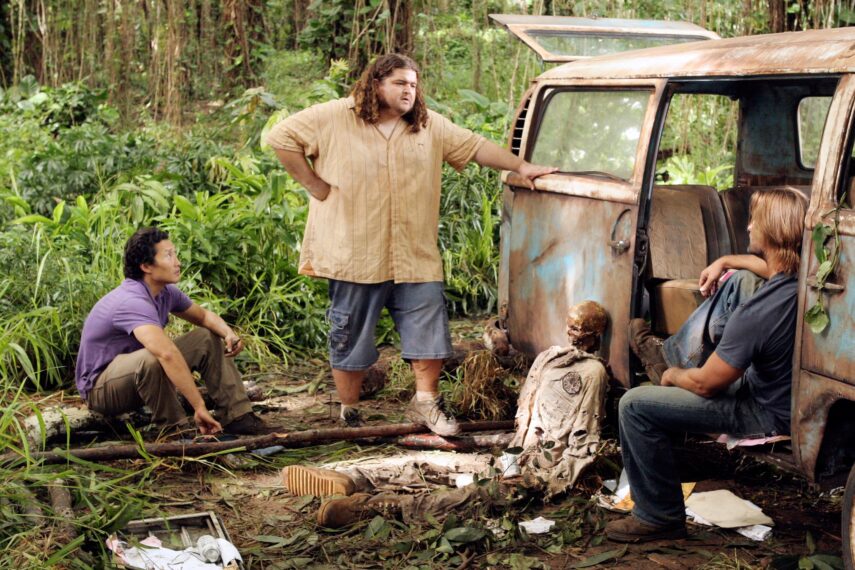
Garcia’s career trajectory has been defined by his ability to portray characters who find themselves at the center of inexplicable circumstances. As Hugo "Hurley" Reyes on Lost, he provided the emotional anchor for a show defined by its surrealism. Later, as Jerry Ortega on Hawaii Five-0, he transitioned into a role defined by conspiracy theories and investigative research. This background informs his approach to History’s Mystery Files, allowing him to oscillate between the role of a skeptic and a curious investigator.
Regarding his time on Lost, Garcia reflects on the production culture of the mid-2000s. The show, which concluded its six-season run in 2010, remains a benchmark for television production. Garcia notes that while he retains a profound appreciation for the professional relationships formed on the island, he maintains a pragmatic view of the physical demands of the role. "It was the job all other jobs get held up to," Garcia says, acknowledging the contrast between the grueling, humid environment of the Hawaii-based shoot and the studio-controlled nature of his current hosting duties.
Supporting Data and Public Reception
The decision by the History Channel to greenlight this series aligns with recent viewership trends. Data from media analytics firms indicate that "mystery and investigation" remains one of the most resilient sub-genres in cable television. Programs exploring the unknown, such as Ancient Aliens or The Curse of Oak Island, have consistently maintained high retention rates, suggesting a robust appetite for content that challenges standard historical narratives.
Critics of the genre often point to the lack of peer-reviewed evidence in such programs. However, producers argue that the value lies in the preservation of oral histories and the documentation of local folklore that would otherwise be lost to time. By bringing these stories to a national audience, the series acts as a repository for regional legends, whether or not they can be definitively proven by contemporary science.
Analysis of Implications
The broader impact of History’s Mystery Files is its contribution to the mainstreaming of speculative history. By framing these stories within a professional production, the series encourages critical thinking about how history is recorded and what gets left out of official textbooks. When Garcia discusses the "high strangeness" cases, the objective is not necessarily to provide a definitive answer, but to catalog the experience of the witness.
From a sociological perspective, the popularity of these shows reflects a societal desire to find wonder in an increasingly documented and digital world. When individuals report witnessing events that defy the laws of physics or standard historical timelines, they are often expressing a desire for a reality that is more complex and less predictable than modern life suggests.
Future Outlook and Official Stance
As the series progresses, the network plans to delve deeper into archival records, collaborating with local historians and investigators to provide as much context as possible for each claim. While the tone of the show remains light and investigative, there is a clear commitment to the "files" aspect of the title—treating each mystery as a data point in a larger, ongoing study of the unexplained.
For Garcia, the transition from actor to host is a natural evolution. His ability to narrate complex events with a blend of levity and seriousness is intended to guide the audience through the more jarring aspects of the series. As the program continues to air on Tuesday evenings, the production team remains focused on identifying new, undocumented cases that have historically been sidelined by mainstream research institutions.
The enduring success of Garcia’s career—from the jungles of a fictional island to the studio sets of the History Channel—underscores the power of effective storytelling. By serving as the conduit for these mysteries, he allows the audience to participate in the investigation, inviting them to consider the possibility that the past is far more mysterious than the current historical record implies. Whether or not these files lead to definitive conclusions, they remain a significant cultural touchstone for viewers seeking an alternative view of the world around them. As the series moves forward, it will likely continue to spark debate, research, and conversation, ensuring that the mysteries of the past remain a vibrant part of the cultural discourse for the foreseeable future.