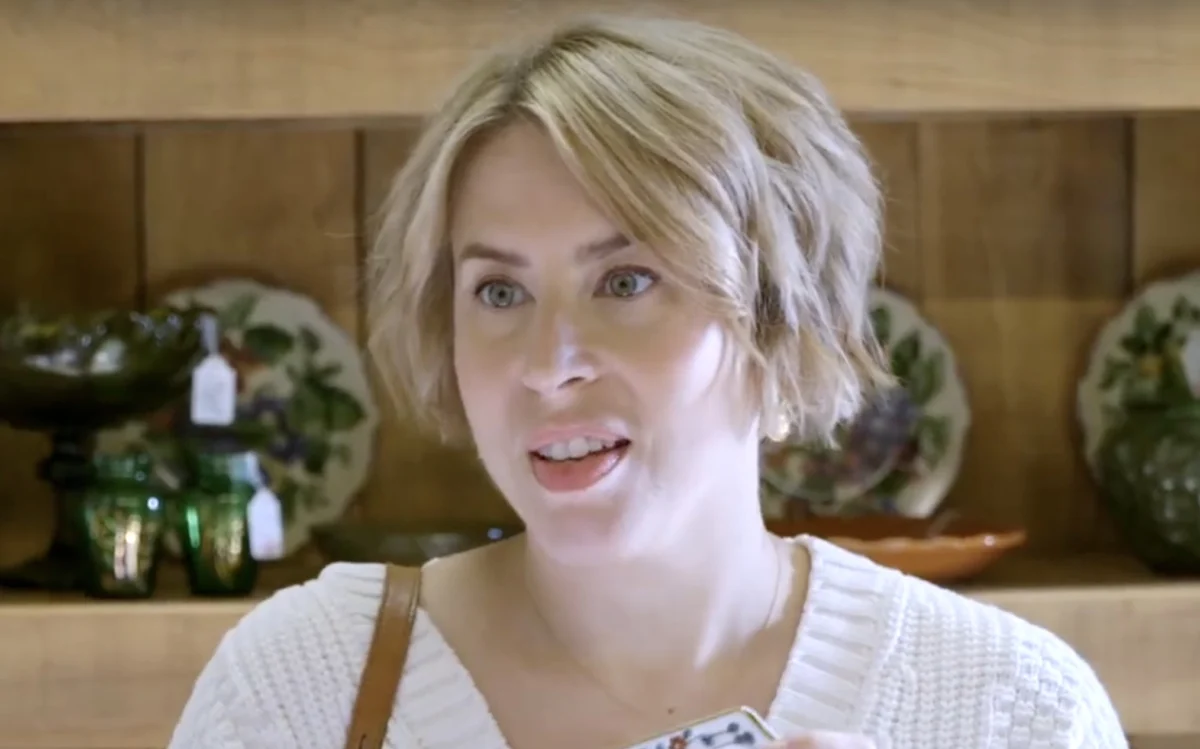
The public discourse surrounding the educational choices of HGTV personalities Erin and Ben Napier has intensified following the couple’s decision to homeschool their two daughters, eight-year-old Helen and four-year-old Mae. While the stars of the hit series Home Town have been transparent about their transition to a home-based curriculum, their choice has sparked a broader debate on social media platforms regarding the social development of children outside of traditional institutional environments. This friction reached a focal point recently when Erin Napier addressed critical comments on Instagram, defending her family’s lifestyle against claims that their children are missing out on essential "real world" interactions.
The Evolution of the Napier Educational Philosophy
The decision to transition Helen and Mae to a homeschooling environment was not a sudden pivot for the Napiers, but rather the result of a multi-year assessment of their values and observations of other families. In earlier interviews conducted throughout the 2024 calendar year, Erin Napier admitted that she once held a skeptical view of homeschooling. She described her younger self as having perceived the practice as unconventional or "weird." However, her perspective underwent a significant shift after encountering a cohort of homeschooled children whose maturity, communication skills, and intellectual curiosity impressed both her and her husband.
This shift in perception led the couple to prioritize a personalized curriculum, which they implemented starting last year. The Napiers frequently document this journey on social media, providing a window into their daily routine. A recent Instagram post highlighted Ben Napier’s role as the primary instructor for subjects ranging from history and poetry to biblical studies. Erin Napier characterized their home classroom as a dynamic space, often accompanied by thematic elements like spaghetti western soundtracks to enhance the learning experience.
Addressing the Socialization Debate
The core of the recent public controversy stems from a comment left on an Instagram post, which suggested that the Napiers’ children were being deprived of the "real world" experiences associated with traditional schooling, specifically the act of navigating social hierarchies and peer-to-peer interactions. This critique is a recurring theme in the broader American debate regarding homeschooling, where opponents often cite the lack of diverse social environments as a potential developmental hurdle.
Erin Napier’s response to these concerns was both swift and detailed. She challenged the underlying premise of the critique by questioning the definition of the "real world." She argued that traditional school settings—which group children strictly by age—do not accurately reflect the age-integrated nature of society. Her rebuttal emphasized that her daughters engage in a wide variety of social environments, including organized sports, dance instruction, art classes, and frequent field trips. Furthermore, she noted that the children are often present on the set of their parents’ television productions, providing them with exposure to professional, multi-generational environments that are rarely accessible to the average elementary student.
Personal History as a Motivator
A pivotal moment in the discourse occurred when Erin Napier shared a deeply personal experience from her own childhood to explain her motivations. She revealed that her support for homeschooling is rooted in a desire to protect her children from the negative aspects of school culture, specifically citing an incident in the fifth grade where she was exposed to pornography by a peer on a school bus.
This revelation shifted the conversation from a general debate about pedagogy to one about child safety and parental influence. By sharing this account, Napier underscored that her decision is not merely academic, but a protective measure aimed at preserving her children’s formative years. She expressed a firm stance that, as a parent, she has a responsibility to curate the influences her children encounter, a task she believes is more manageable within the structure of a home-based education.
Contextualizing the Rise of Homeschooling
The Napiers’ choice reflects a broader trend in the United States. Following the COVID-19 pandemic, which necessitated a temporary shift to remote learning for millions of families, the homeschooling movement saw a significant surge in interest. According to data from the National Center for Education Statistics (NCES) and various independent research groups, the number of families opting for homeschooling has remained elevated compared to pre-2020 levels.
This increase is attributed to several factors:
- Academic Flexibility: Parents are increasingly seeking curricula that allow for deeper dives into subjects of interest rather than the standardized "teaching to the test" model.
- Safety and Environment: As evidenced by the Napiers’ public comments, concerns regarding bullying, exposure to age-inappropriate content, and peer pressure are primary drivers for families choosing to exit the traditional public school system.
- Technological Accessibility: The proliferation of high-quality online educational tools and community-based co-ops has made homeschooling a more viable option for working parents and those without formal teaching backgrounds.
Implications for Public Figures and Modern Parenting
The backlash faced by the Napiers highlights the unique challenges faced by public figures in the digital age. When individuals known for their home-centric lifestyle and family-oriented brand make parenting choices that deviate from societal norms, they often become lightning rods for wider cultural tensions.
From a sociological perspective, the critique directed at the Napiers reflects a defense of the traditional public education system as a pillar of democratic socialization. Supporters of public schools argue that the system is designed to integrate children from diverse backgrounds, fostering a sense of community and civic duty. Conversely, the Napiers represent a growing segment of the population that views the family unit as the primary, and perhaps most effective, site of education and character development.
Analysis of the Public Exchange
The back-and-forth between the Napiers and their critics offers a microcosm of the modern parenting landscape. The debate is rarely about the curriculum itself, but rather about the philosophy of childhood. The Napiers appear to prioritize "intentional parenting," where every interaction—from doing household chores together to visiting film sets—is viewed as an educational opportunity.
Critics, however, remain focused on the "socialization" aspect, which is often considered the traditional school’s greatest advantage. The disagreement highlights a fundamental gap in values: one side prioritizes controlled, intentional exposure to the world, while the other prioritizes the organic, often chaotic, exposure inherent in traditional schooling.
Conclusion: The Future of the Napier Educational Plan
As the Napiers continue to share their experiences, it is likely that the debate will persist. However, the couple has demonstrated a consistent commitment to their path. By framing their choice as a thoughtful, reactive measure based on their own positive and negative experiences with the traditional school system, they have successfully articulated a rationale that resonates with many in the growing homeschooling community.
For now, the Napiers remain focused on the immediate task of educating their daughters. Their willingness to engage in the debate, even when faced with sharp criticism, indicates that they view their educational philosophy as an integral part of their public identity. As Helen and Mae grow, the success of this experiment—measured by the girls’ academic achievement and social integration—will likely remain a topic of interest for both fans of the show and those invested in the evolving landscape of American education. Whether or not their specific model of "real world" preparation stands the test of time remains to be seen, but the Napiers have clearly set a precedent for a personalized, family-led approach to upbringing in an increasingly digital and connected society.