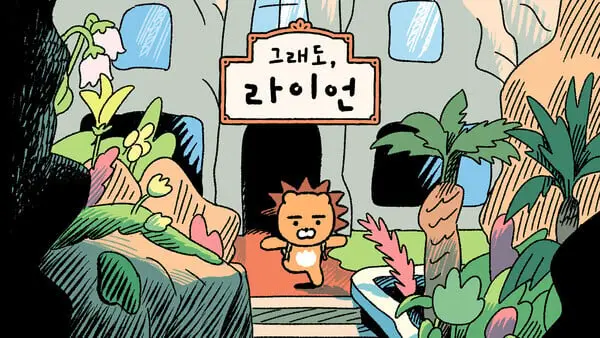
On November 10, 2026, South Korean digital giant Kakao Entertainment officially premiered Ryan Begins, a seven-minute short film that represents a significant milestone in the integration of generative artificial intelligence within professional animation production. Based on the narrative-driven webtoon of the same name, the short film features the iconic Kakao Friends character Ryan. This project stands as the first instance of a major studio utilizing a deep-level technology collaboration with OpenAI to translate a serialized webtoon into an animated format, signaling a potential shift in how creative studios approach resource allocation, visual fidelity, and the iterative nature of digital storytelling.
The Technological Genesis of Ryan Begins
The production of Ryan Begins was a high-stakes experiment in human-AI synergy. Directed by Jiwon Han, a filmmaker known for his work on Netflix’s Lost in Starlight, and overseen by AI supervisor Young-jun Kim, the film was designed to test the limits of generative tools in maintaining a consistent, high-quality aesthetic over an extended narrative arc.
Unlike traditional animation, which relies heavily on key-frame animation and frame-by-frame compositing, the production team at Kakao employed a methodology centered on precision prompting. To achieve the specific emotional tone and visual direction required for a single scene, the production team reportedly utilized approximately 1,500 individual prompts. This exhaustive process was necessary to bridge the gap between AI-generated imagery and the polished visual standards expected of a commercial animation studio.
The workflow began with the creation of detailed scene sketches, which were then fed into ChatGPT’s advanced image generation suite. However, the raw output served only as a starting point. Following the AI’s generation, professional artists conducted extensive manual refinements. This "human-in-the-loop" approach ensured that the character’s subtle movements and the background environments adhered to the specific artistic direction established during the pre-production phase.
A Timeline of the Project
The journey of Ryan Begins spans from the inception of the webtoon to its recent cinematic debut. The project’s timeline highlights the rapid evolution of Kakao’s strategy regarding its intellectual property:
- March 2025: Kakao Entertainment launches the first official story-driven webtoon for the Kakao Friends franchise, providing a definitive origin story for Ryan. This marked a shift away from the brand’s previous "slice-of-life" short-form content.
- Late 2025 – Early 2026: The production team begins conceptualizing the transition of the webtoon into an animated format, opting to trial generative AI to streamline the labor-intensive animation process.
- November 8, 2026: A special advance screening and technical Q&A session is held at Movieland in Seongsu-dong, Seoul. The event, which sold out within 24 hours, included an exhibition detailing the AI-assisted production workflow.
- November 10, 2026: Ryan Begins is officially unveiled to the public, marking the first time a major Korean character IP has been animated through a formal technical collaboration with OpenAI.
Creative Philosophy and Artistic Intent
During the November 8 Q&A session in Seoul, director Jiwon Han provided insights into the creative challenges of using AI for narrative storytelling. A core focus of the production was the depiction of Ryan’s internal state. Han noted that the team intentionally avoided exaggerated facial expressions—a hallmark of traditional 2D animation—in favor of a more minimalist, emotive approach. By reducing reliance on hyper-expressive animation, the team aimed to create a "blank canvas" effect that would encourage viewers to project their own interpretations onto the character’s motivations.
AI supervisor Young-jun Kim emphasized that the technology was treated as a tool rather than an autonomous creator. He described the process as an iterative cycle of rejection and refinement: if an AI-generated image failed to convey the specific emotional nuance required by the script, the team would discard the result and rework the prompt or the underlying sketch until the desired aesthetic was achieved. This underscores a vital industry consensus: AI can accelerate the speed of production, but human oversight remains the arbiter of artistic quality and narrative coherence.

The Broader Context of Kakao’s IP Strategy
The Ryan Begins project is not an isolated experiment but part of a broader, long-term effort by Kakao Entertainment to evolve its character ecosystem. For years, Kakao Friends were largely utilized as static emojis or in short, gag-oriented social media clips. The introduction of a story-driven webtoon in 2025 signaled that Kakao was ready to treat its mascots as legitimate narrative IP.
By pivoting to long-form animation, Kakao is attempting to expand the commercial lifespan and emotional resonance of the Kakao Friends brand. The use of generative AI in this context serves a dual purpose: it acts as a cost-effective method to produce high-quality animation for a franchise that already has massive domestic recognition, and it positions Kakao as a leader in the intersection of "K-content" and global technological innovation.
Implications for the Animation Industry
The success of Ryan Begins raises significant questions regarding the future of the animation industry. The labor-intensive nature of animation has historically been a barrier for smaller studios, often leading to prolonged production cycles and immense financial risk. If 1,500 prompts can indeed assist in generating a high-quality scene, it suggests a path toward lowering the barrier to entry for independent creators and mid-sized studios.
However, the industry also faces concerns regarding the displacement of traditional animation tasks. Professional animators have expressed concerns about the devaluation of their skill sets. Yet, the Kakao production team’s emphasis on the necessity of manual refinement provides a counter-argument: that AI functions best as an assistant that handles the "heavy lifting" of generation, while artists remain essential for the final polish and emotional direction.
Furthermore, the legal and ethical landscape of AI-generated content remains complex. As Kakao collaborates with OpenAI, they are navigating a space where copyright and original artistry are continuously debated. While Ryan Begins is an internal IP, the precedent set by this project will likely influence how other studios handle the licensing and creation of AI-driven media.
Future Prospects and Market Reception
While the English version of the original webtoon has not yet been released, the interest in the animation suggests that the demand for "Ryan-universe" content is growing. The sold-out status of the Seoul screening indicates that the audience is not only accepting of AI-assisted content but is actively curious about the technical process behind it.
Moving forward, the industry will be watching to see if Kakao expands this production model to other characters within the Kakao Friends lineup. If the company can maintain consistent quality while reducing production timelines through AI, it could fundamentally alter the economics of character-based animation.
In conclusion, Ryan Begins is a landmark case study in the modern era of media production. By blending the creative expertise of veteran directors like Jiwon Han with the iterative power of generative AI, Kakao Entertainment has produced a project that is as much about the process of creation as it is about the story itself. Whether this will lead to a wholesale adoption of AI in feature-length animation or remain a tool for short-form experiments remains to be seen, but the bridge between human imagination and machine-assisted execution has been crossed.