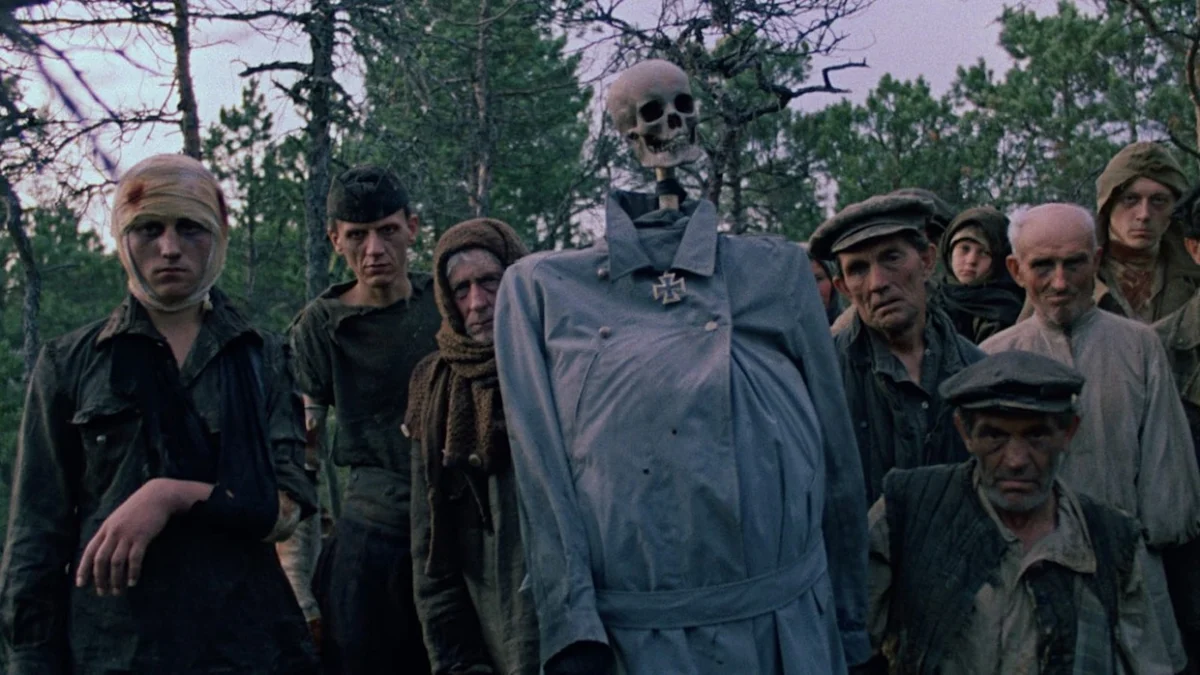
The American Cinematheque’s critically acclaimed film series, Bleak Week: Cinema of Despair, is poised for its most ambitious iteration yet, transforming from a cherished local Los Angeles event into a significant worldwide cinematic phenomenon. Originating in 2022 as a bold counter-programming move during the traditionally lighter summer months, the series is now set to expand into 73 cities and nearly 100 theaters globally starting in June, inviting programmers worldwide to interpret its broad definition of "bleakness" for their diverse audiences. This unprecedented expansion underscores a growing international appetite for challenging, thought-provoking cinema that grapples with profound existential truths and raw human empathy.
The Genesis of Bleak Week: A Local Phenomenon Takes Root
The inaugural season of Bleak Week in 2022 was conceived as a "cheeky stab" at summertime counter-programming by the American Cinematheque, a non-profit organization dedicated to the public presentation of the moving image. Its initial lineup featured 33 films, a curated selection aimed at spotlighting "filmmakers who wholly embrace a cinema of despair in pursuit of unpleasant truths and raw empathy." This foundational principle guided the selection of repertory classics such as Pier Paolo Pasolini’s harrowing Salò, or the 120 Days of Sodom (1975), Elem Klimov’s devastating war epic Come and See (1985), Ingmar Bergman’s stark spiritual drama Winter Light (1963), Michael Haneke’s unsettling home invasion thriller Funny Games (1997), Lars von Trier’s emotionally intense Breaking the Waves (1996), and Béla Tarr’s monumental seven-hour opus Sátántangó (1994). These films, while stylistically diverse, shared a visceral quality and a commitment to exploring the darker facets of the human condition, united primarily by their inherent dreariness and arthouse credentials.
Chris LeMaire, Director of Programming at the American Cinematheque, has been a driving force behind this curatorial vision. Known for his embrace of films often labeled as heavy or depressing, LeMaire’s past programming efforts include spotlighting rare Andrei Tarkovsky prints and orchestrating Lav Diaz’s first-ever visit to the United States. Both Tarkovsky and Diaz are celebrated for their austere, often durational films that delve into national history, political atrocity, and existential concerns, albeit through distinct aesthetic modes. This philosophical alignment forms the bedrock of Bleak Week, which, despite its seemingly surface-level branding, encourages audiences to engage with fundamental human qualities, fostering a dedication to patience and humanism—a willingness to confront potentially intimidating or heavy subject matter.
Strategic Programming and Curatorial Innovation
The inspiration for Bleak Week, according to American Cinematheque Artistic Director Grant Moninger, stemmed from a desire to amplify LeMaire’s programming brilliance and bring greater recognition to arthouse films and celebrated auteurs throughout cinematic history. A key strategic decision in the festival’s early days was to defy one of the American Cinematheque’s unwritten programming rules. Rather than presenting Bleak Week as merely one of many thematic programs, the organizers opted to saturate the schedules of all three of their Los Angeles-based venues with "wall-to-wall despair." This bold move presented both a challenge and an opportunity: if audiences had no choice but to engage with Bleak Week, how would they personally navigate the program?
This question led LeMaire to ponder the multifaceted nature of bleakness itself. "What if there are different types of bleaks?" he mused. The initial program, while strong, contained few truly left-field choices beyond Arthur Penn’s black comedy Penn & Teller Get Killed (1989). However, by its fifth iteration, the series has evolved significantly, boasting a more diverse lineup that places arthouse and repertory mainstays—such as returning favorite Béla Tarr, Jane Campion’s The Piano (1993), and Ingmar Bergman’s war apologia Shame (1968)—alongside a broader spectrum of genre films. This includes selections like Richard Kelly’s enigmatic Southland Tales (2006) and Mick Jackson’s harrowing post-apocalyptic nightmare Threads (1984), films not typically programmed together. The inclusion of retrospective strands dedicated to Isabelle Huppert, Warwick Thornton, and Ari Aster, featuring accompanying Q&A sessions, further enriches the program, aiming to offer something compelling for every type of audience member seeking depth and challenge.
Global Reach and Local Interpretation: A Collaborative Model
The expansion of Bleak Week beyond its Los Angeles origins began gradually, first reaching major cinematic hubs like New York City, Chicago, Dallas, and London. Its current leap to 73 cities worldwide signifies a remarkable testament to its growing appeal and relevance. This widespread acceptance directly challenges prevailing industry narratives, such as The Hollywood Reporter‘s recent article by Carly Thomas on "Hopecore"—a trend favoring uncynical storytelling that celebrates collaboration and the indomitable human spirit, exemplified by films like Project Hail Mary. The success of Bleak Week, with its unflinching portrayal of reality, suggests a powerful counter-current: a strong desire among audiences for films that reflect the world "warts and all."

Moninger views this global unity as inherently hopeful. "To me," he stated, "the greater hope is that places are uniting. These are films made by humans, programmed by humans, for humans, about the human condition. There’s nothing more hopeful than that." This collaborative spirit is central to Bleak Week’s expansion model. Kerstin Larson, programming director at Milwaukee’s Oriental Theater, confirmed that Chris LeMaire directly reached out to potential participating venues. While Larson was already aware of the series through her own research and feedback from LA-based friends, the American Cinematheque provided resources such as a "giant spreadsheet" detailing past programs and distributors’ upcoming restorations. Crucially, LeMaire emphasized a non-impositional approach: "What’s extremely important to us is that we don’t impose a lineup. We don’t even say it has to be seven days. What is a ‘week’ to you? What would that look like in your programming?"
This ethos has fostered remarkable diversity in nationwide Bleak Week programming. For instance, the Oriental Theater, constrained by screen availability, curated a focused lineup of seven films, with only William Friedkin’s heist thriller Sorcerer (1977) overlapping with the American Cinematheque’s broader selection. Larson intentionally honed in on a specific theme: "One of the films that I absolutely had to show was the restoration of American Job (1996), because Chris Smith’s American Movie (1999) is so well-regarded here in Milwaukee. We decided to expand that into a [thematic strand] about how work and labor continues to be bleak. We’re showing The Turin Horse (2011) on Father’s Day, which also is just hilarious—doing all of this programming in June when everything is so bright and sunny." This localized curation demonstrates the flexibility and resonance of the "bleakness" concept, allowing individual theaters to tailor the series to their unique community interests and local cinematic touchstones.
Filmmaker Engagement and Industry Validation
The growing stature of Bleak Week is also significantly bolstered by the enthusiastic participation of renowned filmmakers and actors. A pivotal moment occurred when Chris LeMaire convinced Hungarian auteur Béla Tarr, who had previously stated he would never return to the United States, to attend Bleak Week. Tarr’s presence, as one of the series’ "heroes," instantly elevated the festival’s profile and imparted a sense of occasion that might otherwise have been unattainable. In subsequent years, other influential cinematic voices have joined the fold. In 2025, independent maverick Jon Jost was honored with a rare retrospective, while 2024 featured tributes to Kenneth Lonergan, Lynne Ramsay, and Charlie Kaufman, further cementing the festival’s reputation as a serious platform for artist engagement.
LeMaire marvels at the series’ evolution: "It’s cool we can even call Bleak Week a film festival. There are no premieres of new films. It’s pretty much all repertory programming. And the response to it in this town is like, ‘I gotta get a ticket for every night.’ Year one, we never would have dreamed." Moninger echoed this sentiment, noting the rapid sell-out of Ari Aster’s retrospective tickets "in just a few minutes." The festival’s success is also deeply intertwined with crucial partnerships with distributors. LeMaire highlighted the willingness of entities like Janus Films and American Genre Film Archive to "hold some restorations they have for the year for Bleak Week," a significant endorsement that demonstrates the festival’s industry clout. This year’s edition proudly features world premiere restorations of the Coen Brothers’ The Man Who Wasn’t There (2001) and Daniel Petrie’s historically difficult-to-see Buster and Billie (1974), adding exclusive offerings to its robust lineup.
The star power of figures like French icon Isabelle Huppert, a centerpiece of this year’s programming, further streamlines the curatorial process. "This is the easiest year we’ve ever programmed," LeMaire confessed, "Because once you have her, everyone’s saying ‘yes.’" This strategic approach creates a trickle-down effect, enabling the festival to introduce audiences to lesser-known or more challenging works. "If we can have someone that big, then we can ask audiences to take a chance on some of the rarer things in the lineup," LeMaire explained. "If it’s in a festival with Isabelle Huppert and Ari Aster, it must be interesting." This judicious blend of established appeal and curatorial risk-taking ensures both broad engagement and the discovery of new cinematic horizons.
The Absence of Nonfiction and Broader Cultural Significance
A notable omission in Bleak Week’s programming is nonfiction filmmaking. The organizers consciously choose to exclude documentaries, particularly those depicting real-world atrocities. Moninger explained the rationale: "We don’t actually want to show the suffering. Bleak Week is really triumphant. It’s saying that no matter what people have been through, what they’re going through now, or who they are, you can make art about it." This decision reflects a desire to maintain a distinction between fictional narratives, which serve as vehicles for fantasy and extrapolation, and the direct portrayal of real-world pain, which under a "comparatively glib series banner" might be perceived differently by audiences. While this approach sets a clear boundary, it also suggests a potential area for future development, perhaps through a thoughtfully framed documentary program that aligns with the series’ core values of empathy and profound truth.
The enduring importance of a series like Bleak Week, particularly in a cultural landscape often perceived as leaning towards escapism, cannot be overstated. The "Hopecore" trend, while generating media buzz, represents a recurring cycle rather than a fundamental shift; "treacly sentimentality has never truly been in or out of style, but a constant throughout film history." As Moninger eloquently put it, "There’s never been a time on this earth that wasn’t bleak. It may not be bleak in your house, but I guarantee that next door it’s kind of bleak. And I guarantee you across the ocean it’s kind of bleak. So to say it’s really all about ‘now’ is limiting."
Beyond its curatorial limitations, Bleak Week’s success resonates deeply with the communal potential inherent in cinema. In an increasingly isolated world, the opportunity to experience complex emotions—sorrow, grief, despair—collectively within a shared space offers a unique form of human connection. "Being able to experience sorrow and grief together," Moninger concluded, "there’s something more hopeful about that than people watching entertainment at home." This shared vulnerability and collective engagement with challenging art underscore Bleak Week’s profound cultural significance, positioning it not merely as a film festival, but as a vital forum for collective introspection and empathy in a world constantly navigating its own forms of bleakness.