The landscape of modern television is increasingly defined by ambitious expansions of beloved literary and cinematic universes, as showrunners grapple with the delicate balance of honoring source material while forging new narrative paths. This trend, driven by the insatiable demand for established intellectual property (IP) on streaming platforms, sees acclaimed creators like Bruce Miller, Andy and Barbara Muschietti, and Noah Hawley delving into the worlds of Margaret Atwood’s The Handmaid’s Tale, Stephen King’s It, and Ridley Scott’s Alien, respectively. Their endeavors highlight the creative challenges and immense potential inherent in extending stories that have already captivated millions, often under the direct guidance or with the blessing of the original visionaries. The goal is not merely to retell but to enrich, to explore previously unseen corners, and to provide fresh perspectives on enduring themes that resonate with contemporary audiences.
The Testaments: Continuing the Saga of Gilead
One of the most anticipated continuations is Hulu’s The Testaments, a direct sequel to the critically acclaimed series The Handmaid’s Tale, which itself was an adaptation of Margaret Atwood’s seminal 1985 dystopian novel. Showrunner Bruce Miller, who helmed the initial series, openly admits his early desire for a sequel to Atwood’s original work. "I was like, ‘Well, I hope there’s a sequel!’" Miller recounts, reflecting on his initial reading of The Handmaid’s Tale. Two decades after his first encounter with the text, Miller found himself in the unique position of steering the television adaptation, which debuted on Hulu in 2017. The timing proved prescient, coinciding with a period of heightened political and social tension, making its themes of reproductive rights, totalitarianism, and female subjugation particularly resonant. The series quickly transcended its literary origins, with the evocative image of the Handmaids’ red cloaks and white bonnets becoming a powerful symbol not just of oppression, but of resistance, globally recognized in protests and advocacy movements. Its critical success was unprecedented for a streaming platform, earning it the distinction of being the first streaming offering to win an Emmy for Outstanding Drama Series, a feat it would build upon with 13 additional Emmys over its subsequent five seasons.
Miller’s contemplation of extending Atwood’s narrative beyond the original novel’s conclusion was paralleled by Atwood herself. Unbeknownst to him, the author was also pondering a continuation. Miller acknowledges the long-standing interest in a sequel, noting, "I’m sure it had been suggested a zillion times before." However, he credits the television adaptation for catalyzing Atwood’s decision, suggesting that her engagement with the show, particularly her personal interactions with cast members, allowed her to experience "the fun of television in terms of expanding stories." As production for the second season of The Handmaid’s Tale was underway, Atwood revealed to Miller that she had begun writing a sequel. This new novel, The Testaments, would be published in 2019, set 15 years after the events of The Handmaid’s Tale. Crucially, Atwood shared her expanded vision with Miller, providing a pivotal directive for the ending of his Handmaid’s Tale series: do not kill Aunt Lydia. The menacing character, portrayed with Emmy-winning intensity by Ann Dowd, was destined to return as a central figure in The Testaments.
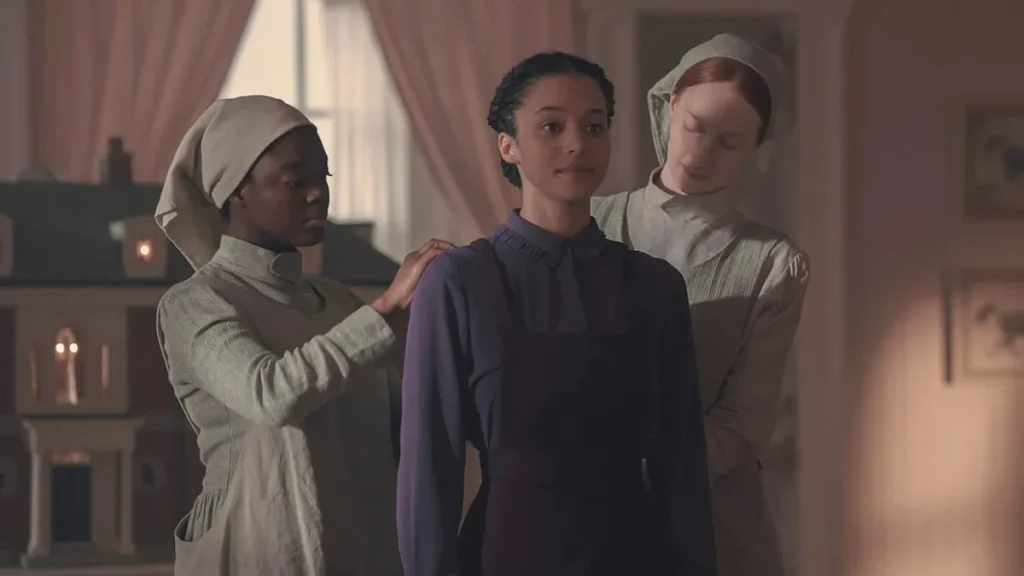
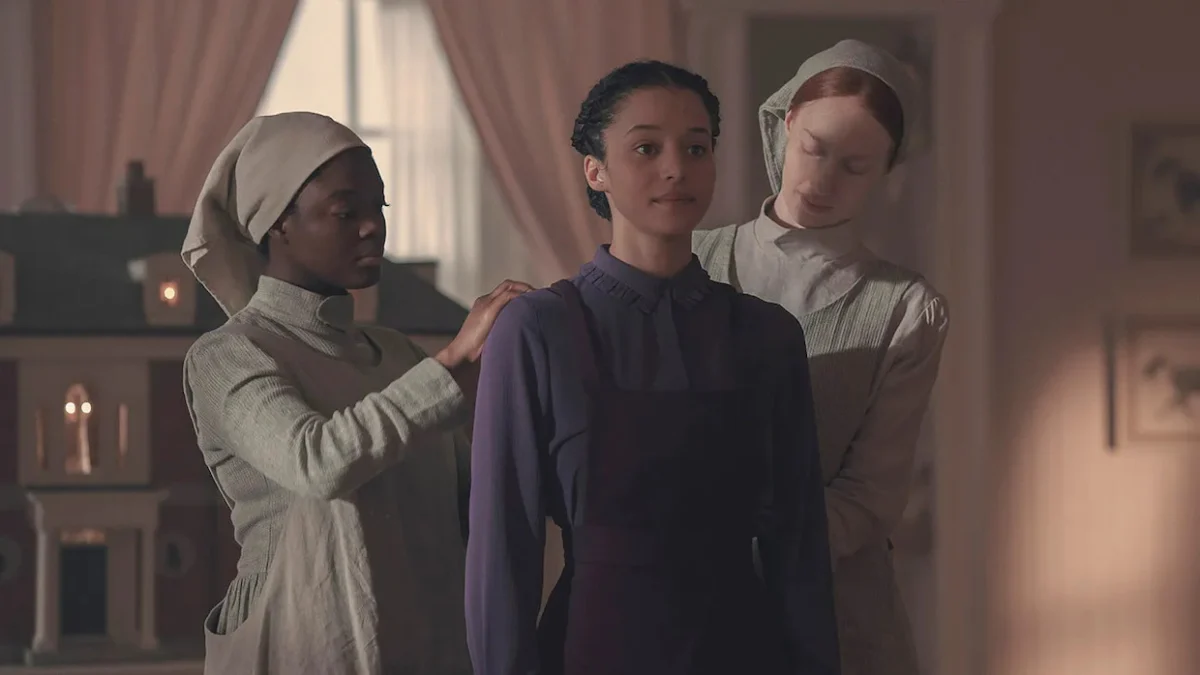
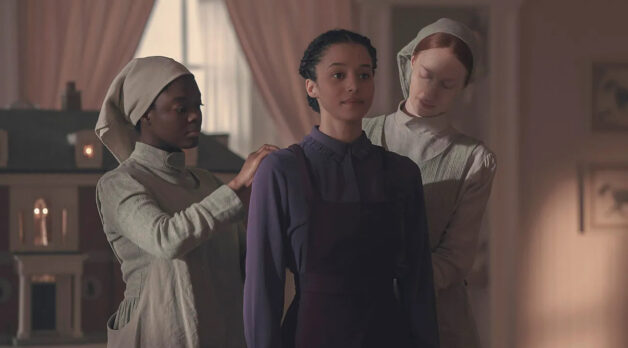
The narrative of The Testaments picks up a decade and a half after Offred (June Osborne, played by Elisabeth Moss in the series) escapes the totalitarian clutches of the Republic of Gilead for the relative safety of Canada. This marked a significant departure from Atwood’s original novel, which concluded with Offred’s ambiguous fate, her story presented as a historical account discovered much later, implying her capture and eventual death. Miller’s adaptation, with Atwood’s encouragement, allowed June to survive and become a more active agent of resistance, paving the way for her continued involvement in the world of The Testaments. The sequel novel primarily follows Agnes Jemima, a young woman raised within Gilead as a handmaid-in-training, unaware of her true parentage as June’s daughter. Another perspective is offered through Daisy, June’s second daughter, raised in Canada. The television adaptation of The Testaments introduces Chase Infiniti as Agnes, whose performance has already garnered critical acclaim, including a Gotham Award, suggesting strong Emmy prospects for the series. The original article’s accompanying image, depicting a young woman in a modest purple dress being helped by two others in taupe dresses and head coverings, visually evokes the ceremonial and restrictive attire of Gilead’s society as depicted in both the novel and the series, particularly the handmaid-in-training garb, offering a glimpse into Agnes’s new reality.
Miller confesses his initial reluctance to deviate significantly from The Handmaid’s Tale novel, a work he deeply admired. However, he recognized the necessity of evolving the narrative to suit the demands of long-form television. "She was very encouraging for me to take the book and interpret it," Miller states, highlighting Atwood’s trust in his creative vision. Throughout the writing process of each Handmaid’s Tale season, Miller and Atwood would meet to discuss ideas, allowing for a symbiotic creative exchange. This ongoing dialogue and the knowledge of The Testaments‘ central premise provided Miller with the freedom to strategically fill the narrative gaps between Atwood’s first novel and his eventual sequel, ensuring a coherent and compelling transition. The sequel, Miller explains, solidified his understanding of Atwood’s willingness to expand her fictional universe. "I got a sense [when I read The Testaments] that she was thinking about the end of The Handmaid’s Tale, where the characters would be placed. It really encouraged me [to consider] some victories for June." This realization empowered Miller to make the most significant departure from the source material: June’s survival and continued fight, diverging from her anonymous death in Atwood’s initial novel. While the specific plot details of the televised Testaments will naturally differ from Atwood’s novel to align with the series’ established narrative, its overarching story and its prescient, powerful themes of resistance, identity, and the struggle for freedom are meticulously preserved.
Unearthing Pennywise: It: Welcome to Derry
Beyond the dystopian future of Gilead, other showrunners are similarly exploring the pasts of iconic figures, venturing into the terrifying origins of Stephen King’s Pennywise the Dancing Clown. Director Andy Muschietti, alongside his producing partner and sister Barbara Muschietti, achieved immense box office success and critical acclaim with their two-part film adaptation of King’s epic horror novel It (It: Chapter One in 2017 and It: Chapter Two in 2019). The films collectively grossed over $1.1 billion worldwide, solidifying King’s enduring appeal and the Muschiettis’ prowess in adapting his complex narratives. It was during the production of these films that the idea for a prequel series began to coalesce. Conversations between Andy Muschietti and Bill Skarsgård, who brilliantly embodied the malevolent Pennywise, sparked a deeper curiosity about the entity’s motivations and backstory. "When you’re close to your actor and talking about character a lot, you go into depths that transcend the story you’re telling," Andy explains. "Soon we were very excited about the potential exploration of Pennywise’s origins—when did the monster become the clown? It’s very enigmatic in the book, but intentionally cryptic." This desire to peel back the layers of a deeply unsettling antagonist forms the core of HBO’s prequel series, It: Welcome to Derry.
Set 27 years prior to the events of It: Chapter One, Welcome to Derry positions itself firmly within the established timeline of the Muschiettis’ cinematic universe. While King’s original novel began its "Losers’ Club" timeline in the late 1950s, the first film adaptation shifted this to the late 1980s. This chronological adjustment was partly a personal choice, as Barbara Muschietti notes, "That was our childhood," referencing the era when they first discovered King’s writing. The prequel’s setting in the early 1960s allows the creators to imbue the narrative with significant historical context. The chilling backdrop of the Cold War, coupled with the nascent stages of the Civil Rights Movement, looms large over a new group of young outcasts in Derry, Maine, echoing the original novel’s "Losers’ Club" as they confront supernatural horrors. This deliberate choice to root the supernatural in tangible historical anxieties amplifies the thematic resonance, connecting the timeless evil of It with specific societal fears of the era.
The Muschiettis envision an intricate origin story for Pennywise’s human alter ego, Bob Gray. The series begins in the economically depressed era at the end of the Great Depression, portraying Gray as a traveling carnival clown with his young daughter. This seemingly innocuous setting takes a dark turn when Gray is lured away by the unnamed, ancient entity that eventually assumes his persona to ensnare its young victims. This "evocative use of vaudevillian imagery" not only grounds the supernatural horror in a recognizable human tragedy but also lays the groundwork for future seasons of Welcome to Derry to explore subsequent historically significant periods, further intertwining the town’s dark history with broader American narratives. The challenge inherent in expanding on a work like King’s It lies in explaining an iconic horror villain’s motivations without diminishing the essential sense of mystery that makes him so terrifying. King’s work, known for its psychological depth and sprawling narratives, has seen countless adaptations, some faithful, others less so. The Muschiettis maintain a close collaborative relationship with King, keeping him informed of any proposed changes. "Whenever we want to test the waters, we let him know immediately," Barbara affirms, acknowledging King as the ultimate "mastermind behind the whole enterprise." Andy Muschietti confidently asserts their approach: "Over the three seasons that we’re planning, we’re hitting the character’s motivation right in the face, and it’s very clear what he wants. It’s not something that people necessarily will expect, but it’s very exciting." This promise of a clear yet unexpected motivation suggests a deep dive into the cosmic horror of It, offering fans unprecedented insight while preserving its core terror.
Beyond the Xenomorph: Alien: Earth
In a different corner of the expansive universe of adaptations, Noah Hawley, the acclaimed creator and showrunner behind the Emmy-winning anthology series Fargo, embarks on a new venture with FX’s Alien: Earth. Unlike Miller and the Muschiettis, Hawley had no prior direct involvement with the Alien film franchise before taking on this television series, which is set in the iconic universe first established by Ridley Scott’s groundbreaking 1979 film. Despite the weight of the franchise’s legacy, Hawley approached the task with confidence, leveraging his experience in crafting complex, thematically rich narratives within existing IP. Alien: Earth is positioned just before the events of Scott’s original film, establishing a chronological link while forging its own distinct identity. The series stars Sydney Chandler as Wendy, a pioneering human-cyborg hybrid – the first of her kind. Wendy leads a specialized team of fellow hybrids to investigate the crash landing of a research vessel. As viewers might anticipate, a xenomorph is found running rampant aboard, having already decimated the ship’s crew.
Hawley articulates that the extended canvas of a 10-episode series provides an ideal platform to bring the franchise’s larger, enduring themes into a contemporary context. He poses a crucial question: "What is [the original] movie at its core? If it had just been a monster movie, I don’t know if there would be a television series there." This introspection leads Hawley to explore the deeper sociological and philosophical underpinnings of the Alien saga. In his series, Wendy finds herself caught in a perilous struggle between two monolithic corporations: Weyland-Yutani, the infamous entity that owns the crashed vessel and seeks to claim the alien specimen for its own nefarious purposes, and Prodigy, the tech company responsible for the groundbreaking hybrid program. This corporate antagonism is a direct amplification of a critical dynamic established in Scott’s original film. There, the threat to Sigourney Weaver’s Ripley was not solely the xenomorph itself, but also the duplicitous android Ash (Ian Holm), who was programmed to protect potential Weyland-Yutani assets—the xenomorph—over human lives. Hawley succinctly captures this dilemma: "You realize she’s trapped between nature and technology, and they’re both trying to kill her. That seems pretty on point with our moment on Earth right now." This analysis highlights the series’ ambition to transcend mere creature feature horror, using the Alien universe as a mirror to contemporary anxieties about corporate power, artificial intelligence, and humanity’s place in a technologically advanced, yet often hostile, cosmos.
A particularly exciting aspect of Hawley’s vision for Alien: Earth is the freedom he has embraced to introduce entirely new extraterrestrial creatures. While some are lethally dangerous to humans, others are unexpectedly benevolent, challenging preconceived notions about "aliens" within the franchise. Hawley clarifies his creative mandate: "It’s called Alien. It’s not called Xenomorph, right?" This distinction allows him to broaden the scope of alien life forms, introducing a diverse array of characters whose biology, diet, and reproductive methods are unknown. "We get to make it fresh again for the audience," he states, emphasizing the potential for renewed wonder and terror. This expansion beyond the singular xenomorph species is a strategic move to inject novelty and unpredictability into a long-running franchise, demonstrating a commitment to innovation while respecting the core tenets that define the Alien universe. Hawley expresses confidence that this additive approach will be well-received by fans: "If you say, ‘Here’s the world of Alien, here’s the creatures and premise that you love, and let me see if I can do something additive to it,’ the hope is that people will feel happy about that."
The Broader Implications of Franchise Expansion
The collective efforts behind The Testaments, It: Welcome to Derry, and Alien: Earth underscore a significant paradigm shift in content creation, particularly within the competitive streaming landscape. The strategic value of established IP cannot be overstated. With proven fan bases and recognizable narratives, these expanded universes offer platforms a degree of guaranteed audience engagement that original content often struggles to achieve. However, this comes with immense pressure to satisfy a diverse audience that ranges from long-time devotees to new viewers. The success of these ventures hinges on a delicate balance: honoring the original spirit and thematic depth while injecting fresh perspectives and innovative storytelling.
The collaboration between original creators and new showrunners, as exemplified by Atwood’s active involvement with Bruce Miller and King’s consultation with the Muschiettis, represents a best-case scenario. This synergy often results in narratives that feel authentically connected to their origins while benefiting from the dynamism of a fresh creative team. It mitigates the risk of "franchise fatigue" by offering new entry points and deeper explorations, rather than mere reiterations. For the television industry, this trend signifies a move towards increasingly cinematic storytelling on the small screen, with production values and narrative ambitions rivaling blockbuster films. It also highlights the evolving role of television as a medium uniquely suited for long-form, serialized narratives that can meticulously unpack complex characters, elaborate backstories, and intricate world-building over multiple seasons. As audiences continue to seek immersive and expansive storytelling experiences, the careful and creative expansion of beloved universes will undoubtedly remain a cornerstone of content strategy for years to come.