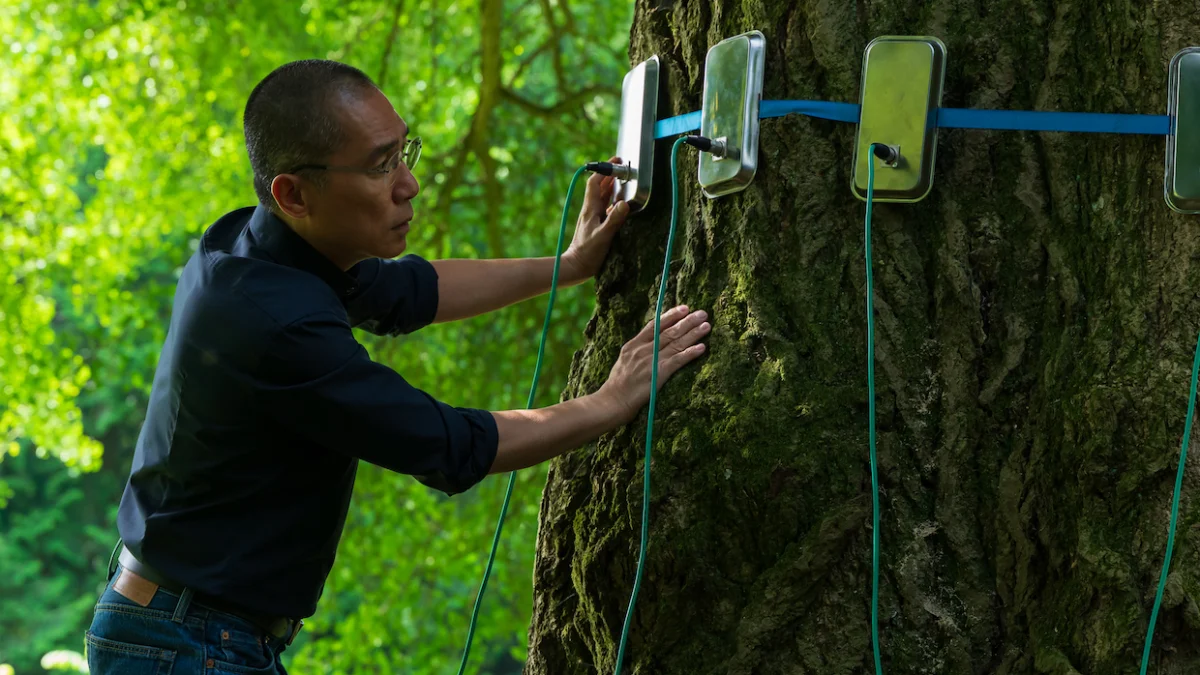
Tony Leung Chiu-wai, the revered Hong Kong actor celebrated for his profound performances and enigmatic screen presence, continues to captivate global audiences with his latest cinematic endeavor, Silent Friend. This Hungarian production, helmed by acclaimed filmmaker Ildikó Enyedi, offers a contemplative exploration of humanity’s connection to nature through the lens of a single, ancient German ginkgo tree across three distinct historical periods: 1908, 1972, and 2020. Leung, a luminary whose collaborations span the oeuvres of cinematic giants like Wong Kar-wai, John Woo, Hou Hsiao-hsien, Ang Lee, and Zhang Yimou, takes on the role of a neuroscientist in the film’s contemporary segment, presenting a character whose intellectual curiosity intertwines with a profound personal journey during a global crisis.
The Philosophical Heart of Silent Friend: Consciousness and Connection
In Silent Friend, Leung’s character, a neuroscientist in 2020, finds his groundbreaking research on newborn brain activity abruptly halted by the unprecedented onset of the COVID-19 pandemic. This professional hiatus leads him to an unexpected solace and fascination with a nearly 200-year-old ginkgo tree. His scientific rigor, usually directed towards human neurological activity, subtly shifts as he endeavors to uncover a potential link between his own consciousness and that of the ancient arboreal sentinel. The film delves into the profound question of plant sentience, a theme that resonated deeply with Leung. He revealed that his perspective on the plant kingdom underwent a significant transformation after immersing himself in literature on plant intelligence for the role. "I do [believe plants have consciousness], especially after studying books about plant intelligence for this movie. I’ve really changed my entire perspective towards plants. I think they’re just like humans. They are sentient beings. So to some degree they have consciousness," Leung stated, echoing a sentiment that aligns with certain philosophical and spiritual traditions, including Buddhism, which posits that all living beings possess consciousness.
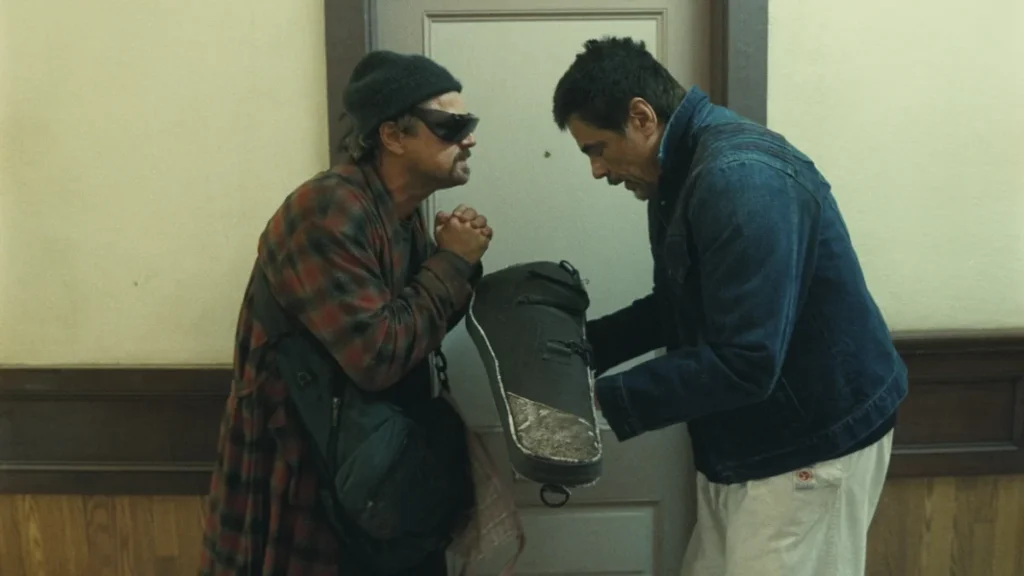
Director Ildikó Enyedi, known for her unique narrative sensibilities as seen in her Golden Bear-winning On Body and Soul, crafted Silent Friend as a meditation on time, connection, and the often-overlooked intelligence of the natural world. The ginkgo tree, a symbol of longevity and resilience, becomes more than just a backdrop; it is a silent observer, a conduit through which human stories unfold across generations. The decision to cast Leung was rooted not just in his acting prowess but in his inherent character. Enyedi remarked, "He has a gentle but strong attention to the world, to fellow humans as well. It’s an approach similar to a monk, or to a scientist for that matter." This observation highlights Leung’s authentic curiosity and introspective nature, qualities Enyedi found crucial for a convincing portrayal of a scientist. She deliberately sought the "person behind Tony," recalling an interview for Shang-Chi and the Legend of the Ten Rings where she was struck by his genuine desire for real conversation, his lack of "ready-made answers," and his profound curiosity about the world. This intrinsic persona, rather than mere acting technique, was the core element she believed would elevate the neuroscientist character beyond conventional cinematic depictions.
The film’s contemporary segment is profoundly shaped by the COVID-19 pandemic, a global event that forced widespread isolation and introspection. Leung’s character experiences this isolation acutely, mirroring the actor’s own real-life experience. He recounted, "Very much like what happened in the movie. I was isolated from other people, in a city with no one I really knew. All the hotels and stores closed down. It was in Tokyo. I like to ride my bicycle, but it was strange because there was no one on the streets." This shared experience of forced solitude and altered realities provides a poignant layer of authenticity to his performance, bridging the fictional narrative with a universally felt historical moment. The film’s theatrical release on May 8 via 1-2 Special, following its appearance at the Busan International Film Festival, allowed audiences to engage with these timely and timeless themes.
A Career Defined by Depth and Diversity: From Television to Global Icon
Tony Leung’s journey to becoming one of Asian cinema’s most revered figures began not on the silver screen but in television. Starting as a co-host of a children’s TV show in 1982, his talent quickly propelled him into leading roles in Hong Kong television dramas, where he honed his craft and built a formidable reputation. By the late 1980s, his transition to film was inevitable, marked by an immediate impact. His collaborations with auteur Wong Kar-wai, beginning with Days of Being Wild (1990) and reaching iconic status with Chungking Express (1994) and In the Mood for Love (2000), cemented his status as a master of nuanced, internal performances. His portrayal of Chow Mo-wan in In the Mood for Love, a character etched in melancholic longing and unspoken desires, earned him the Best Actor award at the Cannes Film Festival, a testament to his extraordinary ability to convey profound emotion with minimal dialogue, often relying on his famed "penetrating gaze."
Leung’s filmography is a tapestry woven from diverse genres, showcasing his remarkable versatility. He has traversed the romantic landscapes of Happy Together, the gritty crime underworlds of John Woo’s Hard Boiled and Andrew Lau and Alan Mak’s Infernal Affairs (a role that profoundly influenced Hollywood’s The Departed), the historical dramas of Hou Hsiao-hsien’s A City of Sadness, and the martial arts epics of Zhang Yimou’s Hero and Wong Kar-wai’s The Grandmaster. From reporters to policemen, smugglers to real-estate tycoons, gamblers to neuroscientists, Leung imbues each character with a singular commitment and empathy. His ability to embody complex inner lives, often through subtle expressions and the intensity of his eyes, has become a hallmark of his performing style. Enyedi’s observation that his distinctive gaze might stem from a "painful, difficult" childhood, where he learned to "hide his feelings, to isolate himself," offers a poignant insight into the wellspring of his artistic depth. This personal history, transmuted into his craft, allows him to connect with audiences on a profoundly human level, regardless of the role or genre. His recent retrospective at Film at Lincoln Center, his first major promotional visit to New York in nearly 25 years, served as a powerful reminder of the breadth and enduring impact of his four-decade-long career.
The Art of Immersion: Tony Leung’s Meticulous Preparation
Leung’s commitment to his craft extends far beyond the script. For his role as a neuroscientist in Silent Friend, he embarked on an arduous six-month preparation period even before production commenced. This intensive process underscores his dedication to authentic character embodiment. "I actually didn’t have much information about the character from the script, so I tried to approach him by learning about neuroscience," Leung explained. His research included studying early cognitive development and consulting with actual neuroscientists from various universities. He even sought opportunities to observe EEG studies on children, an endeavor that proved challenging due to logistical constraints ("We didn’t have a baby lab"). Concurrently, he delved into the philosophy of consciousness and plant intelligence, creating a holistic intellectual framework for his character.
His goal was not merely to understand the character intellectually but to inhabit him "in an unconscious manner, to convince myself that I was that person." This deep immersion was crucial for developing the confidence needed for pivotal scenes, such as a lecture. Furthermore, recognizing that his character might have studied at prestigious institutions like Oxford or Cambridge, Leung meticulously hired a British accent coach to subtly incorporate a hint of a British accent into his delivery. This granular attention to detail, from scientific understanding to vocal nuance, exemplifies his legendary dedication and illustrates why he is considered one of the most meticulous actors of his generation.

Navigating Creative Landscapes: Collaborations and Craft
Leung’s career is marked by enduring collaborations and a unique approach to selecting projects. He prioritizes the director over the script, relying on his instinct to gauge a potential collaborator’s vision and compatibility. "I believe my instinct. I love being with someone I think I can work with. I don’t pick a project because of the script, but because of the director, the person. I need to talk with them, have a meeting to feel them out. If it’s good, then I will work with them," he articulated. This philosophy has led him to work repeatedly with certain directors, fostering deep artistic relationships that yield exceptional results.
His experience on Tran Anh Hung’s 1995 film Cyclo, set in the gritty post-war landscape of Vietnam, provides a vivid example of this collaborative spirit. Despite facing significant challenges, including censorship that prevented the crew from reviewing dailies until after leaving the country, Leung’s performance remained uncompromised. He attributed this to his profound understanding of the script and his close bond with the director and co-star Trần Nữ Yên Khê. "No, because I knew the script so well. I stayed very close with the director and the star… We went to Vietnam about a month before shooting started. We were very close, and I knew the story very well," he explained. The month-long pre-production period, filled with discussions, shared meals, music, and visits to art collectors, allowed for an organic understanding of the film’s world and characters, illustrating the depth of collaboration that defines his preferred working environment.
Leung also acknowledges the stark differences in production methodologies across various cinematic traditions. While films like Cyclo and Silent Friend offer greater flexibility and room for improvisation, major Hollywood productions, such as Shang-Chi and the Legend of the Ten Rings, operate under much stricter constraints. "In a Hollywood production, you can’t change a word. You have to do everything just as it was already prepared. So it’s very different," he noted, highlighting the adaptability required of an actor who navigates both independent and studio systems.
Embracing Complexity: The Allure of Antagonists
In recent years, Tony Leung has broadened his artistic spectrum by taking on a series of compelling villainous roles, a departure from the often-sympathetic characters that defined much of his career. From Xu Wenwu, the powerful and conflicted antagonist in Marvel’s Shang-Chi and the Legend of the Ten Rings (2021), to the ambitious and morally ambiguous real estate tycoon Henry Ching Yat-yin in The Goldfinger (2023), and a corrupt Hong Kong policeman in Where the Wind Blows (2023), Leung has delved into the darker facets of human nature. This shift is driven by a desire for artistic exploration. "It’s something I seldom have a chance to do. I just want to explore that mindset, experience how it feels to be that," he stated, indicating a deliberate choice to challenge himself and delve into unexplored psychological territories.
His portrayal of Sam, the ruthless policeman in Wai Ka-fai’s 1997 noir thriller The Longest Nite, is often cited as one of his darkest performances. Leung fondly recalled the experience, particularly enjoying the improvisational working style of director Johnnie To. "I loved that movie. Its box office wasn’t that great, but I loved working with Johnnie To. You know he wasn’t working with a script, right? I asked him, ‘How come you don’t have a script?’ He said, ‘That’s the way I’m working now.’ It was really enjoyable. I thought, why not explore that kind of character? Because I wouldn’t get that chance in real life." This anecdote underscores his eagerness to embrace creative spontaneity and characters that offer a stark contrast to his own persona.
For The Goldfinger, Leung tackled the role of Henry Ching Yat-yin, a character inspired by the enigmatic real-life figure George Tan, at the center of the infamous Carrian Group scandal that rocked Hong Kong in the 1980s. The Carrian Group, once a high-flying conglomerate, collapsed spectacularly amidst allegations of fraud, corruption, and even murder, becoming one of Hong Kong’s most sensational financial scandals. "I heard of George Tan when I was young, but I had no idea who he was. He’s very mysterious," Leung recalled. Director Felix Chong provided him with the book The Joker’s Downfall (also known as Carrian: a True Story of Murder, Mystery and Mayhem by Ian Robinson), which illuminated the intricate and shocking details of Tan’s rise and fall. "I thought, ‘Wow, how can something like this happen in Hong Kong?’ Someone was even murdered, but there was no follow up." The challenge of portraying such a shadowy figure was immense, as Tan rarely appeared in public. Leung’s research involved looking into the bankers Tan associated with, yet he largely had to construct the character based on the book’s accounts and his own inferences, due to the persistent mystery surrounding the real man. "Even now, no one knows who he really was," Leung concluded, highlighting the profound artistic challenge of bringing such an elusive figure to life.
The Enduring Legacy and Future Horizons
Tony Leung Chiu-wai’s career is a testament to artistic integrity, relentless dedication, and a boundless capacity for transformation. His ability to convey complex emotional landscapes with an unparalleled depth has solidified his status as an international cinematic treasure. From the melancholic lovers of Wong Kar-wai to the stoic heroes of John Woo and the philosophical scientists of Ildikó Enyedi, Leung consistently delivers performances that resonate deeply and leave an indelible mark.
Looking ahead, fans of Hong Kong cinema have reason to anticipate another significant collaboration. Johnnie To, with whom Leung enjoyed the unique, scriptless experience of The Longest Nite, has announced a new project featuring the actor. Leung confirmed the development: "Yes, we’re working on the script right now." However, due to his packed schedule, which includes two other committed projects, the To film is projected for a late 2027 production. This future endeavor, combined with his continued exploration of diverse roles and challenging narratives, ensures that Tony Leung Chiu-wai’s enduring legacy will continue to evolve, inspiring both filmmakers and audiences for years to come. His commitment to authenticity, his introspective approach to character, and his innate curiosity about the world remain the guiding forces of a truly extraordinary cinematic journey.