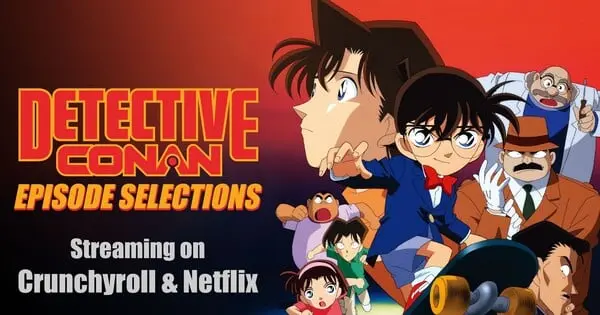
As Detective Conan celebrates three decades of continuous publication, the franchise faces the perennial challenge of managing its massive narrative scale while remaining accessible to new audiences. Created by Gosho Aoyama and serialized in Weekly Shōnen Sunday since 1994, the series has become a cultural juggernaut, spawning over 100 manga volumes, more than 1,100 anime episodes, and an annual feature film series that consistently tops the Japanese box office. However, the sheer volume of content has historically created a "barrier to entry" for Western viewers. Recent initiatives by streaming platforms like Netflix and Crunchyroll to release curated, plot-focused episode collections represent a strategic shift in how this legendary detective series is localized and consumed outside of Japan.
Navigating the Narrative Labyrinth: The New Collection
The latest curated collection, focusing on the buildup to the pivotal "Clash of the Red and Black" arc, serves as a bridge between disconnected segments of the series currently available in English. This release follows previous thematic sets—"Conan vs. The Black Organization," "Rivals of the Great Detective," and "FBI Intervention"—which were designed to isolate the core conflict involving the mysterious Black Organization and the lethal toxin APTX 4869.
The current 12-episode set functions as a tactical prologue. The selection is divided into two distinct narrative categories: classic standalone procedural mysteries and character-driven exposition. The opening segment, featuring "Young Genta’s Misfortune," adheres to the traditional "Detective Boys" format, serving as a reminder of the show’s episodic roots. This is followed by "The Dissonance of the Stradivarius," a three-part case that utilizes the series’ penchant for high-stakes, locked-room puzzles. While these early episodes prioritize traditional mystery tropes—complete with musical theory-based clues and character-specific quirks—they provide minimal movement on the series’ overarching plot.
Introducing Eisuke Hondou and the Black Organization Arc
The latter two-thirds of this collection pivot toward the introduction of Eisuke Hondou, a character who acts as a crucial catalyst for the series’ major plot developments. Hondou’s introduction serves as a structural necessity; his arrival brings the FBI and the Black Organization into closer proximity, escalating the danger for the protagonist, Conan Edogawa.
From a narrative perspective, the Black Organization functions as a "slow-burn" antagonist. By limiting their appearances, Aoyama maintains the threat level of the group while allowing the series to sustain its long-running format. If the organization were a constant presence, the narrative stakes would likely force a premature conclusion. Instead, the writers utilize new characters like Hondou to layer the mystery, connecting the reporter Rena Mizunashi (the operative known as Kir) to the FBI’s ongoing investigation. This character-centric approach highlights Aoyama’s strength in balancing rigid mystery-of-the-week structures with long-form character development.
Production and Localization Standards
A significant aspect of this release is the debut of a brand-new English dub, which aligns with modern localization standards. The production team, including voice actors Robert McCollum (Kogoro Mouri), Megan Shipman (Ran Mouri), and Molly Zhang (Conan Edogawa), has been tasked with maintaining the tonal nuances of the original Japanese performances.
The choice of episodes in this collection is particularly conducive to dubbing, as they rely less on Japanese wordplay or culture-specific puns that often plague the translation of mystery anime. The consistency of the dub, coupled with the modernized animation quality, reflects a significant investment in quality control. When compared to early 1990s episodes, the visual evolution—characterized by more fluid character designs and refined silhouettes—demonstrates the franchise’s successful adaptation to changing animation technologies over the last two decades.
The Challenge of Fragmentation
Despite the success of these curated collections, they highlight a persistent issue in the global distribution of the series: the fragmentation of the official English catalog. On major streaming platforms, the gap between available episodes can be substantial—for instance, jumping from episode 128 to 754. This lack of continuity has historically hampered the growth of the series in Western markets.
By providing these "gap-filling" sets, distributors are effectively creating a roadmap for viewers, allowing them to bypass hundreds of filler episodes to reach the core "Clash of the Red and Black" saga. While this method is a functional workaround, it underscores the difficulty of managing a series that has been running for 30 years without a consistent, long-term international release strategy. Industry analysts suggest that this "piecemeal" approach is likely the most viable path forward for a series of this length, as it prevents the total overwhelming of new viewers while still providing access to the franchise’s most iconic narrative arcs.
Chronology of the Series and Future Outlook
The "Clash of the Red and Black" arc, for which this set serves as the foundation, is widely considered one of the most critical turning points in the entire series. It represents the culmination of years of character setup, providing answers to questions surrounding the Black Organization’s infiltration of the media and the FBI’s counter-intelligence operations.
The following timeline illustrates the evolution of the series:
- 1994: Manga serialization begins in Weekly Shōnen Sunday.
- 1996: Anime adaptation premieres in Japan.
- 2000s: Global localization efforts begin, often marked by heavy editing and name changes (e.g., Case Closed).
- 2020s: Shift toward high-fidelity, uncensored releases and thematic collections on global streaming platforms.
The decision to release this material now suggests that the franchise is moving toward a more unified global presence, potentially capitalizing on the renewed interest generated by the 30th anniversary. By focusing on high-impact story arcs, the current release model attempts to harmonize the series’ long history with the consumption habits of modern streaming audiences.
Broader Implications for Long-Running Franchises
The strategy employed by the Detective Conan team provides a case study for other long-running anime franchises, such as One Piece or Naruto, which similarly struggle with accessibility due to sheer volume. The "curated collection" model allows rights holders to monetize older content while simultaneously cultivating a new generation of fans.
As the series continues, the primary challenge will remain the reconciliation of its dual nature: the comfort of the episodic "whodunit" and the intensity of the overarching spy-thriller. If this collection succeeds in onboarding new viewers, it could set a precedent for how other legacy series are treated in the age of global digital distribution. While the current set is primarily a prelude to the action, its existence is a positive development for fans who have long waited for an accessible way to engage with the, at times, inaccessible history of one of the world’s most enduring detective stories. The upcoming release of the remainder of the "Clash of the Red and Black" saga will be the true test of whether this targeted distribution method can successfully convert casual viewers into long-term franchise enthusiasts.