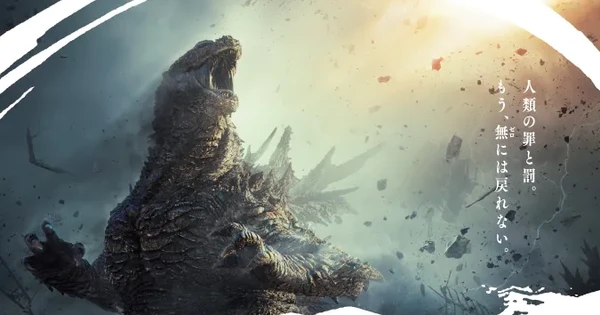
The release of Godzilla Minus Zero marks a pivotal shift in the trajectory of the Toho-produced kaiju franchise, serving as a direct sequel to the 2023 Academy Award-winning film Godzilla Minus One. Directed by Takashi Yamazaki, the new installment attempts to reconcile the franchise’s dual nature: the metaphorical, horror-driven roots of the character and the high-octane spectacle of monster-versus-monster combat. While its predecessor was lauded for stripping the narrative down to a singular, terrifying threat, the sequel introduces King Ghidorah, necessitating a complex balancing act between historical trauma and blockbuster action.
Chronology and Cinematic Context
To understand the significance of Godzilla Minus Zero, one must view it through the lens of recent franchise history. In 2016, Hideaki Anno’s Shin Godzilla offered a bureaucratic and existential critique of contemporary Japan, serving as a standalone reboot. This was followed by the 2023 release of Godzilla Minus One, which reset the timeline to the immediate aftermath of World War II.
Godzilla Minus One became a cultural and financial phenomenon, grossing over $115 million worldwide on a budget estimated at approximately $15 million. Its success was anchored in its depiction of post-war Japan’s psychological landscape. The announcement of a sequel was widely expected, but the challenge for Yamazaki was to escalate the stakes without trivializing the established tone. Godzilla Minus Zero, set in 1949, follows the established timeline of its predecessor, situating the audience in a nation still physically and emotionally rebuilding from total war.
Technical Evolution and the Introduction of Ghidorah
A primary focus of the production has been the visual representation of King Ghidorah. Yamazaki, who oversaw the visual effects in both films, has utilized upgraded rendering software and improved motion-capture integration to ensure that the three-headed dragon appears as a tangible, lethal threat rather than a digital construct.
During a post-screening press conference, critics raised questions regarding the symbolic weight of the new antagonist. When asked if Ghidorah functions as a metaphor for a specific geopolitical or historical entity, Yamazaki refrained from providing a singular answer. Instead, he emphasized the intended emotional response of the audience. “The goal was to evoke a profound sense of powerlessness,” Yamazaki noted. This approach aligns with the director’s established methodology of using kaiju as agents of chaos that disrupt the fragile stability of human existence. The film’s focus on the power dynamic between the two monsters—Godzilla, representing an unstoppable force of nature, and Ghidorah, representing a catastrophic, extraterrestrial disruption—is designed to underscore the helplessness of the human characters caught in the crossfire.
The R-Rating and the Reality of Conflict
Godzilla Minus Zero has received an R-rating, a distinction that sets it apart from many contemporary big-budget monster films. This rating is not a result of gratuitous violence, but rather a commitment to depicting the harrowing reality of the civilian experience in a war-torn nation.
The narrative introduces Kanji Murakami, portrayed by Min Tanaka, whose backstory is deeply rooted in the trauma of the Hiroshima bombing. The film utilizes flashbacks to illustrate the visceral impact of the blast, focusing on the discovery of human remains and the subsequent psychological scarring. Furthermore, the film addresses lingering plot points from Godzilla Minus One, specifically the survival of the character Noriko, played by Minami Hamabe. By framing these events with unflinching honesty, the film challenges the conventions of the genre, which often sanitizes the impact of mass destruction.
Analysts suggest that this tonal shift toward "war-horror" serves as a thematic bridge. By grounding the science-fiction elements in historical reality, the film forces the audience to confront the consequences of violence. This deliberate choice by the production team serves as a counter-narrative to the "bloodless blockbusters" that have dominated the summer box office in recent years. While the film is not intended for children, proponents argue that its examination of trauma makes it a significant, albeit challenging, piece of media for older teenage audiences.
Structural Analysis and Narrative Arc
The film faces unique challenges regarding its structure. Unlike its predecessor, which functioned as an independent narrative focusing on the redemption of the protagonist Koichi Shikishima (Ryunosuke Kamiki), Godzilla Minus Zero is heavily reliant on the audience’s familiarity with the 2023 film.
Shikishima’s arc in the first film—overcoming the guilt associated with his service as a kamikaze pilot—provided a clean, effective hook for the audience. The sequel, while offering new character beats, lacks that singular, central focus. The emotional stakes are distributed across an ensemble cast, with character attachments being predicated on the relationships established in the previous installment. From a critical standpoint, this creates a "sequel dependency" where the film’s efficacy is tied to the emotional legacy of the first entry.
Comparison has been drawn between this diptych and the Star Wars original trilogy. If Godzilla Minus One is considered the foundational narrative, establishing the stakes and the hero’s journey, Godzilla Minus Zero acts as the darker, more complex expansion of that world. The film is less about individual redemption and more about the collective struggle for survival in an unpredictable environment.
Implications for the Franchise
The financial and critical success of this approach has significant implications for Toho’s future strategy. By focusing on a "darker, more grounded" interpretation of the Godzilla mythos, the studio has successfully differentiated its Japanese output from the American MonsterVerse.
The industry-wide impact of this success is notable. With Godzilla Minus Zero, the studio has proven that audiences are willing to engage with complex, slow-burn narratives that prioritize character development and thematic depth over non-stop action. The "bleakness" of the film’s conclusion—where the world is not necessarily "saved," but rather a moment of respite is earned—suggests a shift toward more mature storytelling within the kaiju genre.
Whether the franchise will continue with a third installment remains unconfirmed. Yamazaki has expressed that if the narrative concludes here, he is satisfied with the thematic consistency achieved across the two films. The duology stands as a commentary on resilience; in a world where the return of the monsters is always a possibility, the focus remains on the preservation of family and the maintenance of dignity in the face of inevitable collapse.
Conclusion: A New Standard for Kaiju Cinema
Godzilla Minus Zero succeeds by refusing to compromise its tone. By blending the pulp excitement of classic monster movies with the somber weight of post-war historical drama, the production team has elevated the genre. The technical achievements, combined with a willingness to explore the long-term psychological effects of catastrophe, position this film as a notable entry in the long-running franchise.
As the film reaches international markets, its reception will likely continue to influence the direction of the kaiju genre. By treating its subjects—both human and monster—with gravity and complexity, the filmmakers have ensured that Godzilla remains not just an icon of destruction, but a mirror for the anxieties of the contemporary world. The reliance on the emotional foundation of the previous film may limit its accessibility as a standalone piece, but for the established fanbase, it represents a sophisticated evolution of a character that has been a staple of cinema for over 70 years. Whether this concludes the current narrative arc or serves as a bridge to further conflict, the impact of the work on the cinematic landscape is undeniable.