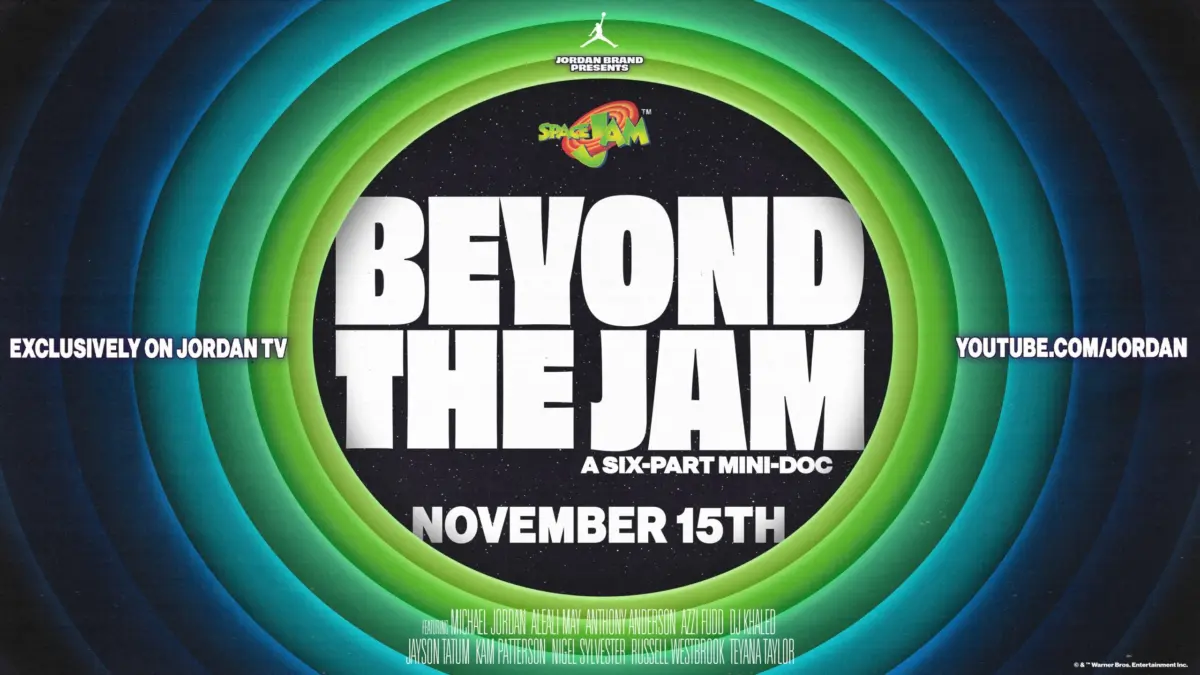
This Sunday, the sports and entertainment landscape will witness a significant pivot in corporate content strategy as Jordan Brand officially debuts Jordan TV, a digital-first platform hosted on YouTube, headlined by a six-part documentary series titled Beyond the Jam. This production arrives exactly three decades after the 1996 release of Space Jam, a groundbreaking film that fundamentally altered the trajectory of athlete-driven entertainment and pop culture. By transitioning from traditional advertising to long-form, narrative-driven programming, the Nike-owned subsidiary is attempting to secure deeper, more sustained engagement with a younger demographic that increasingly rejects overt promotional content.
The Genesis of a Cultural Phenomenon
To understand the significance of the Beyond the Jam docuseries, one must contextualize the original 1996 film. At the time of its release, the concept of a live-action basketball star collaborating with the Looney Tunes was considered a massive creative risk. Produced by Warner Bros., the film grossed over $230 million at the global box office—a massive figure for the mid-90s—and became an enduring touchstone for 90s nostalgia.
The film did more than entertain; it served as a masterclass in cross-promotional marketing. It solidified Michael Jordan’s transition from a basketball superstar to a global cultural icon, effectively bridging the gap between professional sports and Hollywood stardom. Three decades later, the documentary seeks to pull back the curtain on this production, featuring rare on-camera commentary from Michael Jordan himself, alongside a contemporary roster of talent including Jayson Tatum, J Balvin, and Teyana Taylor. The series also serves as a poignant tribute to the late Eric Bauza, the legendary voice of Bugs Bunny and Daffy Duck, who passed away unexpectedly last month.
The Strategic Evolution into Jordan TV
The launch of Jordan TV represents a fundamental shift in how the Jordan Brand perceives its role in the lives of consumers. According to Caitlin Sargent, Chief Marketing Officer at Jordan Brand, the initiative is a calculated response to a changing media consumption landscape. Jordan TV is not intended to be a replacement for the brand’s existing marketing efforts, but rather a dedicated "insider" channel designed to grant the community unprecedented access to the brand’s creative process.
The platform is built on the premise that modern audiences—specifically Generation Z and Alpha—are less interested in commercials and more interested in "making-of" content, behind-the-scenes access, and authentic storytelling. By repositioning its existing YouTube presence as a fully-fledged media channel, Jordan Brand is effectively becoming its own production house. This "inside access" approach aims to demystify the brand, showing the work behind product launches, athlete partnerships, and the intersections between sneaker culture and high-stakes performance art.
Industry Implications and the Death of Traditional Advertising
The decision to move away from traditional television commercials toward serialized long-form content is part of a wider trend in the corporate world. As consumers install ad-blockers and tune out traditional interruptive advertising, major brands are pivoting toward becoming "full-funnel storytellers." By funding original content, companies can maintain the attention of a consumer base that is otherwise difficult to reach through traditional media buying.
Data from the digital marketing sector suggests that this shift is imperative. Studies consistently show that branded content that provides actual entertainment value—rather than just a sales pitch—enjoys higher retention rates and significantly better sentiment scores. For Jordan Brand, the goal is to create "core memories" for their audience. As Sargent noted in recent interviews, if a piece of content feels like an ad, it is likely to fall flat. By focusing on the historical gravity of the Space Jam legacy, the brand is aiming to create a narrative link between the past successes of Michael Jordan and the aspirations of the next generation of athletes.
Chronology of a Legacy: 30 Years of Space Jam
The impact of the original film cannot be overstated when examining the cultural landscape of the 1990s and early 2000s. A brief chronology of the film’s influence highlights why it remains a viable subject for a modern documentary:
- 1996: Space Jam premieres, featuring Michael Jordan at the height of his professional basketball career. It sets a new benchmark for brand-integrated entertainment.
- 2000s: The film’s soundtrack and iconic merchandise, particularly the "Space Jam" Air Jordan 11s, cement the movie’s status as a foundational element of sneaker culture.
- 2021: Warner Bros. attempts to revive the franchise with Space Jam: A New Legacy, starring LeBron James, which serves to re-ignite public interest in the IP.
- 2024: The 30th anniversary of the original film provides the catalyst for Jordan Brand’s strategic pivot into original, long-form episodic content via Jordan TV.
The Role of High-Profile Collaborators
The inclusion of diverse voices in the Beyond the Jam series—ranging from basketball stars like Jayson Tatum to musical artists like J Balvin—indicates that Jordan Brand is actively trying to position itself at the intersection of various cultural spheres. This reflects a broader trend of "lifestyle branding," where an athletic company positions itself not just as a provider of equipment, but as a curator of taste, art, and music.
The participation of Michael Jordan, whose appearances are notoriously selective, serves as a stamp of authenticity for the project. By securing his involvement, the brand ensures that the documentary is viewed as an official historical record rather than a secondary marketing piece. This creates a bridge of credibility that is essential when attempting to pivot a commercial platform into an editorial one.
Analytical Outlook: The Future of Brand-Owned Media
The success of Jordan TV will likely serve as a litmus test for other major athletic and lifestyle brands. If the docuseries manages to generate significant organic traffic and positive social sentiment, it will validate the strategy of "direct-to-consumer" storytelling. In the current economic climate, where the cost of customer acquisition through social media advertising is rising, building a proprietary, owned media channel like Jordan TV is a logical, albeit resource-heavy, investment.
However, the challenge lies in sustaining the quality of the content. To maintain the audience’s attention, the channel must avoid the temptation to pivot back toward overt product placement. The "insider access" value proposition only remains valid as long as the brand is willing to show the authentic, sometimes messy, reality of its operations. If the content becomes too polished or promotional, the "insider" illusion will shatter, and the audience will likely disengage.
Conclusion: A New Chapter for the Jumpman
As Jordan TV prepares to drop its first episode, the industry will be watching closely. The movement toward brand-owned media is not merely a marketing experiment; it is a fundamental shift in how corporations attempt to navigate the modern media landscape. By leveraging the immense cultural capital of the Space Jam legacy, Jordan Brand is betting that its history, when told with the right level of transparency and creative ambition, is the most powerful tool it has to build a future.
Whether or not this strategy will translate into long-term brand loyalty remains to be seen. However, by treating the audience as participants in a shared cultural history rather than as targets for a sales funnel, Jordan Brand is signaling that the era of the passive consumer is coming to an end. The success of the Beyond the Jam series will set the precedent for what a global brand can achieve when it chooses to stop selling products and starts telling stories. As the trailer for the series suggests, the goal is not just to celebrate a 30-year-old movie, but to define the next 30 years of the brand’s relationship with its community.