The atmosphere at the TorunCamerimage festival in Poland shifted from a standard industry screening to a volatile forum for debate as the cinematographer for the A24 documentary You Can See Everything, David Bolen, faced an exhaustive audience interrogation regarding the ethics and methods behind the film. The documentary, directed by Nathan Fielder and Lance Oppenheim, examines the life and domestic surroundings of disgraced Theranos founder Elizabeth Holmes following her conviction for fraud. As the film gains significant momentum in the lead-up to the Academy Awards, the production team has found itself navigating a complex landscape of public scrutiny, particularly regarding the boundaries between objective observation and potential exploitation.
A Tense Q&A in Poland
The post-screening discussion, which extended well beyond the hour-long window typically allotted for such events, served as a flashpoint for the growing discomfort surrounding the film’s intimate and invasive stylistic choices. Bolen, who served as the primary director of photography, took the stage to address technical and thematic inquiries, only to find the audience fixated on the power dynamics between the filmmakers and their subjects.
Bolen candidly characterized the session as the most intense Q&A he had experienced in his career. The scrutiny was largely driven by the film’s unconventional aesthetic, characterized by extreme, claustrophobic close-ups and an observational style that often blurs the line between participant and observer. However, the technical discussions were frequently sidelined by the ethical implications of the documentary’s content, specifically the portrayal of Billy Evans, Holmes’s partner.
The Shower Scene Controversy
Central to the controversy is a scene depicting Billy Evans in the shower. The inclusion of the footage has prompted a public outcry regarding consent and the editorial judgment of Fielder and Oppenheim. In an interview with CBS Sunday Morning, which coincided with the festival screening, Evans asserted that he had not provided consent for the use of the uncensored footage, claiming he had requested that the filmmakers apply a pixelation filter to the sequence.
Bolen, while avoiding direct comment on the legal or contractual nuances of the consent dispute, offered a defense based on the film’s overarching thematic intent. "That scene is really interesting because, for us as filmmakers, it’s like, this is truly a scene that depicts you can see everything," Bolen stated. He argued that the film serves as a meta-commentary on individuals who curate a public image of "openness" while simultaneously navigating the wreckage of legal and reputational ruin.
However, Bolen’s admission that even the crew felt uneasy during the filming process highlighted the internal friction within the production. "I’m curious what you people think because when shooting it, we’re all like, ‘I don’t really understand this,’" he confessed. He further distanced himself from the final editorial decisions, noting that the selection of such scenes rested with Fielder and the editing team, asserting his belief that the choices were made for narrative importance rather than mere shock value.
Chronology of Production and Engagement
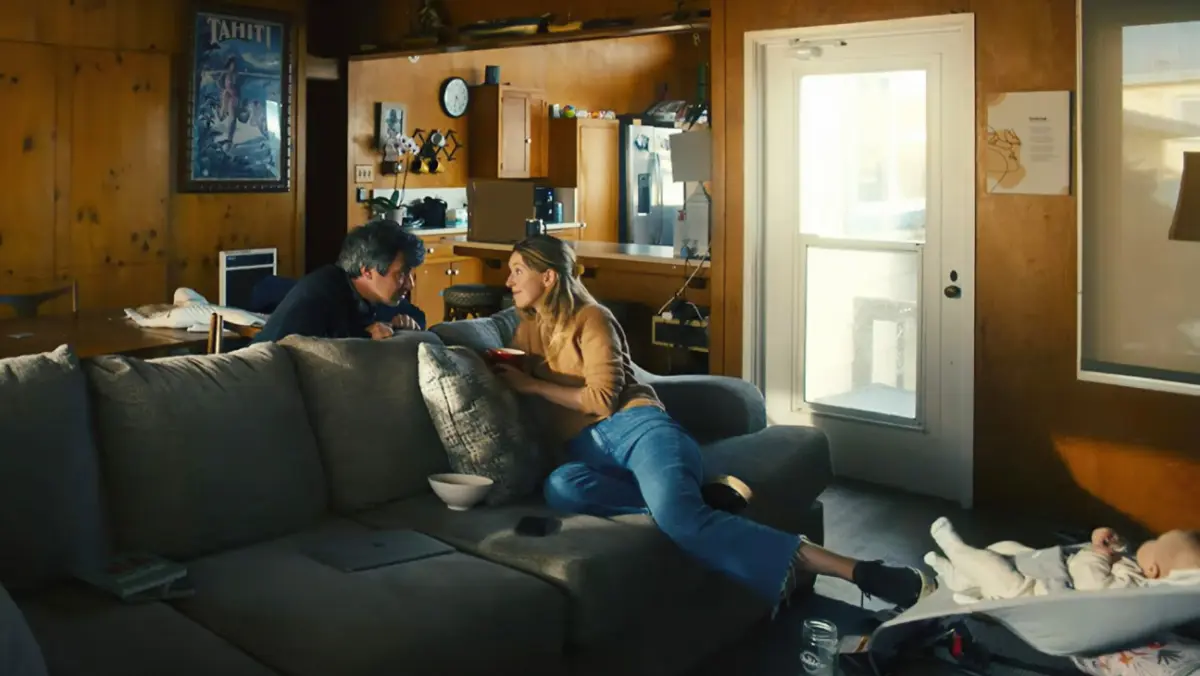
The production of You Can See Everything was marked by a gradual evolution in approach. Initially, Fielder—known for his own meta-documentary style—did not intend to be a central presence in the film. Bolen noted that as filming progressed, the standard observational footage of Holmes and Evans in their domestic life often felt stagnant. To inject urgency and depth, the team began handing cameras to Fielder, allowing him to participate in the scenes directly.
This shift, according to Bolen, was a response to the mundane nature of the subjects’ daily routines. The transition from "fly on the wall" to "participant-observer" fundamentally altered the project’s trajectory. Bolen noted that the team frequently operated with multiple cameras to compensate for the unpredictable nature of the subjects’ interactions. The viral "egg-whisking" scene, in which Evans physically displaces Holmes to take over the task, was cited as an example of the team’s reactive filming style. Bolen admitted the footage was technically imperfect, relying on the overlap of multiple camera angles to ensure the moment was captured, illustrating the "sloppy" but visceral aesthetic that has defined the film’s reception.

Ethical Implications of Observational Cinema
The film’s production environment was, by Bolen’s account, consistently strained. He described the dynamic between the directors and the subjects as a fragile ecosystem, noting that he attempted to remain a neutral party. "It was sometimes a tense environment," Bolen said. While he maintained surface-level politeness with Holmes and Evans, he actively sought to avoid direct entanglement in the disputes that frequently erupted behind the camera.
The question of whether Evans viewed the film prior to its release was addressed with a definitive negative. Bolen confirmed that communication between the subjects and the directors was fraught, and he remained under the impression that Evans did not see the final cut until it was public. This revelation adds a layer of concern regarding the standard practices of documentary ethics, where subjects typically retain some expectation of review, if not total editorial control.
Impact on the Documentary Genre
The success of You Can See Everything in the awards circuit, juxtaposed with the ongoing controversy surrounding its production, signals a broader shift in the documentary landscape. The industry is currently grappling with the ethics of "extreme observation." As filmmakers push for higher levels of intimacy, the responsibility of the production team to their subjects—even those who have been publicly disgraced—is being re-evaluated.
From a journalistic and critical perspective, the film challenges the traditional "neutrality" of the documentary form. By choosing to include moments of clear discomfort, the directors have created a product that is as much about the process of filmmaking as it is about the life of Elizabeth Holmes. However, the lack of a pre-release review by the subjects, combined with the vocalized objections from Evans, raises significant questions regarding the duty of care in non-fiction storytelling.
Technical Craft vs. Moral Responsibility
Technically, the film has been lauded for its bold use of the lens. The decision to frame human faces in extreme close-up was a collaborative effort between Bolen and camera operator Jonathan Mitchell, driven by spontaneous directives from Oppenheim. "If we were just framing these human faces, it all becomes an experience of just trying to understand what’s going on with the situation," Bolen explained.
While the aesthetic choice serves the goal of psychological depth, the "claustrophobic" nature of the visuals reflects the emotional state of the set itself. The tension described by Bolen—where the crew would attempt to "get the cameras out" and remain quiet during arguments—speaks to a production culture that prioritized the capture of the "authentic" moment over the maintenance of a comfortable or respectful environment for the subjects.
Looking Ahead
As the awards season approaches, the discourse surrounding You Can See Everything is unlikely to subside. The film sits at the intersection of a high-profile true crime narrative and a volatile debate over documentary consent. For the production team, the focus remains on the artistic merit of the work; for the critics and the public, the film serves as a case study in the potential fallout of unchecked observational techniques.
The tension between the desire to "see everything" and the right of an individual to maintain boundaries—even in the context of a documentary about a public figure—remains the central unresolved conflict of the film. As Bolen’s comments in Poland demonstrate, even those closest to the production are left to reconcile the final, jarring results of their work with the realities of the human interactions that made the film possible. Whether this documentary is viewed as a groundbreaking piece of non-fiction or a cautionary tale about the ethics of the craft, its place in the 2026 film canon appears secure, albeit deeply contentious.