The international co-production Gentle Monster, a psychological drama directed by acclaimed Austrian filmmaker Marie Kreutzer, has emerged as one of the most talked-about European cinematic releases of 2026. Following its high-profile world premiere in the main competition at the 79th Cannes Film Festival, where it vied for the prestigious Palme d’Or, the film has officially made its streaming debut on Netflix. To mark the release, lead actress Léa Seydoux and director Marie Kreutzer sat down for an exclusive interview to discuss the meticulous creative process behind the film, the psychological depths of its characters, and the collaborative journey of bringing this complex European narrative to life.
Main Facts and Production Overview
Gentle Monster is a gripping, multi-layered drama that examines the shattering fallout of a seemingly idyllic life. Written and directed solely by Marie Kreutzer—best known for her visually striking and psychologically acute work on the 2022 film Corsage—the project is a major European co-production bringing together creative and financial resources from Austria, Germany, and France.
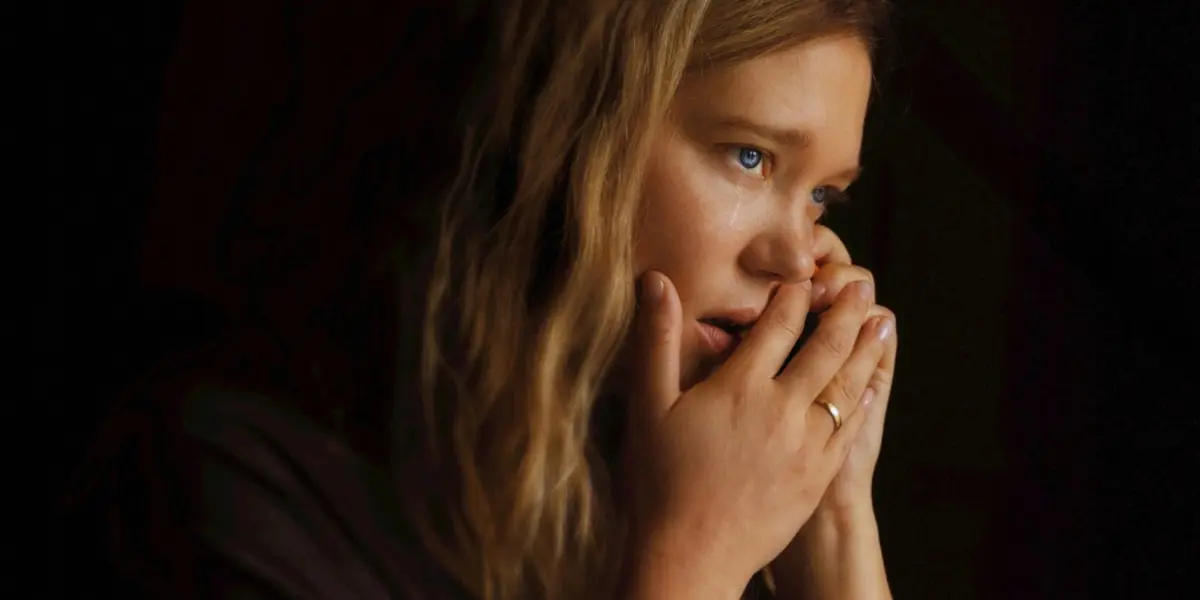
At the center of the narrative is Léa Seydoux, who delivers a towering performance as a globally successful concert pianist. Her carefully curated life is upended when she is forced to confront a series of shocking, dark crimes committed by her husband. The narrative explores themes of complicity, denial, public versus private identity, and the heavy emotional toll of moral reckoning.
Alongside Seydoux, the film features an impressive international ensemble cast. It includes Jella Haase, Laurence Rupp, Malo Blanchet, Anton Rubtsov, Nils Strunk, Sylvester Groth, Patrycja Ziółkowska, and Regina Fritsch. In a significant casting highlight, the film also features legendary French actress Catherine Deneuve, adding further prestige to an already illustrious roster of European talent.
Chronology of the Release and Festival Run
The journey of Gentle Monster from script to screen represents a carefully coordinated rollout typical of elite European arthouse cinema backed by major streaming distribution.
Development and production on the Austrian-German-French co-production took place across various European cultural hubs, focusing on authentic locations to enhance the film’s moody, atmospheric tone. As post-production wrapped in late 2025, anticipation steadily mounted within the European film community regarding Kreutzer’s follow-up to her internationally acclaimed projects.
In May 2026, the film reached its first major milestone with its selection for the main competition at the 79th Cannes Film Festival. Screening alongside some of the world’s most anticipated cinematic achievements, Gentle Monster competed directly for the festival’s highest honor, the Palme d’Or. The red carpet premiere drew massive international press attention, anchored by the presence of Kreutzer, Seydoux, Deneuve, and supporting cast members.
Following its festival run, the film received generally positive reviews from international critics. Praise was directed uniformly toward the atmospheric direction, the taut pacing, and specifically toward Seydoux’s nuanced, emotionally shattering lead performance. Capitalizing on the critical momentum generated on the Croisette, Netflix secured global streaming rights, making the film immediately accessible to subscribers worldwide.

Supporting Data and Critical Reception
The critical consensus surrounding Gentle Monster highlights its success as both an intellectual thriller and an emotional character study. Review aggregators noted a strong positive reception out of Cannes, praising the film’s technical craftsmanship. Cinematography, sound design—crucial for a film centered around a professional concert pianist—and the stark, clinical aesthetic of the production design were singled out for special commendation.
Léa Seydoux’s performance has been widely discussed as a career-best, with critics noting her ability to convey internal terror and psychological disintegration with minimal exposition. Marie Kreutzer’s direction has likewise been lauded for maintaining a suffocating tension without relying on conventional thriller tropes, instead leaning into the slow-burn horror of emotional betrayal.
The collaboration between Austria, Germany, and France also underscores a broader economic and artistic trend in European filmmaking. By pooling resources through official co-production treaties, regional film funds (such as the Austrian Film Institute and various German and French funding bodies), and streaming acquisitions, European creators are increasingly able to secure massive global platforms like Netflix while retaining complete creative autonomy.
Insights from the Creators
During their recent interview with the Next Best Picture Podcast, Léa Seydoux and Marie Kreutzer offered rare behind-the-scenes insights into the making of Gentle Monster. Discussing the emotional gravity of the script, Kreutzer detailed her approach to structuring a narrative where a protagonist must systematically dismantle her own denial. The director emphasized the importance of visual metaphor, utilizing framing and pacing to mirror the protagonist’s internal confinement.
Seydoux spoke candidly about the physical and emotional preparation required to portray a world-class pianist facing an unimaginable personal crisis. Rather than treating the musical elements as mere background texture, Seydoux undertook intensive preparation to authentically capture the discipline of a classical musician—a discipline that ultimately clashes with the chaotic reality of her husband’s crimes. Both creators expressed enthusiasm for the film’s dual life: enjoying the prestigious, traditional theatrical launch at Cannes followed by the unprecedented global reach afforded by Netflix’s streaming architecture.
Broader Impact and Industry Implications
The release of Gentle Monster on Netflix represents a significant moment for the intersection of festival cinema and streaming platforms. For years, the debate surrounding the theatrical window versus day-and-date or rapid streaming deployment has dominated industry discourse, particularly regarding films launched at the Cannes Film Festival, which maintains strict traditional theatrical rules for competition entries in France.
By premiering in competition at Cannes and subsequently landing on Netflix for international audiences, Gentle Monster bridges two traditionally opposed worlds. It proves that prestige European arthouse cinema can command the critical validation of a top-tier festival while leveraging global streaming networks to reach audiences that might otherwise lack access to specialized foreign-language dramas.
Furthermore, the film highlights the rising commercial and artistic stock of Marie Kreutzer as a major voice in contemporary European cinema. Alongside performers of the caliber of Léa Seydoux and Catherine Deneuve, Kreutzer continues to challenge traditional genre boundaries, crafting stories that center complex, morally ambiguous female protagonists.
As Gentle Monster streams to millions of homes worldwide, its resonance is already being felt across awards season discussions, cementing its place as a defining European film of 2026. Viewers interested in a deeper dive into the production can access the full-length interview with Seydoux and Kreutzer via the Next Best Picture Podcast, available across all major podcast platforms and the Evergreen Podcasts Network.