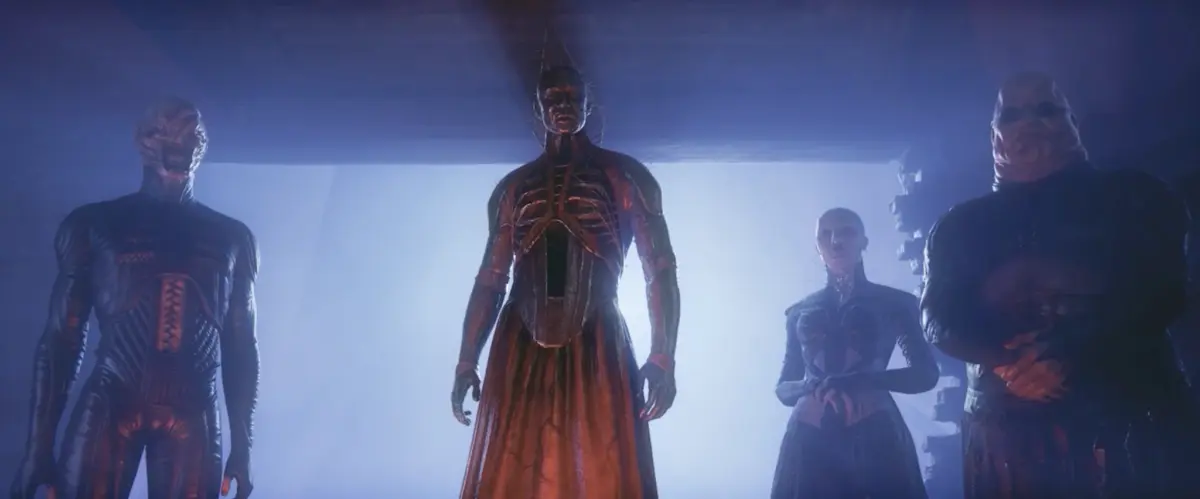
The 2026 Horror Game Awards concluded with a landmark victory for the horror genre, as the critically acclaimed title Clive Barker’s Hellraiser: Revival claimed the coveted Game of the Year trophy. In a ceremony marked by intense competition, the game surpassed a formidable field of industry heavyweights, including Resident Evil: Requiem, to secure the top honor. Beyond the primary award, the production was further recognized for its technical and narrative excellence, with veteran actor Doug Bradley winning the Best Performance award for his reprisal of the iconic antagonist, Pinhead.
A Landmark Night for Horror Gaming
The 2026 Horror Game Awards, an industry-standard celebration of the most terrifying and innovative digital experiences, saw a record-breaking number of submissions this year. The event served as a barometer for the state of the survival horror genre, which has seen a resurgence in both mechanical complexity and narrative ambition.
Hellraiser: Revival emerged from a pool of 16 highly competitive nominees. The shortlist included industry titans and indie darlings alike, such as REANIMAL, Silent Hill: Townfall, ROUTINE, Silver Pines, Directive 8020, and the Fatal Frame II: Crimson Butterfly Remake. The selection process, which involved both a jury of veteran developers and a significant public voting component, highlighted a shift in audience preference toward titles that prioritize atmosphere, psychological tension, and faithful franchise integration.
Chronology of Development and Success
The road to this victory was paved by a development cycle that emphasized authenticity and collaboration with original creative forces. When the project was first announced, industry analysts noted the inherent difficulty in translating the surreal, visceral horror of the Hellraiser mythos into an interactive format.
The development team prioritized a "back-to-basics" survival horror approach, focusing on environmental storytelling and resource management. This decision proved to be a decisive factor in the game’s critical reception. Following its release earlier this year, Hellraiser: Revival earned consistent praise for its adherence to the source material while modernizing the gameplay loops that defined the early era of the survival horror genre.
In the months leading up to the awards, the game maintained high visibility through strategic content drops and developer diaries, which provided transparency regarding the production’s commitment to the franchise’s legacy. The final recognition at the awards ceremony acts as the culmination of this year-long trajectory of critical and commercial success.

The Return of an Icon: Doug Bradley’s Contribution
Perhaps the most significant element of the project’s success was the involvement of Doug Bradley. Unlike many legacy adaptations that rely on voice-alike actors or digital recreations, the production of Revival secured the direct participation of the original Pinhead.
Bradley’s contribution extended far beyond traditional voice-over work. He was instrumental in the technical reconstruction of the character’s signature vocal profile. By drawing on his personal archives and recollections regarding the sound design of the 1987 original, Bradley helped the developers ensure that the auditory experience of the game remained consistent with the history of the film series.
The industry panel at the Horror Game Awards cited this attention to detail as a primary reason for his Best Performance win, noting that it provided a level of gravitas that is rarely achieved in contemporary game adaptations.
Official Statements and Creative Vision
Clive Barker, the creator of the Hellraiser universe, has been an vocal proponent of the project throughout its lifecycle. Following the win, Barker reaffirmed the symbiotic relationship between the actor and the character, stating, "Doug is Pinhead and Pinhead is Doug."
Barker’s involvement was not merely titular; he served as a creative consultant, ensuring that the new narrative entries remained true to the theological and philosophical underpinnings of the Hellraiser lore. In recent statements, Barker expressed a sense of professional pride regarding the project, characterizing Revival as a "wake-up call" for the wider entertainment industry. He argued that the game’s success proves that audiences are hungry for the intellectual, challenging horror that characterized the franchise’s peak years.
Broader Industry Implications
The success of Hellraiser: Revival carries significant weight for the future of horror media. Historically, franchise-based video games have struggled to reconcile the expectations of long-term fans with the necessity of appealing to new players. By successfully threading this needle, Revival has set a new benchmark for intellectual property management.
Industry analysts suggest that the victory may catalyze further development within the Hellraiser brand. Given the commercial success of the game and the positive critical reception, there is increased speculation regarding the possibility of a direct sequel or a broader expansion into other media formats.

Furthermore, the win signals a broader trend in the gaming industry: a return to "old-school" mechanics. The success of Revival reinforces the market viability of slower-paced, atmospheric games that favor tension over action. As developers look toward the 2027 development cycle, many are expected to look at the Revival model as a blueprint for balancing legacy respect with modern interactive design.
Analyzing the Competitive Landscape
To understand the significance of this win, one must look at the competitive field. Resident Evil: Requiem was widely considered the front-runner for the Game of the Year award, given the Resident Evil franchise’s recent streak of critical hits. The fact that Hellraiser: Revival managed to overcome this established juggernaut suggests a shift in the critical consensus.
The jury’s selection reflects an appreciation for the game’s unique narrative risks. While many survival horror games rely on jump-scare mechanics, Revival opted for a more unsettling, slow-burn approach that aligns with the existential dread characteristic of Barker’s original vision. This approach, while more difficult to execute, resonated with the voting committee, who prioritized the game’s overall thematic cohesion and artistic integrity.
Future Prospects for the Franchise
The conclusion of the 2026 Horror Game Awards leaves the Hellraiser franchise in a stronger position than it has occupied in years. The immediate impact is likely to be seen in increased player engagement, as the "Game of the Year" accolade historically leads to a significant surge in sales and long-tail interest.
Looking ahead, the stakeholders involved in the project have signaled a desire to keep the momentum going. With Barker’s explicit interest in exploring new facets of the mythology, the potential for an expanded "Cenobite-verse" has moved from the realm of wishful thinking to a viable strategic possibility.
As the gaming industry continues to evolve, the legacy of Hellraiser: Revival will likely be defined by how it bridged the gap between cinematic horror and interactive entertainment. For now, the victory stands as a testament to the power of creative stewardship and the enduring appeal of one of horror’s most complex and terrifying figures. The industry will undoubtedly be watching closely to see if this success serves as a singular achievement or the beginning of a new chapter for the Hellraiser saga.