Director Taekyung Tanja Inwol’s latest feature documentary, Homesick (original Danish title Hjemsøgt), compels audiences to confront fundamental questions surrounding family, home, and belonging, challenging preconceived notions of what constitutes a "good" or "bad" domestic environment. Following her critically acclaimed debut, A Colombian Family, Inwol’s second cinematic endeavor delves into her deeply personal narrative as an adoptee from South Korea, navigating the intricate and often painful journey of identity across continents. The film world premiered to significant attention in the NORDIC:DOX competition at the 23rd edition of CPH:DOX, the prestigious Copenhagen International Documentary Film Festival, marking it as a significant contribution to contemporary documentary filmmaking and the ongoing discourse on transnational adoption.
The documentary, described as a "raw family chronicle," meticulously traces Inwol’s life experiences, spanning the stark cultural and geographical distance between Western Denmark, where she was raised, and her birth country, South Korea. At its core, Homesick is an intimate portrayal of a family striving for an outward appearance of perfection, while internally grappling with profound struggles. A synopsis for the film reveals the challenging reality behind the Danish façade, detailing domestic violence, breakups, divorce, suicide attempts, death, and pervasive loneliness. This stark contrast between public perception and private turmoil forms a central tension, amplifying the film’s core query: "When one’s origins have been erased in Korea, where does one turn when the family one has been placed in begins to crack?" This question resonates deeply, particularly for adoptees whose foundational sense of self is often tied to a narrative of displacement.
The Shadow of Falsified Documents: A Human Rights Violation Uncovered
A pivotal revelation within Homesick centers on a deeply disturbing finding from June 2025 by the Korean Truth and Reconciliation Commission. Inwol’s adoption case was among just 56 instances where the Commission identified clear violations of human rights. Specifically, it was concluded that her original adoption documents had been falsified, fabricating her status as a "foundling" – a child abandoned by unknown parents – to expedite her adoptability for profit. This egregious act highlights a systemic issue within the transnational adoption apparatus, where the welfare and rights of children and their birth families were compromised for economic gain.
Despite these official findings and the undeniable evidence of human rights abuses, the documentary underscores a profound lack of concrete action from both the Korean and Danish states. This inaction has left Inwol without genuine access to information regarding her birth parents or any form of redress for the systemic injustices she faced. The Commission’s findings, while validating her long-held suspicions and giving official recognition to a deeply personal trauma, have paradoxically failed to provide the practical support or information necessary for full closure. This enduring struggle for truth and accountability, even after official acknowledgment, forms a potent undercurrent throughout the film, exposing the limitations of institutional justice when confronted with deeply entrenched historical practices.
Unpacking the Transnational Adoption System’s "Lost Shine"
Inwol’s narrative serves as a microcosm of a broader historical phenomenon: the transnational adoption system that flourished, particularly from South Korea, in the latter half of the 20th century. Following the Korean War (1950-1953), South Korea became a major source of intercountry adoptions, initially driven by a genuine need to care for war orphans. However, as the decades progressed, and even as South Korea experienced rapid economic development, the system evolved. It became increasingly complex, often criticized for prioritizing the demands of Western adoptive parents over the rights of birth families and adoptees. Denmark, like many other Western nations, was a significant receiving country for Korean adoptees. Between the 1950s and the early 2000s, tens of thousands of Korean children were adopted globally, with a substantial number finding homes in Scandinavian countries.
The press notes for Homesick aptly state that the film "weaves together personal memories and imagination with the political realities of a transnational adoption system that long ago lost its shine." This phrase encapsulates the evolving public perception of intercountry adoption. What was once widely viewed as a purely benevolent act, saving children from poverty or hardship, has increasingly come under scrutiny. Activists, adoptees, and human rights organizations have highlighted ethical concerns, including the potential for coercion of birth parents, fraudulent documentation, and the commodification of children. The "shine" began to fade as the lifelong complexities of identity, cultural assimilation, and the psychological impact of separation on adoptees became more widely understood and articulated by adoptee voices themselves. Homesick contributes significantly to this critical re-evaluation, providing a raw, unvarnished look at these hidden costs.

Artistic Vision: Weaving Memory, Imagination, and Political Reality
To construct her deeply personal narrative, Inwol employs a rich tapestry of cinematic techniques. The film integrates candid interviews, evocative photographs, poignant landscapes, and introspective voice-overs to assemble her unique experience – both as the sole adoptee within a Danish family and as an individual whose origins were systematically "erased from Korea." This multi-layered approach allows her to explore the fragmented nature of her identity and the profound sense of otherness she has carried throughout her life.
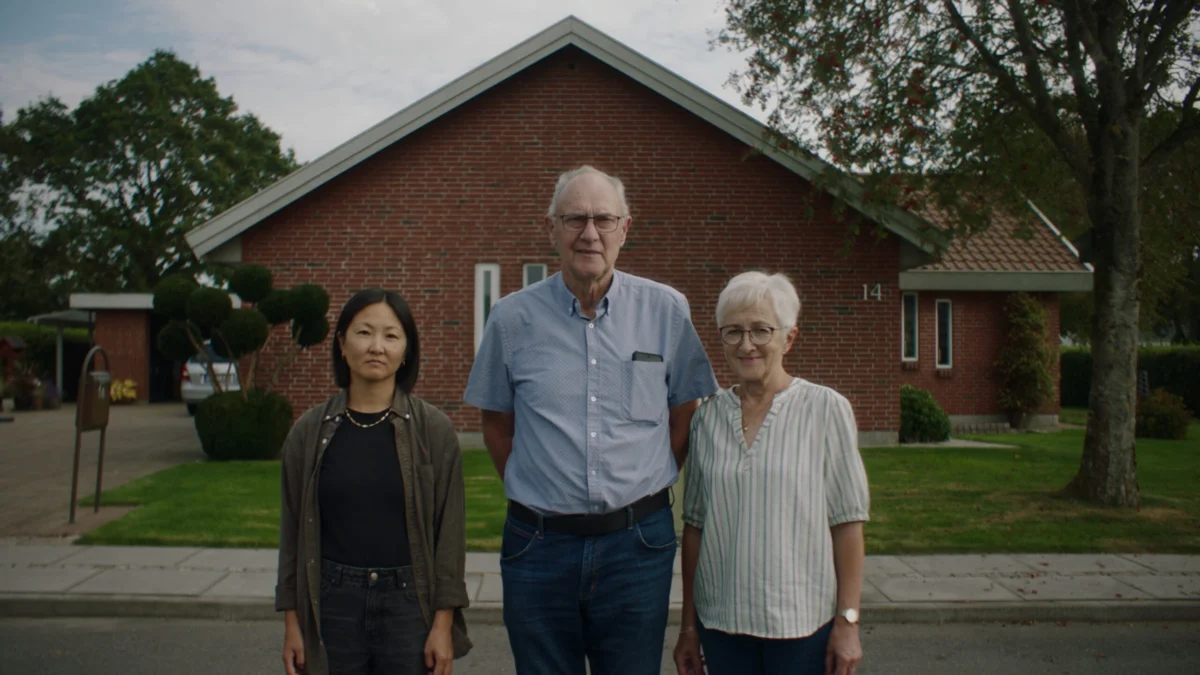
A distinctive visual element Inwol utilizes is what she terms "moving portraits." These are scenes featuring Inwol standing alongside other individuals, whose identities are not immediately revealed, in a composition reminiscent of traditional family photographs. Inwol explains her intention: "Because it’s as if you take a portrait, but then just keep it going. This is the first moment that you get to meet these people, because these people are both family, but also somebody who I want to invite the viewer to look at. Putting myself next to them means you cannot tell from that shot alone whether it’s my parents or my brother or whoever. And I think that just shows the randomness of it all. So, by introducing them in that way next to me, it gives you the idea of the randomness of my being there." This technique powerfully conveys the arbitrary nature of her placement within her adoptive family, emphasizing the chance and circumstance that dictated her belonging. It subtly challenges the audience to consider the inherent "randomness" of family connections for adoptees.
Furthermore, Homesick features performative scenes filmed in Korea, where Inwol and a group of friends don hanbok, the traditional Korean clothing. These three women, like Inwol, were adopted from Korea to Denmark. Inwol elaborates on the significance of these scenes: "The idea for me was to show that I’m not alone, although the core feeling in the film is loneliness and not being seen or recognized." These collective moments create a powerful sense of community and shared experience, countering the isolation often felt by transnational adoptees. The hanbok itself becomes a potent symbol of resilience and resistance, representing a reclaiming of cultural heritage and identity within the context of a "nation suffering" from the historical wounds of division and displacement.
The Power Dynamics of Belonging and the Pain of Silence
Inwol’s motivation for making Homesick stems from a deeply personal imperative to process the grief and unanswered questions following the death of her adoptive parents. She candidly shared with The Hollywood Reporter: "You know this whole thing about rest in peace? People have this idea: let’s not speak ill of the dead. But I was like: ‘No, now’s the time to talk about all the stuff that we couldn’t talk about before.’ It was too difficult when they were alive. Nobody seemed to really agree with me, but I just had all these questions." This statement underscores the societal pressures to maintain silence around difficult family histories, particularly after death, and Inwol’s courageous decision to break that silence.
Initially, her focus wasn’t exclusively on herself. "The idea was to make a film about all the things that we don’t talk about in the family," she explained. However, during the interviewing process, a profound realization emerged: "Interestingly, when I started interviewing the family, I realized that I was part of the secrets. So, I thought, okay, well, I guess it will have to be a film about me, or at least from my position in the family, as being one who we don’t talk about." This shift transformed the project into a journey of self-healing, unexpectedly making her the protagonist of her own cinematic inquiry.
Inwol articulates the profound power dynamics inherent in her adoption: "I have, as a child, had more families than most, belonged to many and nowhere at all — but the premise for them all was that someone had the power to decide where and to whom I was allowed to belong." She challenges the very parameters by which one determines the "betterness" of a family, posing a critical question: "By what parameters can one even determine whether one family is better than another? The childless couple in the West Danish town of Varde had more right to a child than the single mother in the Korean port city of Incheon. Not just any child — but the child she had given birth to." This powerful statement critiques the moral and ethical framework that historically justified transnational adoption, often implicitly devaluing birth families in favor of prospective adoptive parents from wealthier nations. The "strangeness" she highlights—that a child grows up on the other side of the world, and "no one talks about it"—underscores the painful weight of silence, which can indeed be more damaging than any spoken word.
The Director as Protagonist: Navigating Control and Gaze

Being both the director and the subject of Homesick presented unique challenges for Inwol, particularly concerning control over her own narrative and image. "It was never my wish to be a protagonist in my own film," she confessed. "So, when I started out making it, it was so important for me to have control over how I was presented and what people were allowed to see." This inherent tension required her to establish a strict set of rules for herself, meticulously crafting how she would be perceived and how she would present the world through her unique "gaze."
A significant hurdle she identified was the absence of a "language for difference." As an adoptee and a minority in her adoptive family’s story, she recognized that the audience might not inherently align with her perspective. "I am also very aware that the audience is not necessarily on my side, because I’m the minority in the story," she noted. Her artistic solution was to "turn the gaze around," creating a visual language that articulated her lived experience and presented her perspective on those around her, a gaze they had never encountered. This deliberate act of narrative control ensures that Homesick is not merely a story told about an adoptee, but a story profoundly told by one, with all the nuance and complexity that entails.
A Red Thread of Inquiry: Inwol’s Cinematic Journey and Future Explorations
Homesick is not an isolated exploration for Inwol but rather a deeper, more personal dive into themes that have consistently resonated throughout her work. Her first feature, A Colombian Family, explored the intricate relationship between a mother and daughter seeking to heal their bond in Colombia. Inwol recognizes the thematic continuity, quipping, "You can see a trend here." She acknowledges that making her previous film was, in part, a way to "mirror myself in their relationship," suggesting a long-standing personal quest to understand and reconcile with her own familial experiences through her art.
Looking ahead, Inwol affirms that a "red thread" connects her films: "the theme of family divided by conflict or war or diaspora experiences." She is currently in the early stages of developing a film about one of the oldest Korean communities in Mexico. This project aligns perfectly with her thematic interests, allowing her to explore diaspora experiences from a different angle while continuing to ask herself, "What films can I make? What films are for me?" This ongoing inquiry underscores her commitment to using cinema as a tool for personal understanding, cultural exploration, and the amplification of marginalized narratives.
Implications for International Adoption Ethics and Policy
Homesick arrives at a crucial juncture in the global conversation surrounding international adoption. The film’s revelations, particularly the official confirmation of falsified documents and human rights violations, add significant weight to calls for greater accountability and transparency within the adoption industry. It underscores the urgent need for governments, both sending and receiving, to acknowledge historical injustices, investigate past practices, and provide meaningful redress for adoptees whose fundamental rights were violated.
The documentary’s unflinching portrayal of the long-term psychological and emotional impacts of transnational adoption – the struggles with identity, belonging, and the search for origins – contributes to a more nuanced public understanding. It challenges the romanticized view of adoption, urging policymakers, adoption agencies, and prospective parents to prioritize the lifelong well-being and rights of the child, including the right to accurate information about their origins. Films like Homesick serve as powerful catalysts for social change, fostering empathy and driving forward the dialogue on ethical adoption practices, ultimately advocating for a future where no child’s history is erased for profit or convenience.
Inwol’s Homesick is more than a documentary; it is a profound act of self-excavation and a courageous exposé of systemic failures. By confronting her own painful truths, she illuminates universal questions about identity, family, and the enduring human need for belonging, leaving audiences to grapple with the intricate legacy of transnational adoption and the uncomfortable silences that too often accompany it.