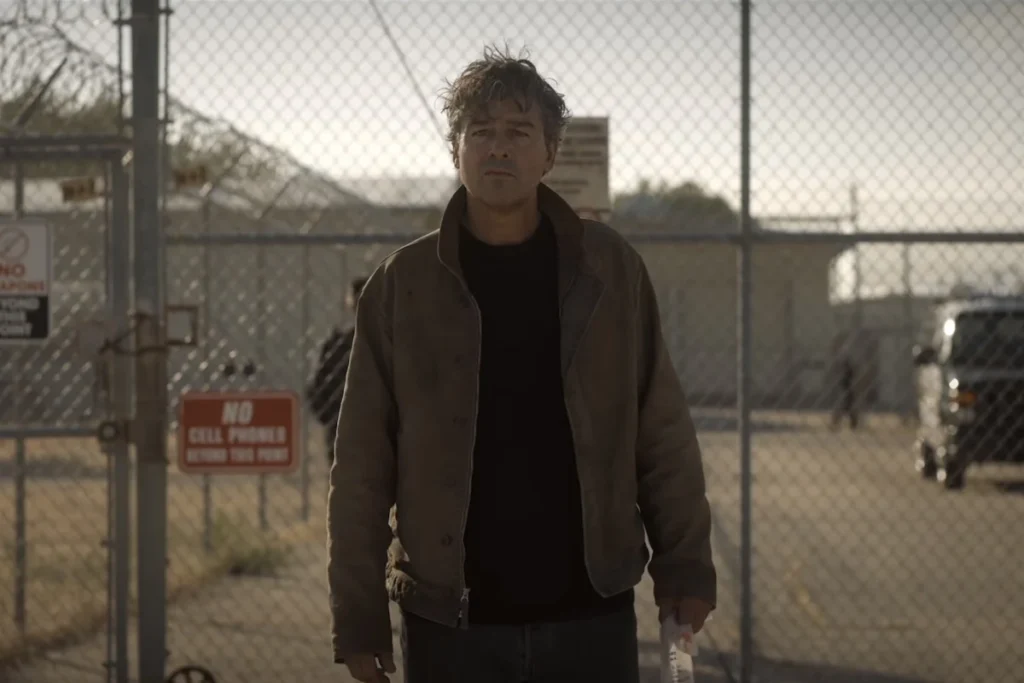
Hulu has officially greenlit a third season of Dan Fogelman’s genre-bending series, Paradise, signaling continued confidence in the show’s narrative trajectory and its ability to captivate a growing audience. The renewal comes as the second season is poised to conclude, with reports indicating significant viewership milestones that have likely influenced the network’s decision. This development fulfills creator Dan Fogelman’s initial three-season vision for the critically acclaimed drama, which stars Sterling K. Brown as a Secret Service agent navigating a drastically altered post-apocalyptic world.
The robust performance of Paradise is underscored by compelling data. According to a report from Variety, the second season has already amassed over 30 million hours of viewing time. Furthermore, the initial season has experienced a remarkable resurgence in viewership, with a 25 million-hour increase in engagement since the launch of its successor. These figures suggest a strong and expanding fan base, a crucial indicator for streaming services when considering renewal decisions. The sustained interest across both seasons highlights the series’ capacity to retain existing viewers while attracting new ones, a testament to its compelling storytelling and character development.
Dan Fogelman, the creative force behind Paradise, has consistently articulated a long-term narrative arc for the series. He shared with The Hollywood Reporter last year that his ambition from the outset was to craft a story that would unfold over three distinct seasons. Fogelman’s vision emphasizes a dynamic approach to storytelling, where each season offers a unique thematic and structural exploration, even while maintaining a consistent cast of characters and an overarching narrative. "Each season of the show is a slightly different show, within the same show with the same characters," Fogelman explained, underscoring his commitment to evolving the series while staying true to its core. This multi-season planning suggests a deliberate and intricate narrative design, aiming for a satisfying arc that rewards viewer loyalty.
The premise of Paradise initially presented itself as a conventional murder mystery. However, the season one premiere delivered a significant twist: the entire scenario was unfolding within a colossal underground bunker, a refuge established after a cataclysmic event rendered Earth’s surface uninhabitable. This foundational revelation immediately set Paradise apart, challenging audience expectations and establishing a high bar for subsequent plot developments. The subsequent seasons have delved deeper into the complexities of this subterranean existence and the lingering questions about the true nature of the disaster and the world beyond.
The logline for the second season further elucidated the expanding scope of the narrative. It revealed that the protagonist, Xavier, embarks on a perilous journey to the surface, seeking to locate Teri and understand how humanity has managed to survive in the three years since "The Day"—the catastrophic event that forced survivors underground. Simultaneously, within the confines of Paradise, the bunker city, the social fabric begins to fray, and new secrets concerning the city’s origins are unearthed. This dual narrative—exploration of the external world and internal societal decay—promises a rich tapestry of conflict, discovery, and moral ambiguity.
Paradise itself is depicted as more than just a shelter; it is a meticulously designed city, governed by the enigmatic figure known only as Sinatra, portrayed by Julianne Nicholson. The trailer for the second season offered a glimpse into the unsettling atmosphere of this enclosed society, describing it as "like before, only creepier." This evocative phrase resonates with established tropes in science fiction entertainment, drawing parallels to similarly unsettling underground or enclosed communities seen in popular series like The 100 and Silo. The description hints at the psychological toll of long-term confinement and the potential for corruption or decay within even the most well-intentioned havens.
The ensemble cast of Paradise contributes significantly to its critical acclaim and viewership success. Beyond Sterling K. Brown’s central role, the series features a talented roster including Enuka Okuma, Sarah Shahi, Nicole Brydon Bloom, Krys Marshall, Aliyah Mastin, Percy Daggs IV, and Charlie Evans. The recurring guest stars, James Marsden, Shailene Woodley, Thomas Doherty, and Jon Beavers, further enhance the show’s star power and narrative depth. The critical recognition for the cast is notable; Brown, Marsden, and Nicholson all received Emmy nominations for their performances in the first season, with Brown also earning a Golden Globe nomination. This level of critical appreciation for the acting talent suggests a high standard of performance that elevates the show’s dramatic impact.
The renewal of Paradise for a third season arrives at a pivotal moment for the series. With only two episodes remaining in the current second season, the anticipation for the conclusion and the subsequent continuation of the story is palpable among fans. The show’s ability to reinvent itself each season while maintaining a cohesive narrative has been a key factor in its success. The exploration of a post-apocalyptic world through the lens of a meticulously constructed bunker society offers fertile ground for examining themes of survival, societal structure, the human condition under duress, and the enduring quest for truth and connection.
The Genesis of Paradise: A Three-Season Vision
The creation of Paradise was not a spontaneous endeavor but a meticulously planned undertaking by Dan Fogelman. His vision for the series was always conceived as a multi-arc narrative, spanning three distinct seasons. This foresight allowed for the development of a complex world and intricate character arcs that could evolve organically over time. Fogelman’s approach, as articulated in his Hollywood Reporter interview, emphasizes the serial nature of the storytelling, where each season serves as a unique chapter, offering fresh perspectives and challenges while building upon the established foundation.
The initial season of Paradise masterfully established its unique premise. It opened with what appeared to be a standard murder-mystery plot, drawing viewers into a familiar genre. However, this setup served as a Trojan horse, revealing the shocking truth that the events were taking place within a massive, self-contained bunker. This twist immediately redefined the show’s genre and scope, shifting it into the realm of speculative fiction and post-apocalyptic drama. The question of why humanity was forced into such an extreme measure—the uninhabitable state of Earth’s surface—became the central driving force for the audience.
The narrative complexity deepened with the introduction of "The Day," the cataclysmic event that necessitated the creation of Paradise. While the exact nature and cause of "The Day" remained shrouded in mystery for much of the first season, its impact was undeniable. The bunker, designed as a sanctuary, became the focal point for exploring the psychological and societal ramifications of such an existential threat. The show’s commitment to exploring the human element within this extreme scenario—the relationships, the power dynamics, and the ethical dilemmas—has been a consistent thread.
Season Two: Expanding Horizons and Unraveling Secrets
The second season of Paradise marked a significant expansion of the series’ narrative boundaries. The decision to send protagonist Xavier to the surface was a bold move, designed to answer long-standing questions about the world outside the bunker and the fate of humanity. This geographical shift allowed the show to explore new environments and introduce new characters, offering a broader perspective on survival in a post-catastrophe world. The search for Teri added a personal stake to Xavier’s mission, imbuing his journey with emotional weight.
The exploration of how people survived "The Day" and the subsequent three years on the surface provided crucial context for the bunker’s existence. It allowed the writers to delve into various models of survival, from isolated communities to more organized societal structures, and to explore the challenges faced by those who remained on the surface. This outward exploration contrasted with the internal narrative unfolding within Paradise, creating a dynamic interplay between the known and the unknown, the safe and the dangerous.
Back within the confines of the bunker city, the second season also focused on the internal dynamics of Paradise. The "fraying social fabric" indicated a growing instability and potential for conflict among the inhabitants. As the initial shock of survival wore off, underlying tensions, power struggles, and the weight of secrets began to surface. The uncovering of new information about the city’s origins suggested that the history of Paradise might be more complex and perhaps more morally ambiguous than initially presented, hinting at potential conspiracies or hidden truths that could challenge the very foundation of their society.
The World of Paradise: A Deep Dive into the Bunker City
Paradise, the eponymous bunker city, is portrayed as a marvel of engineering and a testament to humanity’s will to survive. However, its sterile perfection and controlled environment also serve as a backdrop for intense human drama. The city’s governance under Sinatra, a character whose name itself evokes a sense of iconic authority, adds a layer of intrigue. Sinatra’s leadership style and the city’s operational protocols are likely central to the unfolding conflicts, as the residents grapple with the limitations and pressures of their enclosed existence.
The description of Paradise as "like before, only creepier" is a potent metaphor for the series’ thematic concerns. It suggests that even in a seemingly utopian setting, the echoes of past societal flaws and the inherent challenges of human nature can persist and even be amplified. This sentiment aligns with common dystopian narratives that explore how even the most well-intentioned attempts to create order can lead to new forms of oppression or psychological distress. The comparison to the bunker settings in The 100 and Silo further positions Paradise within a rich tradition of science fiction that uses enclosed societies to examine fundamental questions about humanity, governance, and survival.
The narrative challenges inherent in such a setting are manifold. The psychological impact of long-term confinement, the potential for resource scarcity, the emergence of social hierarchies, and the moral compromises necessary for survival are all fertile ground for dramatic exploration. The series appears to be adept at weaving these elements into its plot, creating a compelling and thought-provoking viewing experience.
Critical Acclaim and Future Prospects
The renewal of Paradise for a third season is a clear indication of its success in both critical and commercial spheres. The strong viewership numbers, coupled with the Emmy and Golden Globe nominations for its lead actors, underscore the show’s high quality and widespread appeal. This critical validation, combined with the audience engagement data, provides a solid foundation for the series’ continued run.
The three-season arc envisioned by Dan Fogelman suggests a well-defined endgame for the story. This clarity of vision is often a hallmark of successful serialized television, allowing for a more cohesive and satisfying narrative progression. As Paradise moves into its third season, viewers can anticipate further revelations about the world, the characters’ pasts, and the ultimate fate of humanity. The show’s ability to blend genre elements—mystery, science fiction, drama—with compelling character studies has positioned it as a standout series on Hulu, and its continuation promises to deliver more of the intricate storytelling that has captivated audiences. The remaining episodes of season two are expected to provide crucial setup for the events to come, leaving viewers eager for the next chapter in the story of Paradise.