The early 2026 box office has marked a significant turning point for Hollywood, signaling a robust appetite for original storytelling, with two standout films, Amazon MGM Studios’ Project Hail Mary and Pixar’s Hoppers, spearheading a notable shift away from exclusive reliance on established franchises and sequels. This burgeoning trend offers a compelling narrative for an industry often criticized for its risk-averse strategies, suggesting a renewed willingness from audiences to embrace fresh narratives and bold creative visions.
Project Hail Mary’s Stellar Debut Ignites the Box Office
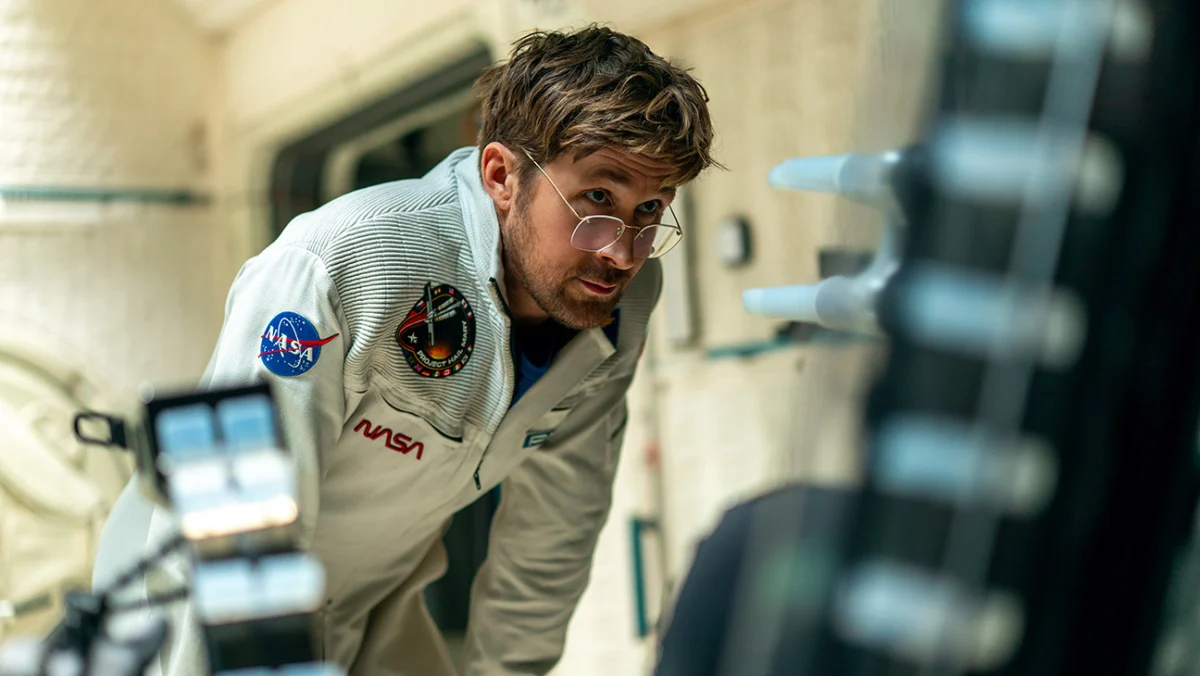
Leading this charge is Phil Lord and Christopher Miller’s highly anticipated science-fiction epic, Project Hail Mary, starring Ryan Gosling and Sandra Hüller. The film, based on Andy Weir’s acclaimed novel, launched into the cinematic cosmos with an astonishing domestic debut of $80.6 million, marking the highest opening of the year so far. Its international performance was equally impressive, securing $60.4 million from overseas markets, culminating in a formidable global start of $141 million. This triumphant performance represents a monumental victory for Amazon MGM Studios, underscoring its ambitious drive to re-establish itself as a full-fledged major Hollywood player amidst a landscape of ongoing industry consolidation, notably with David Ellison’s Paramount-Skydance preparing for a potential merger with Warner Bros.
The film’s trajectory defied initial industry projections, which had anticipated a debut in the $50 million-plus range. However, Project Hail Mary quickly accelerated into hyperdrive, propelled by an extraordinary confluence of critical acclaim and overwhelming audience enthusiasm. Both Rotten Tomatoes and CinemaScore registered rave reviews and "out-of-this-world" audience scores, indicating a broad and deep resonance with moviegoers. This dual endorsement is a powerful indicator of a film’s potential for sustained success, often more potent than either critics or audience scores alone. The involvement of screenwriter Drew Goddard, celebrated for his successful adaptation of another Andy Weir novel, The Martian, undoubtedly contributed to the confidence in the project’s ability to translate complex scientific concepts and compelling human drama to the big screen.
A Rare Achievement for Original Content
Project Hail Mary‘s opening places it in an exceptionally rarefied echelon of films. It stands as only one of three non-sequel or non-franchise installments in the past decade to open domestically to $60 million or more. Remarkably, its $80.6 million domestic haul nearly matched the unadjusted opening of Christopher Nolan’s critically acclaimed Oppenheimer, which debuted with $82 million. The third film on this exclusive list is Jordan Peele’s horror-thriller Us, which opened to $71 million.
Delving deeper into the post-pandemic era, the scarcity of such openings for original films becomes even more pronounced. Beyond Oppenheimer, only two other non-sequel, non-franchise titles have managed to exceed a $50 million domestic opening: Apple’s F1: The Movie and It Ends With Us. In the specific genre of sci-fi space epics, Project Hail Mary‘s performance places it in the same league as Christopher Nolan’s 2014 philosophical sci-fi hit Interstellar, which opened to $47.5 million (unadjusted for inflation, making Hail Mary‘s debut even more impressive relatively). This comparison highlights not just commercial success, but also a thematic and artistic ambition that resonates deeply with audiences craving thought-provoking, large-scale cinematic experiences.
Kevin Wilson, Amazon MGM’s domestic distribution chief, captured the palpable excitement surrounding the film’s performance: “You could feel how big this film was going to be with the rave reviews from the early screenings and massive presales. Congrats to everyone who was involved in making this film. Openings like this are what make this business special.” This sentiment reflects a broader industry relief and optimism, particularly for studios willing to invest in original concepts. The Hollywood Reporter’s own review lauded the film, noting, “Ryan Gosling proves he can have chemistry with a rock in thrilling space odyssey warmed by humanity and hope,” a testament to the film’s unique blend of humor, heart, and high-stakes adventure.
The film’s global rollout is extensive, with openings in 82 markets worldwide, including key territories such as the U.K., France, Germany, Italy, Mexico, Brazil, Australia, Korea, Japan, and China. This broad international distribution strategy is crucial for recouping the significant production and marketing costs associated with a tentpole sci-fi film and maximizing its global impact. Early indications suggest strong performance across these markets, further solidifying its status as a global phenomenon.
Pixar’s Hoppers Breaks the Curse, Signals a Comeback
Adding another layer to the narrative of original content resurgence is Pixar, the legendary animation studio that has historically built its brand on universally appealing, generation-spanning original stories. While Pixar had faced a perceived "rough patch" in recent years, with several theatrical releases underperforming or being diverted directly to streaming platforms, its 2026 offering, Hoppers, has unequivocally broken this curse.
After just three weekends in theaters, Hoppers has emerged as the top-grossing Hollywood film at the global box office, accumulating an impressive $242.6 million in ticket sales through Sunday. Domestically, it is also the highest-grossing film, animated or otherwise, for the year, earning an additional $18 million in its third outing to reach a cumulative total of $120.4 million. This success is particularly vital for Pixar, reaffirming its creative prowess and its enduring connection with audiences worldwide. The studio’s recent struggles had prompted industry discussions about its creative direction and market relevance, making Hoppers‘ triumph a powerful statement about its continued capacity to deliver beloved and commercially successful original animated features. It demonstrates that when Pixar delivers a compelling, emotionally resonant story with its signature animation quality, audiences will flock to cinemas.
Diverse Successes Across the Weekend
While original films commanded the spotlight, established franchises and genre-specific hits also contributed to a robust weekend at the box office, illustrating a healthy diversity in audience preferences. The weekend was not entirely devoid of franchise presence.
A strong new entrant was Dhurandhar: The Revenge, the latest installment in the popular Indian action-thriller series starring Ranveer Singh. The film significantly overperformed expectations, securing the third spot with a debut exceeding $10 million. This performance highlights the growing influence and consistent theatrical drawing power of international productions within the global box office landscape, particularly films catering to diaspora audiences and burgeoning markets.
Furthermore, Searchlight Pictures’ horror-comedy sequel, Ready or Not 2: Here I Come, carved out a respectable niche for itself. The film, directed by the acclaimed filmmaking duo Radio Silence (Matt Bettinelli-Olpin and Tyler Gillett), saw Samara Weaving reprise her fan-favorite role as Grace. It launched in North America with an estimated $9.1 million, contributing to an early global start of $11.9 million. Receiving solid reviews and a B+ CinemaScore, Ready or Not 2 also commenced its international rollout in major markets including the U.K., Australia, and Brazil, with a comprehensive global release planned by mid-April. Its success demonstrates the viability of mid-budget genre films, especially those with established cult followings and strong critical reception.
Broader Industry Implications: A Strategic Reassessment?
The early 2026 box office results, particularly the resounding success of Project Hail Mary and Hoppers, are prompting a significant reassessment within Hollywood regarding investment strategies and creative priorities. For years, the industry has been criticized for an overreliance on existing intellectual property (IP) – sequels, prequels, reboots, and cinematic universes – perceived as a safer bet in an increasingly fragmented entertainment market. The argument often made was that audiences preferred familiar characters and storylines, reducing the risk of financial failure.
However, the current trend suggests a growing fatigue with formulaic franchise extensions and a hunger for fresh, compelling narratives. This doesn’t mean the demise of franchises, but rather a strong indication that original concepts, when executed with high quality and backed by effective marketing, can not only compete but also dominate the box office. The success of Project Hail Mary validates Amazon MGM’s strategy to leverage its resources not just for streaming content but also for high-profile theatrical releases, signaling its intent to be a serious contender in the traditional studio space. This could encourage other streaming-backed studios or traditional majors to diversify their portfolios and allocate more significant budgets to original, non-IP-driven projects.
For talent, this shift could be incredibly empowering. Writers, directors, and actors who have long sought to tell new stories might find more receptive ears and more substantial funding for their original visions. The critical and commercial embrace of films like Project Hail Mary demonstrates that star power, combined with a strong narrative, can still draw audiences in droves, even without a pre-existing universe to lean on. Ryan Gosling’s ability to anchor a film with both gravitas and charm, as highlighted in THR‘s review, is a prime example of this.
Moreover, the success of Hoppers for Pixar is a lifeline, reinforcing the idea that even animation giants need to prioritize innovative storytelling. It could lead to a renewed focus on developing new concepts within the studio, rather than feeling pressured to continually revisit existing franchises. This could inspire a new era of creative risk-taking in animation, benefiting audiences of all ages.
The overall sentiment emerging from early 2026 is one of cautious optimism. While the industry will undoubtedly continue to leverage its most valuable IPs, the undeniable success of original films like Project Hail Mary and Hoppers provides compelling evidence that audiences are ready for something new. This could usher in a more balanced approach to film development, where original stories are given the resources and attention they deserve, ultimately enriching the cinematic landscape for years to come. The message is clear: originality, when done right, is not a risk; it’s a reward.