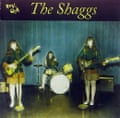
The story of The Shaggs, a musical trio whose raw, untamed sound defied conventional norms and captivated a cult following, is a remarkable testament to the unpredictable currents of artistic destiny. What began as a paternal ambition, fueled by a mother’s cryptic prophecy, evolved into a legacy that continues to inspire awe and debate decades later. This narrative, now further illuminated by the documentary "We Are the Shaggs," delves into the complex forces that shaped the careers of sisters Dorothy, Betty, and Helen Wiggin, transforming them from provincial daughters into accidental avant-garde icons.
The Genesis of a Musical Dream: Prophecy and Paternal Drive
The unlikely musical journey of The Shaggs began in the formative years of Austin Wiggin Jr. As a boy, his mother, a woman of apparent clairvoyant abilities, read his palm. Her predictions were stark: he would father two sons she would not live to see, marry a strawberry blonde, and his daughters would achieve fame in a popular band. By 1965, the first two omens had materialized, instilling in Austin a profound belief in the third. This conviction became the catalyst for a radical life decision. He withdrew his daughters – Dorothy, Betty, and Helen – from their schooling to pursue musical superstardom.
The sisters, then young girls, were thrust into an intense and singular regimen orchestrated by their father. Mail-order homework was supplemented by rigorous calisthenics and, most crucially, constant band practice under Austin’s unyielding supervision. Whether they harbored a genuine passion for music or not, the die was cast: they were to become "The Shaggs," and their existence was to be defined by this singular pursuit. Their world contracted dramatically; excursions beyond their home were limited to church, essential shopping, and a weekly performance every Saturday at the town hall in Fremont, New Hampshire. For five years, they played to an audience of their peers, a community they were largely isolated from, creating a chasm of missed adolescent experiences.
Betty Wiggin, now 75, reflects on this period with a poignant sense of loss. "We missed out on a lot," she admits. "I grieve that a little bit. When you hear people talk about high school – ‘You know how it was in gym class,’ this and that – well, I have no idea, you know?" The sisters’ mother, Dot, a figure of quiet compliance, reportedly supported her husband’s vision, though her personal feelings on the matter remain unarticulated. "She supported what our father wanted and went along with it," Betty explains, adding, "She never really said how she felt."

The Shaggs’ Sonic Anomaly: Divisiveness and Discovery
The final prophecy, that the sisters would find fame, did indeed come to pass. However, the nature of that fame was to be far from the conventional stardom Austin Wiggin Jr. likely envisioned. The Shaggs’ sole studio album, "Philosophy of the World," released in 1969, became a touchstone for a unique brand of musical expression that polarized listeners and critics alike. Their sound, characterized by its accidental avant-garde nature, a seeming disregard for traditional musical tenets such as tuning and timing, and a profound sincerity, provoked reactions ranging from bewilderment to outright horror.
A critic for LA Weekly Album Network famously described "Philosophy of the World" as akin to "a mass murder, too horrible to comprehend, yet it really happened." This stark assessment contrasted sharply with the fervent admiration it garnered from certain artistic circles. Notably, Nirvana frontman Kurt Cobain, a musician known for his eclectic tastes and appreciation for the unconventional, included "Philosophy of the World" among his five favorite albums.
The album’s perplexing beats and motifs create an auditory landscape where the sisters appear to be performing different songs simultaneously. Dorothy "Dot" Wiggin, 77, the lead guitarist, vocalist, and primary songwriter, candidly acknowledges their lack of formal musical training. "We thought our guitars were in tune," she states. "I guess that shows how much we didn’t know."
This perceived lack of conventional skill, however, is precisely what elevates The Shaggs’ music for many aficionados. Musician Jesse Krakow, a self-proclaimed "Shaggs purist" who has meticulously covered their work and collaborated with Dot, offers a more nuanced perspective. "The Shaggs were doing all these crazy, interlocking things – they just weren’t conscious of it," Krakow explains. He points out that "Philosophy of the World" is replete with musical complexities such as hemiola, decrescendos, and ritardandos, forms that bear resemblance to the experimental compositions of artists like Frank Zappa, Captain Beefheart, and Igor Stravinsky. This unintentional innovation has led some musicologists to view their work as a proto-punk or outsider art masterpiece, predating many established movements in experimental music.
A Brief Interruption: Life After the Prophecy
The Shaggs’ musical career, so rigorously pursued by their father, was intrinsically tied to his presence. When Austin Wiggin Jr. died of a heart attack in 1975, the sisters immediately disbanded the group. This abrupt end to their musical endeavors was not entirely unforeseen. Helen, the eldest sister, had already been estranged from the band, having been expelled by their father for marrying without his consent, a transgression for which Betty believes Helen’s "strength" was the cause. Helen passed away in 2006.
Despite the often-controlling nature of their father’s ambition, the sisters express a sense of respect for his dedication to their musical pursuits. Betty, however, emphasizes the profound sense of liberation that followed his death. "We could do whatever we wanted, then," she states. "We couldn’t do much before." The sisters largely divested themselves of their musical equipment and rarely spoke of their time in The Shaggs. They transitioned to more conventional work, taking on cleaning and caretaker roles, and began to build families of their own. "It was different, trying to start without music, because we didn’t have that many friends or anything," Betty recalls, "but we did go to work and meet people, got married." This period marked a deliberate departure from the intense, insular world of their musical upbringing, allowing them to forge independent lives.
The Cult of The Shaggs: Rediscovery and Reverberation
The near-disappearance of "Philosophy of the World" from the public consciousness was almost as dramatic as its initial release. Approximately 900 of the 1,000 copies pressed had gone missing shortly after the album’s debut. However, fate intervened in the form of Boston’s WBCN radio station, which possessed a copy. During a visit to the station, Frank Zappa, a titan of experimental music, encountered the album. He reportedly took a copy with him and, in a statement that would become legendary, declared The Shaggs to be "better than the Beatles."
Despite Zappa’s endorsement, The Shaggs remained largely unknown until Keith Spring, the saxophonist for the blues-rock group NRBQ, discovered the album at the record store where he worked. Spring introduced the record to his bandmates, who, in 1980, reissued "Philosophy of the World" on their Red Rooster label. This reissue was followed by "The Shaggs’ Own Thing," a compilation of unreleased recordings. This collection notably features "Painful Memories," the only song written by Betty. "I was thinking I’d like to write another one but nothing ever came to my mind," she remarks, suggesting a creative well that was perhaps largely tapped during her enforced musical apprenticeship.
The critical re-evaluation of The Shaggs’ work continued to grow. The Village Voice hailed "Philosophy of the World" as a "landmark of rock ‘n’ roll history," while Rolling Stone described it as "the most stunningly awful wonderful record." Patti Smith, a seminal figure in punk rock, was so enamored with The Shaggs that she and her bandmate Lenny Kaye adopted the nicknames "Foot Foot," inspired by Dorothy’s cat in the song "My Pal Foot Foot." Krakow even posits that Kurt Cobain’s iconic guitar solo on Nirvana’s "Come As You Are" echoes The Shaggs’ melodic repetitions. Betty expresses genuine amazement at the band’s widespread admiration: "It’s amazing, really. We wouldn’t have expected that – we didn’t even know until years later."
"We Are the Shaggs": A Documentary Exploration
The enduring legacy and extraordinary narrative of The Shaggs are now the subject of the documentary film "We Are the Shaggs." Directed by Ken Kwapis, the film endeavors to "humanize and dignify" the sisters, weaving together their personal accounts with insights from musicologists and collaborators. Kwapis himself describes his initial encounter with The Shaggs in 1980 as an "odd experience" that stemmed from a "sincere place." He likens their lyrics to those of Brian Wilson, finding them "heartfelt and personal," while acknowledging the "unusual musical texture." Kwapis states that making the film taught him a crucial lesson: "to check my prejudices at the door. And not just when it comes to the arts." This sentiment underscores the film’s objective to present The Shaggs not as a novelty act, but as artists whose unique journey deserves serious consideration.

A Legacy Reclaimed: Performances and Enduring Influence
Dot and Betty Wiggin have, on occasion, reunited to perform their songs, sharing their music together for the first time in decades. Their 1999 appearance alongside Sun Ra, a legendary jazz innovator, saw them unexpectedly mobbed by an enthusiastic crowd. In 2017, they performed at Wilco’s Solid Sound festival, further cementing their status as a revered, albeit unconventional, musical act. Today, their songs garner millions of listens on streaming platforms like Spotify, and their peculiar origin story has even inspired an off-Broadway play, a testament to the enduring fascination with their tale.
Despite the eventual recognition and the dedicated fan base they have cultivated, the sisters’ reflections on their forced musical career remain tinged with a sense of what might have been. When asked if she would choose to repeat her musical journey, Betty unequivocally states, "Truthfully, I don’t think I would have done any of it." She believes that without their father’s relentless drive, they would have experienced a "normal life." Dorothy concurs, suggesting that while she might have continued writing lyrics, she is uncertain about pursuing music. "We probably would have gone to high school and socialized," she muses. Yet, she adds a note of acceptance and pride: "But I feel proud as to what it’s become and all the followers and fans that we have." The story of The Shaggs, therefore, is not merely one of musical oddity, but a profound exploration of artistic destiny, paternal ambition, and the enduring power of sincerity in the face of unconventional expression.