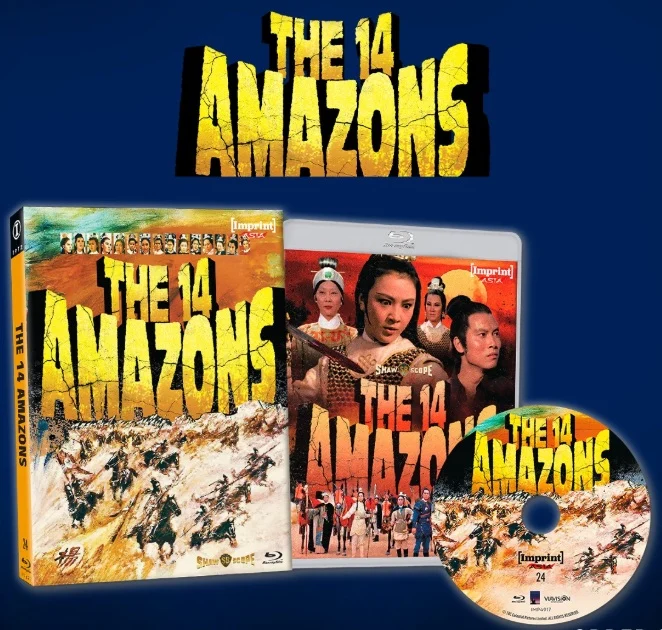
"14 Amazons," directed by the visionary Cheng Kang for Shaw Brothers Studio, represents a monumental achievement in Hong Kong cinema, a large-scale historical war film that masterfully fused the grandeur of operatic storytelling with the exhilarating demands of blockbuster spectacle. Released in 1972, at a juncture when Hong Kong’s cinematic landscape was predominantly shaped by wuxia fantasies and narratives of masculine heroism, the film carved out a distinct identity through its groundbreaking all-female heroic ensemble. This ambitious production not only distinguished itself thematically but also engaged in a subtle, playful rivalry within the industry, numerically escalating the stakes beyond contemporary hits like Chang Cheh’s "Twelve Gold Medallions" and "Thirteen Taibao" to its formidable titular fourteen heroines. The undertaking itself was a testament to Shaw Brothers’ formidable resources, reportedly consuming two years in production and mobilizing an extensive roster of its contract stars and technical personnel. Its immediate impact was undeniable, culminating in significant accolades at the prestigious Golden Horse Awards, including Best Director for Cheng Kang and Best Supporting Actress for the compelling Lisa Lu.
A Dynasty’s Resilience: The Yang Family Saga
The narrative of "14 Amazons" is deeply rooted in the revered legends of the Yang family, a clan celebrated throughout Chinese history and folklore for their unwavering loyalty, extraordinary military prowess, and profound patriotism. Set against the tumultuous backdrop of the Northern Song dynasty (960–1127 AD), a period often characterized by external threats and internal strife, the film opens with a pivotal moment of national crisis. The venerable Yang Zongbao, a key male figure in the family’s military lineage, tragically falls in battle against the encroaching forces of the Western Xia dynasty. His death, portrayed with a poignant dignity as he perishes standing, leaves a gaping void in the nation’s defense.
In a remarkable subversion of traditional gender roles prevalent in many historical epics, the mantle of responsibility for defending the Song empire against its aggressive invaders falls squarely upon the shoulders of the women of the Yang clan. Under the sagacious and resolute leadership of the family matriarch, She Tai-jun, the widows and daughters of the Yang family rise to the occasion. They assemble a formidable army, not merely to avenge their fallen kin but to repel the foreign aggressors and safeguard the integrity of their nation. The ensuing narrative unfolds as a powerful testament to sacrifice, unyielding patriotism, and indomitable resilience, chronicling the women’s arduous march to war against overwhelming odds, embodying the enduring spirit and legacy of the Yang family. This historical period was marked by persistent border conflicts, particularly with the Khitan-led Liao dynasty and the Tangut-led Western Xia dynasty, making the themes of national defense and heroic sacrifice particularly resonant with audiences familiar with these historical pressures.
Shaw Brothers’ Grand Vision and Theatricality
Shaw Brothers Studio, a cinematic powerhouse that dominated Hong Kong filmmaking from the 1960s to the early 1980s, was renowned for its efficient studio system, massive backlots, and a stable of contract stars and directors. "14 Amazons" epitomized this system’s capacity for grand-scale productions. The film’s approach to storytelling was less concerned with meticulous historical accuracy and more with the potent art of mythmaking. It drew heavily from the well-established and deeply ingrained legends of the Yang warriors, adopting an overtly theatrical tone that echoed the rich traditions of Chinese opera in both its stylized dialogue and the archetypal characterizations.
This theatricality was a deliberate choice, intended to elevate the narrative beyond mere historical recounting into the realm of epic folklore. The ideological framework presented is stark and unambiguous: a clear dichotomy between righteous patriots, exemplified by the Yang family, and treacherous officials or foreign enemies, who embody the threats to the nation’s stability. In this regard, "14 Amazons" aligns seamlessly with a broader trend of nationalist storytelling that was prevalent across Chinese-language cinema of the period. Films from this era frequently emphasized themes of loyalty, self-sacrifice, and moral clarity, often resonating deeply with contemporary political sentiments and celebrating patriotism as the utmost societal virtue. This focus on national identity and collective heroism served to both entertain and reinforce cultural values, a hallmark of Shaw Brothers’ more ambitious historical epics. The studio’s investment in such large-scale productions was a strategic move to maintain its market dominance against emerging rivals and evolving audience tastes.
Production Challenges and Cinematic Innovations
The two-year production timeline for "14 Amazons" underscores the immense logistical undertaking involved. Shaw Brothers, known for its disciplined production pipeline, likely deployed multiple units simultaneously to manage the vast scope. The film’s reported budget, while not publicly detailed, would have been considerable for its era, reflecting the studio’s commitment to grandeur. The mobilization of a "vast number of Shaw Brothers stars and resources" meant leveraging the studio’s deep roster of talent, from leading actors to martial artists and supporting players, all operating within a highly organized system.
From a technical standpoint, the film remains both impressive in its ambition and, at times, uneven in its execution, a common characteristic of large-scale productions pushing boundaries. The sheer scale is undeniable, featuring elaborate battle sequences that sprawled across meticulously constructed outdoor sets. Inventive visual ideas, such as the infamous "human bridge" sequence where soldiers form a living pathway, demonstrated a clear ambition to push the boundaries of genre spectacle. The action choreography, overseen by a young Ching Siu-tung in one of his earliest significant credits, shows flashes of the creative genius that would later define his career. His work emphasizes agility and verticality, particularly evident in sequences featuring tree-top combat, showcasing an innovative approach to martial arts staging. However, the reliance on operatic movements and Peking Opera-inspired staging, while culturally resonant, occasionally slowed the pacing and reduced the immediate visceral impact of the action, presenting a stylistic duality that both enriched and occasionally hampered the film’s kinetic energy.
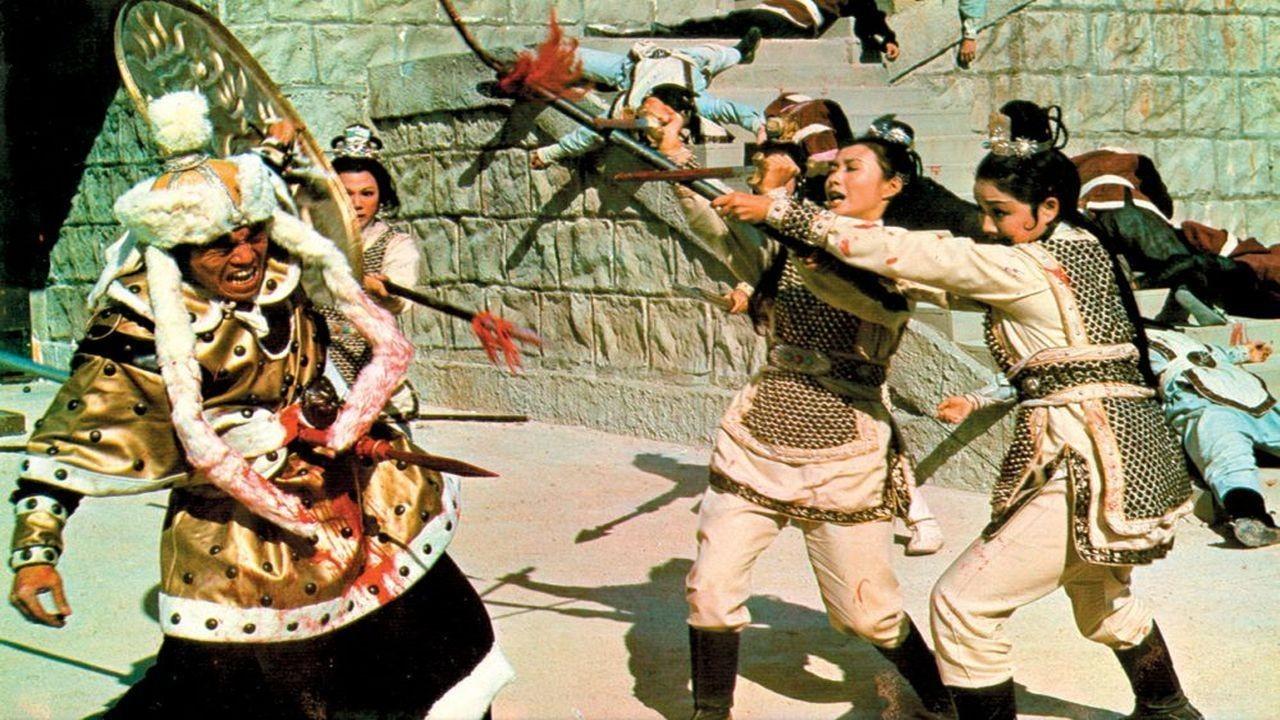
Cinematographically, the film benefits from the polished studio aesthetic characteristic of Shaw Brothers productions. With credits remarkably mentioning seven different Directors of Photography, a possible indication of the film’s massive scale requiring multiple camera units or changes during the extensive production period, the visuals are consistently vibrant and the frames carefully composed. The battle scenes, while highly stylized, are executed with a palpable sense of grandeur that effectively underscores the film’s epic aspirations. Chiang Hsing-lung and Fan Kung-ming’s editing is generally effective in maintaining narrative clarity, guiding the audience through complex sequences, although some segments do feel extended, contributing to a certain sense of lengthiness that might test modern sensibilities. Despite these minor pacing issues, the sequences set in the desert stand out as particularly impressive, demonstrating a mastery of composition and atmosphere that truly elevates the visual storytelling.
Character Arcs and Performance Dynamics
While "14 Amazons" excels in spectacle and thematic resonance, its approach to characterization is largely schematic. Most figures function as archetypes, embodying specific virtues or roles within the larger narrative, rather than being developed into fully complex individuals. This choice, while a limitation in terms of psychological depth, served the film’s mythic aspirations, allowing the characters to represent broader ideals. The central trio of She Tai-jun, Mu Guiying, and Yang Wenguang receive the bulk of the narrative attention, providing focal points for the audience’s emotional investment. Lisa Lu delivers a commanding portrayal of She Tai-jun, balancing the matriarch’s formidable authority with a profound emotional weight, anchoring the film’s core themes of resilience and leadership. Ivy Ling Po, a celebrated star, brings charisma and resolute presence to her role as Mu Guiying, embodying the fierce warrior spirit. Lily Ho, as Yang Wenguang, adds another layer of strength and determination to the heroic ensemble.
The remaining heroines, while visually reinforcing the collective strength and unity of the Yang family, often serve more as a powerful visual chorus than as distinct personalities. This ensemble approach, while showcasing the breadth of Shaw Brothers’ talent pool, inevitably leads to uneven character development, with many actors left with limited material to truly flesh out their roles. Nevertheless, the supporting cast, including veterans such as Tien Feng and Lo Lieh, adds further gravitas, even when confined to more conventional villainous or secondary roles. A notable aspect often highlighted by critics is the film’s willingness to depict the physical punishment the female warriors endure. Unlike many wuxia films where protagonists often appear invulnerable, "14 Amazons" injects a sense of (partial at least) realism by showing the heroines facing genuine hardship and injury, making their victories feel more earned and their sacrifices more profound.
Aural Landscape and Critical Acclaim
The sound design of "14 Amazons," which garnered well-deserved recognition at the Golden Horse Awards, plays a crucial role in enhancing the film’s immersive atmosphere. The judicious and often dramatic use of music and sound effects reinforces the film’s operatic tone, heightening both the emotional and dramatic stakes throughout the narrative. While occasionally leaning toward a sense of excess, this approach largely succeeds in underscoring the epic nature of the story and the profound emotions at play. The score, often sweeping and majestic, complements the visual grandeur, driving the narrative forward and amplifying the sense of heroism and tragedy.
The film’s critical reception at the time was largely positive, particularly regarding its ambition and visual spectacle. Its Golden Horse Awards, including Best Director for Cheng Kang, Best Supporting Actress for Lisa Lu, and an award for sound design, solidified its status as a significant cinematic achievement. The Golden Horse Awards, established in 1962, quickly became, and remains, one of the most prestigious film awards in the Chinese-speaking world, akin to the Academy Awards. Such recognition highlighted the film’s technical prowess, directorial vision, and strong performances within the competitive landscape of early 1970s Hong Kong cinema.
Legacy and Enduring Impact
Ultimately, "14 Amazons" stands as a fascinating and important artifact of its time, a film that deftly combines spectacle, deeply ingrained Chinese ideology, and rich cultural tradition into a singular cinematic experience. While it may possess certain limitations in terms of narrative depth and individual character complexity, its sheer ambition, monumental scale, and profound cultural significance ensure its lasting appeal. The film’s unique premise of an all-female army, while rooted in legend, offered a refreshing counterpoint to the male-dominated action films of its era, subtly challenging gender norms within the genre and showcasing the strength and agency of women.
Decades after its initial release, the film continues to retain a certain charm and relevance, not only as a compelling piece of entertainment but also as a vital reflection of the prevailing values and aesthetic sensibilities of early 1970s Hong Kong cinema. It solidified Shaw Brothers’ reputation for producing lavish historical epics and demonstrated Cheng Kang’s skill in orchestrating complex action sequences and large ensemble casts. Its legacy can be seen in subsequent films that attempted similar large-scale historical dramas or featured strong female protagonists. "14 Amazons" remains a testament to the creative and industrial might of Shaw Brothers Studio, a film that, despite its stylistic particularities, left an indelible mark on the history of Hong Kong cinema and continues to be appreciated for its bold vision and powerful thematic resonance.