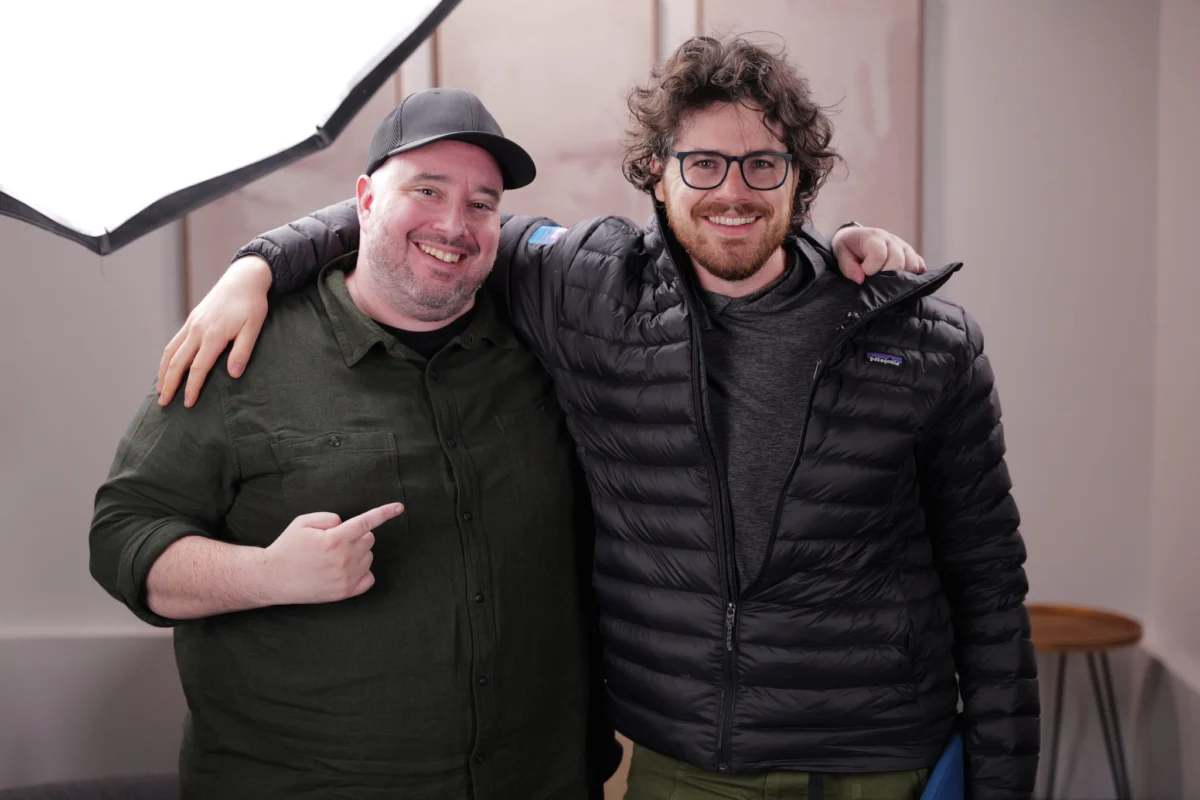
The production brings together the Academy Award-winning creative teams behind two of the most significant films of the early 2020s. From the narrative side, Daniel Kwan and Jonathan Wang, the architects of the multi-Oscar-winning "Everything Everywhere All at Once," serve as producers. Their involvement signals a continuation of their interest in complex, multi-layered storytelling that bridges high-concept themes with deeply personal emotional stakes. Joining them are Shane Boris and Diane Becker, the producers of the Academy Award-winning documentary "Navalny." This fusion of narrative innovation and investigative documentary rigor provides the film with a unique structural foundation, blending personal memoir with a global technological survey.
The Narrative Core: Fatherhood and Technological Uncertainty
At the heart of the documentary is Daniel Roher’s personal journey. While developing the project, Roher navigated the profound experience of becoming a father, a life event that fundamentally shifted his perspective on the technological future. This transition provides the "Apocaloptimist" framework of the title—a portmanteau describing a state of being that acknowledges the potentially catastrophic risks of AI while remaining stubbornly hopeful about its capacity for human enhancement.
The film meticulously documents Roher’s transition from a skeptic, wary of the displacement of human creativity and the erosion of privacy, to an observer who recognizes the inevitability of the AI revolution. By framing the rise of AI through the lens of a new parent, the documentary asks what kind of world the next generation will inherit. It moves beyond the binary of "utopia versus dystopia," instead focusing on the nuanced reality of a world where algorithms and human intuition must coexist.
Visual Artistry and the Human Touch
One of the most critically acclaimed aspects of the film is its deliberate aesthetic choice to utilize handcrafted animation and artwork created entirely by human hands. In a film centered on the proliferation of AI-generated content, Roher and Tyrell made a conscious decision to reject algorithmic assistance in the production of the documentary’s visual assets. This serves as a meta-commentary on the value of human labor and the unique "imperfections" that define traditional artistry.
The animation, led by Charlie Tyrell’s distinctive visual style, provides a tactile counterpoint to the abstract concepts of neural networks and data processing discussed by the film’s subjects. Critics at the 2026 Sundance Film Festival noted that this contrast reinforces the film’s central thesis: that while AI can simulate creativity, the intentionality and lived experience of the human artist remain distinct and irreplaceable.
Chronology of Development and Global Context
The development of the documentary spans a transformative four-year period in the technology sector. To understand the film’s significance, one must look at the timeline of its production alongside the real-world evolution of AI:
- 2022-2023: The emergence of Large Language Models (LLMs) and generative image tools triggers a global debate on the future of work and intellectual property.
- 2024: Daniel Roher and Charlie Tyrell begin preliminary research and filming, coinciding with the initial wave of AI regulation discussions in the United States and the European Union.
- 2025: Production intensifies as AI becomes integrated into mainstream creative workflows. Roher’s personal narrative regarding fatherhood is integrated into the film’s structure.
- January 2026: The film premieres at the Sundance Film Festival to critical acclaim, securing a distribution deal with Focus Features.
- March 27, 2026: The film opens in North American theaters, followed by an international rollout.
This timeline highlights how the film captured a "lightning in a bottle" moment, documenting the shift from AI as a speculative concept to a pervasive daily reality.
Supporting Data: The AI Landscape in 2026
The release of the documentary coincides with a period of unprecedented investment and anxiety regarding artificial intelligence. According to 2025 industry reports, the global AI market reached an estimated valuation of $1.8 trillion, with generative AI accounting for a significant portion of that growth. In the creative sectors specifically, a 2025 survey of the International Documentary Association (IDA) found that nearly 60% of documentary filmmakers had experimented with AI tools for transcription, archival research, or color grading, while only 15% felt comfortable using AI for creative content generation.
The documentary addresses these statistics by interviewing a broad spectrum of experts, including ethicists, Silicon Valley engineers, and labor rights advocates. By grounding the film in these data-driven realities, Roher and Tyrell provide a factual backbone to the more philosophical questions of the narrative.

Industry Reactions and Critical Reception
The film’s premiere at Sundance was met with a chorus of positive reviews, with many praising its ability to make a dense, technical subject feel intimately accessible. Industry analysts have pointed to the film as a potential frontrunner for the 2027 awards season, noting the "pedigree of its producers" and the "timeliness of its subject matter."
In an extensive interview following the premiere, Daniel Roher addressed the criticisms often leveled against AI-themed media—namely, that it often leans too heavily into "doomsday" scenarios. Roher emphasized that his goal was to provide a "human-centric audit" of the technology. He argued that the threat of AI is not just a technological problem, but a political and social one, requiring human intervention and ethical oversight.
Early reactions from the tech community have been notably mixed but engaged. While some proponents of accelerationism have criticized the film for its "cautious optimism," many in the ethical AI movement have praised it for highlighting the human cost of rapid automation. The consensus among critics is that the film succeeds because it does not attempt to provide easy answers, but instead provides a framework for how individuals can maintain their agency in an increasingly automated world.
The Focus Features Strategy and Broader Impact
The decision by Focus Features to grant the film a traditional theatrical window rather than a direct-to-streaming release is a significant statement on the documentary’s perceived importance. For a documentary to receive a major theatrical push in 2026, it must possess both commercial appeal and cultural relevance. This distribution strategy suggests that the studio views "The AI Doc" not just as an educational tool, but as a major cinematic event capable of drawing audiences back to theaters for a collective experience.
The film’s impact is expected to extend beyond the box office. Educational institutions and policy think tanks have already expressed interest in using the film as a catalyst for discussion. The "Apocaloptimist" philosophy has begun to trend in academic circles as a pragmatic middle ground for discussing technological advancement.
Analysis of Implications for Future Filmmaking
The success of "The AI Doc: Or How I Became An Apocaloptimist" may signal a shift in how the film industry approaches the topic of technology. By prioritizing human-made art and personal storytelling, Roher and Tyrell have created a blueprint for "tech-humanism" in cinema.
Furthermore, the involvement of the "Everything Everywhere All at Once" and "Navalny" teams suggests a new model for documentary production, where the boundaries between high-concept narrative filmmaking and traditional journalism are increasingly blurred. This hybrid approach allows for a more visceral and engaging form of documentary that can compete with blockbuster narratives for public attention.
As AI continues to evolve, the film serves as a time capsule of a moment when humanity was forced to look in the mirror and decide what parts of its essence were non-negotiable. Whether AI proves to be a tool for unprecedented good or a harbinger of societal disruption, "The AI Doc" remains a vital document of the human spirit’s attempt to find balance in a changing world.
The documentary’s theatrical run, beginning March 27, 2026, will likely be followed by a wide release on digital platforms, ensuring that its message reaches a global audience. As Roher noted in his recent public statements, the film is not just about the technology of today, but about the legacy we leave for the children of tomorrow. Through its blend of data, personal reflection, and human artistry, the film stands as a testament to the enduring power of human storytelling in the age of the machine.