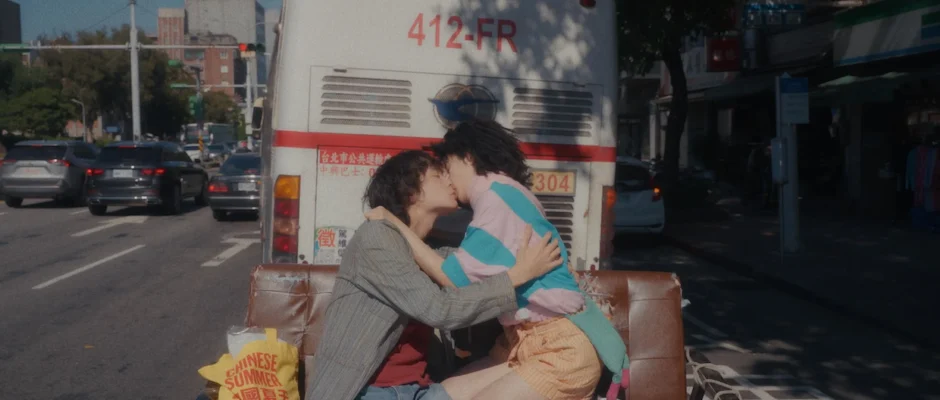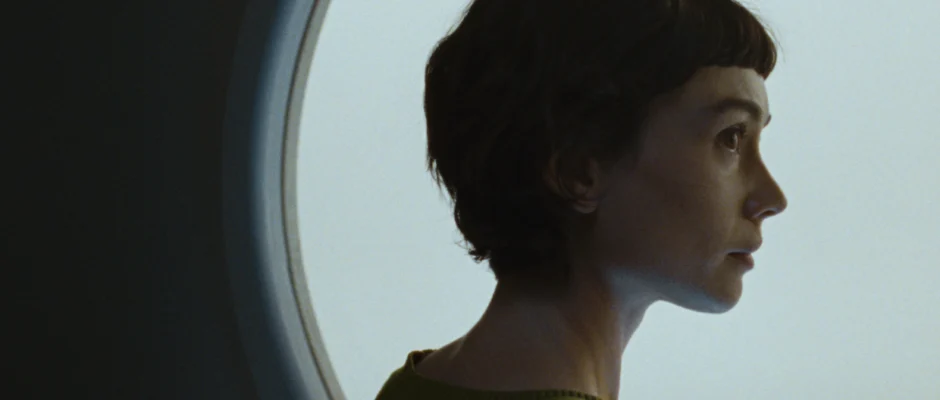
Brian Tetsuro Ivie’s Anima, a lo-fi science fiction road trip film, premiered at SXSW on March 12, offering a poignant exploration of consciousness, mortality, and the enduring human quest for meaning. The film masterfully interweaves earthy intimacy with spiritual reflection, focusing on the transformative journey of discordant personalities finding harmony amidst an existential crisis. Its narrative, anchored by compelling performances and a distinctive 16mm aesthetic, delves into the burgeoning real-world debate surrounding digital immortality and the fundamental nature of the human soul.
The Premise: A Journey to Digital Eternity
At its core, Anima follows Beck (Sydney Chandler), a young woman embarking on her first day in a new, enigmatic role. Her assignment: to escort Paul (Takehiro Hira) to a facility where he intends to undergo an end-of-life procedure. This isn’t a conventional medical intervention; Paul’s objective is to upload his consciousness into a cloud system, thereby creating a digitized version of himself accessible to anyone who wishes to visit. What initially appears to be a straightforward, transactional journey for Beck soon devolves into an existential winding road, as Paul frequently diverts their course. His purpose for these detours becomes clear: to make amends with individuals he has wronged throughout his life, seeking absolution before transitioning into his digital afterlife. These acts of reconciliation are presented as a means for Paul to find peace, an essential prerequisite for his perceived eternal existence.
However, despite its high-concept sci-fi premise centered on digitized immortality, Anima maintains a profound warmth, continually grounding its characters in the preciousness of their current existence. Director Brian Tetsuro Ivie’s deliberate choice to shoot on 16mm film imbues the narrative with a grainy, lived-in texture, visually reinforcing the film’s core message. This aesthetic choice highlights the palpable reality of Beck and Paul’s odyssey, during which both characters uncover unexpected facets of themselves and each other, often more than they are willing to admit. The film subtly argues that in the fervent pursuit of preservation—be it of consciousness or legacy—one risks failing to be present. Their shared journey becomes a powerful meditation on savoring the time we have rather than merely attempting to extend it indefinitely.
Philosophical Roots and Contemporary Relevance
Director Brian Tetsuro Ivie revealed that Anima‘s narrative draws significant inspiration from the Parable of the Rich Fool in the Gospel of Luke (Luke 12:13-21). This ancient parable tells of a wealthy man who hoards his possessions, planning for a long, prosperous future, only to die unexpectedly, his accumulated riches rendered meaningless. Ivie, who grew up in a Catholic home but found his true connection to faith through the arts, recognized in this parable a timeless question: "What does it mean to live a meaningful life?"
Ivie’s journey into filmmaking was deeply intertwined with his spiritual quest. He expressed an aversion to the often-narrow confines of "Christian movies," believing instead that "all truth is God’s truth." His personal mission to understand the divine through artistic expression found its narrative anchor in modernizing this biblical tale. In Anima, Paul embodies a contemporary iteration of the Rich Fool, attempting to transcend death through technological means without fully engaging with the spiritual or relational dimensions of his life.
This thematic core directly confronts the burgeoning field of transhumanism and the aspiration for mind-uploading, a concept gaining traction among futurists and tech luminaries like Ray Kurzweil. While projects like Nectome (which aimed to preserve brains for future digitization, though now defunct) and ongoing research into neural interfaces and artificial general intelligence push the boundaries of what’s possible, Anima injects a critical, humanist perspective. Ivie articulates a fundamental disagreement with the notion of humans as primarily material beings, uploadable to silicon. He posits that humans are primarily immaterial, suggesting that true consciousness and identity reside beyond mere data, in the realm of the soul or spirit. This philosophical stance provides the film’s intellectual backbone, challenging audiences to consider the profound implications of pursuing digital immortality without spiritual or ethical introspection.
Character Arcs: Beck’s Journey from Transaction to Connection
Sydney Chandler’s portrayal of Beck is central to the film’s emotional resonance. Chandler expressed her enthusiasm for playing a "human being" in a grounded sci-fi piece, a departure from some of her previous genre work. To inhabit Beck’s inner life, Chandler explored guiding questions such as "Where is she stunted in her youth?" and "What’s her relationship to loyalty?" She crafted a backstory for Beck, inferring that the ambiguous loss of her father instilled a "quiet rage" and a transactional approach to relationships, leading her to question loyalty and love. This background explains Beck’s initial coldness and her dispassionate view of her job with Paul—she’s merely seeking a paycheck.
However, as the journey progresses, Paul, brought to life with profound humanity by Takehiro Hira, inadvertently forces Beck to confront her own emotional walls. Chandler noted the dynamic between the characters, realizing they were "two sides of the same coin." Beck, initially resistant to connection, begins to see echoes of her own humanity in Paul’s desperate attempts at reconciliation. This transformative process, as Chandler described, felt like "therapy," allowing her to work through personal life aspects through her art.
The film’s exploration of "not knowing" is pivotal to Beck’s arc. While Paul seeks to eliminate the mystery of death, Beck ultimately embraces it. Chandler profoundly articulated her belief that the beauty of life lies in its inherent mystery, including the ultimate mystery of death. She argued that removing the aspect of death strips life of its color and meaning, a conclusion that Beck herself arrives at. This is powerfully illustrated in the scene where Paul takes the pill for his procedure. Chandler, having developed a genuine affection for Hira, found herself unexpectedly overcome with emotion, describing her internal struggle: "I think a part of her wanted to say ‘stop,’ but she couldn’t." Her turning away, a moment of profound emotional conflict, signifies not abandonment, but a boundary, an acceptance of Paul’s choice while simultaneously rejecting it for herself. It is a moment of both frustration and growth for Beck, signifying her acceptance of what is, and her personal commitment to a different path.

Aesthetic Integrity: The Enduring Power of 16mm Film
Brian Tetsuro Ivie’s decision to shoot Anima on 16mm film is not merely an aesthetic choice but a philosophical statement. Ivie lamented the film industry’s pivot to digital during his film school years, always feeling that "there was something just so human about film." He describes it as "imperfect" and a "chemical miracle," quoting Steven Spielberg. This reverence for the tangible, organic nature of film stock aligns perfectly with the film’s themes of embracing imperfection and the material reality of human existence, even when discussing futuristic concepts.
The resurgence of film stock in recent years, favored by acclaimed directors like Christopher Nolan, Quentin Tarantino, and Paul Thomas Anderson, speaks to a broader industry appreciation for its unique visual qualities—richer colors, dynamic range, and distinctive grain structure. For Anima, the 16mm format’s more pronounced grain structure and the intentional incorporation of "light leaks" served to underscore the film’s lo-fi, intimate feel. This visual language grounds the seemingly futuristic idea of digital consciousness transfer in a "felt reality," creating a compelling juxtaposition between a tool of the past and a concept of the future. Ivie’s commitment extends to his company, Kebrado, which aims to help filmmakers "maintain their humanity through the arts," viewing the slower, more laborious process of working with film as akin to "a prayer."
The film’s visual coherence was further enhanced by costume designer Emily Costantino, whom Ivie praised for her original approach. Costantino avoids derivative references, instead drawing inspiration from diverse sources like paintings and vintage Japanese magazines from the 1960s, ’70s, and ’80s. This methodology ensured that the costumes were not merely functional but integral to the film’s overall color palette and mood. Chandler appreciated the comfort and practicality of her wardrobe, noting how Beck’s "scroungy outfits" contrasted with Paul’s more "Matrix-inspired" attire, visually hinting at their differing relationships to the future and their present realities. The meticulous attention to costume, cinematography, and even car color ensured a cohesive visual language that prevented the film from feeling "flat," as Ivie described, making it a truly immersive experience.
Filmmaking with Empathy: Ivie’s Documentary Legacy
Brian Tetsuro Ivie’s background in documentary filmmaking significantly influenced his approach to directing Anima, particularly in his leadership style and commitment to his crew. In an industry often criticized for its demanding conditions, especially in independent productions, Ivie prioritized the well-being of his team. He implemented a "Crew Careline" item in the budget, allocating personal funds to ensure better food, accommodation, and transportation for his crew members. This initiative was a deliberate statement: "You’re not on the altar of my ambition. We want you to come out of this better than when you started." This ethos, supported by his producers, reflects a profound respect for human dignity and echoes the collaborative spirit often found in documentary work, where trust and authentic engagement are paramount.
Sydney Chandler found Ivie’s documentary background particularly reassuring. She trusted that he would guide them to authentic performances, pushing for scenes until he felt "the truth of what you would feel from a real person going through something." This emphasis on genuine emotional discovery, rather than rigid adherence to a script, allowed actors the freedom to explore and embody their characters more deeply, contributing to the film’s grounded realism despite its sci-fi premise.
AI, Art, and the Enduring Human Element
Anima‘s exploration of digital consciousness is acutely relevant in an era dominated by discussions about artificial intelligence and its impact on human creativity and existence. The film enters a canon of sci-fi narratives that grapple with profound questions of the soul and the importance of human connection in the face of technological advancement. Sydney Chandler, whose college thesis explored genre work emerging from periods of crisis (e.g., horror, sci-fi, and surrealist art after WWI and WWII), observes that contemporary sci-fi stories about AI consistently return to these themes.
The current global discourse around AI, especially following recent Hollywood labor disputes that highlighted concerns over AI’s role in creative industries, underscores the anxieties that Anima subtly addresses. Chandler notes that most AI narratives portray resistance, a collective yearning for more human connection, rather than utopian acceptance. This observation gives her hope, suggesting a subconscious societal desire to preserve genuine human interaction.
Chandler offers a compelling argument for the enduring power of human-made art over AI-generated content. She posits that "art is made from human mistakes," a fundamental element that AI, in its current form, cannot replicate. She vividly illustrates this by contrasting an AI’s perfect execution with a human actor’s unplanned, visceral emotional response—like her unexpected tears during Paul’s pill scene. "What makes us human is our mistakes, and then we have the capacity to ask why and try to fix them," she asserts. This capacity for self-reflection, for understanding and processing imperfection, is what defines the human soul and, consequently, human art. She expresses strong hope that this inherent humanness will allow art created by people to "outlast and withstand the AI movement."
Brian Tetsuro Ivie echoes this sentiment, finding in sci-fi a potent vehicle to communicate complex ideas without being didactic. The genre allows him to "tap into that deeper longing and ache we all have" for meaning and connection, while acknowledging that "life is more mysterious than we give it credit for." Anima doesn’t offer easy answers but rather galvanizes essential questions, inviting its audience to chew on the profound implications of our technological trajectory and to rediscover the irreplaceable value of human experience, connection, and the acceptance of life’s inherent mysteries.
As Anima begins its festival run, its timely narrative and thoughtful execution position it as a significant contribution to contemporary cinema, challenging viewers to look inward even as technology pulls them toward an uncertain future. It serves as a powerful reminder that while the future may offer dazzling technological possibilities, the enduring essence of humanity lies in our present connections, our imperfections, and our capacity for both profound love and sorrow.