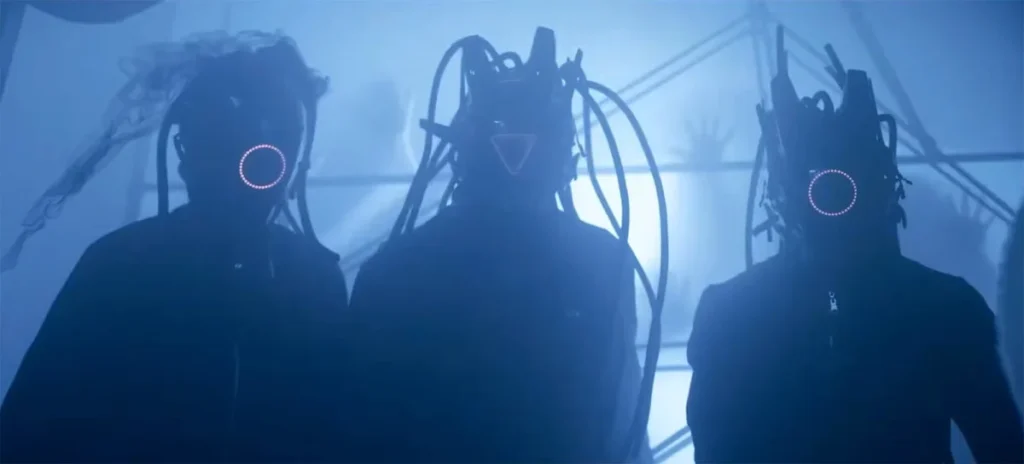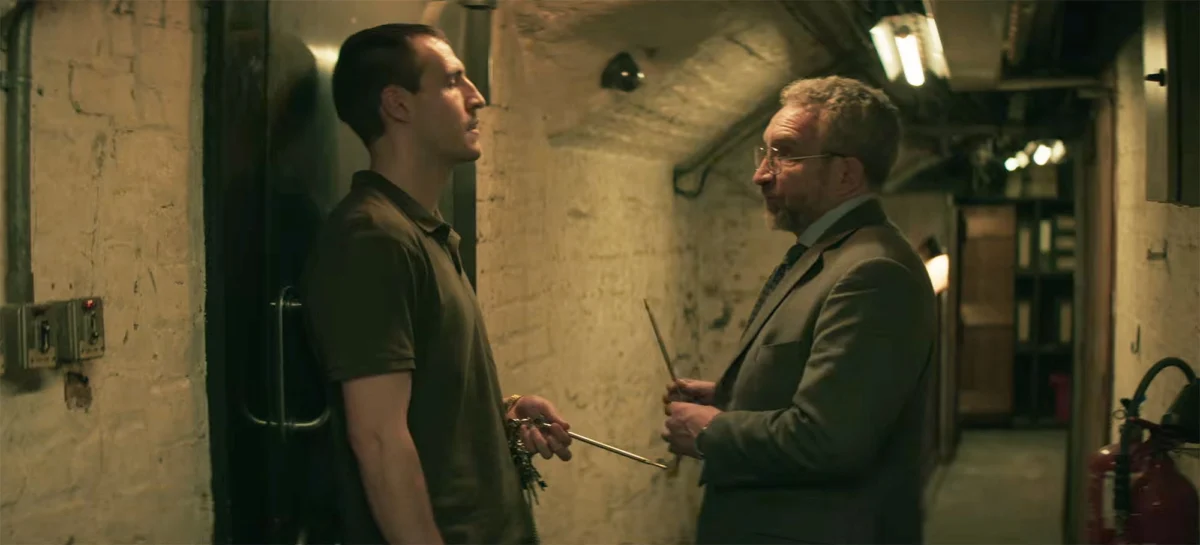
Epic Pictures Group has officially released the first trailer for No Ordinary Heist, a high-stakes Irish crime thriller scheduled for a multi-platform release in the United States on April 24, 2026. Directed by Colin McIvor, the film is a dramatized exploration of one of the most significant bank robberies in global history, focusing on the psychological and physical toll of a crime where the primary actors are forced into participation against their will. Starring Eddie Marsan and Éanna Hardwicke, the production seeks to blend the tension of a traditional heist film with a claustrophobic character study rooted in the specific sociopolitical atmosphere of Belfast.
The narrative of No Ordinary Heist centers on an unconventional premise: a bank robbery executed by individuals who have no desire to commit a crime. The plot follows two bank employees who share a mutual animosity but are forced into an uneasy alliance when a criminal syndicate kidnaps their families. To ensure the safety of their loved ones, the two protagonists must navigate the security protocols of their own workplace to facilitate the theft of millions of pounds. This "tiger kidnapping" setup—a term used to describe a crime where a hostage is used to coerce someone into performing a specific task—serves as the catalyst for a story that unfolds over a single, high-tension day.
Historical Context: The 2004 Northern Bank Robbery
The film is heavily inspired by the real-life events of the Northern Bank robbery, which took place in Belfast in December 2004. At the time, it was the largest cash robbery in the history of the United Kingdom and Ireland, with a total of £26.5 million (approximately $50 million at the time) stolen in various currencies. The audacity and precision of the crime sent shockwaves through the international financial community and had profound political ramifications for the Northern Ireland peace process.
On the night of Sunday, December 19, 2004, groups of armed men gained entry to the homes of two key Northern Bank officials: Chris Ward and Kevin McMullan. The criminals held the families of both men at gunpoint, using them as leverage to force the officials to assist in the robbery. The following day, Ward and McMullan were instructed to go to work at the bank’s headquarters in Donegall Square West as if nothing were wrong. Under the constant threat of violence against their families, they were forced to facilitate the entry of the thieves and the removal of massive quantities of cash.

The real-world investigation that followed was one of the most complex in the history of the Police Service of Northern Ireland (PSNI). While several individuals were arrested and questioned over the years, the majority of the stolen funds were never recovered, and the identity of the masterminds behind the operation remained a subject of intense public and political debate. By grounding No Ordinary Heist in these historical facts, director Colin McIvor aims to capture the specific tension of a city emerging from a long period of conflict while still dealing with the remnants of organized criminal and paramilitary structures.
Production Design and Cinematic Vision
Director Colin McIvor, known for his previous work on films such as Zoo and Cup Cake, has emphasized that No Ordinary Heist is intended to be more than a standard action film. In statements accompanying the trailer release, McIvor described the project as a "taut, claustrophobic, and immersive study of the human spirit pushed to its absolute limit." To achieve this, the production team focused on a specific visual palette designed to evoke the winter atmosphere of Belfast and the sterile, oppressive environment of a high-security bank vault.
The film’s cinematography, handled by Damien Elliot, utilizes a contrast between "icy winter blues" and "warm sodium lamps." This visual language is intended to mirror the emotional state of the protagonists—shifting between the cold terror of their situation and the frantic energy of the heist itself. McIvor noted that the production "meticulously recreated the atmosphere of Belfast," using tobacco-stained ceilings and tomb-like vault sets to create a sense of impending doom and physical confinement.
The screenplay, co-written by McIvor and Aisling Corristine, reportedly focuses heavily on the "wit and language unique to the city." While the stakes are life-and-death, the film seeks to incorporate the dark humor and resilience often associated with the people of Belfast. This linguistic authenticity is a central component of the film’s attempt to provide the city with what McIvor calls "the cinematic treatment it deserves."
A Cast of Character-Driven Performance
The success of a film with such a concentrated focus on a small group of characters relies heavily on the caliber of its cast. Eddie Marsan, a veteran actor known for his roles in Ray Donovan, Happy-Go-Lucky, and The Thief, His Wife and the Canoe, brings a seasoned presence to the production. Marsan’s ability to portray complex, often embattled men fits the requirements of a protagonist forced into an impossible moral and physical dilemma.

Opposite Marsan is Éanna Hardwicke, a rising star who has garnered acclaim for his performances in The Sixth Commandment and Normal People. The dynamic between Marsan and Hardwicke’s characters—rivals who must overcome their personal grievances to survive—is the emotional engine of the film. The cast is rounded out by Michelle Fairley, widely recognized for her role as Catelyn Stark in Game of Thrones, and Eva Birthistle, whose previous credits include Brooklyn and The Last Kingdom. The inclusion of Steven Calvert and Donal O’Hanlon further reinforces the film’s local authenticity, providing a supporting cast deeply familiar with the nuances of the Irish setting.
Analysis of the Tiger Kidnapping Motif
The "tiger kidnapping" is a specific type of crime that became tragically common in Ireland and the UK during the early 21st century. Unlike traditional bank robberies, which often involve "smash-and-grab" tactics or sophisticated technological bypasses, the tiger kidnapping relies entirely on human vulnerability. By targeting the families of employees, criminals bypass electronic security systems by using the human element as the "key" to the vault.
From a narrative perspective, this allows No Ordinary Heist to bypass many of the clichés of the heist genre. There are no high-tech gadgets or elaborate laser-grid navigations; instead, the "heist" is a series of agonizing decisions made by ordinary people under extraordinary pressure. The trailer highlights this by emphasizing that the actual criminals "never step foot inside the bank." This psychological distance creates a unique layer of tension, as the protagonists become both the victims and the perpetrators of the crime.
Distribution and Market Impact
Epic Pictures Group, the distributor behind the film’s US release, has positioned No Ordinary Heist as a prestige crime thriller. By choosing a late April 2026 release date, the studio is placing the film in a window that allows it to capture audiences looking for sophisticated, adult-oriented counter-programming to the early summer blockbuster season. The film will be available in select theaters and on Video on Demand (VOD) platforms starting April 24, 2026.
The production was supported by a team of producers including Ruth Carter, Johanna Hogan, and Damon Lane. Their collective goal has been to produce a film that maintains "lasting permanence in the mind" by avoiding the disposable nature of many modern action thrillers. By focusing on a "simple and economical concept," the filmmakers hope to deliver a story that resonates on a human level while satisfying the demands of the genre.

Broader Implications and Industry Reception
The release of No Ordinary Heist comes at a time of continued interest in "true crime" adaptations and historical dramas that explore the complexities of Northern Ireland’s history. Films like Belfast (2021) and series like Blue Lights have demonstrated a significant global appetite for stories set in the region that move beyond the tropes of the "Troubles" to explore more nuanced human and criminal dramas.
Industry analysts suggest that No Ordinary Heist could follow in the footsteps of successful Irish genre films such as The General or 71, which used specific historical events as a backdrop for high-tension storytelling. The focus on a "jagged spike" of emotional arcs—lurching from despair to hope—suggests a film that prioritizes character development alongside its plot mechanics.
As the April 2026 release date approaches, the film is expected to generate significant discussion regarding its portrayal of the 2004 robbery. While the film is a dramatization and not a documentary, its ties to real-world events provide a layer of gravity that distinguishes it from purely fictional entries in the crime genre. For audiences, the draw will likely be the combination of a frighteningly plausible premise, a high-caliber cast, and the opportunity to see a landmark piece of modern history brought to life with cinematic intensity.