The landscape of contemporary cinema continues to be shaped by the prolific output of Academy Award-winning director Steven Soderbergh, whose latest venture, The Christophers, has recently unveiled its final UK trailer ahead of a scheduled May release. This psychological thriller, which delves into the ethics of art forgery and the complexities of familial legacy, marks a significant entry in Soderbergh’s recent filmography, following closely on the heels of his 2025 projects, Presence and Black Bag. Distributed by Picturehouse in the United Kingdom and Neon in the United States, the film explores the intersection of creative genius and financial desperation, anchored by a cast that includes Ian McKellen, Michaela Coel, James Corden, and Jessica Gunning.
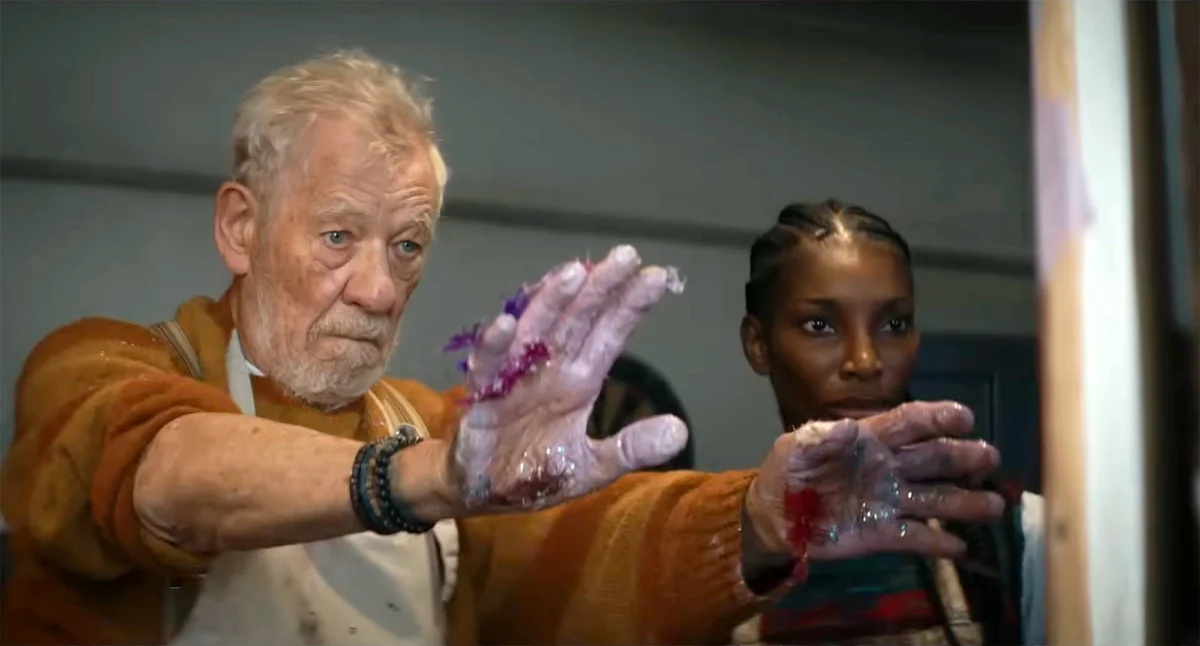
The narrative center of The Christophers concerns Julian Sklar, portrayed by Ian McKellen, a fictional titan of the London pop art scene during the 1960s and 1970s. Once a celebrated figure amidst the cultural explosion of the era, Sklar has spent the latter decades of his life in obscurity and financial ruin. The plot is set in motion by his two estranged children, played by James Corden and Jessica Gunning, who are motivated by the impending loss of their inheritance. In a bid to manufacture value from their father’s legacy, they enlist the services of Lori Butler (Michaela Coel), a skilled art restorer with a clandestine history as a forger. The scheme involves completing eight unfinished canvases from Sklar’s "Christophers" collection—works abandoned decades ago—and planting them in storage to be "discovered" as lost masterpieces upon the artist’s eventual passing.
Technical Collaboration and Script Development
The screenplay for The Christophers was penned by Ed Solomon, marking another chapter in a robust creative partnership between Solomon and Soderbergh. The duo previously collaborated on the HBO limited series Mosaic, the crime thriller No Sudden Move, and the Max series Full Circle. Solomon, known for his versatile range—from the high-concept comedy of Bill & Ted’s Excellent Adventure to the blockbuster structure of Men in Black—reportedly crafted a script that balances the procedural tension of a heist with a meditative exploration of artistic authenticity.
Soderbergh, true to his established methodology, serves not only as director but also as his own cinematographer and editor, utilizing his well-known pseudonyms Peter Andrews and Mary Ann Bernard, respectively. This hands-on approach allows for a distinct visual language that, in the case of The Christophers, seeks to mirror the aesthetic evolution of the London art world. The film’s production design and cinematography reportedly emphasize the contrast between the vibrant, saturated memory of the 1960s pop art movement and the more muted, clinical reality of the modern-day art market and restoration laboratories.
Chronology of Production and Release
The journey of The Christophers from conception to screen followed an efficient timeline characteristic of Soderbergh’s production company, Extension 765.

- Late 2024: Principal photography commenced in London, taking advantage of the city’s historical art districts and contemporary galleries to ground the fictional narrative in a sense of place.
- September 2025: The film saw its world premiere at the Toronto International Film Festival (TIFF). Early critical reactions highlighted the film’s "thoughtful" approach to the concept of originality, with particular praise directed at the chemistry between McKellen and Coel.
- April 10, 2026: Neon initiated a limited theatrical release in the United States, targeting select arthouse cinemas in major metropolitan areas.
- April 17, 2026: The film expanded to a nationwide release across the United States.
- May 2026: Picturehouse is set to debut the film in UK cinemas, supported by a final marketing push that includes the recently released UK-specific trailer and promotional posters.
The staggered release strategy reflects the film’s status as a high-concept indie thriller, aiming to build word-of-mouth momentum through festival circuits and limited engagements before reaching a broader international audience.
Cast Dynamics and Character Profiles
The casting of The Christophers brings together a diverse array of talent, bridging the gap between veteran stage and screen legends and contemporary breakout stars.
Ian McKellen’s portrayal of Julian Sklar is described as a poignant look at an artist who has outlived his own fame. Sklar represents a generation of British artists who defined a movement but were often consumed by the commercial machinery of the industry. Industry analysts suggest that McKellen’s performance provides the emotional weight necessary to anchor the film’s more cynical plot points regarding forgery.
Michaela Coel, who gained global acclaim for her work on I May Destroy You, plays Lori Butler. Her character serves as the audience’s surrogate into the technical world of art restoration. The film explores the "art of becoming someone else," a theme that resonates through Lori’s ability to mimic Sklar’s brushstrokes and psychological state during his creative peak.
The casting of James Corden and Jessica Gunning as the estranged children adds a layer of dark comedy and tension. Gunning, coming off the success of her performance in the series Baby Reindeer, brings a specific intensity to the role of a daughter desperate to secure a future through deceptive means. Corden’s involvement marks a continued shift toward more dramatic, character-driven roles following his departure from the late-night television circuit.

Thematic Analysis: Art, Originality, and Inheritance
At its core, The Christophers functions as a critique of the commodification of art. By focusing on "unfinished" works, the film raises questions about when a piece of art is truly complete and who possesses the moral authority to finish it. The act of forgery in the film is not merely a crime of financial gain but a philosophical challenge: if a forger can perfectly replicate the intent and execution of the original artist, does the resulting work hold the same intrinsic value?
The backdrop of the 1960s and 70s London pop art explosion provides essential context. This era was defined by artists like Richard Hamilton, David Hockney, and Peter Blake, who challenged traditional notions of fine art by incorporating mass-produced imagery. By placing Julian Sklar in this historical framework, Soderbergh and Solomon highlight the irony of a movement that embraced "pop" and accessibility becoming a source of exclusive, high-stakes inheritance disputes.
Furthermore, the film examines the nature of the "legacy" left by parents to their children. The desperation of the Sklar siblings reflects a broader societal anxiety regarding economic stability and the reliance on generational wealth. Their willingness to commit fraud to secure an inheritance serves as a commentary on the erosion of familial bonds in the face of financial necessity.
Industry Implications and Market Reception
The release of The Christophers is a significant marker for Neon and Picturehouse, distributors that have increasingly positioned themselves as champions of auteur-driven cinema. In a market often dominated by large-scale franchises, a mid-budget thriller focused on the art world represents a strategic move to capture the "adult drama" demographic that has shown resilience in the post-pandemic box office.
Soderbergh’s ability to maintain a prolific pace—releasing multiple high-quality films within a twelve-month span—continues to be a subject of discussion among industry professionals. His model of production, which often involves lower budgets and streamlined crews, is frequently cited as a potential blueprint for sustainable independent filmmaking. The success of The Christophers at the 2025 Toronto International Film Festival served as a proof of concept for this model, demonstrating that narrative depth and high production value do not always require traditional blockbuster budgets.

As the film prepares for its UK theatrical run, the final trailer emphasizes the suspenseful elements of the plot, positioning it as a "must-watch" for audiences interested in psychological thrillers and character studies. The inclusion of quotes such as "Becoming someone else" suggests a film that is as much about the fluidity of identity as it is about the mechanics of an art heist.
Conclusion and Future Outlook
The Christophers stands as a testament to the enduring relevance of Steven Soderbergh’s cinematic voice. By blending the technical intrigue of art restoration with the emotional volatility of a family drama, the film offers a multifaceted viewing experience. As it transitions from its successful US debut to its highly anticipated UK release, the film is expected to provoke further discussion regarding the ethics of the art market and the definition of creative expression.
With a screenplay by Ed Solomon that bridges the gap between commercial appeal and intellectual rigor, and a powerhouse cast led by Ian McKellen and Michaela Coel, The Christophers is poised to be a highlight of the 2026 cinematic calendar. Its exploration of what it means to be an "original" in a world of copies remains a timely and compelling theme that is likely to resonate with global audiences well beyond its initial theatrical window.