A chilling new creature feature, The Yeti, emerges from the icy depths of the Alaskan wilderness, promising a primal battle for survival against a legendary beast. Directed and written by Gene Gallerano and William Pisciotta in their feature directorial debuts, the film centers on a desperate rescue mission that quickly devolves into a harrowing fight for life. While the titular monster, the elusive Yeti, is the undeniable draw, the film grapples with balancing its monstrous premise with an unexpectedly introspective narrative, resulting in a cinematic experience that is as ambitious as it is uneven.
The narrative kicks off with a stark depiction of loss and urgency. An oil tycoon, whose identity and expedition details remain somewhat obscured in the initial unfolding of events, has vanished along with his team deep within the unforgiving Alaskan landscape. Their objective was reportedly to identify potential new oil well sites, a venture that seemingly led them into unforeseen peril. In response to their disappearance, the tycoon’s son, Merriell Sunday Jr. (portrayed by Eric Nelsen), spearheads a high-stakes search and rescue operation. To navigate the treacherous terrain and confront the unknown dangers, he assembles a specialized team of experts, each bringing a unique skill set to the perilous undertaking.
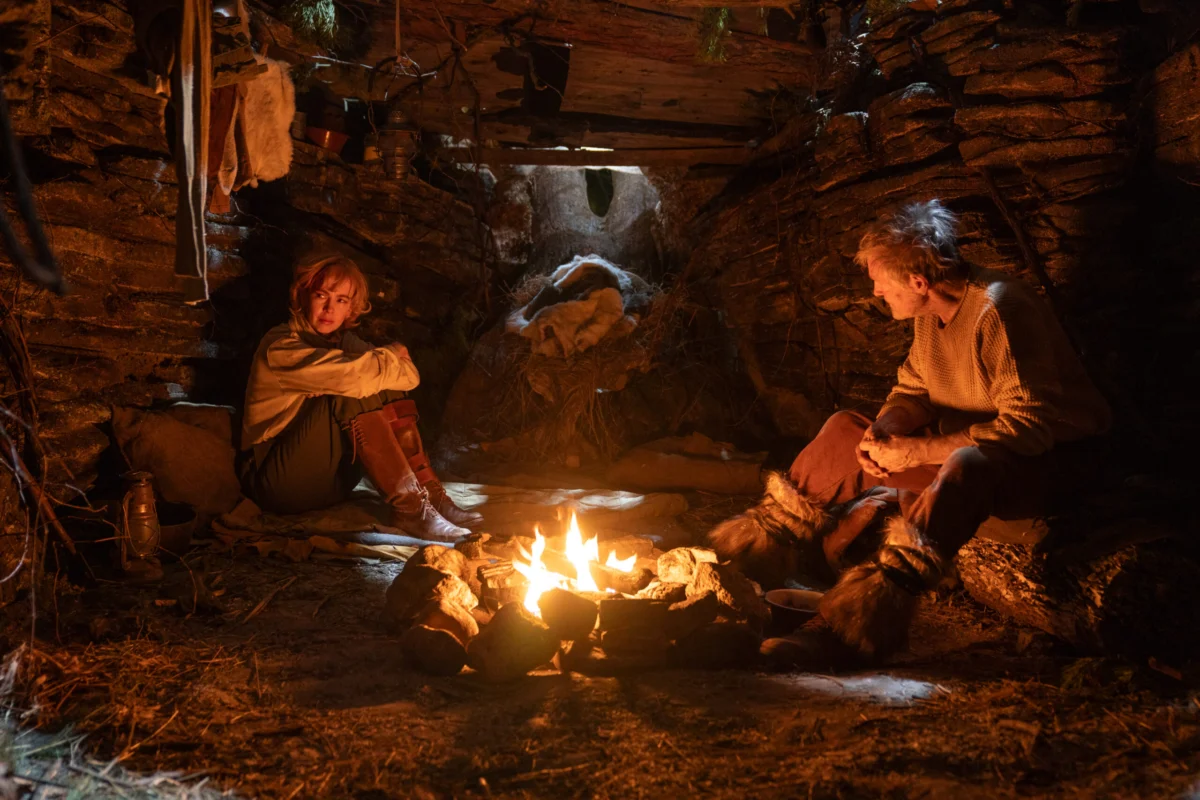
This assembled crew comprises Marianne (Heather Lind), a veterinarian tasked with assessing any potential biological threats or injuries; Coates (Linc Hand), a seasoned veteran whose combat experience is expected to be crucial in hostile environments; Dynamite Dan (Gene Gallerano), a character whose moniker suggests a penchant for explosive solutions; Booker, an expert in radio communications, played by the consistently engaging Jim Cummings; and Ellie (Brittany Allen), a skilled cartographer and explorer whose personal stake in the mission is amplified by the fact that her own father is among the missing. The ensemble cast, featuring recognizable talent, is tasked with portraying individuals carrying significant emotional burdens, a narrative choice that the film attempts to weave into the fabric of the unfolding horror.
Character Arcs and Thematic Ambitions
![‘The Yeti’ Might Star, But His Ferocious Bite Doesn’t Land [Review]](https://www.dreadcentral.com/wp-content/uploads/2026/03/THEYETI_4.jpg)
The film endeavors to imbue its characters with depth by framing their involvement through the lens of personal trauma. Marianne’s veterinary background suggests a capacity for care and understanding of living creatures, potentially even the monstrous one they are set to encounter. Coates, the veteran, is depicted as wrestling with the lingering psychological effects of his military service, a common trope in survival thrillers that aims to add a layer of gritty realism to his actions. Dynamite Dan’s character, while seemingly straightforward, hints at a potentially volatile personality, a wildcard in an already volatile situation.
Booker, brought to life by Jim Cummings, is presented as someone who has endured significant hardship, though the specifics of his struggles are initially left open to interpretation. Ellie, the cartographer, carries the heavy weight of her father’s disappearance, her expertise in navigation and exploration making her an indispensable, yet emotionally vulnerable, member of the team. The film’s attempt to connect these individual traumas to their present predicament, however, is often met with mixed results. The filmmakers’ stylistic choices, which include a grand, almost declamatory visual presentation reminiscent of classic adventure narratives, coupled with a bold broadcast font for on-screen text, create an aesthetic that feels somewhat at odds with the modern, and at times melancholic, thematic undertones. This juxtaposition between the epic scope of an expedition into the unknown and the intimate portrayal of individual suffering forms a central tension within the film.
Musical Score and Stylistic Divergence
The score, composed by John Hunter, is noted for its quality but is also critiqued for its occasional misalignment with the on-screen action. While Hunter’s compositions can effectively build tension during the creature’s more aggressive sequences, the pervasive use of slow, melancholic medleys during character monologues about their personal traumas is described as jarring. This stylistic divergence suggests an effort to elevate the film beyond a conventional creature feature, aiming for a more profound emotional resonance. However, the critique implies that this ambition is not fully realized, leading to a disconnect between the film’s intended emotional impact and its execution.
The review highlights a fundamental tension between the film’s B-movie sensibilities—characterized by graphic and visceral horror, such as the disturbing image of a man’s intestines being manipulated—and its more elevated thematic aspirations. The core premise of a giant, ape-like creature stalking the wilderness is inherently suited for a straightforward horror-thriller, yet The Yeti appears to strive for a deeper, more meaningful commentary, a goal that seems to undermine the very genre it inhabits. This conflict between genre expectations and artistic ambition is a recurring theme in the critical assessment.
![‘The Yeti’ Might Star, But His Ferocious Bite Doesn’t Land [Review]](https://www.dreadcentral.com/cdn-cgi/image/width=788,height=444,fit=crop,quality=90,gravity=auto,sharpen=1,metadata=none,format=auto,onerror=redirect/wp-content/uploads/2026/03/THEYETI_4.jpg)
The Creature Feature Conundrum
Despite the thematic ambitions, the film’s central antagonist, the Yeti, is treated with a curious degree of restraint. While the practical effects used to create the creature are acknowledged as impressive, its screen time is often limited. The Yeti is frequently shrouded in shadow, its attacks obscured, leading to a sense of anticipation that the film struggles to fully satisfy. This approach, while potentially building suspense, is seen as a missed opportunity for a creature feature that hinges on the presence and impact of its titular monster. The obscured nature of the on-screen violence, with an emphasis on the aftermath rather than the act itself, further contributes to a sense of narrative indecision. The question of whether key moments of brutality, such as a limb being torn off, are fully depicted or merely implied remains a point of ambiguity for the viewer.
Narrative Pacing and Environmental Dynamics
The pacing of The Yeti is also subject to scrutiny. While the film is commended for its relatively quick start, the transition from the assembly of the rescue team to their immediate stranding in the wilderness is perceived as abrupt. The geographical context of their predicament is frequently unclear; the vastness of the Alaskan wilderness, the scale of the isolation, and the severity of the winter conditions are elements that are presented more as atmospheric backdrops than as plot-driving forces. The winter storm, in particular, is characterized as mere set dressing, failing to significantly impact the narrative beyond providing a plausible reason for the team’s isolation. This lack of environmental integration leaves the audience with a sense of disorientation regarding the characters’ spatial relationships and the true extent of their peril.
Potential and Missed Opportunities
![‘The Yeti’ Might Star, But His Ferocious Bite Doesn’t Land [Review]](https://www.dreadcentral.com/cdn-cgi/image/width=788,height=525,fit=crop,quality=90,gravity=auto,sharpen=1,metadata=none,format=auto,onerror=redirect/wp-content/uploads/2026/03/THEYETI_2.jpg)
Notwithstanding its shortcomings, The Yeti possesses certain redeeming qualities. The film is visually appealing, and the design of the titular creature is genuinely striking. In its more focused moments, the film hints at the potential of a more streamlined siege-style horror, reminiscent of films like Dog Soldiers, where a contained group faces a relentless monster. Such a scenario, focusing on a small-scale, intimate battle against a formidable foe, is suggested as a more fitting and effective narrative for the film’s strengths. However, the review concludes that The Yeti ultimately falters by deviating from this potential, succumbing to predictable tropes and formulaic mayhem just as it begins to gain momentum. The collective talent involved, including the directors and cast, is acknowledged, but the film’s execution is deemed insufficient to elevate it beyond its perceived limitations.
Release Information
The Yeti is scheduled for release in AMC Theaters on April 4th and 8th, with a digital release to follow on April 10th. This limited theatrical run, coupled with its digital availability, indicates a strategy to reach a broad audience within the genre film community. The film’s distribution through AMC Theaters suggests an effort to capture the communal viewing experience often sought by horror enthusiasts.
Critical Summary
The critical assessment of The Yeti posits that its conventional approach to creature feature tropes, combined with an uneven blend of thematic depth and visceral horror, prevents it from achieving its full potential. The film’s ambitious attempts to imbue its narrative with emotional resonance and philosophical undertones are ultimately overshadowed by its reliance on familiar genre conventions and a reluctance to fully commit to its monstrous premise. The "paint-by-numbers" approach described in the summary suggests a lack of originality, and the film’s "sauce"—its inherent potential—is not sufficiently potent to overcome these perceived deficiencies, leaving a B-movie that is competent in its execution but ultimately fails to leave a lasting, impactful impression.