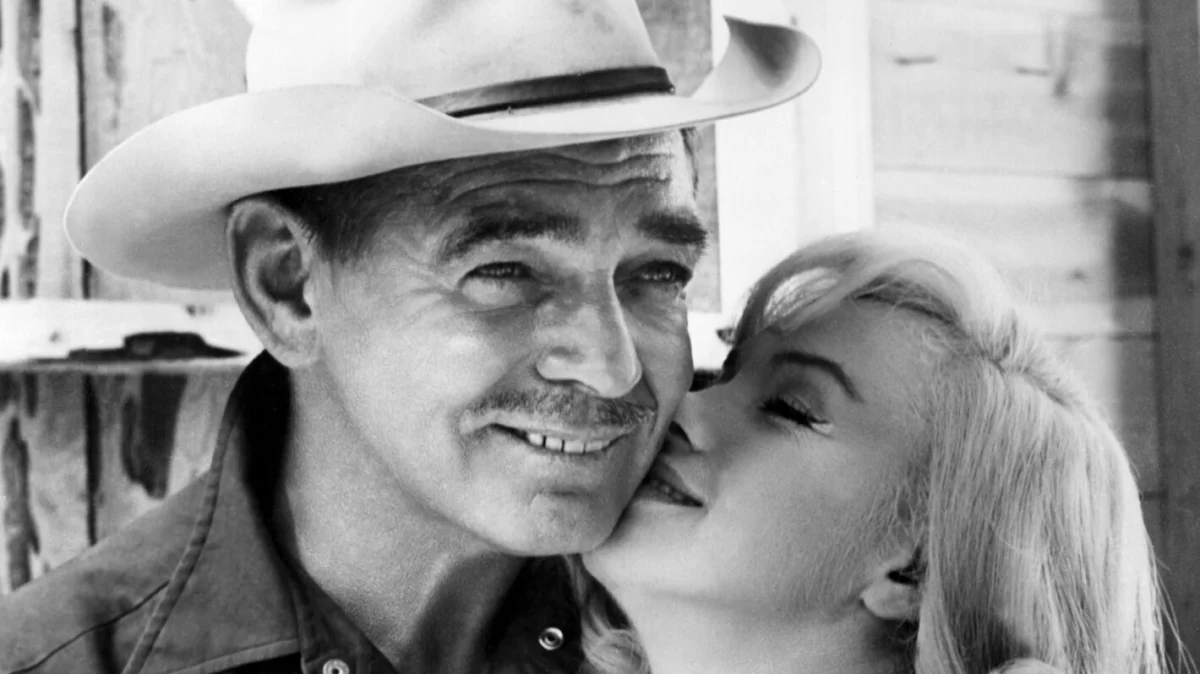
The production of the 1961 film The Misfits remains one of the most scrutinized chapters in Hollywood history, serving as the final completed work for two of the silver screen’s most enduring icons: Clark Gable and Marilyn Monroe. For over six decades, a persistent narrative has suggested that Monroe’s well-documented unprofessionalism, emotional instability, and the resulting stress of the production directly contributed to the fatal heart attack suffered by Gable shortly after filming concluded. While medical evidence and historical context suggest a far more complex reality involving Gable’s long-term health and the grueling physical demands of the shoot, the rumors continue to color the legacy of the film.
The Context of a Troubled Production
The Misfits, directed by John Huston and written by Pulitzer Prize-winning playwright Arthur Miller, was conceived as a prestige project. Miller wrote the screenplay specifically for his then-wife, Marilyn Monroe, intending it to be a vehicle that would showcase her range as a serious dramatic actress. The cast was a collection of cinematic heavyweights, including Montgomery Clift, Eli Wallach, and Thelma Ritter. At the center of the production was Clark Gable, the "King of Hollywood," playing Gay Langland, an aging cowboy struggling to find his place in a rapidly modernizing West.
Filming commenced in July 1960 in the Nevada desert, primarily around Reno and Dayton. The production was immediately beset by difficulties. The environmental conditions were extreme, with temperatures frequently exceeding 100 degrees Fahrenheit. These conditions were compounded by the deteriorating marriage of Miller and Monroe, which played out publicly on set. Monroe’s struggle with substance abuse—specifically a dependency on barbiturates and alcohol—led to chronic tardiness and days where she was unable to perform. In August 1960, the production was halted for ten days while Monroe was hospitalized in Los Angeles for exhaustion and to stabilize her medication levels.
The Physical Toll on Clark Gable
At 59 years old, Clark Gable was no longer the youthful lead of his Gone with the Wind era. Despite his rugged appearance, Gable’s health was compromised by decades of heavy smoking—often three packs a day—and significant alcohol consumption. Furthermore, in preparation for The Misfits, Gable had engaged in a crash diet to lose roughly 35 pounds, reportedly using Dexedrine, an amphetamine, to accelerate the weight loss.
The role of Gay Langland was physically demanding. Gable, a veteran of the studio system who took pride in his professionalism and masculinity, insisted on performing many of his own stunts. This included a particularly grueling sequence in which he was dragged across a dry lake bed by a truck at speeds reaching 30 miles per hour, simulating a struggle with a wild stallion. The combination of extreme heat, amphetamine use, rapid weight fluctuation, and intense physical exertion placed an immense strain on a cardiovascular system already weakened by age and lifestyle.
Chronology of the Final Days
The timeline of Gable’s decline is brief and tragic. Filming for The Misfits officially wrapped on November 4, 1960. Observers on set noted that Gable appeared exhausted but expressed satisfaction with his performance, famously telling his wife, Kay Williams, that he felt he had finally done something he could be proud of.
On November 6, 1960, just two days after the production ended, Gable suffered a massive coronary thrombosis at his home in Los Angeles. He was rushed to Hollywood Presbyterian Hospital. For several days, his condition seemed to stabilize, and there were optimistic reports regarding his recovery. However, on the evening of November 16, 1960, Gable suffered a second, fatal heart attack. He died at the age of 59, ten days after his initial collapse and just months before the birth of his only son, John Clark Gable.
Marilyn Monroe’s own trajectory followed a similarly tragic path. The Misfits premiered on February 1, 1961, to mixed reviews, though it has since been reassessed as a masterpiece of late-period Western noir. Monroe never completed another film. Her subsequent project, Something’s Got to Give, was plagued by the same issues that haunted The Misfits, leading to her firing from the production. On August 5, 1962, Monroe was found dead in her Brentwood home of a barbiturate overdose at the age of 36.
The Genesis of the Monroe Rumors
The theory that Monroe "killed" Gable originated almost immediately after his death. Much of the speculation was fueled by the frustrations of the crew and the public comments made by Gable’s widow, Kay Williams. In the wake of her husband’s death, Williams expressed bitterness regarding the delays and the emotional toll the production had taken on Gable. She pointed to the hours Gable spent waiting on set in the blistering heat for Monroe to emerge from her trailer as a primary source of stress.
"It wasn’t the physical exertion that killed him," Williams was quoted as saying in various tabloid reports of the era. "It was the waiting. He was a professional, and the lack of professionalism on that set broke his heart."
This sentiment was echoed by some members of the production staff who felt that Monroe’s behavior was disrespectful to a legend of Gable’s stature. The narrative of the "difficult actress" vs. the "stoic professional" was a compelling one for the media, and it successfully shifted the blame for a complex medical event onto a single, controversial individual.
Statements and Reactions from the Set
Despite the rumors, those closest to the production often offered a more nuanced view. Director John Huston, known for his own ruggedness and demanding sets, later reflected on Gable’s condition during the shoot. In his autobiography, Huston noted that Gable was "already a very sick man" when filming began, though he hid it well. Huston admitted that the production was "hellish," but he did not lay the blame solely at Monroe’s feet, acknowledging that the script, the heat, and the stunts were equally responsible for the exhaustion felt by the entire cast.
Arthur Miller, who observed the interaction between the two stars daily, noted that Gable was actually quite protective of Monroe. According to Miller, Gable was one of the few people on set who showed Monroe genuine patience, often comforting her during her frequent emotional breakdowns. Miller contended that Gable’s pride in his work and his desire to prove his vitality led him to push himself harder than he should have, regardless of Monroe’s delays.
For her part, Monroe was reportedly devastated by Gable’s death. Friends of the actress claimed she felt a profound sense of guilt, exacerbated by the media’s portrayal of her role in his passing. She reportedly kept a photo of Gable in her home and spoke of him with reverence until her own death, referring to him as a father figure she had always sought.
Medical and Statistical Analysis
Modern medical analysis suggests that the "stress" theory, while psychologically appealing to the public, lacks clinical weight when compared to Gable’s physical risk factors. According to the American Heart Association, the combination of heavy long-term smoking, high cholesterol (common in diets of that era), and the use of amphetamines for weight loss creates a high-risk profile for coronary artery disease.
The "stunt" factor cannot be overstated. Performing high-intensity physical labor at nearly 60 years of age in 100-degree heat is a significant trigger for cardiac events in individuals with underlying heart disease. While emotional stress can exacerbate heart conditions, the physical stressors Gable voluntarily undertook were far more likely to have precipitated the thrombosis than the frustration of waiting for a co-star.
Furthermore, statistical data from the era shows that heart disease was the leading cause of death for men in Gable’s age bracket. The medical technology of 1960 was also limited; the concept of the "Coronary Care Unit" (CCU) was only just beginning to be developed, and the treatments available to Gable at Hollywood Presbyterian—primarily bed rest and anticoagulants—were often insufficient for major thrombotic events.
The Broader Impact and Implications
The death of Clark Gable and the subsequent death of Marilyn Monroe marked the definitive end of the "Studio System" era. The Misfits serves as a cinematic time capsule, capturing the transition from the polished, controlled environments of Old Hollywood to the grittier, more erratic "New Hollywood" of the 1960s.
The persistence of the rumor that Monroe caused Gable’s death reflects a broader societal tendency to scapegoat women—particularly those perceived as "difficult" or "unstable"—for the failings or misfortunes of powerful men. It also highlights the "cursed film" trope that has followed other productions like Rebel Without a Cause or Poltergeist, where the off-screen tragedies become inextricably linked to the film’s artistic identity.
Today, film historians view The Misfits not as the cause of Gable’s death, but as a testament to his dedication to his craft. He chose to go out with a performance that stripped away the "King of Hollywood" persona to reveal a vulnerable, aging man—a performance that required a level of honesty and physical sacrifice that may have cost him his life, but secured his legacy. The rumor involving Monroe remains a piece of Hollywood folklore, a tragic footnote to a film that was already steeped in melancholy and the theme of things coming to an end.