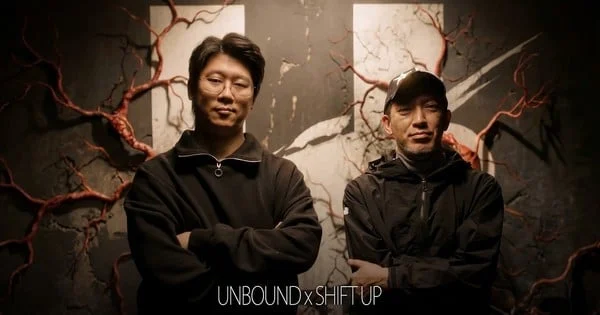
South Korean game developer SHIFT UP has officially announced what it describes as an "acquisition" of Unbound Studios, the nascent development house founded by the legendary Shinji Mikami, the visionary creator behind the iconic Resident Evil franchise. The announcement, made on Wednesday, marks a significant strategic move for both entities, promising to reshape the landscape of AAA game development, particularly for PC and console platforms. While SHIFT UP’s official website prominently features the term "acquisition," the accompanying announcement video has characterized the partnership as a "publishing partnership," hinting at a nuanced operational integration.
This development signifies a crucial step for SHIFT UP, a company that has rapidly ascended to prominence in recent years, particularly with the global success of its 2024 action title Stellar Blade and its 2022 mobile hit GODDESS OF VICTORY: NIKKE. The acquisition of Unbound Studios, though its precise financial terms remain undisclosed, grants SHIFT UP direct access to Mikami’s unparalleled expertise and his team’s creative talent. This integration is expected to bolster SHIFT UP’s ambitions to expand its footprint in the high-stakes PC and console gaming markets, leveraging Unbound’s developing pipeline of future game projects.
The partnership is more than just a business transaction; it represents the convergence of two distinct yet complementary forces in the gaming industry. SHIFT UP, known for its visually stunning graphics and engaging gameplay, now gains the imprimatur of a developer helmed by a figure synonymous with survival horror and innovative game design. Unbound Studios, established by Mikami in 2022 after his departure from Tango Gameworks, was envisioned as a platform for him to pursue new creative endeavors without the constraints of larger corporate structures. This alliance with SHIFT UP suggests a strategic alignment of goals, potentially accelerating Unbound’s ability to bring its projects to fruition on a global scale.
A Legacy of Innovation: Shinji Mikami’s Journey
Shinji Mikami’s career is a testament to his profound impact on the video game industry. His directorial debut with the original Resident Evil in 1996 at CAPCOM not only birthed a genre-defining franchise but also set new benchmarks for atmospheric tension, resource management, and cinematic presentation in video games. The success of Resident Evil was further solidified by his involvement in its 2002 remake and the critically acclaimed Resident Evil 4 in 2005, titles that consistently pushed the boundaries of interactive storytelling and gameplay mechanics. Mikami’s influence extended beyond the Resident Evil universe with his direction of Dino Crisis in 1999, another title that garnered significant attention for its blend of action and survival elements. His tenure at CAPCOM concluded with the release of God Hand in 2006, a unique action game that showcased his distinct design sensibilities.
Following his departure from CAPCOM, Mikami co-founded PlatinumGames in 2006 alongside Hideki Kamiya and Atsushi Inaba, a studio renowned for its stylish and high-octane action titles. During his time at PlatinumGames, he directed Vanquish, a futuristic third-person shooter celebrated for its innovative "slide-boost" mechanic and fast-paced combat. After leaving PlatinumGames in 2010, Mikami established Tango Gameworks, a move that signaled his commitment to building his own creative studio. Under his leadership, Tango Gameworks released a string of notable titles, including The Evil Within (2014) and its sequel The Evil Within 2 (2017), both of which offered a modern take on survival horror. The studio also ventured into the action-adventure genre with Ghostwire: Tokyo, which experienced a staggered release, initially slated for 2021 before launching on PlayStation 5 and PC in March 2022. In a surprising move, Tango Gameworks also launched the rhythm-action game Hi-Fi Rush in January 2023, a title that received widespread critical acclaim for its vibrant art style and engaging gameplay, demonstrating Mikami’s willingness to explore diverse genres. Mikami officially departed Tango Gameworks in March 2023, paving the way for the establishment of Unbound Studios.
SHIFT UP’s Ascendancy and Strategic Vision
SHIFT UP’s rise has been meteptoric, driven by a clear vision for high-quality game development across multiple platforms. GODDESS OF VICTORY: NIKKE, a visually striking mobile title, garnered a substantial global player base, showcasing the studio’s ability to create engaging live-service experiences. However, it was the release of Stellar Blade in 2024 that truly cemented SHIFT UP’s position as a major player in the console gaming arena. The action-adventure game, lauded for its stunning visuals, fluid combat, and compelling narrative, achieved significant commercial success and critical acclaim, demonstrating the studio’s capacity to compete with established AAA developers.
The acquisition of Unbound Studios by SHIFT UP is a strategic maneuver that aligns with the evolving demands of the global gaming market. As the industry consolidates and competition intensifies, securing experienced talent and established creative leadership becomes paramount. For SHIFT UP, partnering with Shinji Mikami provides not only a wealth of creative direction but also a significant boost to its brand recognition and credibility within the Western gaming markets, where Mikami’s name carries immense weight. The integration of Unbound’s talent into SHIFT UP’s PC and console development pipeline suggests a long-term commitment to diversifying its portfolio and enhancing its capacity for large-scale, ambitious projects.
Analyzing the "Acquisition" vs. "Publishing Partnership" Nuance
The semantic distinction between "acquisition" and "publishing partnership" is noteworthy. While the term "acquisition" implies a complete takeover and integration of Unbound Studios into SHIFT UP’s corporate structure, a "publishing partnership" might suggest a more collaborative arrangement where Unbound retains a degree of autonomy in its development while SHIFT UP handles the financial, marketing, and distribution aspects of its games. This could be a strategic approach to allow Mikami and his team the creative freedom they sought when forming Unbound, while still benefiting from the resources and reach of a larger entity.
From a business perspective, an acquisition could offer SHIFT UP greater control over intellectual property and development timelines, potentially leading to more efficient resource allocation and a streamlined creative process. Conversely, a publishing partnership might foster a more innovative and less restrictive environment for Unbound’s developers, allowing them to experiment more freely. The exact nature of this integration will likely become clearer as Unbound’s future projects begin to emerge under the SHIFT UP umbrella. However, the core intent remains evident: to combine the strengths of both studios to create impactful gaming experiences.
Future Implications and Market Impact
The merger of SHIFT UP and Unbound Studios has several significant implications for the gaming industry. Firstly, it signals a growing trend of consolidation and strategic alliances, as studios seek to leverage each other’s strengths to navigate an increasingly competitive market. Secondly, it underscores the enduring appeal of established creative talent. Shinji Mikami’s reputation as a visionary director is a powerful asset, and his continued involvement in game development is always met with keen anticipation.
For players, this partnership promises a new era of high-quality games from a developer that has proven its mettle in both the mobile and console spaces, now bolstered by the pedigree of one of gaming’s most respected figures. The focus on PC and console platforms suggests that SHIFT UP is not content to rest on its laurels and is actively pursuing ambitious projects that will appeal to a global audience. The integration of Unbound’s talent pool also signifies a potential expansion of SHIFT UP’s development capabilities, allowing for the simultaneous development of multiple projects and potentially a faster release cadence for future titles.
The industry will be closely watching to see how this new entity evolves and what groundbreaking titles emerge from this collaboration. The combined expertise of SHIFT UP’s modern development prowess and Shinji Mikami’s legendary creative vision positions this new venture as a formidable force in the AAA gaming landscape, poised to deliver experiences that could define the next generation of interactive entertainment. The implications extend beyond just game releases; this partnership could also influence talent acquisition, development methodologies, and the overall perception of South Korean game development studios on the global stage. The commitment to expanding the PC and console pipeline is particularly significant, indicating a strategic shift towards higher-budget, more technically demanding projects that are crucial for maintaining relevance in the premium gaming sector. This move by SHIFT UP is a clear statement of intent: to become a dominant global publisher and developer, capable of competing at the highest echelons of the industry.