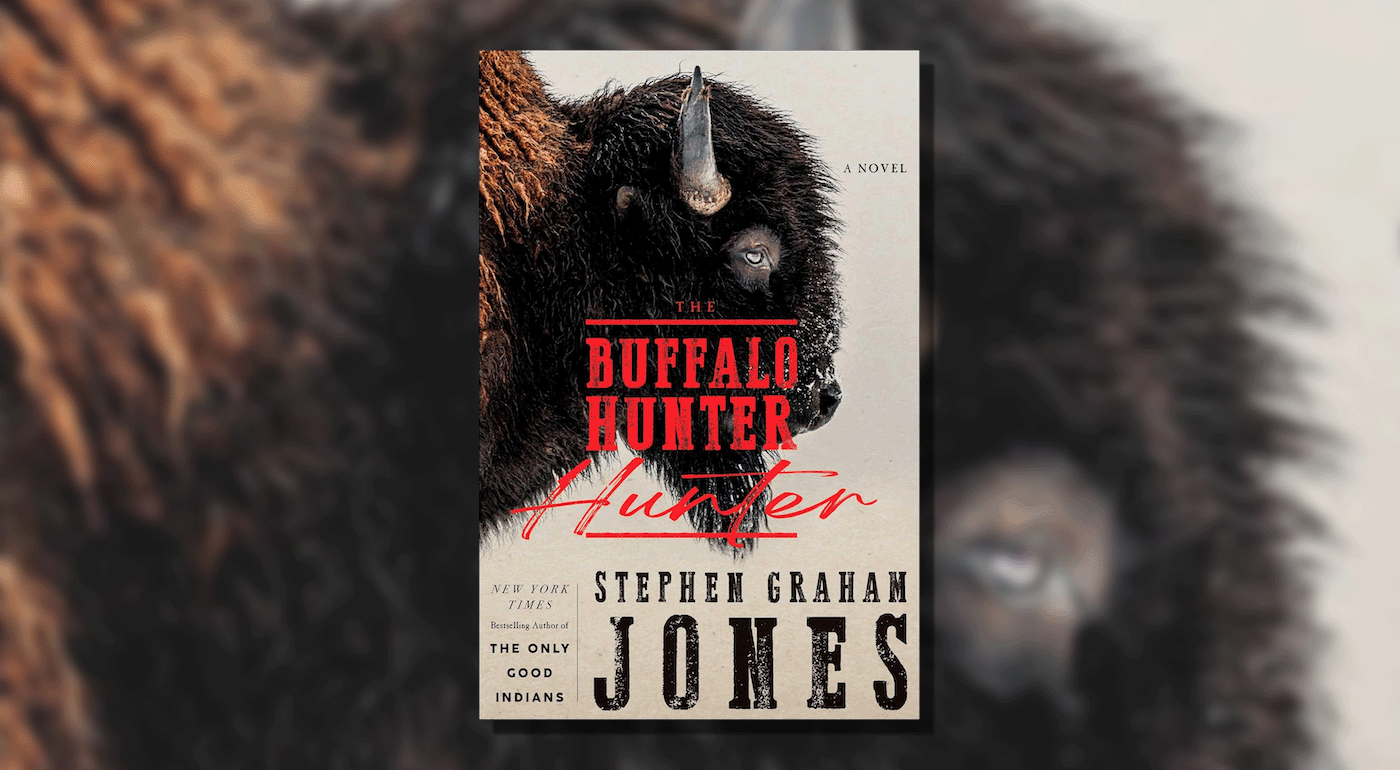
This week’s installment of "Reading the Weird" delves into Chapters 7 and 8 of Stephen Graham Jones’s highly anticipated novel, The Buffalo Hunter Hunter, first published in 2025. The narrative continues to explore the disquieting confession of a man known as Good Stab to Pastor Arthur Beaucarne, a story that challenges Beaucarne’s rational worldview and hints at deeper, more sinister truths lurking beneath the surface of early 20th-century Montana. Spoilers for these chapters follow.
Pastor Beaucarne’s Struggle with the Unexplained
Four days have passed since Good Stab’s harrowing account of his alleged transformation and deeds left Pastor Arthur Beaucarne deeply unsettled. The pastor has dedicated this period to meticulously dissecting Good Stab’s narrative, attempting to reassemble its disparate elements into a coherent and acceptable story. However, the more he examines the tale, the more it resists conventional understanding.
Beaucarne’s initial approach is one of “provisional conjecture,” seeking to discount what he perceives as the “more fantastic elements.” He theorizes that Good Stab may have experienced a “catastrophic loss,” perhaps linked to the historical Marias River massacre, which led to his isolation and subsequent delusions during a harsh winter. This prolonged solitude and deprivation, Beaucarne suggests, could have induced a state where the “impossible” became an “unassailable fact” in Good Stab’s mind.
Cataloging the ‘Delusions’
Despite his efforts to rationalize, Beaucarne meticulously catalogs the specific elements Good Stab described, which he labels as delusions:
- The "Cat Man" Curse: Good Stab claims to have been infected by a curse from a mythical “Cat Man.”
- Blood Consumption: Following this curse, he purportedly subsists solely on blood, empowered by senses far beyond human or animal capabilities.
- Supernatural Resilience: He asserts an extraordinary resilience to disease, accidental injuries, and intentional harm, with even mortal wounds resulting in temporary death, from which he recovers.
- Monstrous Gluttony: A key element of his story is a voracious appetite for blood, requiring him to drain each victim completely. The narrative specifies that if he consumed blood past the point of the victim’s last heartbeat, the residual blood would cause him to sicken.
- Transmutation Through Consumption: Good Stab’s confession includes a peculiar detail: if he consumes animals, he gradually begins to take on “four-foot” characteristics. This observation triggers a vague recollection in Beaucarne of “some ancient lay… complete with justice and chivalry,” though the specifics elude him.
The Pastor’s Own Frailties and Doubts
Beaucarne also notes perceived liabilities in Good Stab’s account: a hypersensitivity to sunlight and an inability to ingest any solid food or liquids other than blood. He also grapples with a less supernatural, more personal discomfort: Good Stab’s deploring of the deep torpor that follows feeding. Beaucarne himself acknowledges finding “extreme satiation” a welcome respite, a numbing of thought that allows for a sense of “communion with Creation that speaks ineluctably of wholeness.” However, he also admits to the regret that follows such indulgence, describing himself stumbling drunkenly around the church, offering apologies to a crucified Jesus, or overeating to the point of illness.
Sacrilege and the Arrival of the Stranger
A more troubling observation by Beaucarne occurred during a recent communion service. Instead of consuming the Host, Good Stab appeared to have hidden it, later dropping it in the street. Beaucarne considers this act of sacrilege, whether motivated by disrespect for Christianity or by the Host being solid food, to be his own fault, regretting allowing someone not of the Faith to participate in the sacrament.
The first murder victim is buried on Tuesday, with Beaucarne officiating despite struggling with the aftermath of a food binge. The sparsely attended funeral, comprised mostly of the curious, is notable for the absence of Good Stab and the presence of a stranger. This neatly dressed man, holding a bowler hat, exchanges a nod with Beaucarne before departing with Sheriff Doyle. As a form of penance, Beaucarne lingers, watching the gravediggers from “boot hill.” Looking out at the prairie, he imagines Good Stab’s approach to Miles City and expresses a wish to have witnessed it, if only to have had the chance to “scurried away.”
Investigating the "Cat Man" and the Appearance of Dove
By April 13, 1912, Beaucarne learns from local informants that a Blackfeet man resides on the outskirts of town. He procures a thick rasher of bacon, a universally desirable food, and visits the aged Amos Short Ribs, who is huddled over a dung fire in a dingy tent. While Amos cooks the bacon, Beaucarne attempts to ascertain if he has ever encountered a domestic cat. His doubt about Good Stab’s story hinges on the anachronism of a Blackfeet man in 1870 knowing of such a feline, let alone naming his monster “Cat Man.” When verbal descriptions fail, an embarrassed Beaucarne borrows the local brothel’s orange mouser. Amos’s reverent fascination with the animal confirms it is indeed new to him.
As Beaucarne prepares to leave, Amos inquires about “the Fullblood” he has seen exiting the church. Amos believed this individual was dead, having been killed for his actions against the buffalo hunters. When pressed about what the Fullblood did, Amos gestures towards the prairie. Beaucarne, recalling the flayed corpses discovered near town, asks if the Fullblood is responsible for the…
Before he can finish, Amos abruptly retreats into his tent. At this precise moment, the stranger from the funeral approaches. He introduces himself simply as Dove and presents credentials identifying him as a Pinkerton agent. Dove reveals he has traveled by coach from San Francisco and is pursuing a case for a family there. His investigation has led him to believe that his quarry—or parts of them—are currently in or around Miles City. Looking directly at Beaucarne, Dove adds a chilling detail: “Parts of them anyway, Father. I can’t say for certain where their skin is.”
Contextualizing the Narrative: Historical and Cultural Underpinnings
Stephen Graham Jones’s novel is set in a period of significant cultural and historical transition in the American West. The late 19th and early 20th centuries witnessed the consolidation of federal power, the near-eradication of buffalo herds, and the forced assimilation of Native American tribes. This backdrop of displacement and violence is fertile ground for exploring themes of trauma, identity, and the supernatural, often intertwined with indigenous folklore.
The Marias River Massacre (1870): This historical event, referenced by Beaucarne, was a brutal attack by the U.S. Army on a Piegan Blackfeet camp. While ostensibly a reprisal for raids, it resulted in the deaths of hundreds of men, women, and children, disproportionately impacting the Blackfeet Nation. The event is deeply etched in the collective memory of the Blackfeet and has been a subject of historical controversy and artistic representation, often highlighting themes of injustice and suffering.
Pinkerton National Detective Agency: Founded in 1850, the Pinkerton Agency became a formidable private law enforcement entity. During the Civil War, they engaged in espionage for the Union. By the early 20th century, they were renowned for tracking western outlaws and, controversially, for strikebreaking activities for corporations. Their involvement in the narrative signals a direct confrontation with the mysterious events unfolding in Miles City, suggesting a secular, albeit formidable, force is now investigating the supernatural occurrences.
Native American Folklore: The references to a “Cat Man” and the potential connection to a blood-drinking entity resonate with various folkloric traditions. While Beaucarne struggles with the anachronism of domestic cats, Indigenous cultures have rich mythologies that often feature shapeshifters and beings with animalistic attributes. The Wendigo, a creature of Algonquian folklore associated with insatiable greed and cannibalism, is a notable example of a supernatural entity tied to consumption and transformation, themes that appear to be central to Good Stab’s confession.
Thematic Analysis and Authorial Intent
Motivated Reasoning and Denial: Ruthanna’s commentary highlights Beaucarne’s "motivated reasoning." His desire to maintain a rational and civilized worldview leads him to actively seek explanations that dismiss the supernatural. The presence of domestic cats in his reasoning becomes a convenient, albeit flawed, tool to discredit Good Stab’s story, rather than an opportunity to explore the possibility of Good Stab’s lived experience. This reflects a broader historical tendency to dismiss or misinterpret Indigenous narratives and beliefs through a Western, rationalist lens.
The "Lesser Breeds" and Cultural Superiority: Beaucarne’s internal monologue, particularly his surprise at the “rhetorical capability” of Native Americans and his contemplation of Kipling’s "Recessional," reveals a deeply ingrained sense of cultural superiority. His framing of non-Western peoples as "lesser breeds without the Law" underscores the colonial mindset prevalent at the time, where indigenous knowledge and experience were often devalued or ignored. This sets up a potential conflict between Beaucarne’s entrenched biases and the unfolding reality of the supernatural events.
The Nature of Sin and Redemption: Beaucarne’s preoccupation with his own sins—gluttony, despair, and vanity—suggests a personal struggle for redemption that may be intertwined with his attempts to understand Good Stab’s confession. His struggle to reconcile his own frailties with the extreme claims of Good Stab indicates a deeply personal, and perhaps guilt-ridden, engagement with the narrative.
The "Protagonistic Impulse to Explain Away the Inexplicable": Anne’s commentary astutely identifies a core trope in weird fiction: the character’s drive to rationalize the inexplicable. Beaucarne embodies this, attempting to fit Good Stab’s confession into existing frameworks of delusion, trauma, or deception. However, the persistent intrusion of the uncanny—the stranger, the lingering sense of dread, the implications of the "hump" murders—suggests that Beaucarne’s rationalizations are becoming increasingly untenable.
Implications and Broader Impact
The introduction of Dove, the Pinkerton agent, injects a new dimension into the narrative. His explicit mention of the missing skin and his pursuit of a case involving dismemberment suggest a violent and possibly supernatural serial killer is operating in Miles City. The Pinkerton Agency’s reputation for efficiency and their focus on maintaining order imply that they will approach the situation with pragmatism, potentially clashing with both Good Stab’s supernatural claims and Beaucarne’s attempts at theological or psychological interpretation.
The juxtaposition of Beaucarne’s spiritual and psychological struggles with Dove’s practical, albeit unsettling, investigation creates a dynamic tension. The narrative is building towards a confrontation not only with the unknown entity or entities at play but also with the limitations of human understanding, be it theological, psychological, or investigative, in the face of the truly inexplicable. The novel continues to probe the boundaries between reality and myth, sanity and madness, and the enduring power of old sins and ancient forces in the modern world. The unfolding events in Miles City suggest that the "weird" is not merely a matter of individual delusion but a tangible force that can disrupt the established order and challenge the very foundations of belief.