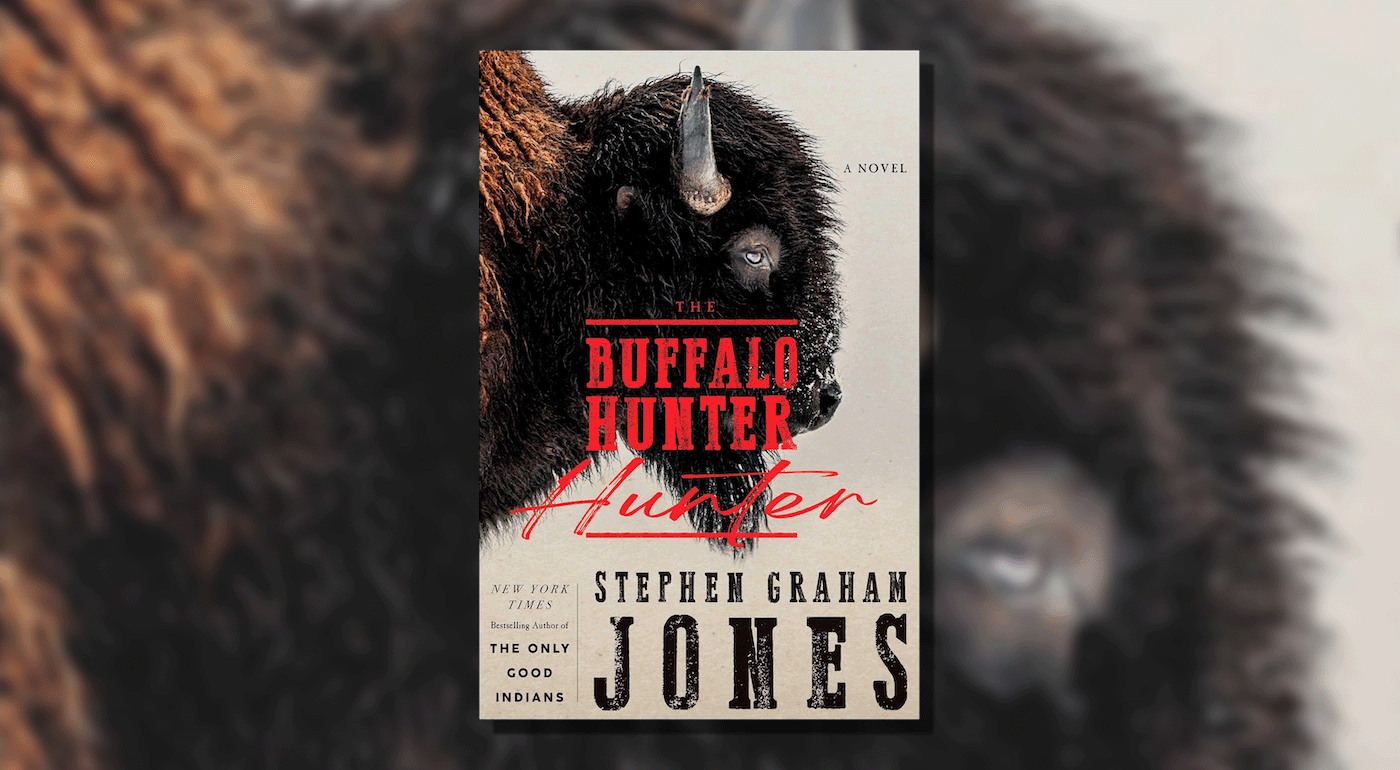
Welcome back to Reading the Weird, where we delve into the unsettling realms of weird fiction, cosmic horror, and Lovecraftiana, tracing their lineage from historical origins to contemporary manifestations. This week, our exploration focuses on Chapters 9 and 10 of Stephen Graham Jones’s novel, The Buffalo Hunter Hunter, first published in 2025. Please be advised that the following discussion contains spoilers.
The Absolution of Three-Persons, April 14, 1912
Arthur Beaucarne, a man clearly wrestling with the unsettling residue of recent events, endeavors to commit his encounter with a Pinkerton detective to paper. He hopes this act of narrative containment will prevent the experience from festering in his memory, much like a persistent, tendril-ridden fungus. After three failed attempts to settle his thoughts, Arthur finally finds a semblance of stillness, though he remains acutely aware that the seemingly casual conversation with Detective Dove was, in fact, a meticulously crafted interrogation.
Their perambulation through Miles City saw Arthur still cradling the stray cat from the local cathouse, a creature he has yet to return to its more accustomed haunt. Under the guise of sharing information "in strictest confidence," Dove began to unravel the particulars of his investigation. The subject was a man of "middling high society," heir to a considerable newspaper fortune, who had vanished after being observed in the company of a "black-robed man." Dove provided a description: the black-robed individual was younger than Arthur, possessed darker skin, and wore sunglasses. Arthur, piecing together fragmented clues, tentatively inquired if this missing heir was the first of the "flayed men" they had discovered. Dove’s affirmative nod confirmed Arthur’s dawning, grim understanding. The body, he explained, was to be exhumed and returned to San Francisco.
Dove’s attention was briefly diverted by the presence of women on the cathouse porch, the very women to whom Arthur had not yet returned the surprisingly placid feline. Recalled to the matter at hand, Dove added a further complication: the missing heir’s three sons had also disappeared shortly after their father. He presented Arthur with a photograph of the youngest son, a face Arthur recognized with chilling certainty as the second flayed man. This victim, too, would be exhumed for a San Francisco grave. Arthur, sensing an opportunity to contribute constructively, asked how he might assist Dove’s investigation. Dove suggested Arthur’s "position in the community" could prove invaluable and then inquired if Arthur’s religious sect practiced confession. While Arthur confirmed that it did, he immediately invoked the Lutheran Seal of the Confessional, a sacred vow forbidding the disclosure of anything confided to him. He did, however, offer to relay any permissible information to Dove. Perhaps with a touch too much eagerness, Arthur then proposed that an Indigenous perpetrator might be responsible for the murders, a suggestion Dove neither embraced nor dismissed outright.
Dove then shifted the focus, inquiring about the distance to Fort Benton. He stated his obligation to telegraph any findings regarding a long-missing transport. This transport, consisting of six Pinkertons and a "large package" they were escorting westward, had vanished in Montana in 1870. Inadvertently, Arthur let slip hints that suggested he possessed knowledge about the enigmatic "Cat Man," further deepening the detective’s suspicions.
Meanwhile, for a third consecutive Sunday, Good Stab attended church services, lingering afterward to continue his peculiar form of "confession" with Arthur. He observed the cat, Cordelia, that Arthur still hadn’t returned to the brothel, and offered his approval of the animal’s prowess as a hunter, a trait he evidently shared. Arthur, prompting him to resume his narrative, set the stage for further revelations.
The Nachzehrer’s Dark Gospel, April 14, 1912
Wounded by a shot through the shoulder, Good Stab found himself bleeding out the sustenance he had recently consumed from his fellow Pikuni tribesmen, White Teeth. He slumped against a bull that, while skinned, was not yet deceased. This visceral moment prompted a digression into an ancient Pikuni legend concerning Kills-for-Nothing. Her face, the story went, was torn away by a similarly not-quite-dead bull. In her agony, she fled to the Backbone and leaped into a lake, where she purportedly resides with the underwater people. The skin she lost was placed within a potent medicine bundle, the keepers of which all succumbed to smallpox. The legend held that if this skin ever reached Kills-for-Nothing’s lake, she could reclaim it and walk the earth once more.
However, such ancient tales were no longer widely recounted. Good Stab, refocusing on his own harrowing experience, described clawing his way into the bull’s carcass to hide and drink its still-living blood. After succumbing to a post-feeding slumber, he awoke the following day to find the napikwans (a derogatory term for white settlers) had departed, having overlooked him. Naked and caked in the gore of his bovine savior, he wandered among the corpses of the buffalo. The calves, left alive as too insignificant to expend bullets on, followed him, their plaintive cries for food and comfort stirring a deep-seated resolve within him. It was this plight that propelled Good Stab to declare a personal war against the napikwans. Raising a fist, he emitted a hiss, a sound he had never before produced, mirroring the chilling cry of the Cat Man.
Drawn by the scent of the napikwan hunters, Good Stab, accompanied by the orphaned calves, located their camp. They wielded a new type of rifle, which Good Stab termed "long-shooters," explaining their ability to strike him from a distance. The hunters were engaged in a boisterous feast of buffalo tongues when they noticed the calves. They began to lure the young animals with cow butter, then proceeded to slit their throats. This act evoked a bitter memory for Good Stab: the soldiers who attacked Heavy Runner’s camp during the Marias River Massacre had employed similar tactics, killing the Pikuni with knives, axes, and rifle butts to conserve ammunition. Enraged by this recollection, Good Stab unleashed his supernatural stealth and speed, terrorizing the camp before returning to choke two hunters to death with the blood of the slaughtered calves. A tomahawk blow to his back rendered his legs useless, and he prepared for his imminent demise. However, a final, unslaughtered calf found him and licked his face, imploring his protection. Realizing the pursuing napikwans would kill it along with him, Good Stab rallied. With immense effort, he wrenched the tomahawk from his back and used it to fell the first napikwan, draining his blood to the last living drop. Ironically, the next napikwan‘s shot, intended to kill him, saved him from the post-feeding sleep that would have left him helpless, draining the excess blood. He managed to stand amidst a circle of his would-be captors, who screamed in terror, unable to comprehend his nature.
He was, they realized with dawning horror, "the Indian who can’t die," "the worst dream America ever had." Before the napikwans could react, Good Stab dodged away, fleeing towards the Backbone. Bullets rained down, but he paused to scoop up the last buffalo calf – the one that had licked his face. In the morning light, he would discover it was a white one, a creature of profound spiritual significance. As he concluded his tale, Good Stab conveyed a sense of profound emptiness, stating that both his heart and his pipe were now empty.
What’s Cyclopean
Arthur Beaucarne’s vocabulary expands in direct proportion to his rising anxiety. His pronouncement, "Maychance I bring my own perturbations into this fraught interrogation," perfectly encapsulates his heightened emotional state, a sentiment readily understood by anyone experiencing similar pressures.
The Degenerate Dutch
The observation that Indigenous peoples possess "an inbuilt sense to avoid anyone in uniform, or with credentials granting them authority" carries a stark historical weight. This ingrained wariness is a direct consequence of centuries of systemic oppression, violence, and broken treaties, a legacy that continues to inform contemporary interactions.
Libronomicon
Arthur’s comparison of the Pinkerton detective’s interrogation style to "the stinging couplet at the end of a sonnet, which is where the fatal turn resides," reveals his perception of the interrogation’s underlying tragic inevitability. He views the world, and his place within it, as a "farce" where he is compelled to play a predetermined role.
Anne’s Commentary
Detective Dove proves to be a formidable interrogator. His conversation with Arthur Beaucarne gradually transforms from an ostensibly casual chat into a pointed and unnerving line of questioning. Dove’s approach suggests he is not merely casting a wide net for clues, but has already identified Arthur as a person of significant interest.
Dove skillfully draws Arthur in by divulging select details of his case under the guise of “strictest confidence.” This tactic is designed to flatter Arthur, implying he is trustworthy. The mention of a missing newspaper heir from San Francisco, and the question of how this might relate to the town preacher, serves as a carefully placed piece of bait. Dove then dangles a second lure: the suspected perpetrator is a "man in black robes."
Arthur takes the bait, his mind immediately jumping to conclusions, perhaps wondering if Dove suspects him. Dove’s knowing grin suggests the interrogation is proceeding as he intended. Arthur’s anxious reaction to the broad description of a "man in black robes" implies guilt, even though the San Francisco black-robe was described as younger and darker-skinned than Arthur. Before Arthur can fully process this, Dove drops another hook: "you don’t have any of those sunglasses either now, does [he]?"
Arthur’s confused nod, followed by an overly emphatic headshake, reveals his predicament. Dove has now described Good Stab, and Arthur has reacted as if he has indeed encountered such an individual in Miles City. The subsequent presentation of a photograph of the second victim, the missing heir’s son, further unnerves Arthur. Gathering his resolve, he asks how he can assist. Dove’s next question is a double-barreled trap: Arthur’s role as town minister, he posits, might be relevant. After a noticeable pause, Arthur confirms this.
Dove then steers the conversation toward confession, a core duty of Arthur’s ministry. Arthur expresses his “regretful inform[ation]” that he is "bound by Luther’s Small Catechism" regarding confession. He clearly assumes Dove understands the confidentiality inherent in the Lutheran confessional practice. Thus, he cannot assist Dove with anything confided during confession. He also, with evident regret, is likely pondering whether Dove is aware that a man matching the black-robe’s description has been a frequent visitor to Arthur’s church for two consecutive Sundays.
Arthur’s "too eager" suggestion that Indigenous people might be involved, citing the violent nature of the killings and their supposed "low value on human life," further raises Dove’s suspicions. Dove shrugs off the suggestion, remarking that Arthur’s reference to the "woolier days" brings to mind "a buffalo hide, yes?" He then seemingly reverts to casual conversation, inquiring about Fort Benton. Arthur’s question about Dove’s business there provides the perfect opportunity for Dove to mention the 1870 disappearance of a Pinkerton transport, comprising two wagons and six agents. He notes it is standard procedure for any agent to report any information regarding this cold case. Dove offers no further details, leaving Arthur to inadvertently reveal more by implying he knows the transport carried more than just money and that it vanished in winter.
Dove’s parting non sequitur, "There was no horse," serves as the coup de grâce. He questions the absence of hoofprints and footprints at the scene where the two San Francisco men were found. This implies the killer possessed the ability to transport and dispose of adult men without leaving any trace of their passage, prompting Arthur to discreetly inquire among his parishioners about such an individual. Arthur is left to grapple with the unsettling possibility that Dove knows about Good Stab, not by name, but by his peculiar nature, and how much he might know about Arthur’s involvement with the Nachzehrer.
Good Stab’s third confession marks a significant turning point, presenting the initial major climax of his origin story as both villain and hero. He has been consumed by despair over his profound disconnection from his people and any meaningful purpose. The wanton destruction of the buffalo herd is deeply disturbing, but the napikwans further condemn themselves by deeming the calves unworthy of bullets, echoing the soldiers’ actions during the Marias River Massacre, where the Pikuni were slaughtered with economically reusable weapons. The hunters in Chapter Ten only resort to killing calves for sport, luring them with white-horn butter, the same sustenance that had once severely ill young Good Stab.
From a transgressor who killed the beaver-chief and an undead parasite on his own people, Good Stab transforms into the undying Indian, an embodiment of "America’s worst dream." As he flees to sanctuary, he carries the last living calf with him. In the morning sunlight, he beholds its whiteness, a rare birth that holds immense spiritual significance for Plains Indigenous tribes, including the Blackfeet, heralding hope, renewal, and the promise of better times. It is difficult to conceive of a more auspicious omen for Good Stab to carry away from the carnage of Chapter Ten.
Ruthanna’s Commentary
Adding to the initial impression of the novel’s thematic exploration of vampirism, Good Stab unequivocally embodies the "gross kind of vampire." This is not a creature of nocturnal glamour or sophisticated indulgence; it is a primal hunger that defies control, even when desperately desired. The act of biting one’s own people is a testament to this loss of control. Interrupted by armed individuals leads to literal wounding, and being "full to bursting" results in an abundance of visceral unpleasantness. Arthur’s own gluttony for cake, while a lesser vice, serves as a pale reflection of this overwhelming hunger.
Unfortunately for Arthur, his cake consumption is merely a minor concern. The Pinkerton detective clearly disbelieves that Arthur’s guilt is solely a product of his religious convictions. Indeed, Arthur either knows the identity of the missing heir or harbors a strong suspicion, and his attempts at deception are transparently poor. The compelling suspicion is that the heir shares Arthur’s own dark, clandestine past, including prolonged encounters with a man in black robes. This raises the chilling question: will he also share Arthur’s fate? This does not, however, deter Arthur from continuing these meetings. The privilege of the confessional, I believe, does not extend to hearing confessions from someone one suspects might murder them. Thus, Arthur’s continued engagement stems from a deep-seated guilt, an unresolved conviction that his impending fate is, in some measure, deserved.
Good Stab’s confession this week reaches the core of the book’s title. He has failed his people repeatedly: by killing the beaver, by killing White Teeth, and by losing his capacity for safe community living. He exists in a liminal state, neither fully human nor animal, embodying the worst of both. Yet, he now claims a purpose that, while not entirely Pikuni, aligns with their values: seeking revenge for the disrespectful napikwan slaughter of the buffalo and their people. The narrative emphasizes that "Blackhorns are always there for the Pikuni," and even if Good Stab can only offer protection to orphaned calves for a fleeting period, he finds a way to be present for them.
The recurring imagery of flaying and skins permeates these chapters, creating an almost unbearable sense of visceral horror. The buffalo are skinned, as are the bodies discovered outside of town. Good Stab finds refuge within buffalo skins, though his own fails as a vessel for their blood. Legendary hunters sleep within such hides. Ancient campfire tales speak of Kills-for-Nothing, who lost her face to a blackhorn’s horn and now resides underwater to avoid the sun’s burning effect on her skinless visage. Skin serves as both protection and a point of vulnerability, the very thing from which one cannot scrub guilty blood, the very thing that exposes one’s guilt.
Meanwhile, Arthur reports that Chance Aubrey remains tremulously enthusiastic about the "titanic hull" making its way toward America. Aubrey has "gambled all he has, including his happiness, on this crossing." Readers, of course, understand this to be a perilous gamble, indicative of the "infectious" obsessions that will prove his undoing. This reminds me of Ragtime. While I haven’t personally read E.L. Doctorow’s novel, I have greatly enjoyed the musical adaptation. A central theme in Ragtime is the parasocial relationships ordinary people form with celebrities, who represent idealized connections to the modern world: Emma Goldman’s radical inspiration, Harry Houdini’s ability to escape any predicament, Evelyn Nesbit’s glamour. Chance’s obsession appears to be of a similar nature. One can feel deeply invested in "Progress," but Progress has no reciprocal obligation and certainly no obligation to adhere to one’s personal scripts. Celebrities, or even grand symbols like ships, are ultimately individuals or entities first, and symbols second. They cannot be controlled.
The same principle applies to Arthur’s precarious relationship with Good Stab and, I suspect, with the Pinkerton detective. To Arthur, they represent harbingers, perhaps divinely sent to hound him as he secretly believes he deserves. Similarly, he views American Indians as symbolic figures, embodying instincts and characteristics that serve as instruction or mystery for White Men. However, to themselves, these individuals are simply people. Or, in Good Stab’s case, perhaps something far more complex and unsettling.
Next week, we conclude our National Poetry Month features by examining Linda D. Addison and Jamal Hodge’s Stoker-nominated chapbook, Everything Endless.